8 in 10 foreign medical graduates fail India’s test. A racket sold a way in
In Buldhana, a district in eastern Maharashtra, Sanket Unhale, 26, had been seeing patients since August, police say, working alongside his uncle, a doctor at a local hospital. Varun Akhade, 28, from the same district, was practising on his own. Both had studied medicine in the Philippines, and both held certificates from the Maharashtra Medical Council (MMC), the body that registers doctors in the state, saying they were cleared to practise in India.
Nearly 500 km away, in Mumbai, at around the same time, Gauri Bhosle came across the first sign that something was wrong with their registrations.
In August, Bhosle, who is in charge of the MMC portal, was going through the list of applicants who had applied for or secured certificates to practise as doctors in India when she came across 24 entries that should not have been in that section of the database. The section, the ‘state desk’, reflects only those who had cleared their MBBS in Maharashtra and so did not have to sit a screening test. These entries, which belonged to 22 applicants, were of people recorded as having studied medicine abroad and cleared the Foreign Medical Graduate Examination (FMGE), the screening test conducted by the National Board of Examinations in Medical Sciences (NBEMS) that a foreign-trained medical graduate must pass before practising in India. Such applicants are listed separately.
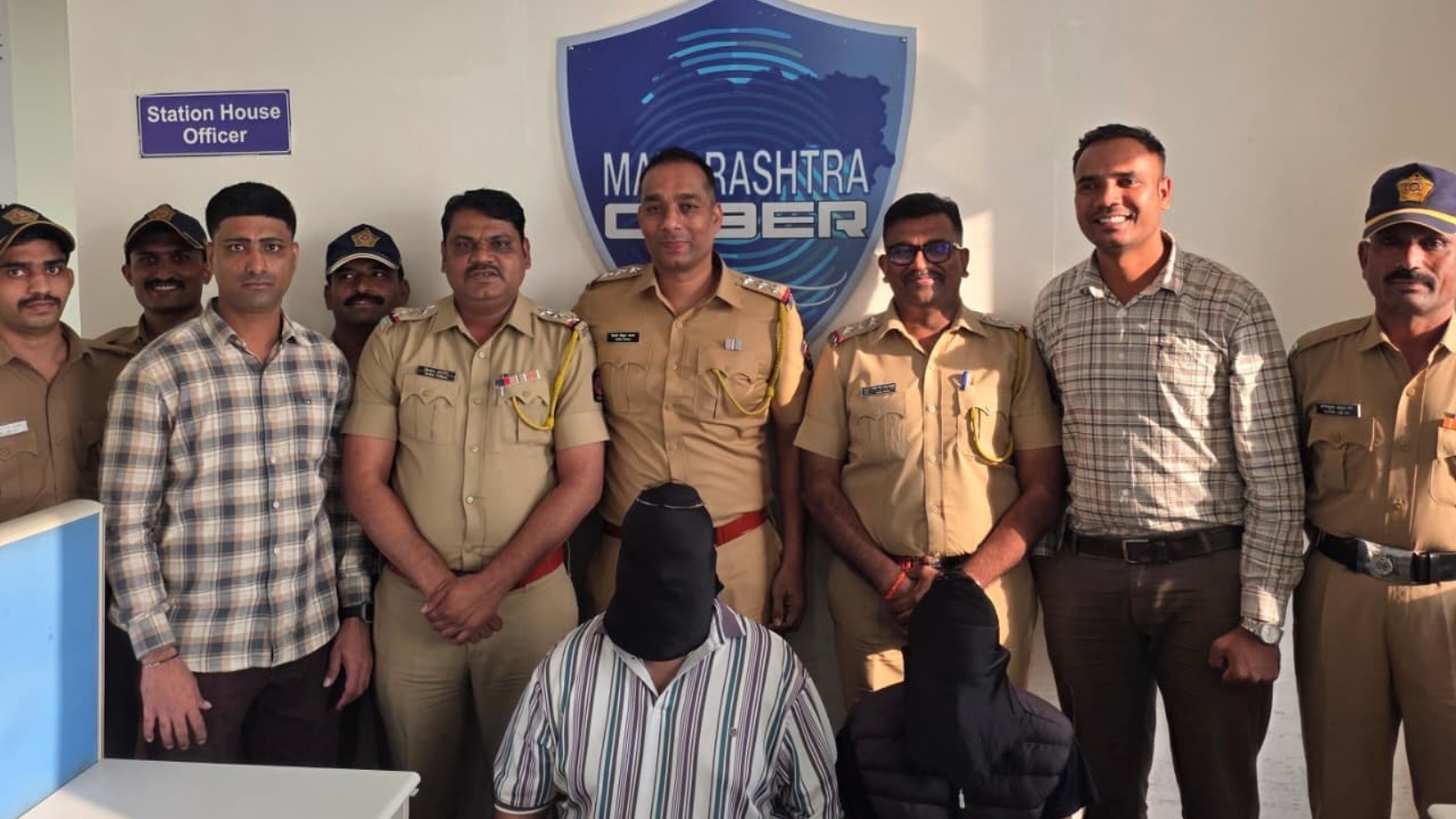
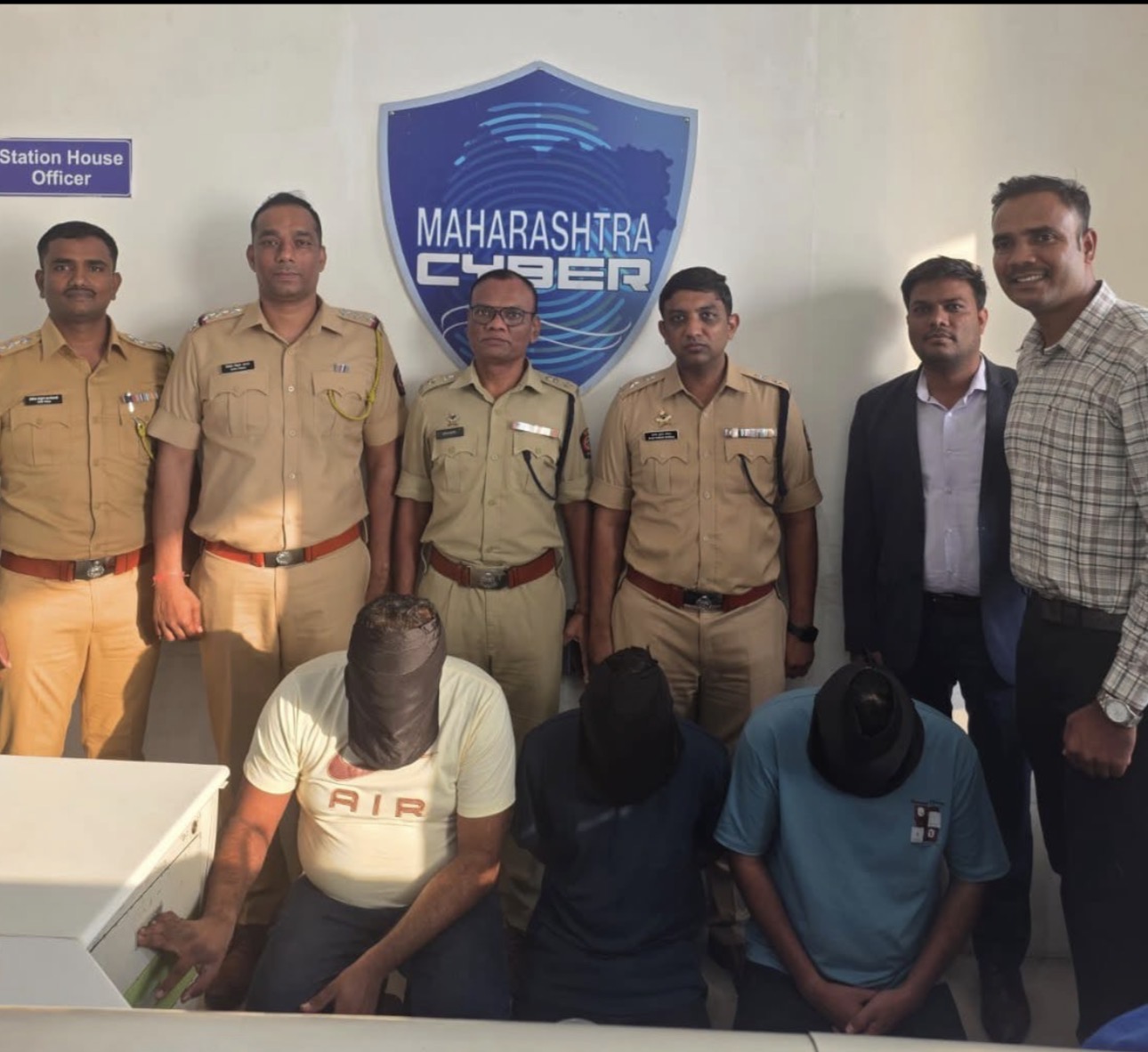 First three arrested accused with Maharashtra Cyber team that nabbed them including DCPs Ajay Kumar Bansal and Sanjay Latkar (Express)
“There was no chance that someone having cleared their exams abroad would come in the same list Bhosle was checking which was the database of those having given their exams in the state,” an MMC official said.
Police would later say that none of the 22 had cleared the exam at all. Two of them were Akhade and Unhale.
Blank pages where the documents should be
The first thought was that the software had thrown up an error, and that thought did not survive long. “Initially, it was suspected to be a technical glitch. However, MMC systems had been upgraded in June this year and such issues should not be taking place. Hence, she then alerted her superior Dhanashree Patiye and they started going through the 24 applications,” the official told The Indian Express.
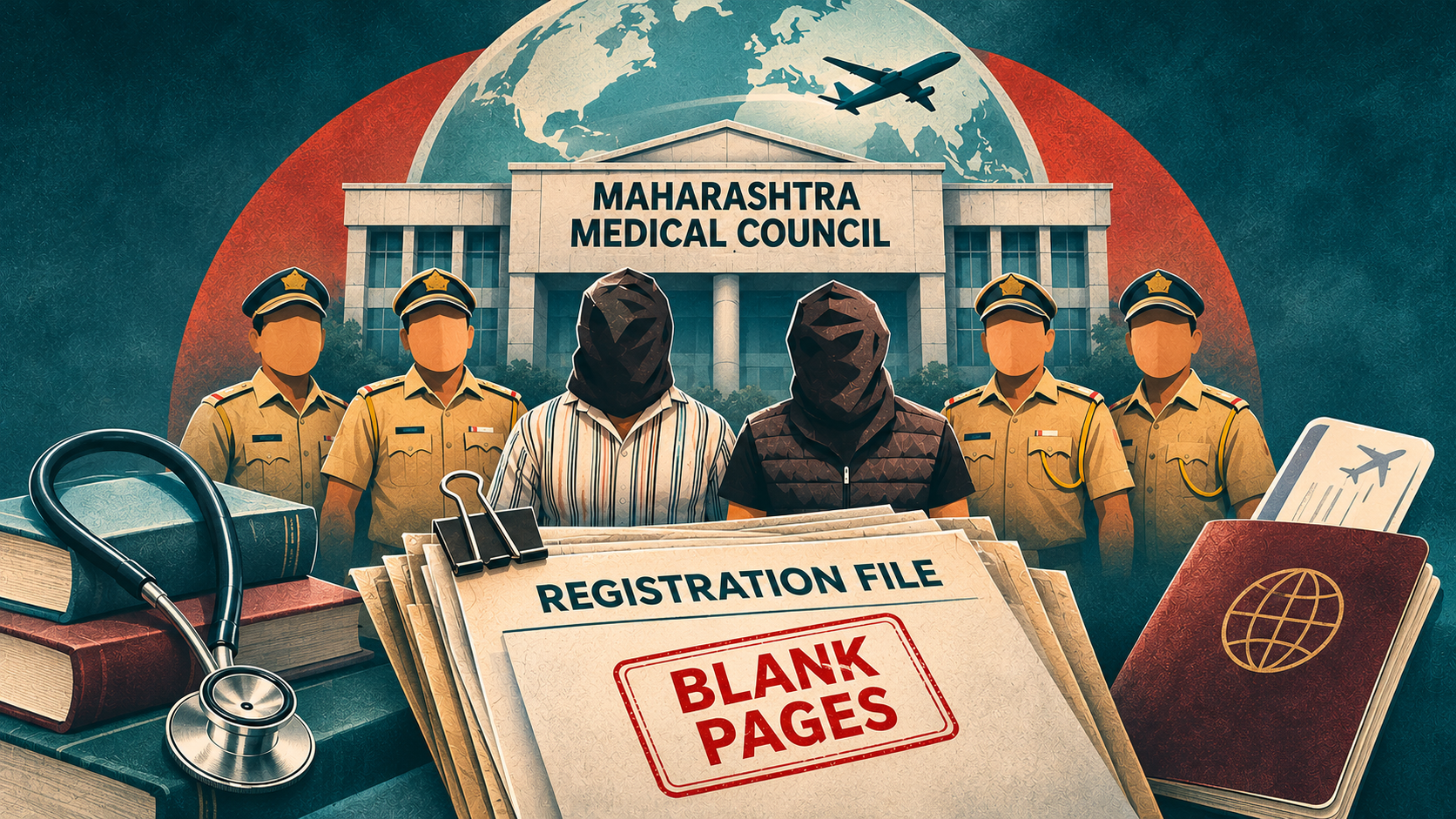
A foreign graduate’s application file normally holds documents from the institute abroad, identity papers and payment slips. These held blank pages. In some instances the same name had been used for more than one application. “At this point they realised that this was not a technical glitch but someone had tried to tinker with the system. They found that these ineligible people had been issued certificates to practise as doctors as per records which was strange,” the official said.
Story continues below this ad
A foreign graduate’s registration is supposed to pass through a check that these files could not have cleared. “Usually, when someone does their medicine study from abroad, it is a three-month verification process that includes MMC writing to the university abroad and getting confirmation from them,” the official said.
All 24 entries had been made in April, when the council was still running its old software, which was suspected to be glitch-ridden. The new system came in June. Convinced that someone had been inside the database before the upgrade, the MMC alerted the government and filed a complaint with Maharashtra Cyber on August 14.
Backdoor entry, and forged certificates
The FIR was registered on the complaint of the council’s business manager, Rakesh Waghmare, 40. During the technical investigation that followed, led by Maharashtra Cyber SP Ajay Kumar Bansal, it appeared that the council’s security network had been compromised before the June upgrade, and that there had been illegal backdoor entry to the database.
“We found that some accused had secured unauthorised access and manipulated the entries in the system to show that these particular people had cleared their exams. We found none of them had actually cleared the exams. Apart from manipulating the system, the accused also created forged certificates showing they had cleared the exams and provided them to the applicants,” the official said.
Story continues below this ad
Police then went through the records of those who had benefited and zeroed in on two students from Maharashtra. Akhade and Unhale had studied medicine in the Philippines and allegedly failed to qualify the prescribed local examination, but had obtained and possessed medical registration certificates.
They were arrested in the first week of October and are in judicial custody. “Sanket Unhale was practising along with his uncle who is a doctor at the local hospital while Varun was practising independently,” an officer said of the weeks before the arrests.
From WhatsApp groups to Bulandshahr
The two men told police they had been approached by someone who asked whether they were interested in getting clearance to practise in the country. He turned out to be Rahul Patil, 35, a medical representative from Nashik district, whom police suspect of being a key operative of an inter-state gang that generated and procured the forged documents. A medical representative’s job is to be the link between pharmaceutical companies and doctors.
Patil charged between Rs 15 lakh and Rs 25 lakh an applicant, and police suspect some of the 22 used his services. Police suspect he got the names of the two Buldhana men from WhatsApp groups formed by applicants who had sat the screening exam and failed. They were then contacted over the phone.
Story continues below this ad
Patil’s interrogation led police to Dharmendra Singh, 29, from Madhya Pradesh, who they say was the link between him and the man at the top of the chain. That man, police suspect, is Shivam Singh, 31, a resident of Bulandshahr in Uttar Pradesh, an MBA by qualification who runs a 50-bed hospital called New Maxx there.
“He earlier had a smaller hospital and since he interacts with doctors, we suspect he came to know about the demand for medical degrees. We suspect he used the services of a hacker to enter the MMC system and we are on the lookout for this person,” an officer said. The duo are currently in the custody of Maharashtra Cyber. The hacker has not been found.
A market built on failure
The demand Shivam Singh is suspected to have spotted is the product of a funnel that narrows at every stage.
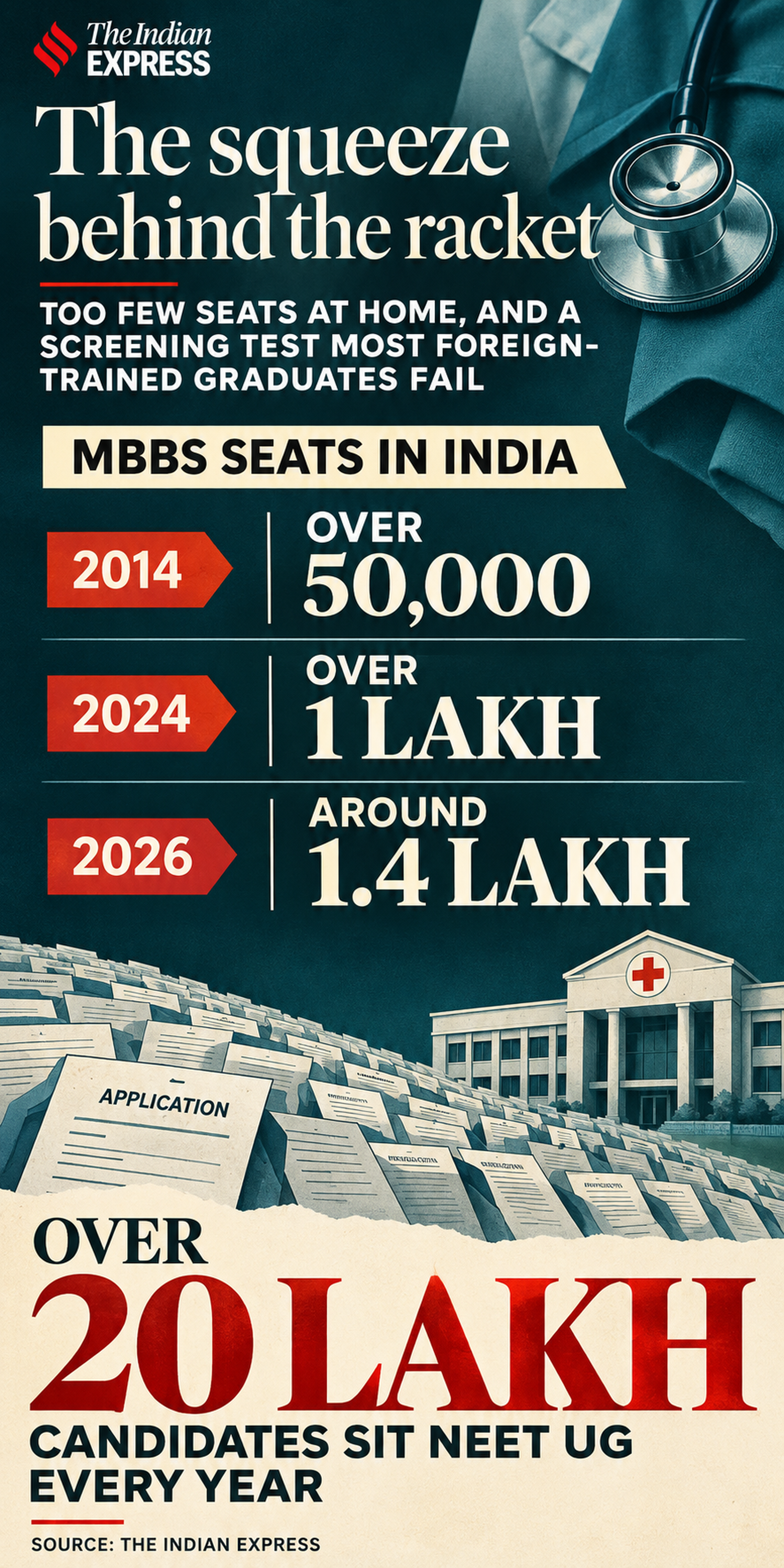
Every year, more than 20 lakh candidates appear for the NEET UG examination for the one lakh-odd MBBS seats in the country. Officials say the number of seats has risen from over 50,000 in 2014 to more than a lakh in 2024 and around 1.4 lakh in 2026, and the competition has not eased. Only about half those seats are in government colleges, which pushes their cut-offs higher. A student who misses that rank is left with private colleges, where the fees can be very large.
Story continues below this ad
Akhade and Unhale had both appeared for NEET and had not scored well. What they did next is what thousands do each year. They went abroad, where admission is easier, tuition costs are lower and the teaching is also in English. China, Russia, Ukraine, Uzbekistan, Georgia and the Philippines are the usual destinations, and in some of them, an official said, the degree costs a tenth of what it would in India. Akhade studied at the AMA School of Medicine in the Philippines and Unhale at Fatima College of Medicine there.
Cost was one of the reasons Dr Shubham Nikhare, now an intern at Mumbai’s Gokuldas Tejpal (GT) and Cama & Albless hospitals, chose Kazakh National University in Almaty. “The same medical course in India could cost nearly Rs 80 lakh to over Rs 1 crore. In Kazakhstan, I could complete the five-year course for around Rs 40 lakh, including accommodation and other expenses,” he said. Dr Vedangi Gandre, an intern at the same hospitals, put her six years at Alte University in Georgia at around Rs 50-60 lakh.
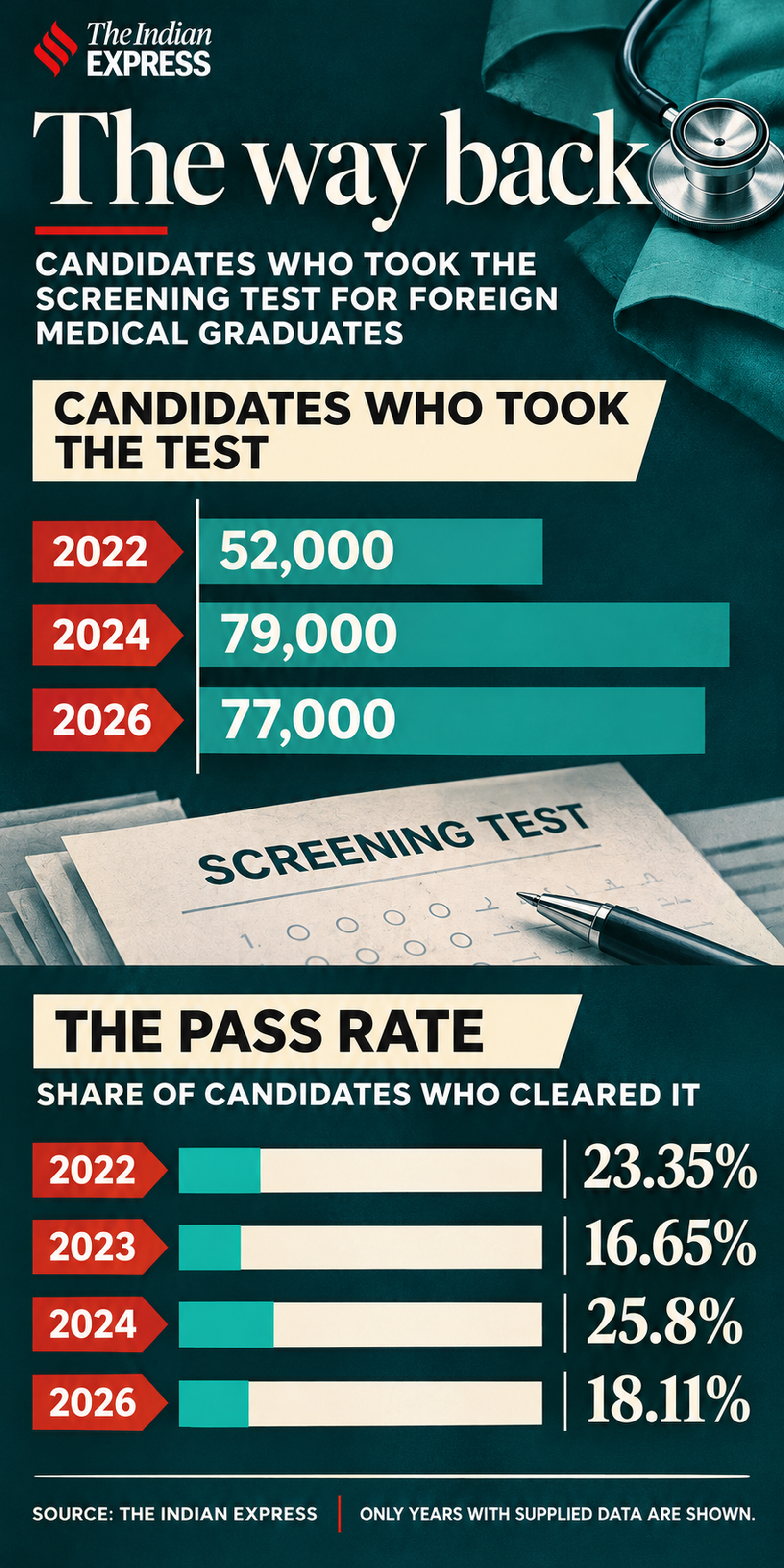
The degree, though, is only half of it. To practise in India, a foreign graduate must clear the FMGE, and most do not. About 52,000 students sat the exam in 2022 and 79,000 in 2024. Nearly 77,000 appeared this year. The pass percentage was 23.35 in 2022, 16.65 in 2023 and 25.8 in 2024, and a little over 18 this year.
Nikhare and Gandre both cleared the FMGE on their first attempt, and both said it is hardest on those who have to sit it again. A candidate needs 150 marks out of 300, and the question papers are not released afterwards, they said, so those who fall short cannot see where they went wrong. Those who repeatedly fail, Nikhare said, “get stuck in this cycle without knowing what they need to improve”. Gandre said the paper has shifted towards clinical and application-based questions. “Every year, the difficulty of the examination seems to be increasing,” she said.
Story continues below this ad
An officer from Maharashtra Cyber said they suspect the quality of training in some of these countries is not on par with India’s, which is why some students find the exam hard to clear and then resort to such measures. Many applicants fail on several attempts, and it is from among those that the buyers in this case appear to have come.
Twenty more, and a summons each
Apart from the two arrested, 20 others who had been practising as doctors have been issued summons, and some of them have applied for anticipatory bail. An officer said several of them had cleared exams in the Philippines, and that their records have since been removed from the system.
Police and the council do not fully agree on who the 22 are. Police said some of them had cleared their exams in foreign countries and failed the FMGE here. MMC sources said some had not cleared their exams in the foreign countries either.
Who had the list of those who failed
That points to the question Maharashtra Cyber has not yet answered, and the one with the widest implications. “Based on our investigation, it came to light that students who failed the NBEMS exams had been approached. Clearly someone had access to the database of these students which should only be with the concerned government authority,” a source said.
Story continues below this ad
The agency suspects that what was done in Maharashtra could have been done elsewhere, since the database would hold applicants from other states, and that this may turn out to be a racket with tentacles across the country.
It would not be the first time. In December 2022, the CBI registered a case against 14 state medical councils and 73 foreign graduates who had obtained registration without passing the FMGE. The Maharashtra council was among the 14, and seven of the 73 were registered here.
An MMC official said that while the council upgraded its online security in June, after the breach, it is also seeking a further audit by a company recognised by the Government of India so that the system is foolproof and such an incident does not take place again.
KioskNews shows a cleaned-up reading view extracted from the publisher’s page — the original always lives on their site, not ours.