Poor students increasingly lured into mule account schemes
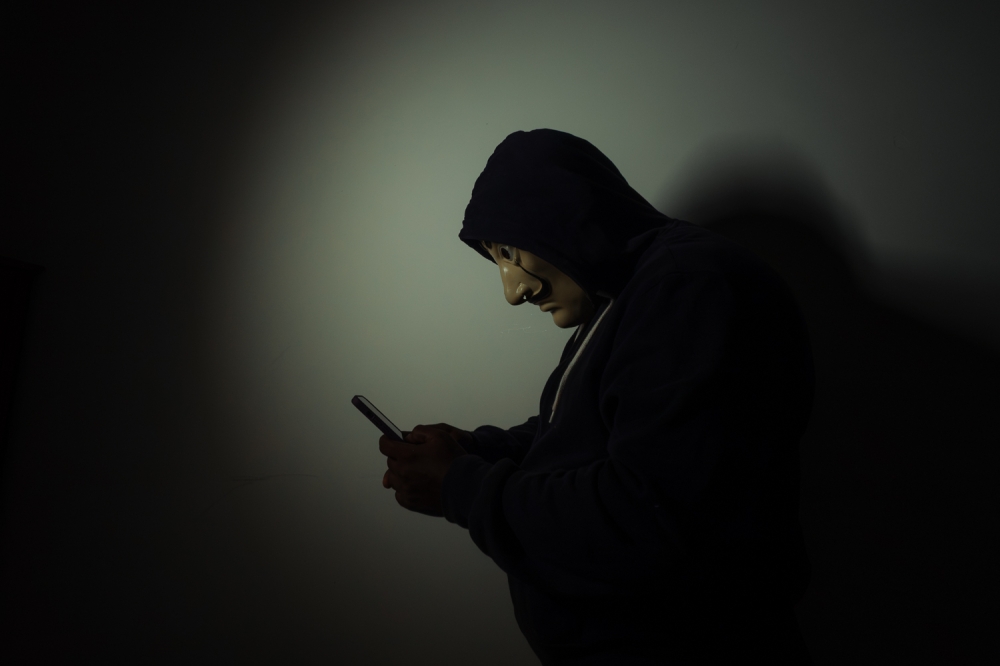

Online scam syndicates are increasingly exploiting financially vulnerable university and college students by recruiting them as mule account holders, sometimes offering payments of as little as RM40. — Picture by Raymond Manuel
By Malay Mail
First Published: Tuesday, 17 Nov 2026 10:06 AM MYT
Last Modified: Tuesday, 17 Nov 2026 10:14 AM MYT
KUALA LUMPUR, Nov 17 — Online scam syndicates are increasingly exploiting financially vulnerable university and college students by recruiting them as mule account holders, sometimes offering payments of as little as RM40.
Kosmo reported Malaysian International Humanitarian Organisation (MHO) secretary-general Datuk Hishamuddin Hashim saying the trend has become more prevalent in several states, particularly among students in the Klang Valley, Selangor and Penang.
He said syndicates specifically target students from low-income families who are struggling to meet their daily expenses, using various pretexts to gain access to their banking information.
Among the latest tactics is the use of digital bank accounts, which can be opened online with minimal verification requirements such as a selfie and a copy of an identity card.
The ease of registration has enabled scammers to adapt their methods, moving away from the traditional practice of renting or buying physical ATM cards.
“These are modern-day mule account tactics. The modus operandi has evolved significantly,” Hishamuddin said.
He said students are commonly approached through advertisements for part-time jobs, paid surveys or education loan schemes.
In one frequently reported scam, students are instructed to open a bank account as part of a supposed recruitment process. Once the account is created, they are informed that they were unsuccessful in securing the job, unaware that the account may later be used for illegal transactions.
Other victims are tricked into providing personal details under the guise of participating in surveys, only to discover later that the information had been used to facilitate banking activities without their knowledge.
Hishamuddin said students seeking financial aid were also vulnerable. Some are persuaded to disclose online banking usernames and passwords after being told the details are needed for loan disbursements.
“The victims are often in urgent need of money and do not question the requests,” he said.
Many only realise they have become linked to criminal activities when contacted by police investigators or when their bank accounts are frozen following fraud complaints.
Beyond the immediate financial consequences, victims may face multiple investigations and long-term repercussions, including potential criminal records.
The issue has surfaced in several court cases involving students. Among them was a law student who was fined after admitting to allowing his bank account to be used for unlawful transactions, while another college student was charged with acting as a mule account holder for an online scam syndicate.
The growing problem had earlier prompted Home Minister Datuk Seri Saifuddin Nasution Ismail to warn that increasing numbers of students were being recruited by scam networks, with some allegedly offered monthly payments of between RM1,000 and RM2,000 in return for the use of their bank accounts.
KioskNews shows a cleaned-up reading view extracted from the publisher’s page — the original always lives on their site, not ours.