Opinion: Opinion | How India Is Making Its Stock Market An Expensive Place To Invest
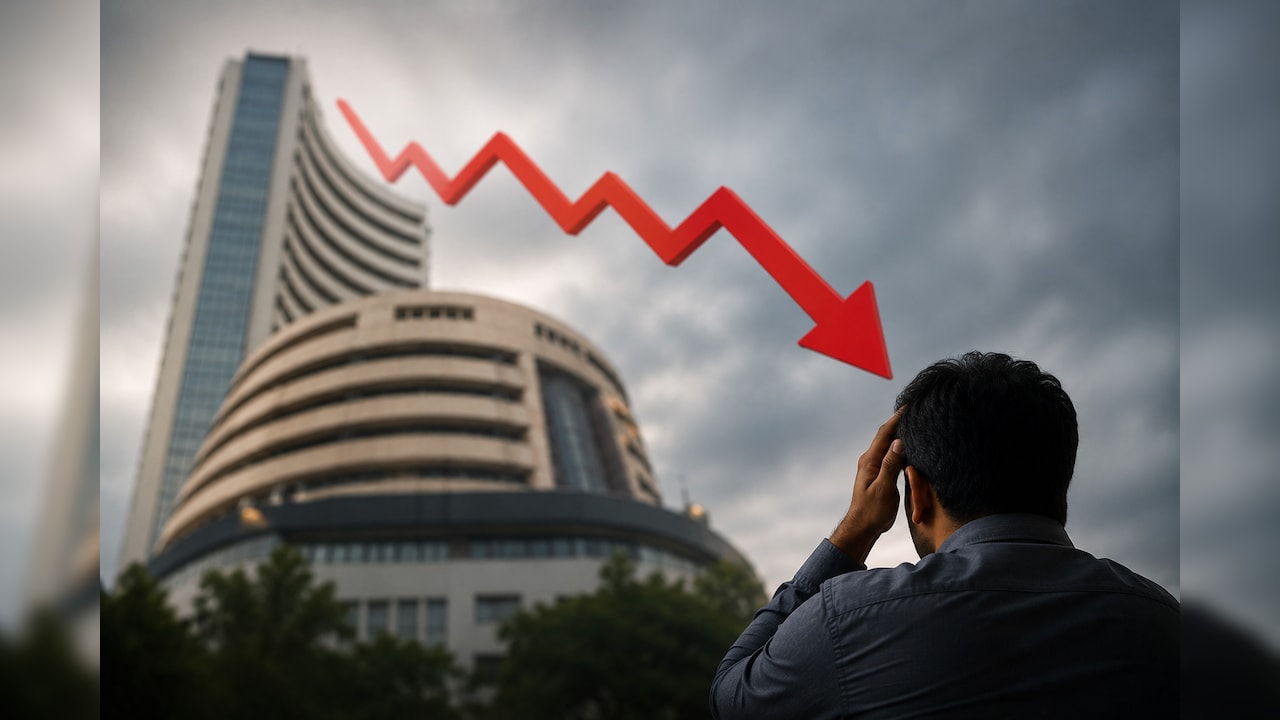
In the thirteenth century, the lords whose castles lined the Rhine discovered a business model. Each stretched a chain across the river and tolled every passing barge. No single toll was ruinous. Together, they strangled the river. Merchants rerouted their cargo, and in 1254, the Rhenish cities formed a league and pulled the toll castles down. The lords had assumed the river had nowhere else to flow. The merchants knew better.
Global equity capital is the modern river. Unfortunately, India operates the only toll booth on its route. The Finance (No. 2) Act, 2024, taxes long-term capital gains (LTCG) on listed equity at 12.5% and short-term gains at 20%, plus surcharge and cess, plus a securities transaction tax (STT) on every trade. The Ministry of Finance confirmed, in reply to Lok Sabha Unstarred Question No. 166 on 20 July 2026, that foreign portfolio investors (FPIs) pay the same 12.5% as residents. No competing jurisdiction does this. The United States treats a non-resident's gains on listed stocks as foreign-source income and levies nothing. Singapore, Hong Kong, and the United Arab Emirates have no capital gains tax. China exempted foreign investors from tax on A-share gains through Circulars 79 and 81 of 14 November 2014, three days before Stock Connect opened, and has extended the exemption through 31 December 2027. The adjective 'temporary' has survived twelve years.
Advertisement - Scroll to continue
This has quantifiable implications. The Nifty has compounded at about 10.5% a year in rupees over two decades. Weighting the 20% short-term and 12.5% long-term rates by typical holding patterns gives a blended tax drag near 15% of returns, taking 10.5 to about 8.9. Average annual rupee depreciation of 4%, running at nearly 7% in 2026, takes 8.9 to roughly 6% in dollars. The S&P 500's century-long annualised return is near 10. Of the 4-point gap, about two points is tax design. Capitalise the wedge. If foreign investors demand 2 points more to hold Indian equity, the equilibrium price of every Indian stock falls until expected returns gross up, which is a permanent increase in the cost of equity for every issuer in a country that saves less than it needs to invest.
The flow data record the adjustment. FPIs sold Rs 1.66 lakh crore of Indian equities in 2025 and a record Rs 3.08 lakh crore in 2026 through October 12. Foreign ownership of the Indian market is at a 15-year low. India's weight in the MSCI Emerging Markets index has roughly halved from its September 2024 level, and allocators have begun asking whether India merits a dedicated country allocation at all. A market that loses asset-class status receives only pooled emerging-market money, which is benchmark-driven and momentum-chasing by construction. The toll is paid not by the barge but by the towns along the river.
Advertisement - Scroll to continue
The government's case is not frivolous. The revenue is real. Equity LTCG tax yielded Rs 72,249 crore in 2023-24 and Rs 1,29,158 crore in 2024-25. The horizontal equity argument is real. Arun Jaitley, reintroducing the tax in 2018, cited Rs 3.67 lakh crore of exempted gains in returns for the assessment year 2017-18, and asked why the economy's most buoyant income should escape tax when a schoolteacher's mutual fund gains do not.
The zero-tax years were the treaty-shopping years, until the Mauritius treaty was renegotiated in 2016. The evidence cuts the government's way too. FPIs absorbed the 2024 rate hikes and ended that year with a net inflow. And domestic institutions have bought for 38 consecutive months, absorbing everything foreigners sold.
Each point is true. None survives decomposition. The Rs 1.29 lakh crore is a headline, not an FPI figure. No FPI-wise split is published, and net sellers book fewer taxable gains than compounders, so the foreign share is likely a small fraction of a levy mostly paid by residents. Horizontal equity misreads elasticities. The schoolteacher's capital is immobile and bears the tax. The fund's capital is perfectly elastic in supply, so the incidence shifts entirely to the immobile party, the Indian issuer. Textbook Ramsey logic says tax the inelastic base, which India does anyway through STT. And the decisive witness is the government itself. The Income-tax (Amendment) Ordinance, 2026,
The Income-tax (Amendment) Ordinance, 2026, exempted FPI interest and capital gains on government securities from April 1 this year, expressly to align with comparable jurisdictions and attract pension and sovereign wealth capital. The capital gains element of the revenue cost was an estimated Rs 500 to Rs 1,000 crore. Every word of that justification applies to equities. The principle was conceded precisely where the exchequer borrows and suspended where firms raise capital.
A stand, therefore. Keep the tax for residents. Jaitley's logic holds where capital cannot leave. For non-resident portfolio investors in listed equity, restore the 2004 bargain, under which STT was introduced as the explicit price of exempting long-term gains, a bargain the 2018 Act honoured in the collection and abandoned in the exemption. STT yielded Rs 57,522 crore in 2025-26, collected at source, evasion-proof, paid by resident and foreigner alike. Let that be the toll. At a minimum, allow FPIs to compute gains in the currency of investment, taxing income rather than rupee depreciation, a proposal the ministry is reportedly examining with the Securities and Exchange Board of India. The Finance Minister said on October 13 that she would seek inputs on LTCG. There is no record of the Rhine lords ever cutting a toll voluntarily. There is a clear record of what the river did. The Rhenish league is remembered. The toll castles are ruins, photographed by tourists who pay nothing to pass.
(The author was with the Economic Advisory Council to the Prime Minister)
KioskNews shows a cleaned-up reading view extracted from the publisher’s page — the original always lives on their site, not ours.