US, Iran exchange fire in flare-up; Bessent signals more sanctions
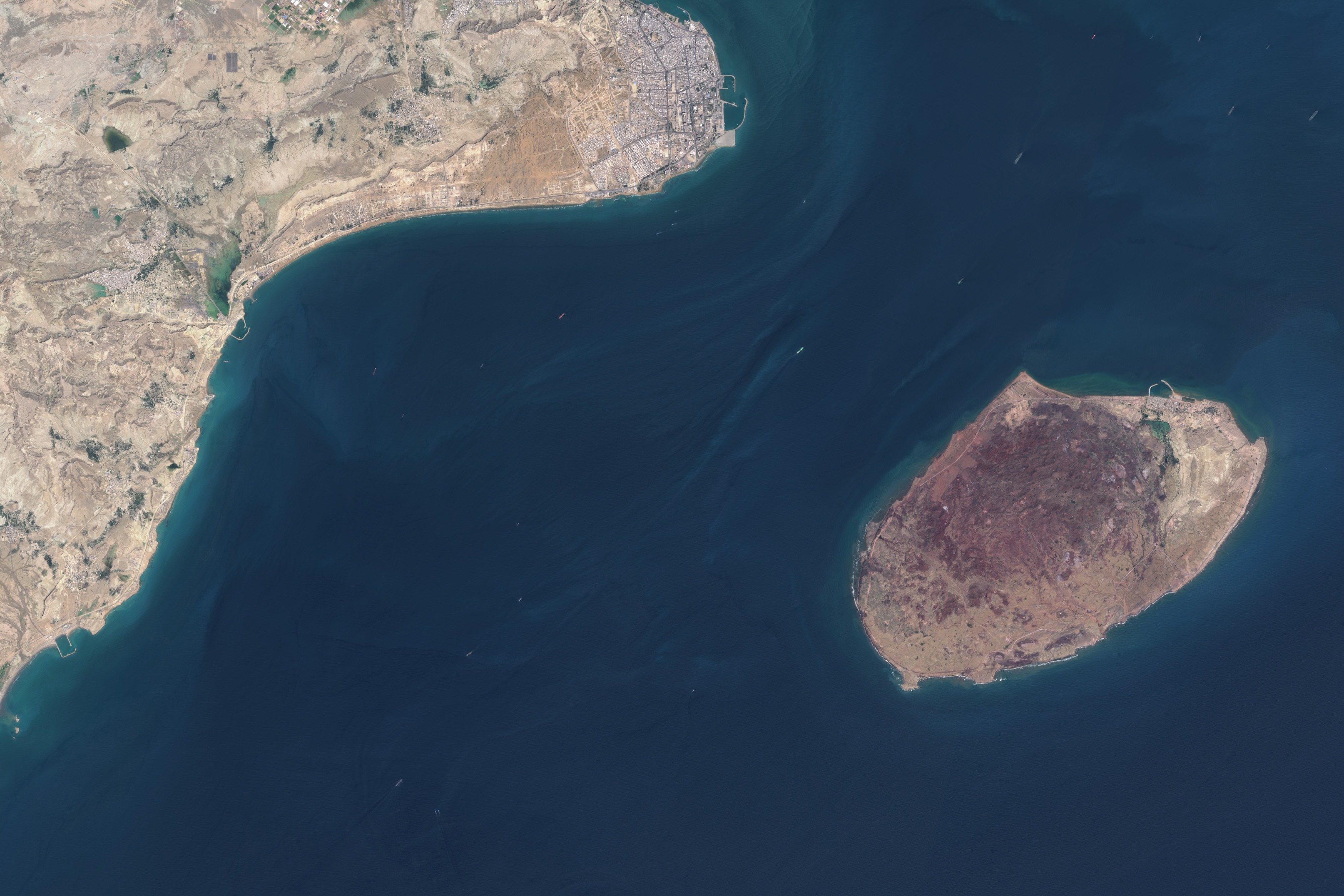
The small Iranian island in the Strait of Hormuz near the strategic port of Bandar Abbas overlooks shipping lanes at the mouth of the Gulf, giving it a key role in tension over Iran, maritime security and global energy supplies.
Iran responded by launching an attack on two U.S. bases in Jordan, Iranian media said.
The return to hostilities follows weeks in which the Trump administration has stepped up efforts to punish Tehran and its business partners with costly economic sanctions, shifting away from military options.
U.S. Treasury Secretary Scott Bessent told Reuters on Sunday new secondary sanctions were likely to be unveiled weekly in the effort to pressure Iran, with an initial focus on banks.
"We're starting with the banks, and we're telling the banks it's not okay to have Iranian money and to aid the regime," Bessent said in an interview.
After imposing penalties on the United Arab Emirates branches of Egypt's Banque Misr on Friday over alleged financial links to Iran, Bessent said the next step may be cutting off an institution entirely from the dollar-based financial system.
"You're going to see a lot more of these every week," Bessent told Reuters, ahead of a meeting of Group of 20 finance leaders.
FIRST KNOWN MILITARY ATTACKS IN WEEKS
In describing the first known U.S. military strikes since late July, a U.S. official said forces attacked two Iranian launchers on Larak Island.
"Islamic Revolutionary Guard Corps forces were observed preparing to launch rockets with sea mines into the Strait of Hormuz," the source added.
In retaliation, Iran launched ballistic missiles at Jordan, targeting two U.S. bases. Jordan's armed forces had intercepted eight missiles that entered its airspace, state television said.
Iran's Revolutionary Guards said the attack killed and wounded several soldiers and citizens and vowed a "response and punishment" from Tehran, according to Iranian state media.
In a statement, the U.S. Central Command, said it took "limited, precise" action against minelaying forces of Iran's Revolutionary Guards that posed an "imminent threat" in the Strait of Hormuz. It gave no details.
After the U.S. strikes, Iran attacked U.S. forces station in Jordan, a Fox News reporter said on Sunday, citing a U.S. source. Nearly all incoming missiles "have been intercepted at this point," the reporter said on X, flagging a lack of significant impact.
Amid threats to shipping, the number of visible commodity vessels transiting the Strait of Hormuz dropped to five a day over the weekend, shipping data showed.
The actual number could be higher as some vessels have switched off automatic identification systems to evade attacks.
Last week, U.S. President Donald Trump said all mines had been detonated or removed from the international waters of the strait and Iran had been warned that any vessel placing new mines would be destroyed.
While Trump has repeatedly said the Strait of Hormuz is open, Iran's Revolutionary Guards' navy had called those statements "an obvious lie", reiterating that it remained closed to ships without Iranian permission.
The waterway carried nearly a fifth of global crude oil and liquefied natural gas shipments before it was blockaded in the six-month-old Iran war.
(Reporting by David Lawder in Asheville, North Carolina, Phil Stewart and Kanishka Singh in Washington, Helen Coster in New York, and Yasmine Ghania and Hatem Maher in Cairo; Editing by Paul Thomasch and Clarence Fernandez)
KioskNews shows a cleaned-up reading view extracted from the publisher’s page — the original always lives on their site, not ours.