UK one step closer to Chagos deal after new court victory
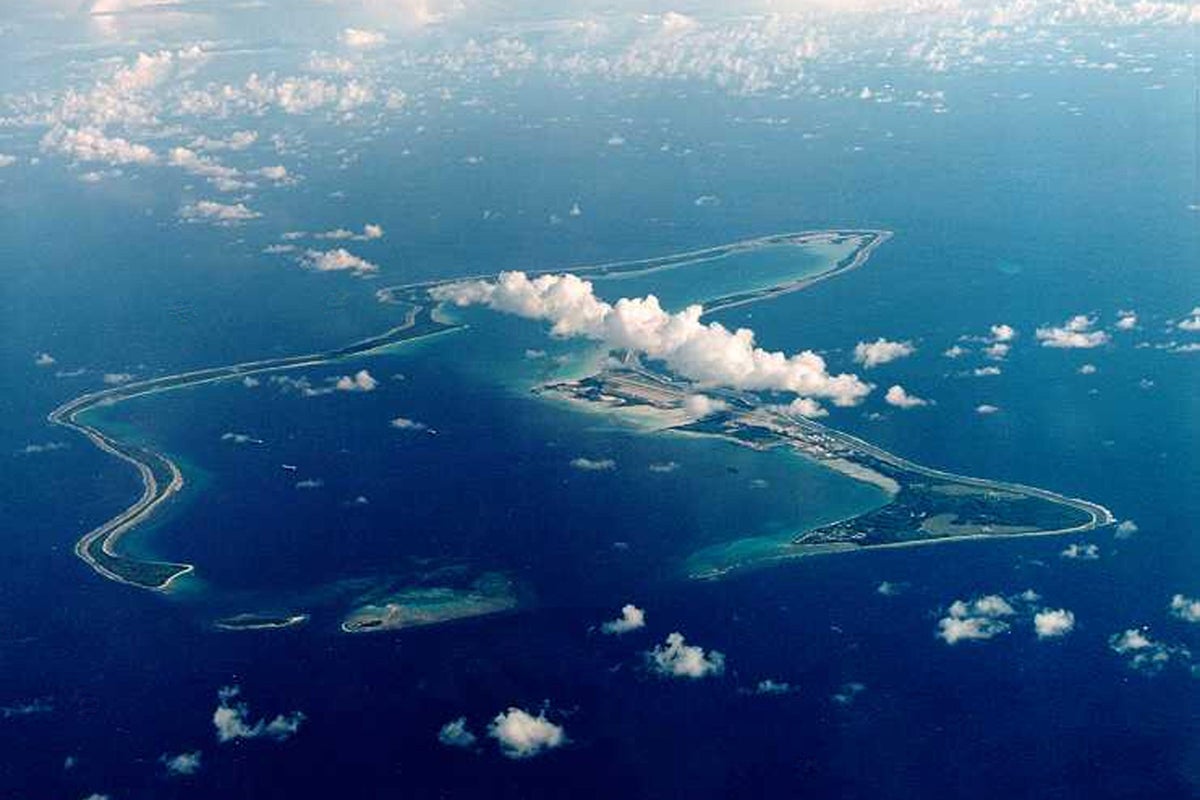
The UK government has moved one step closer to being able to hand over the Chagos Islands to Mauritius after a legal victory over islanders claiming a right of abode.
The British Indian Ocean Territories (BIOT) court of appeal has ruled that a previous judge’s ruling in the BIOT court that Chagos islanders now have a right of abode was not valid.
Instead the judges said that the decision needs to be made by the Court of Appeal in England.
It means a group of Chagossians who have reoccupied one of the islands in protest over the Labour government’s controversial deal with Mauritius are facing an uncertain future.
However, it also means that the legal wrangling will go on, with cases to be heard in London and Bermuda next year.
The row has come after Sir Keir Starmer agreed to hand the islands to Mauritius in 2024 and then pay £30bn to lease back the crucial airbase on Diego Garcia. However the deal has been mired in delays after US president Donald Trump pulled his support.
Chagossians had been removed from the islands in the 1960s and 1970s on the basis of national security because of the concerns over the security of the base.
But last year a judge at the BIOT court ruled that the facts had changed and not only could the governor of the islands not remove the islanders who had occupied one of them, but they also now had a right of abode.
The judges at the court of appeal - Sir Howard Morrisson, Mr Justice Lane, Mrs Justice Nott, Mrs Justice Plimmer and Mr Justice Bird - said that the BIOT court was the wrong one to decide that and it would need to go to the English Court of Appeal.
The judgement stated: “There are 14 British Overseas Territories, of which 12 have constitutions made under powers granted by Acts of the United Kingdom Parliament. Only two territories, Gibraltar and the BIOT, have constitutions ‘made exclusively by virtue of the Royal Prerogative’ (
“Both territories were acquired by cession (in the case of what is now BIOT, from France under the Treaty of Paris in 1814) and, as such, they lie outside the definition of ‘British Settlement’ for the purposes of the British Settlements Acts of 1887 and 1945 ‘and no Act of Parliament has been passed that deals with their constitutional arrangements’.
“Consequently, the Crown enjoys a full prerogative power to make such legislative, executive and judicial provisions for the BIOT as it thinks fit, provided that those provisions do not contravene any Act of Parliament extending to the territory.”
Lawyers acting for the islanders have already asked for their case to be heard by the English Court of Appeal but also put in an appeal to the Judicial Committee of the Privy Council which decides on Commonwealth issues and meets in Bermuda in April next year.
A representative of the islanders said that the judges at the BIOT appeal court had made a “howling error”.
He noted: “It says the Bill for Diego Garci has passed parliament and awaits royal assent. It does no the bill fell and was not carried over in the new parliament session so the government must do it completely from scratch again.”
Meanwhile, James Tumbridge, the lawyer acting on behalf of the islanders, said: “We fight on.”
He went on: “The appeal was successful meaning the government won, mainly because they said the BIOT court cannot make the decision on right of abode, only an English court can do that say the BIOT Court of Appeal. Last week the judge in the English Court of Appeal when told the ‘appeal’ was successful, immediately remarked this is going to the Privy Council. A very positive reaction. Lady Justice Andrews was the judge.
“In BIOT cases, above the Court of Appeal you go to the Privy Council. It is the commonwealth supreme court, and equivalent to the UK Supreme Court, the judges are the same in both.
“I already asked the government to consent that a stay is kept in place pending the appeal so that no changes happen on island. Our appeal application is under way. I have asked the government to consent to the Privy Council having the case, they will not agree I suspect but I have asked.”
Mr Burnham has not yet made it clear whether he continues to push ahead with Sir Keir’s Chagos deal with Mauritius.
However, early indications are that the policy has not changed despite the Chagos legislation required for the treaty failing in parliament because it ran out of time in the Lords. Mr Burnham said he wants the issue resolved by the end of the year.
Mr Burnham has kept on Sir Keir’s national security adviser Jonathan Powell who negotiated the deal.
Defence secretary Wes Streeting recently stated that any deal would need the consent of the US who share the base.
KioskNews shows a cleaned-up reading view extracted from the publisher’s page — the original always lives on their site, not ours.