The 8 Most Bittersweet Movie Endings of All Time, Ranked

Jeremy has more than 2800 published articles on Collider to his name, and has been writing for the site since February 2022. He's an omnivore when it comes to his movie-watching diet, so will gladly watch and write about almost anything, from old Godzilla films to gangster flicks to samurai movies to classic musicals to the French New Wave to the MCU... well, maybe not the Disney+ shows.
His favorite directors include Martin Scorsese, Sergio Leone, Akira Kurosawa, Quentin Tarantino, Werner Herzog, John Woo, Bob Fosse, Fritz Lang, Guillermo del Toro, and Yoji Yamada. He's also very proud of the fact that he's seen every single Nicolas Cage movie released before 2022, even though doing so often felt like a tremendous waste of time. He's plagued by the question of whether or not The Room is genuinely terrible or some kind of accidental masterpiece, and has been for more than 12 years (and a similar number of viewings).
When he's not writing lists - and the occasional feature article - for Collider, he also likes to upload film reviews to his Letterboxd profile (username: Jeremy Urquhart) and Instagram account.
He has achieved his 2025 goal of reading all 13,467 novels written by Stephen King, and plans to spend the next year or two getting through the author's 82,756 short stories and 105,433 novellas.
Sign in to your Collider account
If an ending’s bitter, then it’s a bummer, basically. If you want an example, uh, Romeo and Juliet? Like, everyone knows how that ends. It’s not really spoilable. But it might be unfair to throw something that’s not quite as old at you, without warning, and tell you it ends on a bleak note. As for movies with happy/sweet endings? They're a lot more common. Watch any movie at random, and there’s a probably better-than-average chance it'll end on an uplifting note.
And then as for the movies that are right in between, and most exemplify a certain bittersweet feeling as a result, that’s what you’ve got below. There will be some unavoidable spoilers here, though most of the movies below are famous and a little older… not all, though, so you’ve been warned if you're hypervigilant about spoilers that go bump in the night.
8 'Braveheart' (1995)

No one is going to call Braveheart a subtle movie any time soon, but as to whether it’s an immensely satisfying movie, on an emotional front, once you get past some of the narrative choices and the simplifying of history? Sure! And if those are hard things to get past, then you do you. It’s a free country and all. And Braveheart is about trying to make a country free. It’s all coming full circle, look at that.
You've got a big old war with some spectacular battle scenes, and an inevitably bittersweet conclusion where Wallace effectively gets martyred.
William Wallace is the unambiguous hero of Braveheart, seeking revenge for an unjust murder against a backdrop of oppression, which inspires rebellion, and then you’ve got a big old war with some spectacular battle scenes, and an inevitably bittersweet conclusion where Wallace effectively gets martyred. The fight continues, in the movie, and real life… well, real life is/was more complicated. But a movie’s a movie and this movie is moving.
7 'Gladiator' (2000)

Winning Best Picture at the Oscars five years after Braveheart and scratching the same itch in a fair few ways, Gladiator is also an epic about revenge and how that escalates into something more. The difference is more that the revenge takes a whole movie to enact, and the man seeking vengeance doesn’t get the chance to overthrow everything or lead armies like William Wallace, but it’s more implied a change is gonna come, as Sam Cooke sang about once.
Not so much if you disappear into further historically inaccurate realms with Gladiator II, but Gladiator is the classic of the pair, and the one that really matters. The hero gets what he wants, though dies, but dies feeling peace, having done everything he had left to do in life, and then – at least with just this movie – there’s a sense his death will continue to matter long after he’s gone.
6 'Marty Supreme' (2025)

Unlike those two just-mentioned epics, Marty Supreme isn't quite obvious with how it’s bittersweet, in the sense that things aren’t uplifting and tearjerking here because someone makes some kind of grand/noble sacrifice. Marty Supreme is a movie about a guy who doesn’t really do anything noble, treating everyone around him poorly because he’s so intensely focused on becoming a table tennis champion, making so many bad decisions that the movie itself drifts away from even feeling like a sports movie rather quickly.
In the end, he kind of wins, but not really, like an inverse Rocky, where Rocky doesn’t really win, but also, he kind of does. Whether he learns anything from it… there is some ambiguity. But he might. And he acknowledges his fatherhood, to some extent, and maybe that’ll be enough to snap him out of all the chaos and insanity of his hustling/table tennis-heavy lifestyle. Or, if not, then sure, it’s probably much more bitter than sweet, but you can’t deny there’s a possibility of something sweet here, at the end of so much that’s bitter, and that’s something.
5 'Cinema Paradiso' (1988)

Cinema Paradiso is a romantic drama of sorts, partly about a young man falling in love in the traditional sense, but then also being about his love of cinema, which lasts throughout his life. His young adulthood has him torn between a few different things, including staying in his hometown and pursuing love versus leaving his small town behind and becoming some kind of filmmaker.
He does the latter, and there is a bit of ambiguity over how much this was worth it, a little like Marty Supreme in that sense. Like that movie, Cinema Paradiso ends with the main character experiencing a whole host of complex emotions underscored by great non-diegetic music (Ennio Morricone’s score for Cinema Paradiso, and “Everybody Wants to Rule the World” by Tears for Fears for Marty Supreme). He also gets something meaningful left to him by someone he used to care about, and gets to reminisce about a formative part of his life in a way that feels cathartic and undeniably nostalgic.
4 'Robot Dreams' (2023)

Trying to describe Robot Dreams might make it sound a little silly, but the execution is almost everything here, and it’s hard to understand without watching the whole thing for yourself. It’s an animated movie that’s not really a kid’s film specifically, though it can be watched by anyone of just about any age, because there’s nothing here content-wise that’s too alarming. As for the emotional punch, packed, though…
That is a bit intense. But again, not in a depressing way. This movie’s either about two very good friends who drift apart for a host of reasons in the way friends sometimes do, or maybe they were more than friends, and sometimes people who are more than friends drift apart, too. It’s about drifting apart and moving on. There is hope for the robot and dog at the end of Robot Dreams for sure, so that’s sweetness and all, but the time they had together – whatever that bond was – is over… hence a bit of bitterness to go along with it.
3 'La La Land' (2016)
Without a doubt, La La Land gets off to a good start, and it’s compelling for most of its runtime for sure, but it’s the ending that feels like the best and most memorable part of the entire film. And that’s the case for lots of movies, sure, but La La Land goes the extra mile in really building to one of the most cathartic endings it could, at least for a film about two people who fall in and out of love.
The falling out of love thing seems mostly mutual, because both have their own creative passions they're pursuing. They end up in the same vicinity briefly, and only exchange looks from across the room, technically, but one (or both) imagine a life (or lives) spent together, by a miracle, only for reality to sink in and them to part ways, but with a degree of peace, for what that’s worth. It’s very moving, and really does get you feeling a huge number of emotions right in the film’s closing minutes.
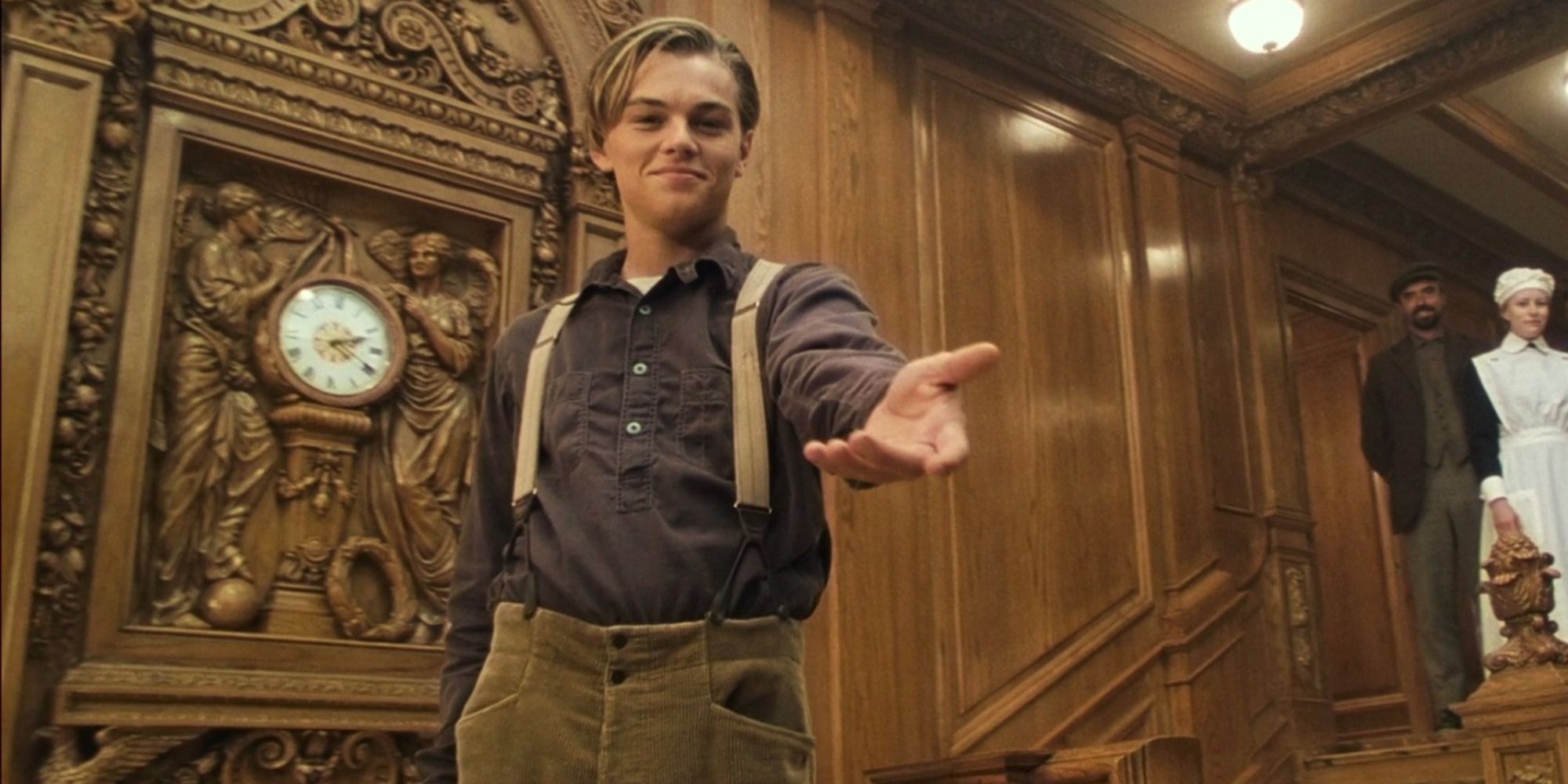
2 'Titanic' (1997)

Robot Dreams ends with some acknowledgment of having to move on, and then La La Land does that but a bit more explicitly. The one movie that’ll appear after this point is in a similar camp. As for Titanic? Like all these movies in the top half of this ranking, it’s mostly about the bond between two people, but they have to part because they get stuck in a disaster, and the one who ultimately survives still clings to that past – and the brief romance felt – some eight decades later.
If you want to be cynical, maybe you think that sounds ridiculous, or even disrespectful to whoever else she might've met and gotten into a relationship with afterward, but Titanic feels like it’s about falling in love for the first time, and forever remembering that first time for the remainder of one’s life. You feel it when they're falling in love, and then you may feel why she continued to hold onto that time in her life. And when they're either reunited in an afterlife, or that’s simply what Rose dreams as she falls into a sleep she won’t wake up from, what you’ve got on your hands is something intensely bittersweet.
1 'Casablanca' (1942)
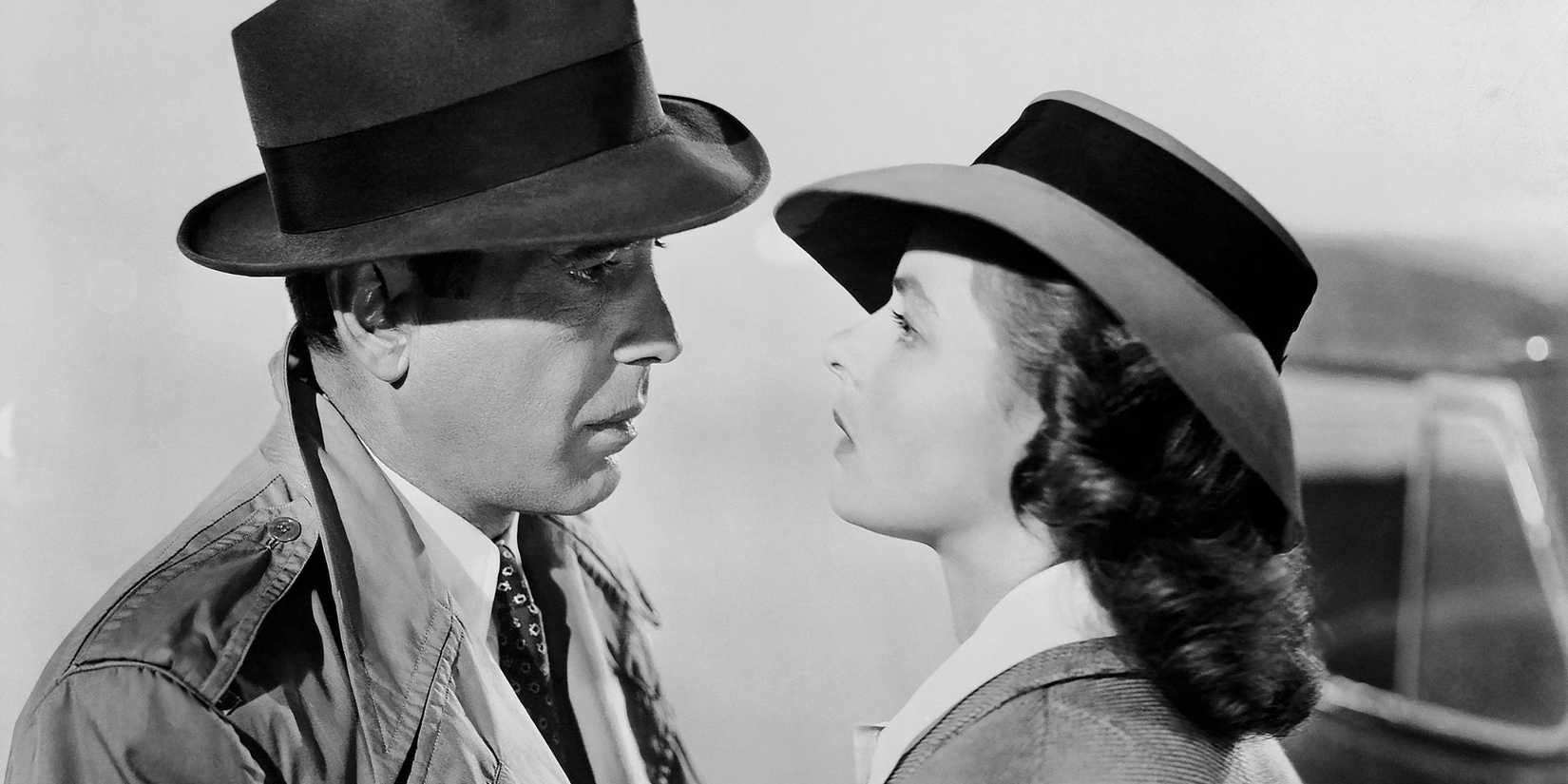
The Citizen Kane of great bittersweet endings? But also, Casablanca might well be the Citizen Kane of great movies. No, sorry, this analogy doesn’t work. They are both great movies! And from around the same time. Where was this going… oh, yeah, well, Citizen Kane ends on a bummer of a note, with a mystery unresolved and all, at least to the people who were looking into it, and then the life of Charles Foster Kane is also shown to be a tragic one, but at least the viewer gets the whole picture, or as whole a picture as possible.
Casablanca, on the other hand, wants you to feel equal parts thrilled and tearful, since everything except the romance that most of the movie was about gets resolved. But everyone realizes things are more than any individual, since World War II is still ongoing (and indeed was in its middle stages when Casablanca came out), so there are sacrifices made for a greater good. Rick completes one of the best character arcs of all time, he and Ilsa get a perfectly written scene bidding each other farewell, and then there’s the start of a beautiful friendship. What more could you ask for, out of a movie ending?

Casablanca
- Release Date
- January 15, 1943
- Runtime
- 102 minutes
- Director
- Michael Curtiz
- Writers
- Howard Koch, Julius J. Epstein, Philip G. Epstein
KioskNews shows a cleaned-up reading view extracted from the publisher’s page — the original always lives on their site, not ours.