Tennessee fails to execute convicted killer Christa Pike after 2 lethal injections
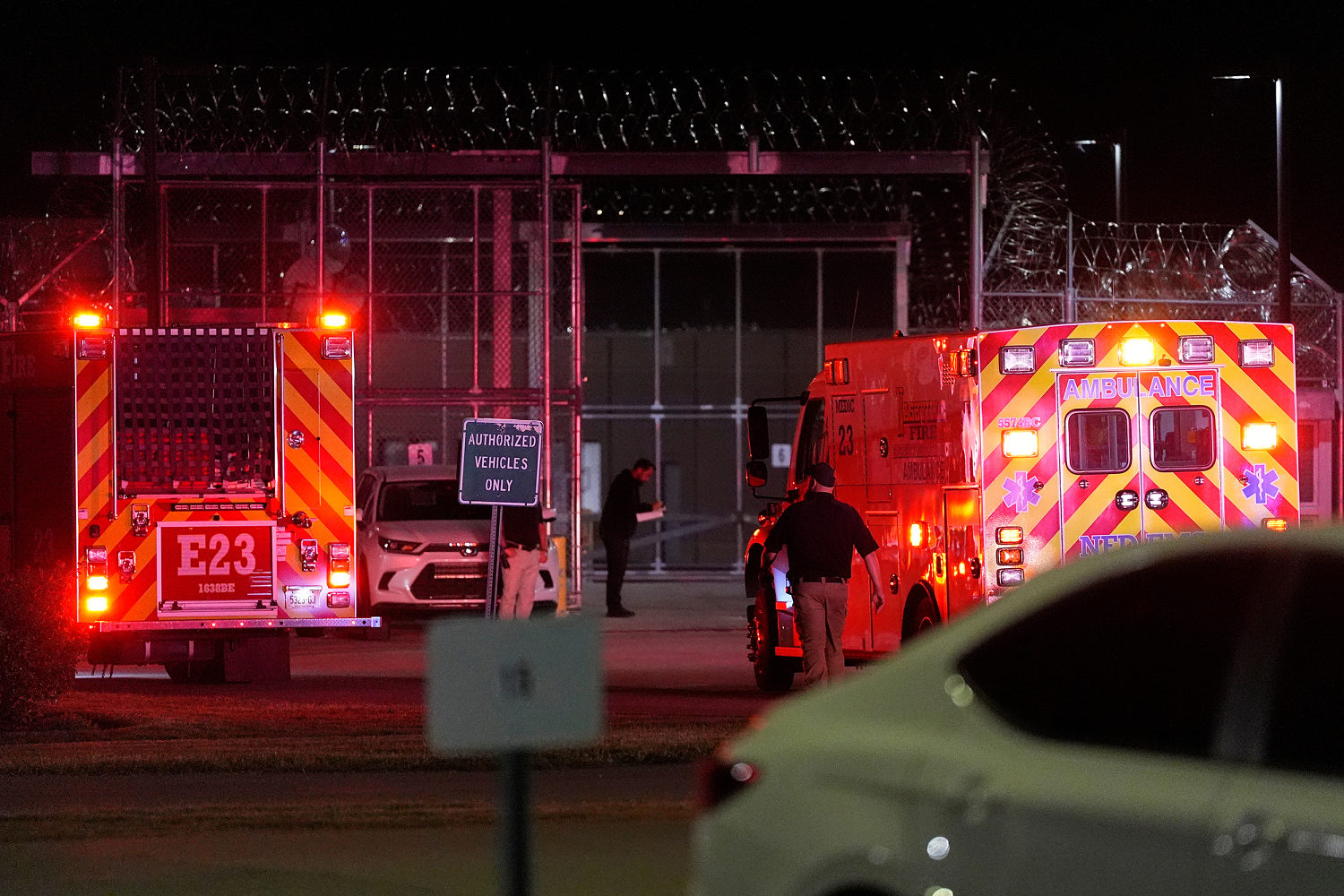
Tennessee failed to execute the lone woman on its death row as planned Wednesday, after injecting her with a lethal drug, a stunning development after the Supreme Court had stepped in to allow the state to put her to death.
Attorneys for Christa Pike said Wednesday night that she was being treated at a hospital, but they did not know her condition. A spokesperson for the Department of Correction did not answer an emailed question whether she was alive but said she was “transported to an off-site medical facility.”
Pike, 50, is the state’s only woman on death row. She was convicted of murdering a classmate, Colleen Slemmer, in 1995, when she was 18 years old, and sentenced to death.
In a news conference Wednesday night, journalists who witnessed the botched execution described snoring and complaints from Pike about pain, as well as her kicking her feet so often that she knocked off the sheets laid on her. At times, the curtain was closed and journalists could only hear sounds.
In a federal court filing seeking to halt her execution, Pike’s lawyers said witnesses saw executioners injecting “both syringes of lethal injection chemicals,” but that Pike remained alive.
They said Pike “has not lost consciousness and still has a heartbeat” and that curtains to the death chamber “have gone down twice,” according to the lawyers.
In a phone interview with NBC News early Thursday morning, May Martinez, the mother of victim Slemmer, described the failed execution attempt.
“It was a mess,” she said.
Gov. Bill Lee, a Republican, said in a statement that he was ordering “a comprehensive, third-party review to determine exactly what occurred.” He added that the last remaining execution for this year in Tennessee will not be carried out as planned.
‘Nothing about today was normal’
An ambulance was seen arriving at the prison where Pike was to be executed and then leaving. Medical aid was being administered, according to online federal court records.
“It appeared that this did not go like they thought it was supposed to go,” said John North, investigative producer at WBIR television in Knoxville. “But we don’t know that. When we left the building, so far as we knew, she was probably still alive.”
Tori Gessner, a reporter and anchor at WKRN of Nashville who has witnessed five executions in the state, said at a news conference that, “Nothing about today was normal, typical, at all.”
Gessner said that at 7:34 p.m. Pike was heard saying, “My arm feels like it’s about to burst open.” Pike then talked about that spot on her arm and asked, “Does this happen like that?” Gessner said.
A spokesperson for the Department of Correction said the state “followed every step of the State’s lawful, established execution protocol approved by the Attorney General’s Office” and that “the lethal injection chemical in the protocol has consistently been effective.”
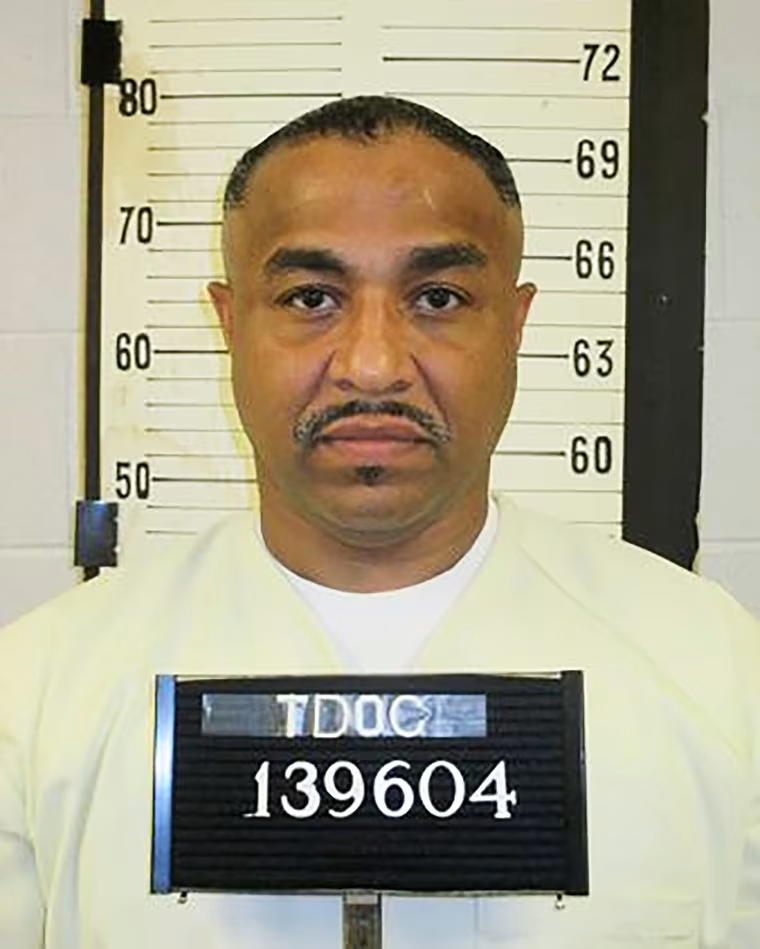
It’s the second time an execution did not go as planned in Tennessee this year. Tony Carruthers, convicted in three 1994 killings, was granted a one-year reprieve after executioners in May couldn’t find a vein for a backup IV.
“Tonight the State of Tennessee once again failed to carry out a lawful execution,” Pike’s attorneys said in a statement.
The execution warrant for Pike was set to expire at midnight local time (1 a.m. ET Thursday). The Department of Correction did not immediately say whether they would attempt another execution, or when.
The process to execute Pike began at about 8 p.m., her lawyers said, after the Supreme Court vacated a lower court’s Wednesday morning order that had temporarily blocked the move.
The high court’s decision hours later capped a flurry of last-minute legal maneuvering in a bid by Pike’s defense team to spare her life. Justices Sonia Sotomayor, Elena Kagan and Ketanji Brown Jackson dissented.
Robin M. Maher, executive director of the Death Penalty Information Center, told the Associated Press that what Pike experienced is “singular and unparalleled.”
Victim’s mother furious
“They went to try to execute her, and she didn’t die,” said Martinez, who wanted the execution carried out and was furious with the state’s governor, the director of the Department of Correction and the attorney general.
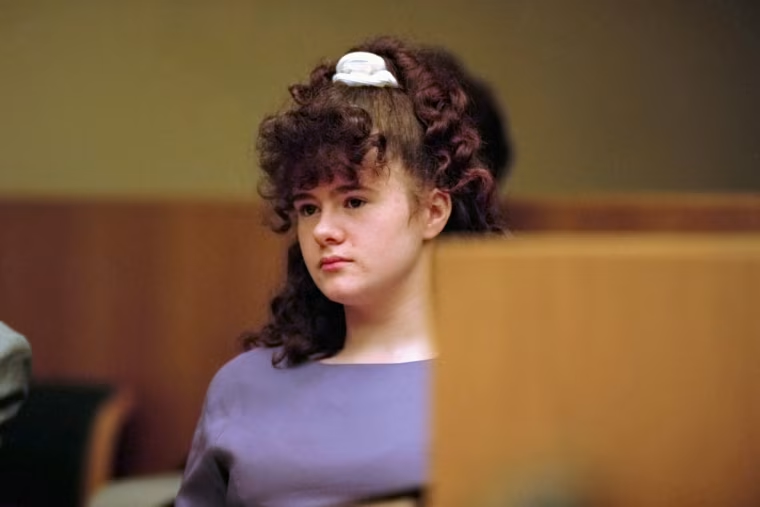
Martinez told NBC News that Pike never expressed remorse during Wednesday’s attempted execution. “Not nothing ... about what happened, you know, to Colleen,” Martinez said.
She criticized the communications from officials.
“They didn’t say anything, and then, all of a sudden, they asked all the victims to leave. And we left,” Martinez said.
“We didn’t know anything until we got up to the office and saw the commissioner,” Martinez said. “And he said that it didn’t work ... and she’s on her way to the hospital.”
Asked what her message to the governor and attorney general was, Martinez was terse in her reply: “They f----- up.”
Pike was set to be the first woman in more than 200 years that the state has put to death, according to historical records.
Pike does not deny the brutal killing of Slemmer that saw her and two teenage accomplices work together to torture, slash and fatally beat Slemmer, 19. The case became sensationalized when investigators said it was tied to the occult because someone had carved a pentagram into Slemmer’s chest and Pike bragged to another student that she had kept a fragment of the victim’s skull as a “souvenir.”
But Pike’s current supporters argue the state should consider her age at the time, her mental illness and her allegations of severe sexual abuse. “I was a mentally ill 18-year-old kid. It took me numerous years to even realize the gravity of what I’d done,” Pike has said.
Appeals court stayed execution, based on child abuse claims
About an hour before her scheduled execution at 10 a.m. local time in Nashville, the 6th U.S. Circuit Court of Appeals said it needed to review claims made by her lawyers. At issue was whether Pike could reopen a court proceeding centered around her allegations that she was sexually abused beginning when she was a child — abuse that the state did not dispute at a special hearing in August.
The appeals court in a split decision agreed to a “short” reprieve halting her execution “in order to properly analyze the parties’ fully briefed arguments and resolve the issues on the merits.”

03:39
In turn, the state attorney general’s office asked the Supreme Court to intervene, arguing that the execution needed to go on to “avoid rewarding Pike’s abusive delay tactics.”
In their dissent, the three liberal justices wrote that vacating the lower court’s temporary stay of execution “interferes with the Sixth Circuit’s routine administrative handling of a capital case and unnecessarily prevents that court from giving due consideration to Pike’s claim.”
“I see no reason to shortcircuit the ordinary process of appellate review, particularly in light of the grave consequences of an erroneous decision,” Sotomayor wrote.
Lee and the Supreme Court had said this week they would not stop Pike’s execution.
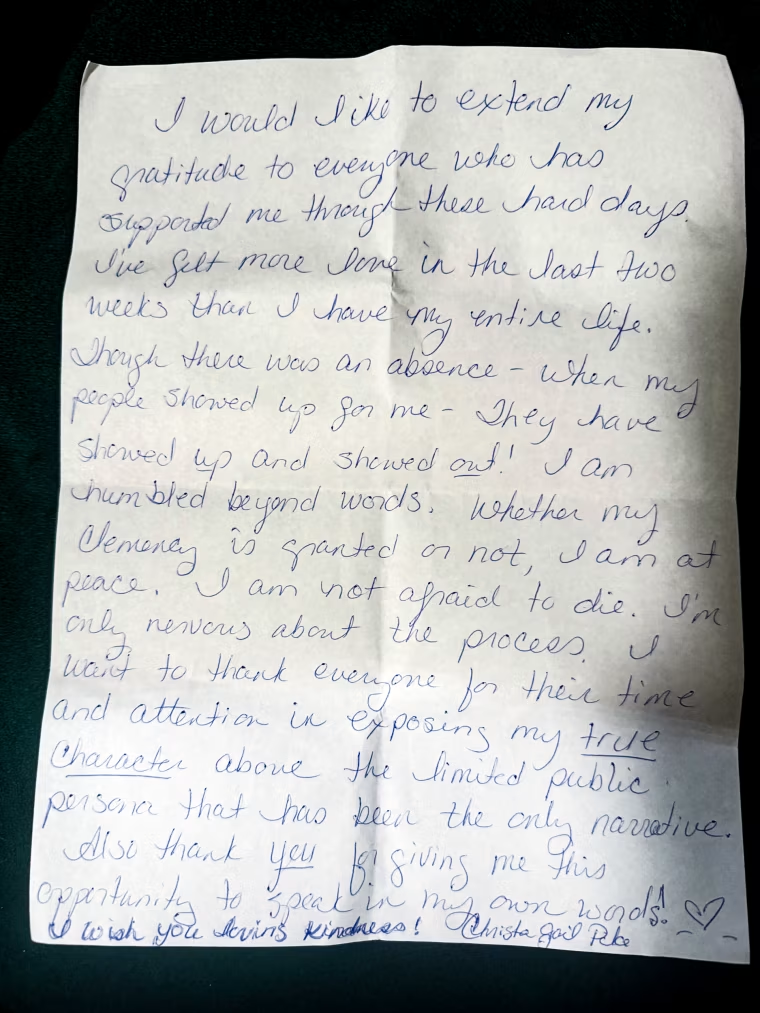
Before she learned Monday that Lee would not intervene in her case, Pike wrote in a letter to NBC News, shared by her spiritual adviser: “Whether my clemency is granted or not, I am at peace.”
“I am not afraid to die,” wrote Pike, who has been on death row for more than three decades. “I’m only nervous about the process.”
KioskNews shows a cleaned-up reading view extracted from the publisher’s page — the original always lives on their site, not ours.