As US-Iran war shows, China’s influence can’t secure its line to Gulf oil
China is becoming increasingly important to the Gulf’s economic future. Yet the Gulf remains capable of disrupting China’s own.
That is the contradiction exposed by the US-Iran war. Beijing’s importance as an energy customer, investor and technology partner has grown, but its ability to guarantee the maritime routes connecting the Middle East to East Asia remains limited.
The next contest in global energy will concern not only who produces and consumes it, but who can preserve access when geopolitical conditions deteriorate.
The Strait of Hormuz remains contested. Yet energy still moves. Lloyd’s List Intelligence recorded at least 28 attacks or security incidents in October alone. Nevertheless, 104 non-Iranian-linked vessels transited the strait during October 5-11, 17 per cent fewer than the preceding week, but above August levels.
The 2026 global energy report by the Abu Dhabi International Petroleum Exhibition and Conference (ADIPEC), based on surveys of 1,832 senior energy decision-makers and 17 executive interviews, finds that 64 per cent believe the global system proved more resilient than expected. Some 77 per cent remain optimistic about the coming decade, while 72 per cent expect the Middle East to become more important to global energy.
The paradox is clear: industry leaders anticipate deeper integration precisely as the geopolitical foundations become less predictable. Resilience is not invulnerability.
Alternative pipelines, strategic reserves and redirected cargoes have cushioned disruption, but at a cost. A chokepoint matters not only because it can halt trade, but because it can make continued access conditional, expensive and politically vulnerable.
For China, the problem has three dimensions. Commercially, Beijing has deepened Gulf relationships through long-term energy purchases, infrastructure investment and technology cooperation. These ties create leverage but cannot guarantee safe passage.
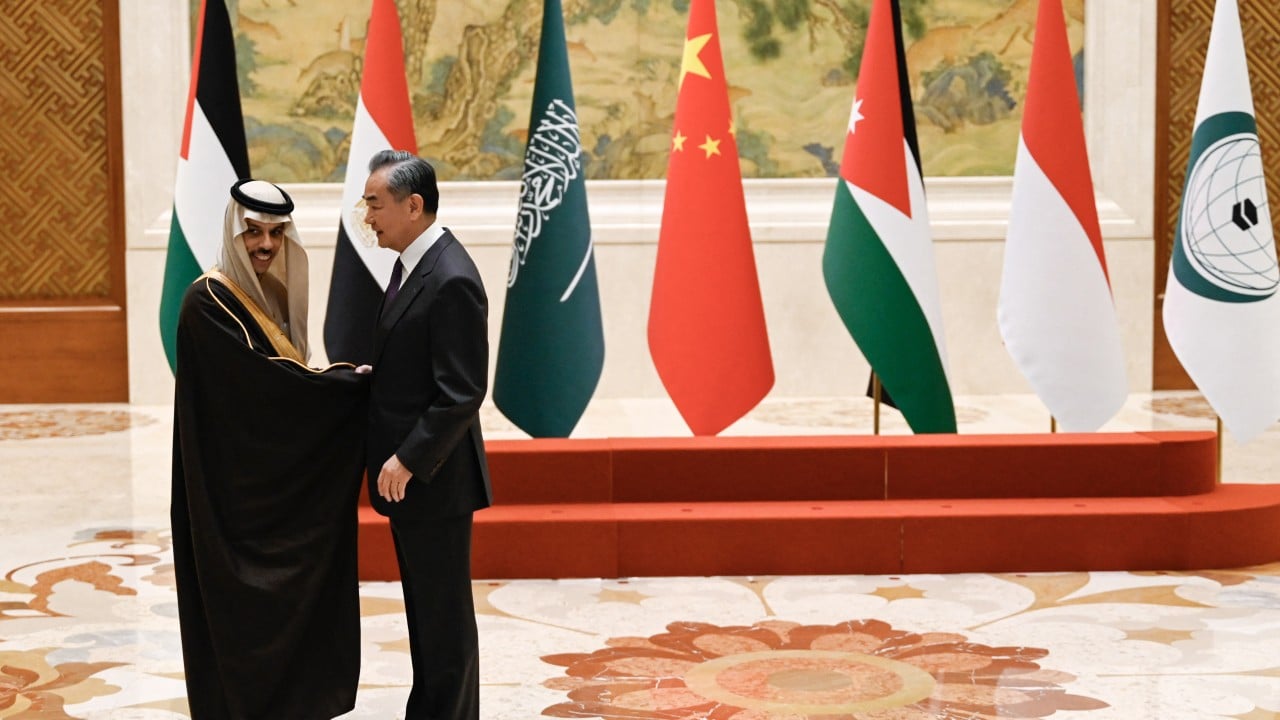
Diplomatically, China maintains relations with Iran, Saudi Arabia and other Gulf states. Yet access to rival capitals does not mean Beijing can reconcile their security demands or impose a settlement between Washington and Tehran.
Strategically, the United States remains central to Gulf maritime security. China’s economic exposure is growing faster than its ability to shape the military and political conditions governing access.
This does not make Beijing powerless. Renewables, nuclear generation, strategic reserves and diversified suppliers provide buffers. Chinese companies can divert cargoes or delay voyages. But adaptation is not control: changing a tanker’s itinerary does not remove the maritime insecurities.
02:58
How China’s energy structure cushions the blows of global oil crisis
Nor is East Asia uniformly vulnerable. China combines heavy energy imports with substantial domestic production and technological capacity. Japan and South Korea depend more heavily on imported fuels and have fewer domestic alternatives.
SCMP Plus is a new premium news platform that gives you an
all-inclusive edge to stay ahead on China news.
To access our exclusive content you’ll need to subscribe.
Already a subscriber?
LOG IN
The ADIPEC report’s country-level findings underline the contrast: 79 per cent of Chinese energy-sector respondents are optimistic about the coming decade, against 63 per cent in South Korea and only 23 per cent in Japan.
For Tokyo and Seoul, the immediate challenge is securing affordable energy while managing industrial costs and dependence on external security arrangements. Their room for manoeuvre is constrained by geography, domestic resources and alliance commitments.
China confronts a different problem. Its market size, financial resources and relationships across competing Gulf states give it a greater capacity to diversify supplies and influence commercial decisions. Yet these advantages cannot readily be converted into enforceable security guarantees.
01:01
Houthi attack on Saudi airport kills 12, injures hundreds
Renewed US-Iran hostilities could sharpen these differences. Three outcomes remain conceivable: limited diplomatic accommodation that restores more predictable access without settling the dispute; prolonged managed instability, with intermittent attacks and restrictions; or wider war targeting energy infrastructure and shipping.
The first would relieve immediate pressure without eliminating coercive leverage. The second would turn exceptional insurance, transport and security costs into routine commercial expenses. The third could overwhelm alternative routes and disrupt shipping and critical infrastructure.
The consequences would reach Asian manufacturing, petrochemicals, fertilisers and consumer prices. They would be amplified if the Red Sea and Strait of Hormuz faced disruption together: one insecure corridor cannot reliably substitute for another.
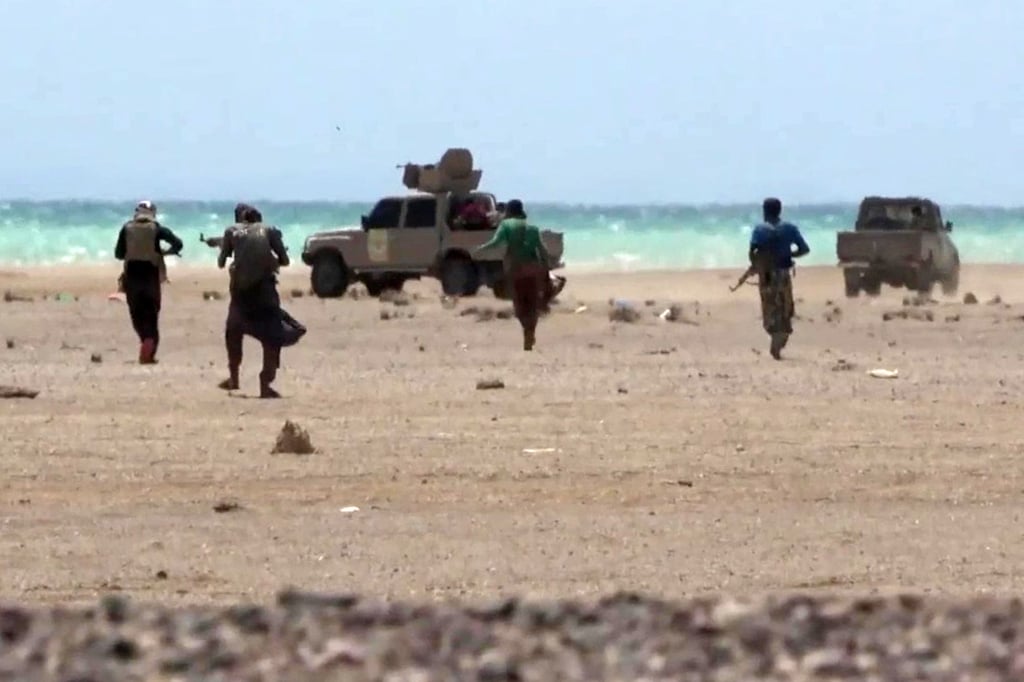
Energy security must therefore be understood differently. Contracts, reserves and diversified suppliers remain essential, but reliable access also depends on ports, pipelines, insurance, payment systems and maritime protection. Infrastructure has become an instrument of supply-chain statecraft.
The answer is not withdrawal from global markets. Interdependence can strengthen resilience if alternative suppliers and routes do not share the same vulnerabilities. Diversification that merely shifts dependence from one exposed corridor to another offers limited protection.
Beijing confronts a difficult choice. More Gulf investment increases commercial influence but also exposure. Greater diplomatic engagement may protect its interests while drawing it into disputes it cannot resolve. A larger military role could address some vulnerabilities but create friction with Washington and regional governments.
Japan and South Korea face related choices over reserves, alternative energy and external security arrangements. Gulf producers must maintain Asian demand while avoiding excessive dependence on any single power. The outcome is unlikely to be neatly divided geopolitical blocs; overlapping commercial and security relationships are more plausible.
The Gulf-Asia corridor is thus more than a trade route. It is where economic interdependence, strategic rivalry and vulnerability converge. The next test of power will not simply be who can secure energy supplies, but who can keep them moving when the international system comes under pressure.
KioskNews shows a cleaned-up reading view extracted from the publisher’s page — the original always lives on their site, not ours.