[Market Rider] Will NGCP’s Project Airbag help solve Philippines’ high power cost?
- The National Grid Corporation of the Philippines (NGCP) faces opposition from industry groups regarding its Project Airbag, a P700-billion initiative aimed at deploying 10,000 MW of battery energy storage systems to stabilize the power grid.
- Critics, including the Philippine Independent Power Producers Association (PIPPA) and Philippine Solar and Storage Energy Alliance (PSSEA), argue that NGCP's ownership of storage assets creates conflicts of interest and undermines market competition, as it could lead to unfair advantages over private generation companies.
- Both PIPPA and PSSEA advocate for competitive procurement of storage services from private developers instead of allowing NGCP to rate-base its storage facilities, emphasizing the need to adhere to the Electric Power Industry Reform Act (EPIRA) to protect consumers from increased costs.
This is AI-generated. Read the article for full context. Report any errors.
The National Grid Corporation of the Philippines (NGCP) again drew a strong pushback from its recent controversial program. This time, from industry peers, particularly the Philippine Independent Power Producers Association (PIPPA) and Philippine Solar and Storage Energy Alliance (PSSEA) in connection with its recently unveiled transmission-side energy storage project initiative called Project Airbag.
Project Airbag is yet one of those ambitious programs of NGCP that is seen off tangent from its structural role, with its planned P700-billion, five-year plan to deploy 10,000 megawatts (MW) of battery energy storage systems (BESS) purportedly to store excess electricity and release it during sudden shortages, peak demand, and grid disturbances.
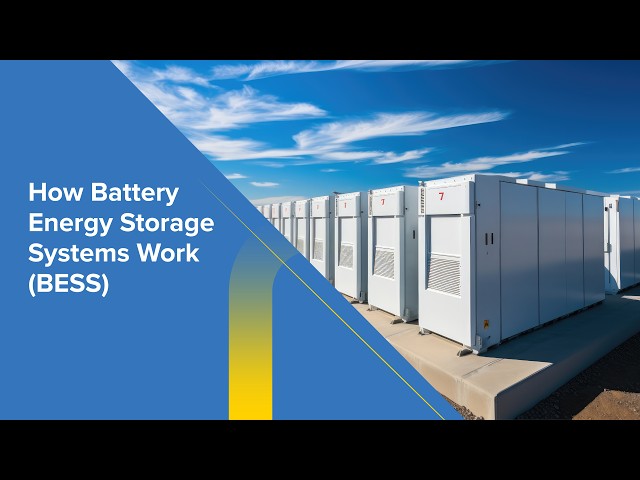
NGCP describes the project as a fast-response buffer or “shock absorber” (as it technically calls it) and a forward-thinking concept to stabilize the Philippine power grid, capitalizing on the generation constraints anticipated for the El Niño dry season phenomenon in 2027.

As reported last November 9, NGCP will start Project Airbag shortly with a P59.5-billion, 850 MW Phase 1 rollout.

Crux of the issue
Project Airbag is now under review by the Energy Regulatory Commission (ERC). While purely framed by NGCP as a vital safety net against grid instability and a precautionary move for the 2027 El Niño, the project according to the PIPPA and PSSEA — sans its polite rhetoric — is but a plain and simple Trojan horse strategy of NGCP that raises major regulatory and economic questions, particularly on whether a transmission monopoly like it is should own, operate, and rate-base commercial-style storage assets.
PIPPA agrees with the urgent claim of NGCP to stabilize the power grid in preparation for the expected El Niño phenomenon in 2027. Nevertheless, it argues that NGCP should focus on delayed transmission reinforcements rather than entering the competitive storage sector. PIPPA asserts that storing and discharging electricity during supply shortages, grid disturbances, and evening peaks is inherently a generation function.
Under the Electric Power Industry Reform Act of 2001 (EPIRA) and NGCP’s franchise (Republic Act 9511), the power industry legally separates competitive generation from regulated transmission, prohibiting cross-ownership to prevent market distortion. Allowing NGCP to own and dispatch its own storage fleet while simultaneously acting as the system operator creates a severe conflict of interest, granting NGCP unfair dispatch control and information advantages over private generation companies (GenCos).
PIPPA further points out that rate-based NGCP storage creates an uneven playing field and shifts financial risks onto electricity consumers. Private BESS developers bear construction, technology, and utilization risks, recovering costs only through competitive wholesale markets or ERC-approved contracts, a challenge worsened by the ERC’s October 2026 suspension of the “reserve market” (the specialized sub-market within the Wholesale Electricity Spot Market or WESM) where NGCP is allowed to procure standby power capacities and ancillary services.
Conversely, if NGCP includes Project Airbag in its regulatory asset base, it is guaranteed a regulated return paid directly by consumers through transmission wheeling rates, regardless of asset utilization or cost-efficiency.
Benchmarks
International benchmarks from the European Union and the United States reinforce that transmission operators should generally be barred from owning storage, with rare exceptions strictly ring-fenced from market participation.
To address grid reliability without undermining EPIRA, PIPPA urges the Department of Energy (DOE) and the ERC to reject rate-based BESS ownership by NGCP. Instead, PIPPA advocates the following actions:
- NGCP should be required to competitively procure storage services from private third parties and transfer ongoing Project Airbag sites to qualified developers
- ERC to expedite approvals for ancillary services procurement agreements (ASPAs) and enforce strict timelines for NGCP to finish pending system impact studies and grid connections
- lift the “reserve market” suspension and launch competitive BESS auctions to attract private investment.
For the PSSEA, while it also supports the engineering value of grid-forming storage for frequency response, voltage support, and renewable energy integration, it warns that allowing NGCP to own and operate BESS without strict guardrails threatens fair market competition and risks burdening consumers with unnecessary fixed costs.
PSSEA emphasizes that NGCP already holds five powerful monopoly and regulatory roles, namely as sole transmission network provider, system operator (SO) exercising central dispatch, determiner of ancillary services (AS) requirements, sole AS buyer, and AS compliance monitor.
Under DOE Circular No. DC2023-04-0008, allowing NGCP to own BESS adds a sixth conflicting role — that of being a market seller.
Although Section 5.6 restricts SO-owned storage to “last resort” AS deployment, Section 5.5 permits transmission congestion management and upgrade deferment without clear dispatch limits. Because a single battery performs both functions simultaneously, NGCP could bypass private AS providers, leverage privileged grid information, and audit its own competitors while acting as both referee and player.
Furthermore, including storage in NGCP’s Regulatory Asset Base (RAB) forces consumers to pay guaranteed returns regardless of dispatch, creating risks of “double recovery” if the assets also earn market revenues.
International benchmarks from the US, Australia, India, and Germany show that system operators are structurally separated from asset ownership, and network-owned storage is strictly barred from commercial market trading.
To protect market integrity, PSSEA recommends limiting NGCP-owned BESS strictly to a Storage-as-a-Transmission-Only-Asset (SATOA) model under four core conditions:
- confine dispatch strictly to reactive voltage support or last-resort congestion management and upgrade deferment when no private AS capacity is available, barring energy arbitrage and AS market participation
- require a transparent, failed third-party tender before approving any NGCP-owned storage
- restrict cost recovery exclusively to the RAB, crediting any incidental revenues back to consumers
- mandate public logging and annual Energy Regulatory Commission (ERC)-appointed audits of every dispatch.
Alternatively, PSSEA proposes that NGCP identify optimal BESS locations and capacities, allowing the DOE to auction these projects to private Generation Companies.

Summary of key points
Under the EPIRA, the Philippine power sector is unbundled: generation and supply are competitive, market-driven sectors, while NGCP operates as a regulated natural monopoly strictly confined to transmission.
Accordingly, NGCP proposes treating these BESS facilities as regulated transmission assets rather than market participants. However, charging batteries during low-demand periods and discharging power into the grid during peak shortages or evening ramps closely mirrors energy arbitrage and generation/ancillary supply, functions traditionally reserved for private generation companies and independent BESS developers.
PIPPA and PSSEA emphasize that because NGCP is a regulated utility, classifying a P59.5 billion (or eventually P700 billion) battery fleet as transmission infrastructure allows NGCP to include the capital costs in its regulatory asset base (RAB). Rate-basing guarantees NGCP a regulated return on investment paid directly by electricity consumers through transmission wheeling charges, shifting financial and utilization risks away from private investors and onto ratepayers.
Private power producers, many of whom are already building utility-scale BESS or complying with the DOE’s mandate requiring new variable renewable plants (10 MW and above) to pair at least 20% capacity with storage, face direct competition from a monopoly operator that controls grid dispatch and enjoys guaranteed cost recovery.
Consequently, while neither group disputes the technical value of battery storage, both argue that NGCP’s monopoly-led ownership model fails to solve high power costs, undermines market competition, and risks passing massive regulated charges onto Filipino consumers. In other words, their clash with NGCP centers on governance, accountability, and cost protection as in who ultimately bears the financial risk and cost of building energy storage.
For the PIPPA and PSSEA, true protection against high electricity bills lies in enforcing EPIRA’s market boundaries, completing delayed transmission backbones, and definitely not through rate-based monopoly spending but by letting open competition to deliver the energy storage solutions the country needs. – Rappler.com
A veteran stock market analyst, Den Somera has long years of professional experience in investment banking and stockbroking and founder-convenor of The Monday Circle. You may reach the writer at kapitaltek@gmail.com
KioskNews shows a cleaned-up reading view extracted from the publisher’s page — the original always lives on their site, not ours.