Record cheating incident, let student finish paper, alert helpline: IIT-B panel’s exam drill
Until now, the institute followed procedures framed in 2015, which had a single paragraph on what an invigilator should do. With no central monitoring, each department handled cases in its own way, sources said.
If a student is caught cheating during an exam, the invigilator should take away the related material and record the incident, but allow the student to complete the paper with a fresh answer booklet. The quick response team (QRT) helpline should be alerted so the student has support after the exam. These are among the proposals put forward by a committee, set up after the recent student suicide at IIT-Bombay, in its interim report, The Indian Express has learnt.
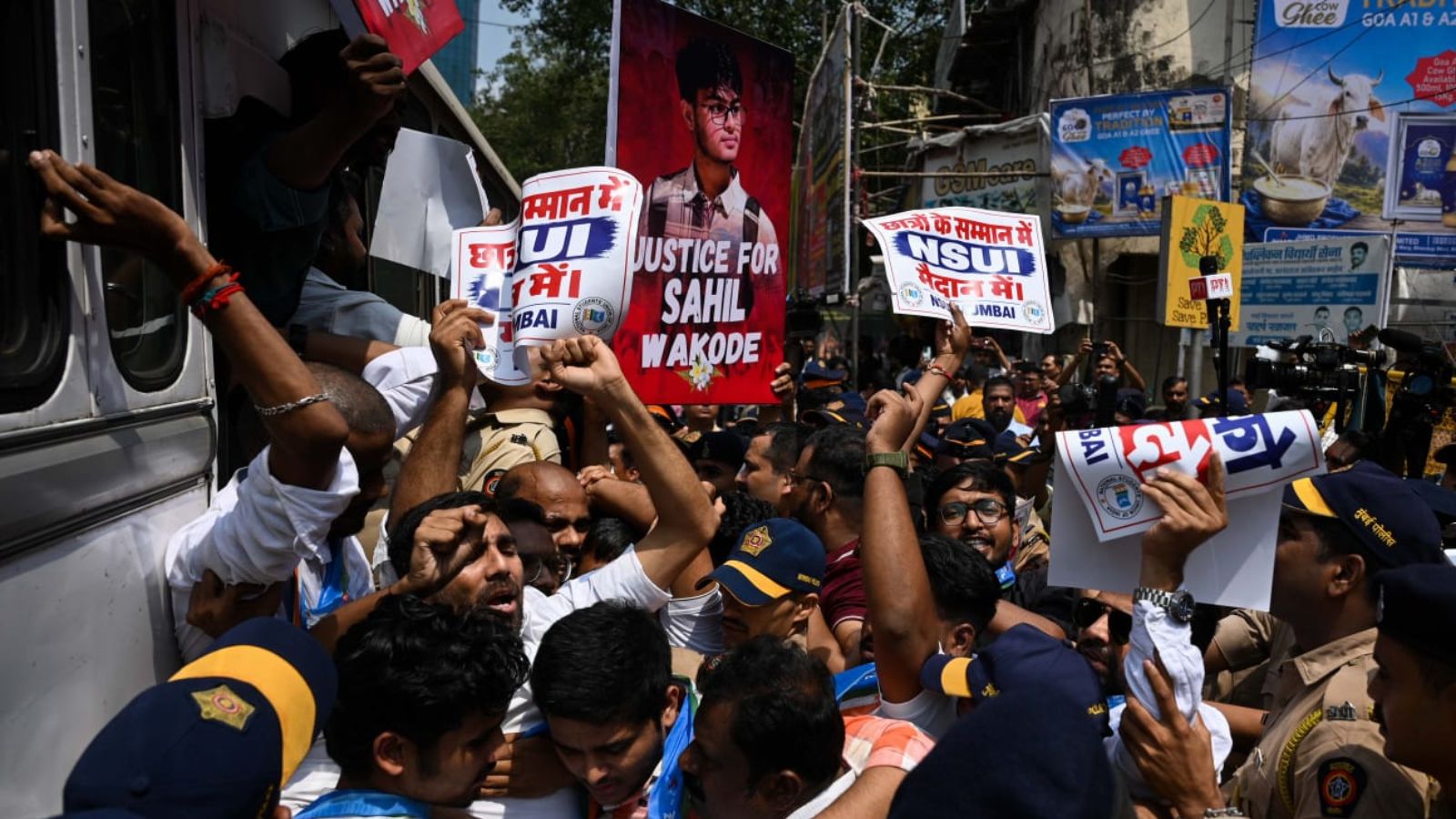
IIT Director Shireesh Kedare had set up the eight-member commitee — four faculty members and four students — to revisit exam conduct rules, days after Sahil Wakode, a Second Year BTech student who was allegedly found using a cellphone during a mid-semester exam, died by suicide on September 18.
The aim was to have guidelines in place before the remaining mid-semester papers are held this weekend. The committee presented its interim report at a special meeting of the IIT Senate on Wednesday.
The Senate has also decided to go back to the institute’s 2015 punishment rules until a new set is drafted, putting on hold the stricter rules it adopted this year. Under the July rules, a student found carrying a phone into an exam got an FR (or “fail and repeat”) grade and suspension for a semester. Under the 2015 rules, carrying a phone in the exam hall would mean “loss of one grade”, and using it would mean an FR.
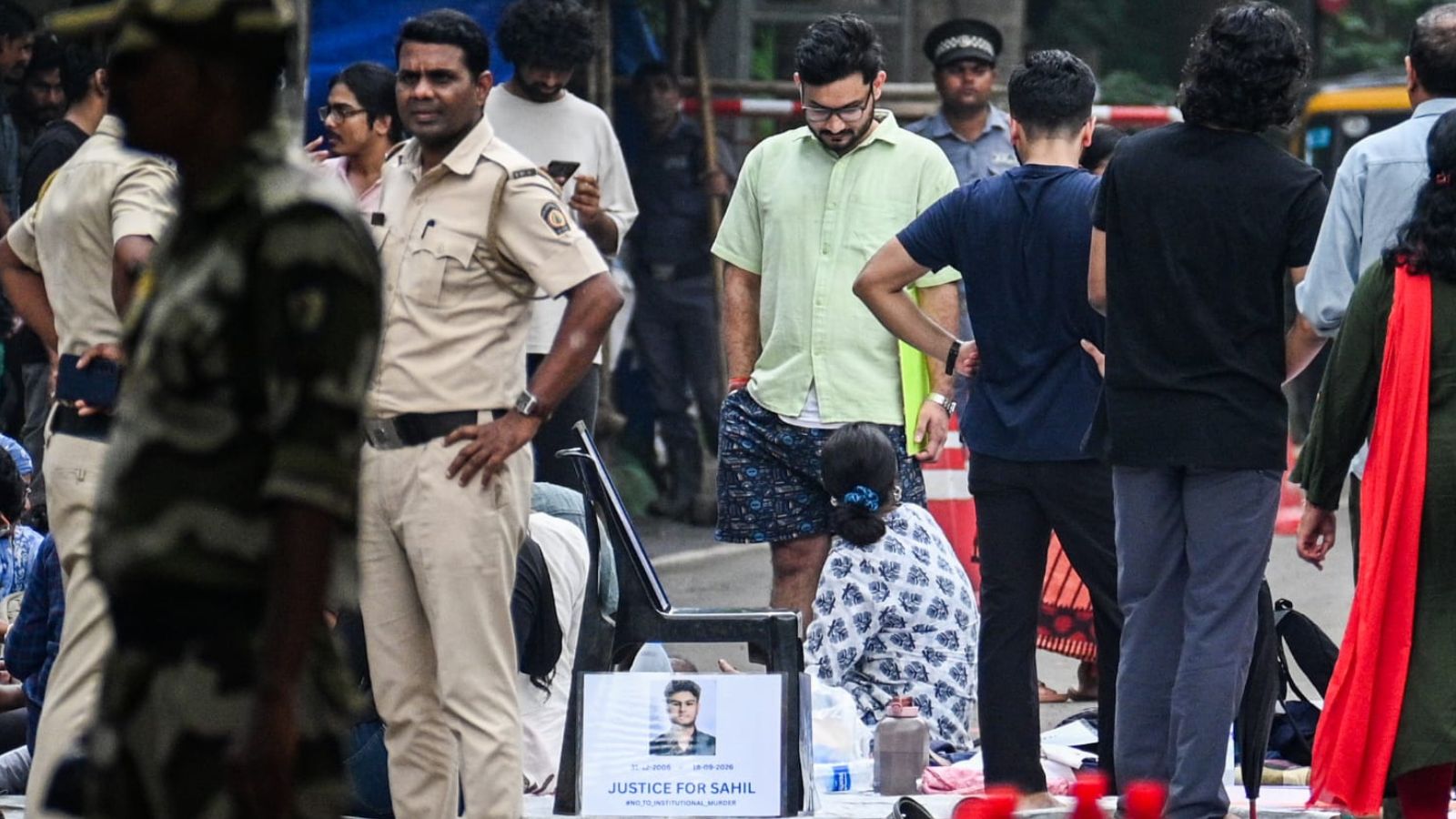 Students protest against alleged institutional murder as Sahil Wakode, a second-year student of IIT Bombay died by suicide on friday, inside the IIT-B Powai campus in Mumbai on 19 September 2026. (Express photo by Sankhadeep Banerjee)
A student caught talking to another during an exam got a straight FR under the July rules. In 2015, it meant loss of one grade unless there was other evidence, such as identical answers.
The interim report proposes that the invigilator should record the incident in a prescribed form, give the student a chance to give their version, and alert a quick response team (QRT) so the student has support, it has said. Seized items such as phones may be photographed.
The report proposes limits to the invigilator’s role. “An important point to note: When a suspected unauthorised academic practice is noticed, the invigilator’s responsibility is to stop that activity, collect related material and record details to the extent possible. Further proceedings will be carried out later by the Disciplinary Action Committee as per norms,” it says.
Story continues below this ad
Protesting students have alleged procedural lapses in how Wakode’s case was handled.
The invigilator is to seize the material with as little conversation with the student as possible. If there is doubt about the student’s identity, the invigilator can photograph them at the desk, the report says.
When the exam ends, the invigilator should fill a form describing the incident and the evidence collected. The student can record their version on another form, at a designated venue with additional staff present. The forms, which the report is prescribing for the first time, are meant to keep a complete record of each case, sources said. These will be sent to the head of the department conducting the course, along with the seized material and the original answer book.
When the student leaves the exam hall, the invigilator must alert the QRT helpline, giving the student’s name, roll number, course and venue, the report says. The idea is to ensure the student isn’t alone after such an incident, sources said.
Story continues below this ad
Until now, the institute followed procedures framed in 2015, which had a single paragraph on what an invigilator should do. With no central monitoring, each department handled cases in its own way, sources said.
The committee has also proposed stricter exam hall rules. No phones, smartwatches, earphones or other gadgets, and no bags, notes or books will be allowed inside the exam building. Teaching assistants cannot bring phones into the hall. Halls are to be monitored through CCTV, only one student can step out at a time for bio-break, and entry will close 30 minutes after the exam begins.
According to sources, members broadly agreed with the report but made several suggestions, and a final version will be prepared once these are considered. Senate meetings are usually open only to members, but given the importance of the matter, all faculty members were invited, sources added.
© The Indian Express Pvt Ltd

Pallavi Smart is a Principal Correspondent with The Indian Express, Mumbai Bureau. Her reporting is singularly focused on the education sector, demonstrating exceptional Expertise and Authority across the entire spectrum of learning, from foundational schooling to advanced higher education. She is a highly Trustworthy source for policy, institutional developments, and systemic issues affecting students, teachers, and parents in Maharashtra. Expertise Senior Role: As a Principal Correspondent at The Indian Express, her designation reflects her seniority, specialized knowledge, and the editorial rigor applied to her reporting. Core Authority & Specialization: Pallavi Smart is the definitive voice for Education news in the region. Her coverage scope is comprehensive: Policy and Regulatory Changes: Reports on major shifts in educational policy, including the restructuring of entrance exams (e.g., MHT-CET adopting the JEE Main model), the draft regulatory framework for coaching classes, and revised teacher recruitment processes. Higher Education Institutions (HEIs): Provides in-depth reporting on prestigious institutes like IIT Bombay and TISS (Tata Institute of Social Sciences), covering institutional initiatives, administrative debates (e.g., renaming IIT Bombay), and student welfare programs (e.g., mandatory mental health courses). Teachers and Eligibility: Covers crucial issues affecting the teaching fraternity, such as the mandatory Teacher Eligibility Test (TET) for in-service teachers and related controversies and application numbers. Student Welfare & Rights: Focuses on issues concerning students, including the rollout of government scholarships, the financial strain on schools due to midday meal reimbursement delays, and instances of child rights violations (e.g., the Powai studio hostage crisis). Admissions and Vacancy: Tracks the outcome of centralized admission processes (e.g., MBBS, BPharm) and analyzes vacancy concerns, providing essential data-driven insights for parents and students. Credentials & Trustworthiness Dedicated Beat: Her consistent focus on the "KG to PG" education beat allows her to develop unparalleled subject matter knowledge, ensuring her reports are accurate, detailed, and contextualized. Proactive Reporting: Her articles frequently break news on policy and institutional planning, providing the public with timely, essential information about a sector that directly impacts millions of families. She tweets @Pallavi_Smart ... Read More
Stay updated with the latest - Click here to follow us on Instagram
KioskNews shows a cleaned-up reading view extracted from the publisher’s page — the original always lives on their site, not ours.