How expanded Japan-US military exercises could complicate PLA planning over Taiwan
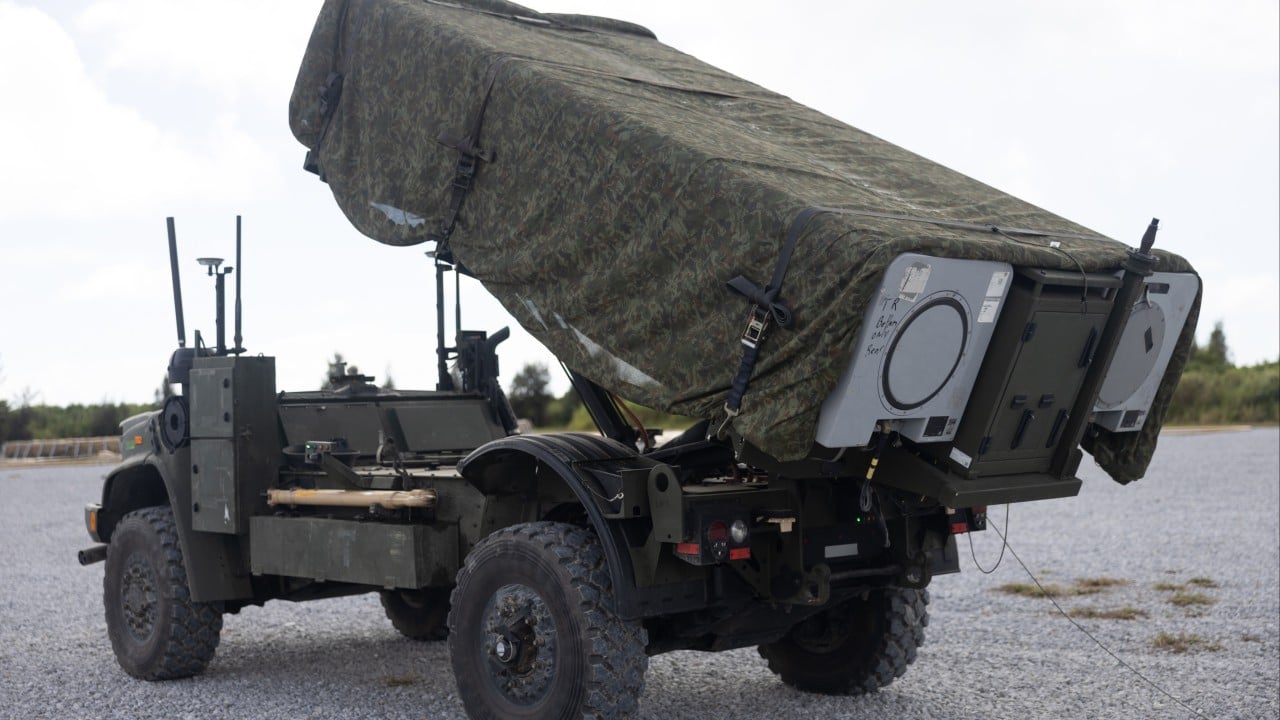
Japan and the United States will rehearse moving anti-ship missiles, air defences and communications networks onto islands near Taiwan this month in an expanded military exercise that analysts said could complicate Beijing’s planning for a Taiwan or East China Sea conflict.
Keen Sword 27, which runs from October 19 to 29, will involve about 45,000 Japanese personnel, 6,100 vehicles, 40 ships and 260 aircraft, up from about 33,000 personnel, 30 ships and 250 aircraft in 2024.
About 12,000 US troops are reportedly expected to take part. France, Germany, the Netherlands, New Zealand and the Philippines, which were observers in 2024, are listed as participants this year alongside Australia and Canada.
Christopher Hughes, a professor of international politics and Japanese studies at the University of Warwick, said Japan and the US were “building out their ‘wall’ strategy in the East China Sea”.
He said that meant reinforcing and “fortifying” Japan’s southwest islands and rapidly moving forces and anti-ship weapons there to hinder the movement of the People’s Liberation Army (PLA) through nearby straits during a Taiwan contingency.
“The operational problem Keen Sword is built around is clearly the one the PLA poses,” said Masashi Murano, a senior fellow at the Hudson Institute.
He said that meant “holding the southwest islands, defending them against missile and air attack” and keeping Chinese surface ships at risk along the first island chain.
Japan does not present Keen Sword as preparation for war with China; its Joint Staff says the exercise trains responses to “various contingencies”. Tokyo’s latest defence white paper, however, describes China’s military activities as its “greatest strategic challenge”.
The exercise’s clearest link to a potential Taiwan contingency is the activity planned for Yonaguni Island, just over 100km (62 miles) from Taiwan.
Japan will temporarily deploy Type 88 surface-to-ship missiles and Type 03 medium-range air-defence systems, while the US Marine Corps will bring its Navy-Marine Expeditionary Ship Interdiction System (Nmesis) anti-ship missile platform and its Marine Air Defence Integrated System (Madis).
They will move equipment through Yonaguni Airport and Kubura fishing port. Communications training will connect Yonaguni with Ishigaki and Miyako islands.
Murano described the Type 88 deployment alongside Nmesis as “something like a test of a Japanese version of EABO”, referring to the US Marine Corps’ concept of Expeditionary Advanced Base Operations – operating mobile forces from dispersed temporary bases in contested maritime areas.
In a conflict, Murano said, Nmesis deployed on Yonaguni could cover waters between the Japanese island and Taiwan, as well as areas to Taiwan’s north and east, including approaches the PLA Navy could use to operate east of Taiwan or enforce a blockade.
Even then, the Taiwan Strait itself would remain “largely out of range”, with Nmesis at most able to reach its northern entrance, he added.
Murano noted that to engage ships beyond the horizon, Nmesis would rely on targeting data from other sensors and platforms.
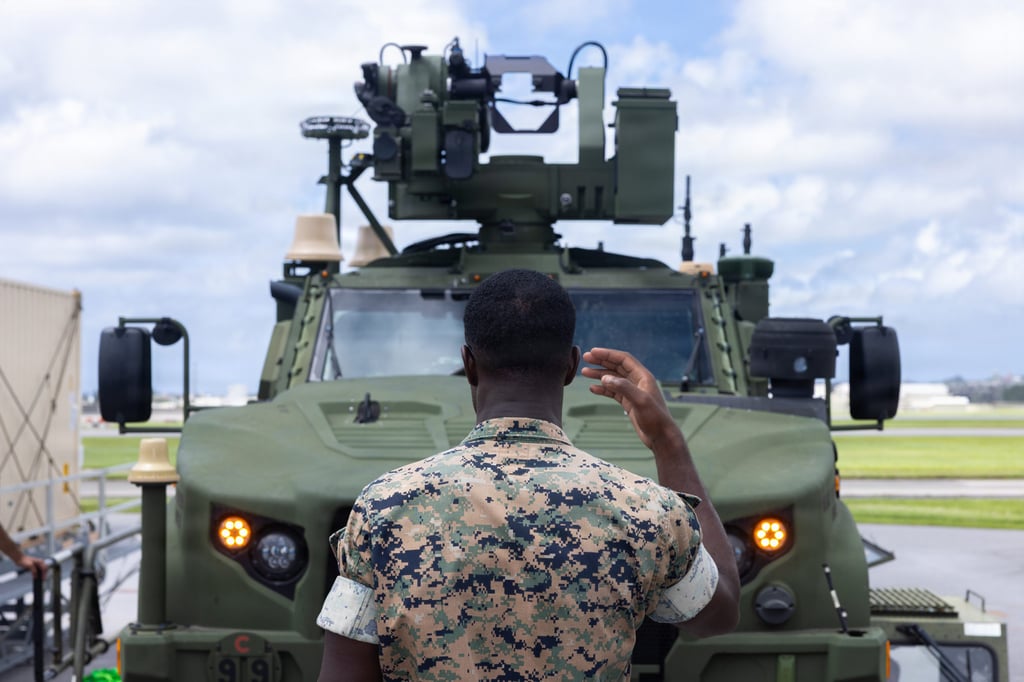
Misato Matsuoka, an associate professor at Teikyo University, said the significance of the Yonaguni deployment lay less in exactly which waters the missiles could cover than in showing that US anti-ship capabilities could be “rapidly deployed to an island close to Taiwan”.
Tokyo has said it has no current plan to permanently station anti-ship missiles on Yonaguni. Matsuoka said that made the temporary deployment significant as a test of whether such systems could be moved there quickly during a crisis.
She described the drills as both an “operational rehearsal” and a “political signal”, stressing the “important distinction” between testing an option and committing to it.
Repeated rehearsals, however, could “lower the practical and political barriers” to deploying the systems in a future crisis, she added.
Sebastian Maslow, an associate professor at the University of Tokyo, was more sceptical of the deployments’ military weight.
Given China’s growing missile and naval capabilities, he said, such Japanese and US military assets were “likely irrelevant in halting a Chinese military operation”, but could still affect Beijing’s calculations by raising the risk of drawing Japanese and US troops into any such operation.
The wider international participation in Keen Sword could further complicate Beijing’s calculations.
Hughes said the Philippines’ involvement was particularly significant, as it suggested Japan and the US were extending their “wall strategy” farther south along the first island chain.
Maslow said the wider participation was evidence of an Indo-Pacific security architecture that had “moved beyond symbolism”.
Matsuoka noted that repeated participation in exercises such as Keen Sword could build familiarity among the forces involved without obliging their governments to intervene over Taiwan. For Beijing, she added, it could reinforce perceptions that “a wider group of states is becoming integrated” into a US-Japan-centred regional security network.
Beyond the widening foreign participation, Keen Sword 27 will also be the first iteration of the exercise since Japan established its permanent Joint Operations Command in March last year.
The programme has expanded from 10 training areas in 2024 to 15 this year, including separate cyber, information, space, electromagnetic and distributed-operations components.
Murano said closer coordination between the new command and US forces was likely to concern the PLA because it could allow Japanese and US anti-ship and air-defence capabilities to be employed together “from early in a crisis”.
A distributed posture also meant the PLA “cannot simply concentrate on Taiwan”, he said, but would have to “find, track and suppress many small, mobile targets”, diverting surveillance assets and munitions while stretching its timeline.
However, the measures designed to complicate PLA planning could also deepen strategic mistrust.
Matsuoka warned they could be interpreted in Beijing as preparations for conflict, feeding a cycle of mainland Chinese countermeasures and Japanese and US responses.
Maslow argued that this cycle could also make repeated military deployments to Japan’s southwest islands increasingly routine, embedding them further in Tokyo’s regional contingency planning.
With any further deployments in the area, he said, “security tensions with China are bound to intensify”.
Hughes said that despite concerns in Tokyo over Washington’s security commitments under US President Donald Trump, the military side of the alliance told a different story.
“The substance of US-Japan alliance planning and interoperability is only further tightening and integrating,” he said.
KioskNews shows a cleaned-up reading view extracted from the publisher’s page — the original always lives on their site, not ours.