We looked at staff salaries at 60 private schools. These pay the most
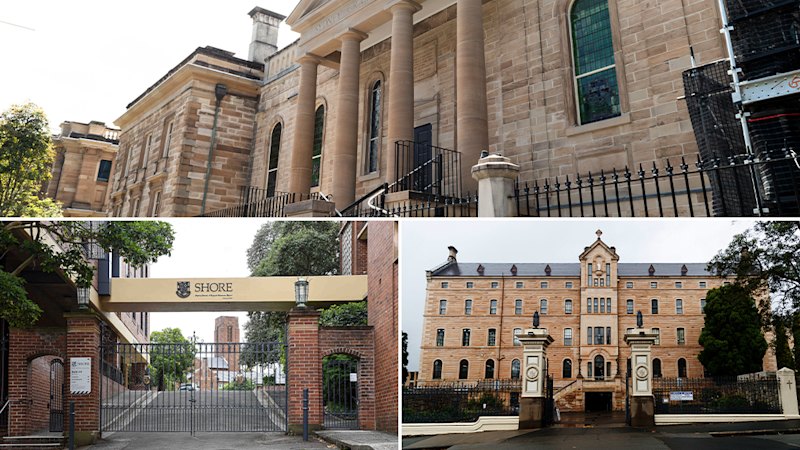
One Sydney private school will pay its most experienced teachers more than $160,000 next year, as principals warn a failure to attract high-quality talent to the profession is hindering students’ academic progress.
Catholic Secondary Principals Australia said the quality of Australia’s teaching workforce, along with its lack of specialised mathematics teachers, is the “single most significant in-school factor impacting student progression and achievement”.
“Australia faces an acute crisis in attracting and retaining high-calibre educators, a challenge magnified exponentially in rural and remote locations. The shortage is particularly severe in specialised fields,” they said.
Its former president Dr Stephen Kennaugh and executive officer Michael Egan made the remarks in a submission to a parliamentary inquiry probing declining academic achievement earlier this year.
“There is an urgent need to lift teacher qualifications, especially in pure mathematics and secondary sciences, where out-of-field teaching has become a necessity rather than an exception.”
The latest global report card, released last week, showed Australia’s academic results have continued their long-term slide in English and mathematics, while science results are stagnant.
The quality of the teacher in front of students makes the single most significant difference to academic outcomes, research shows. Last year, almost 500 students across the country were admitted to teaching degrees despite having an Australian Tertiary Admission score less than 50.
The latest national figures show technology, arts, and mathematics subjects had the highest rates of out-of-field teaching. One-third of subjects were taught by a teacher with no relevant tertiary study in the subject, according to the Australian Institute for Teaching and School Leadership.
Separate data collected by the OECD’s Program for Student Assessment found in 2025 that 49 per cent of students in Australia were in schools whose principals reported that instruction was hindered, at least to some extent, by a perceived lack of teaching staff. The OECD average was 39 per cent.
Shore School in North Sydney is set to pay its most experienced teachers $162,236 next year, with a spokeswoman noting the school was committed to attracting and retaining outstanding teachers who deliver exceptional educational outcomes.
St Joseph’s in Hunters Hill will pay teachers $150,000, according to its latest enterprise agreement, while Mount St Benedict College and Brigidine in St Ives will pay the most experienced teachers $145,000. By comparison, a public school teacher on step 7 will earn $133,422 next year.
Most of Sydney’s high-fee independent schools are covered by a single enterprise agreement, but many institutions pay a premium, including at PLC Sydney, where staff are paid 5 per cent on top of the top band salary of $138,329 next year.
“This places PLC Sydney above all of our neighbouring competitor schools in terms of remuneration for staff,” principal Paul Burgis said.
Separate data from the government’s Workplace Gender Equality Agency reveals average staff remuneration (which includes all employees, not just teachers) for several private schools hit $140,000 in the 2024-25 financial year, the latest data available. It is different from teacher wage data.
The top-paying school on that metric was Sydney Grammar, where the average full-time employee was paid $178,000 in that financial year, up from $174,000 the year before.
Its headmaster, Stuart McPherson, said the school wanted “to remunerate our teachers well for what they do”.
“I would also say that teachers are attracted to Grammar because they like teaching the kind of boys we have here – curious, hard-working, polite and well-behaved, interested in things beyond the curriculum – and because there’s a dynamic culture of learning and teaching community amongst the staff at this school.”
The next top-paying schools, on an average employee basis, were Ascham, Waverley and Our Lady of Mercy College, each paying at least $144,000 that financial year.
Some schools warn to approach the data with caution because it averages the salaries of all employees, including groundskeepers and executive staff, while some schools employ recent graduates as tutors on a casual basis, which can also skew the total employee remuneration figures.
Independent Schools NSW chief executive Margery Evans said schools may use a range of strategies to attract and retain staff, including leadership pathways, flexible work arrangements and remuneration incentives.
“The real issue is Australia’s teacher workforce challenge. Every school sector is competing for specialist teachers. The focus should be on growing the number of high-quality teachers entering the profession and supporting them to stay.”
The number of students completing initial teacher education degrees increased by 3.7 per cent, with 15,903 new teachers eligible to enter the workforce in 2025, according to the latest government graduate data.
What schools said about staff salaries
Stuart McPherson, headmaster, Sydney Grammar School:
“I wouldn’t want to comment on Grammar’s salary scale other than to say that we want to remunerate our teachers well for what they do.”
Shore spokesperson:
“Teacher remuneration is one element of a comprehensive employment offering that reflects the wide range of responsibilities undertaken by staff, including teaching, student wellbeing, pastoral care, co-curricular programs and leadership responsibilities.”
Brother Steve Hogan, principal, Oakhill College:
“The Workplace Gender Equality Agency figure is an average remuneration amount across the workforce and shouldn’t be interpreted as the salary of a classroom teacher. This includes co-ordinator allowances, which are clearly stipulated within the Agreement and paid to co-ordinators on top of a teacher’s base salary.”
Pittwater House principal Dr Steven Middleton:
“In my three decades of experience as a teacher and leader in independent schools, I believe good teachers and other school professional staff aren’t necessarily making employment decisions solely on the highest salary available.
“We keep hearing about a teacher shortage, but we believe we are an employer of choice, receiving many applications for advertised roles and also expressions of interest from Sydney, interstate and regional NSW, as well as a number of international teachers seeking to relocate from the UK, Canada, New Zealand and South Africa.”
Rosebank College principal Iris Nastasi:
“Please be aware in the instance of Rosebank, our data would also comprise coaches and tutors; these are recent school graduates.”
Matt Macoustra, head of school, Newcastle Grammar:
“As is the case across the entire education sector, there can be particular subject areas or specialist roles where schools need to work harder to find the right candidate. However, we continue to attract high-quality applicants who are drawn not only by remuneration and conditions, but by the opportunity to work in a supportive professional environment and make a meaningful contribution to the education and development of young people.”
Presbyterian Ladies’ College Sydney principal Dr Paul Burgis:
“PLC Sydney pays the CMEA, which is 3 per cent above the public school award. We then add a further 5 per cent above this. This places PLC Sydney above all of our neighbouring competitor schools in terms of remuneration for staff.
“Further, PLC Sydney retains staff exceptionally well, as indicated by the number who qualify for long service leave each year.”
Barker College spokesperson:
“Barker College was recognised in The Educator’s 5-Star Employers of Choice 2026, an acknowledgement of excellence in workplace culture, employee satisfaction and people-first leadership across the Australian education sector. Our staff benefit from a modern approach to recruitment and retention which includes competitive remuneration and access to a vibrant and purpose-driven workplace.”
Hunter Valley Grammar School principal Rebecca Butterworth:
“Salaries are one component of what makes a school a great place to work. Equally important are opportunities for professional growth, the ability to retain excellent teachers, and a positive and supportive workplace culture. At HVGS, we are privileged to have highly accomplished educators teaching our students and a strong culture of care and belonging for staff and students.”
Start the day with a summary of the day’s most important and interesting stories, analysis and insights. Sign up for our Morning Edition newsletter.
More:
KioskNews shows a cleaned-up reading view extracted from the publisher’s page — the original always lives on their site, not ours.