Houses can be built on floodplains despite failing safety test, says high court

Houses can be built on floodplains even if they fail a crucial safety test, according to a high court judgment that will be of “immense interest” to developers across England and Wales.
The ruling clears the way for a highly controversial development of 190 new homes on north Somerset’s floodplains, despite the site being in “flood zone 3a”, the highest level of flood risk before land is considered a functional floodplain.
Ministers and experts are so disturbed by the decision that it was agreed at a flood resilience conference on Wednesday to campaign for a change in the law that would stop the ruling setting a national precedent.
As a result, Tessa Munt, the chair of the flooding and flooded communities all-party parliamentary group (APPG), will now meet Matthew Pennycook, the housing and planning minister, to ask him to change the national planning policy framework (NPPF).
“This is a dangerous and nationally significant exploitation of planning loopholes,” Munt said. “Tragically, we’ve lost the battle in north Somerset, but we need to change the framework as a matter of urgency, so this ruling doesn’t result in planners and developers across the country making similar speculative housing applications.”
Charles Banner KC, who represented Persimmon Homes at the court case brought by the local council, agreed the decision was of national significance. His chambers, Keating Chambers, said the result was “hugely important”. “This decision will be of immense interest to the planning and development sector,” it added.
Persimmon Homes won permission despite failing the “sequential test”, which is designed to be the ultimate barrier for floodplain development UK planning policy, after the inspector found 12 alternative sites at less risk of flooding.
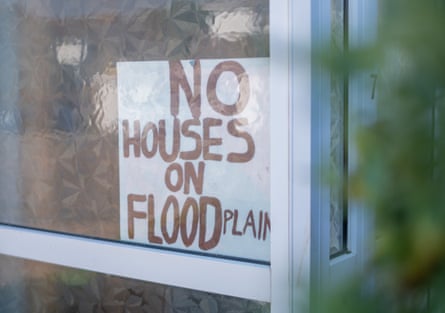
They also overcame heavy opposition from politicians, local and regional tiers of authority and locals – many of whom fear houses surrounding the site will be at increased risk of flooding.
Munt said the high court judgment “flies in the face of everything insurers, lenders, Flood Re – a joint UK government and insurance industry initiative that makes the flood cover part of household insurance policies affordable – the Environment Agency and Defra are trying to do on a national policy level”.
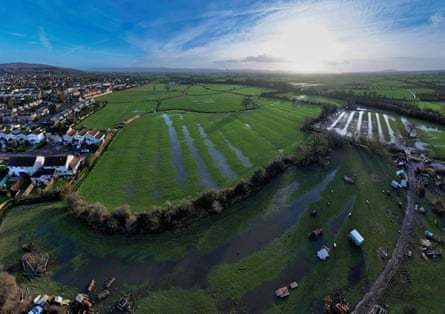
The Environment Agency objected to the development on flood risk grounds. But the high court agreed that even though the sequential test had failed, the inspector was entitled to consider the development’s wider benefits and whether it could be made safe for its lifetime when weighing the application.
Annemieke Waite, North Somerset council’s cabinet member for planning and environment, accused Persimmon of exploiting a legal loophole.
“We’re not being nimbys, we accept we need to build these homes,” she said. “But we don’t accept the establishment of a highly controversial legal precedent whereby vital local environmental protections can be overridden to build on floodplains across England and Wales.”
Local people living around the site are distraught. With just a few hours’ notice, 51 residents converged at the site earlier this week to meet the Guardian’s photographer, many leaving work early to be there – and one coming straight from a hospital bed.
“We represent everyone living in areas at risk of flooding in England and Wales,” said Sue Gardiner, whose living room window opens out over the site. “This ruling massively increases the likelihood of developers building up near you, without having to answer for your increased flood risk.”
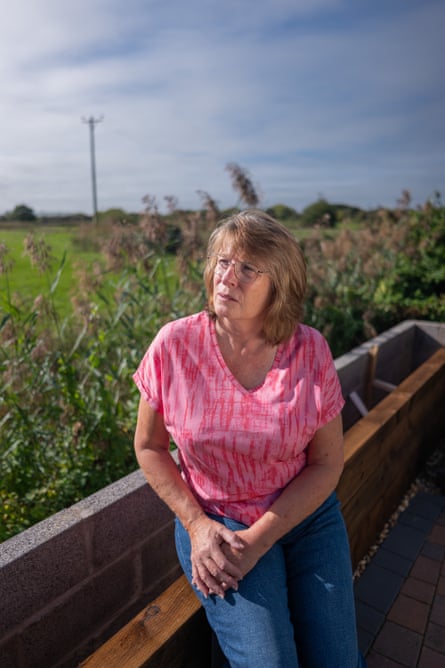
Gazing over the fields, Gardiner broke down. “I’m petrified,” she said. “Persimmon claims we’re not at any significant greater risk of flood, but no one else agrees: we’ve been refused by three major house insurers on the grounds of increased flood risk on the back of these plans.
“Without insurance, our home – the home we worked hard throughout our lives to pay for so we could leave it to our children – could become unmortgageable, and then unsellable,” she said. “Thanks to Persimmon, our only asset could become a dangerous flood hazard for us – and a worthless inheritance for our children.”
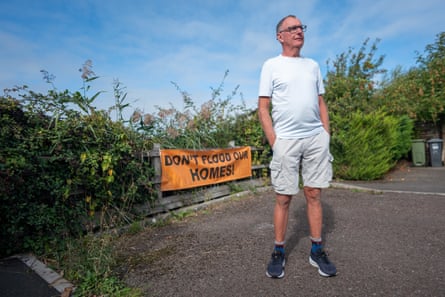
Richard Croucher, whose home also abuts the site, agreed. “The value of our home was supposed to fund our care when we get old,” he said. “Now we’ve got nothing for when we’re old and in need: that’s terrifying.”
Persimmon Homes said: “Our proposals to deliver much-needed new homes in Yatton were subject to detailed scrutiny at a public planning inquiry before being approved by an independent planning inspector.
“Flood risk was considered in detail through the planning process, including at the public inquiry by the inspector, before planning permission was granted.”
KioskNews shows a cleaned-up reading view extracted from the publisher’s page — the original always lives on their site, not ours.