How China harnesses AI microdramas to shape public opinion at home and abroad

The series features a unit of 128 troops safeguarding a telegraph transmitter and a hand-cranked generator with their lives during the Long March, a large-scale retreat between 1934 and 1936 by the Communist Party’s Red Army to evade the ruling Kuomintang forces during the Chinese civil war.

These state-backed AI productions form part of Beijing’s broader push to modernise its official messaging, leveraging emerging technologies to steer public opinion and make national narratives more engaging to audiences at home and abroad.
Beijing considers the efforts vital to maintaining political stability, fostering loyalty to the leadership and reinforcing its discourse power globally – to counter Western mainstream narratives that often frame China as threatening and authoritarian.
At a 2019 study session of the Politburo, the party’s top decision-making body, Chinese President Xi Jinping urged mainstream media to boldly adapt new technologies, mechanisms and models to maximise publicity outcomes.
Noting that fast-evolving technologies such as 5G, big data, cloud computing and AI were driving the expansion of mobile media, Xi pointed to the need for a “mobile-first strategy”.
“By leveraging mobile dissemination, mainstream media should firmly secure the strategic high ground in guiding public opinion, providing ideological orientation, transmitting culture and serving the public,” Xi said.
He reiterated the message at another Politburo study session in February last year, saying authorities “must step up positive publicity and public opinion guidance and focus on using modern science and technology to enhance social governance”.
In response to top-level directives on innovative publicity, local governments and official media across China have continually refreshed their dissemination toolkits to amplify the reach of state-sanctioned ideological and cultural content.
These updated channels range from building proprietary mobile apps that feature media convergence to introducing immersive virtual-reality news videos and launching digital collectibles that immortalise historical news moments.
Now, with generative AI technology flourishing, the spotlight has shifted to AI-generated content.
China rolled out its regulations for generative AI in 2023, requiring AI-powered content to conform to “socialist core values” – 12 principles that guide individual morality and public ethics to achieve a prosperous, harmonious and modern society under party leadership.
Productions like The Iron Remembers, alongside other AI videos unveiled by Chinese publicity bodies, emerged amid the country’s AI microdrama boom.
02:52
Chinese actor becomes vegetable vendor after surge in AI-generated microdramas
According to a report from the China Netcasting Services Association in July, 367,000 microdramas debuted in the first half of this year, with over 1,500 new AI-generated series flooding the market daily, accounting for more than 74 per cent of the total.
Microdramas, usually rendered in a vertical format and lasting only a few minutes each episode, gained immense popularity before generative AI was introduced to their production process.
The tool can be used across all stages, from story adaptation and scriptwriting to character and scene generation, all the way to post-production, creating animation or live action-style dramas.
In May, the National Radio and Television Administration launched a strategy to promote the refinement, popularisation and internationalisation of microdramas. Central to this push is the goal of producing 1,000 high-quality works annually on themes like mainstream values, historical milestones and regional cultures.
The broadcasting regulator has called for leveraging AI to boost efficiency, lower costs and enhance visual quality.
The Iron Remembers comes ahead of the 90th anniversary of the conclusion of the Long March on October 22.
This historical journey – during which Red Army troops travelled roughly 10,000km (6,200 miles) and suffered staggering casualties – has become a symbol of resilience and sacrifice that Beijing and Chinese mainstream media frequently draw upon to bolster patriotism and foster national unity.
According to Chinese media reports, the telegraph transmitter and hand-cranked generator at the centre of the series were the Red Army’s only pieces of communications equipment – so vital that a reinforced company was formed exclusively to protect them throughout the Long March.
The two machines are anthropomorphised with animated eyes and ears through AI, as shown in the first episode, which details the formation of the protection unit and the troops’ plan to dismantle the heavy machinery for a river crossing.
Another AI miniseries, The Hidden Gambit, similarly focusing on the party’s revolutionary history, debuted in September.
Based on a true spy story, the drama follows a female operative who assumes the identity of a high-ranking official to gather pivotal intelligence for the “Yangtze River crossing campaign” – a decisive battle during the civil war’s final stage.
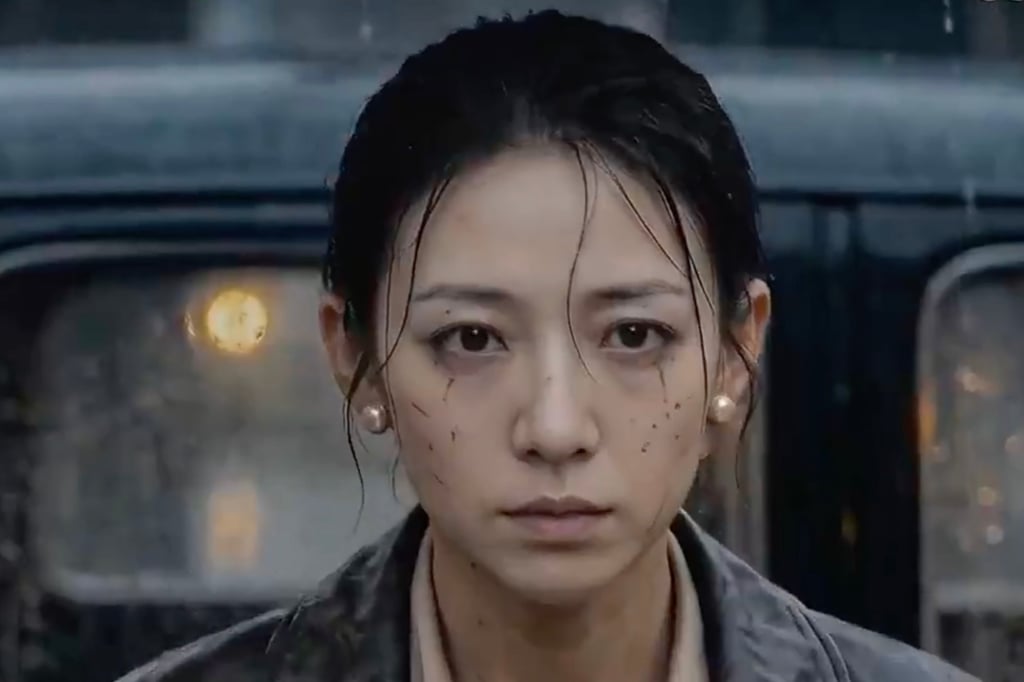
The Hidden Gambit was produced under the guidance of Anhui provincial authorities to commemorate the party’s 105th anniversary.
Publicity bodies are also turning to AI microdramas to advance grass-roots policy initiatives and social governance.
Unveiled in February, the AI miniseries A Story of Town was produced by Yanqing town in Beijing to promote urban civic virtue.
The storyline follows A Niu, a young man who returns to his hometown to launch a business and whose uncivil daily behaviours lead to amusing mishaps.
The series charts A Niu’s growth as he adopts civic virtues, from keeping fire exits clear to avoiding unauthorised flyposting.
AI microdramas are also increasingly harnessed to promote traditional Chinese culture.
The Queen’s Sword, an AI series from state-owned news channel China Global Television Network that debuted on October 2, showcases the Shang dynasty civilisation of 3,000 years ago – an era historically documented primarily through oracle bones and bronze artefacts.
Other recent titles include Illuminating the Lamp of Spatiotemporal Connection, which debuted last Thursday, with backing from local authorities in Hangzhou, Zhejiang province.
It showcases the intangible cultural heritage of gun deng, or “rolling lantern”, through a time-travel narrative spanning the Southern Song dynasty (1127-1279), the Republic of China era (1912-1949) and modern times.
These projects closely align with Beijing’s continuing call to preserve and revitalise Chinese culture, fostering cultural confidence to counterbalance foreign cultural influence.
Other AI microdramas are meant to display regional development.
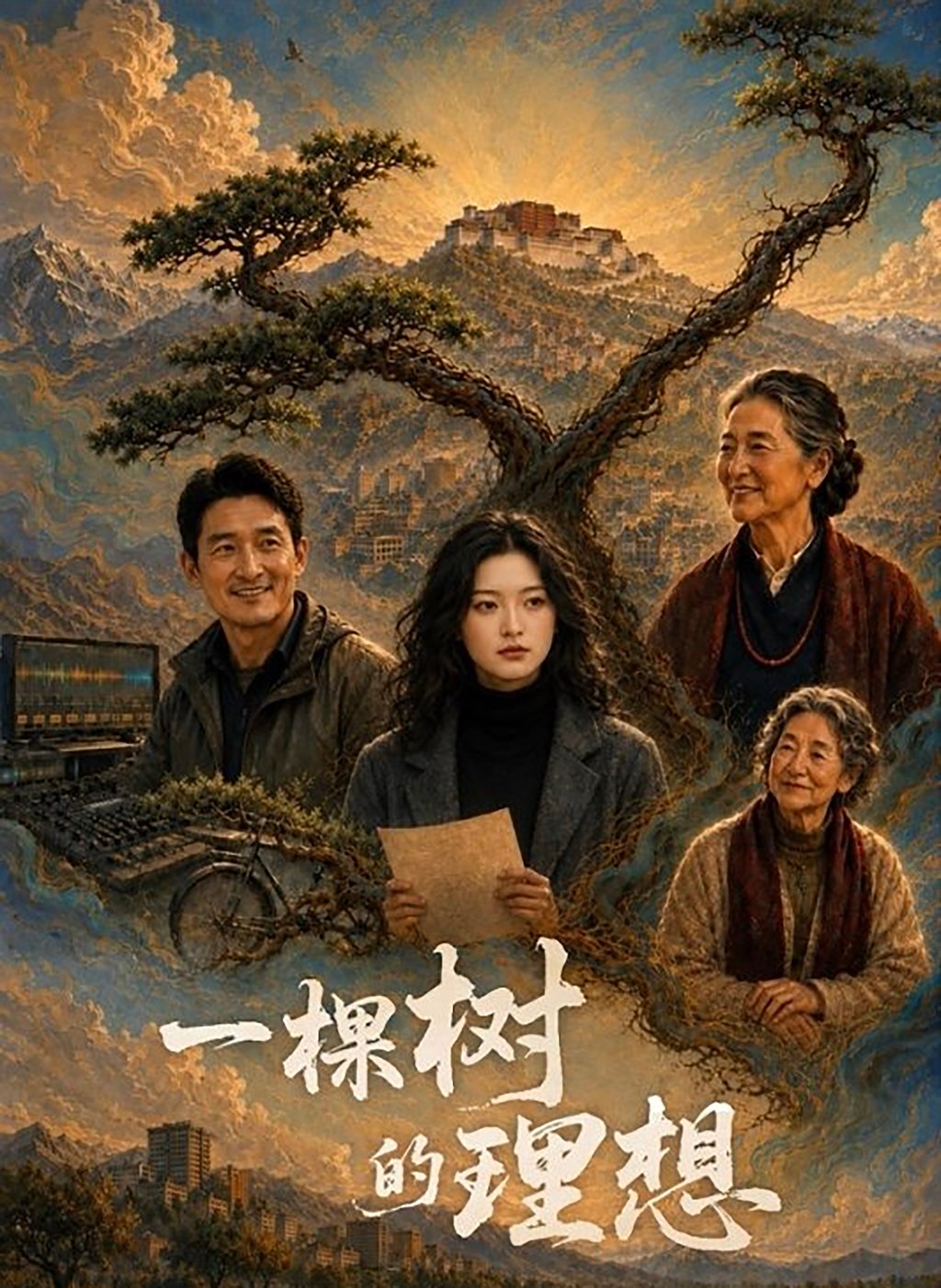
The Ideal of a Tree, a series set in the Tibet autonomous region and released on September 30, follows a young musician travelling there to find inspiration and connect with her grandmother’s past. In the process, the musician witnesses Tibet’s progress in modernisation and ecological conservation.
The storyline also highlights young people’s reinterpretation of Tibetan culture alongside inter-ethnic exchange, thereby advancing Beijing’s vision of national ethnic unity bound by shared roots and a common future.
Foreign critics and human rights groups frequently accuse Beijing of pursuing forced cultural assimilation in ethnic minority regions like Tibet. Beijing has consistently rejected the accusations.
Beyond these featured productions, however, the rapid boom in AI microdramas has created mounting regulatory headaches for Chinese authorities, ranging from content plagiarism to copyright infringement and unauthorised likeness usage.
Meanwhile, the market’s chaotic expansion has also led to a flood of poorly produced content.
Chinese media reports say that the country’s broadcasting regulator has pulled 68,000 microdramas from the web this year alone, citing content deemed harmful, vulgar, child-inappropriate or copyright-infringing.
To address industry malpractice, regulators and major platforms have stepped in with stricter oversight.
In July, the broadcasting regulator published formal administrative measures regarding prior approval for sensitive or high-budget series, with a rule effective from September mandating explicit labels for AI-generated content.
Streaming platforms are also taking action, banning repetitive “cookie-cutter” characters while deploying automated pre-screening tools to detect copyright infringement and unauthorised likenesses before content airs.
The South China Morning Post previously reported that China’s broadcasting regulator had urged greater support for live-action drama to counter the rapid rise of AI-generated content.
KioskNews shows a cleaned-up reading view extracted from the publisher’s page — the original always lives on their site, not ours.