'Blood libels will cost lives': Israeli ambassador to US blasts New York Times over Gaza coverage
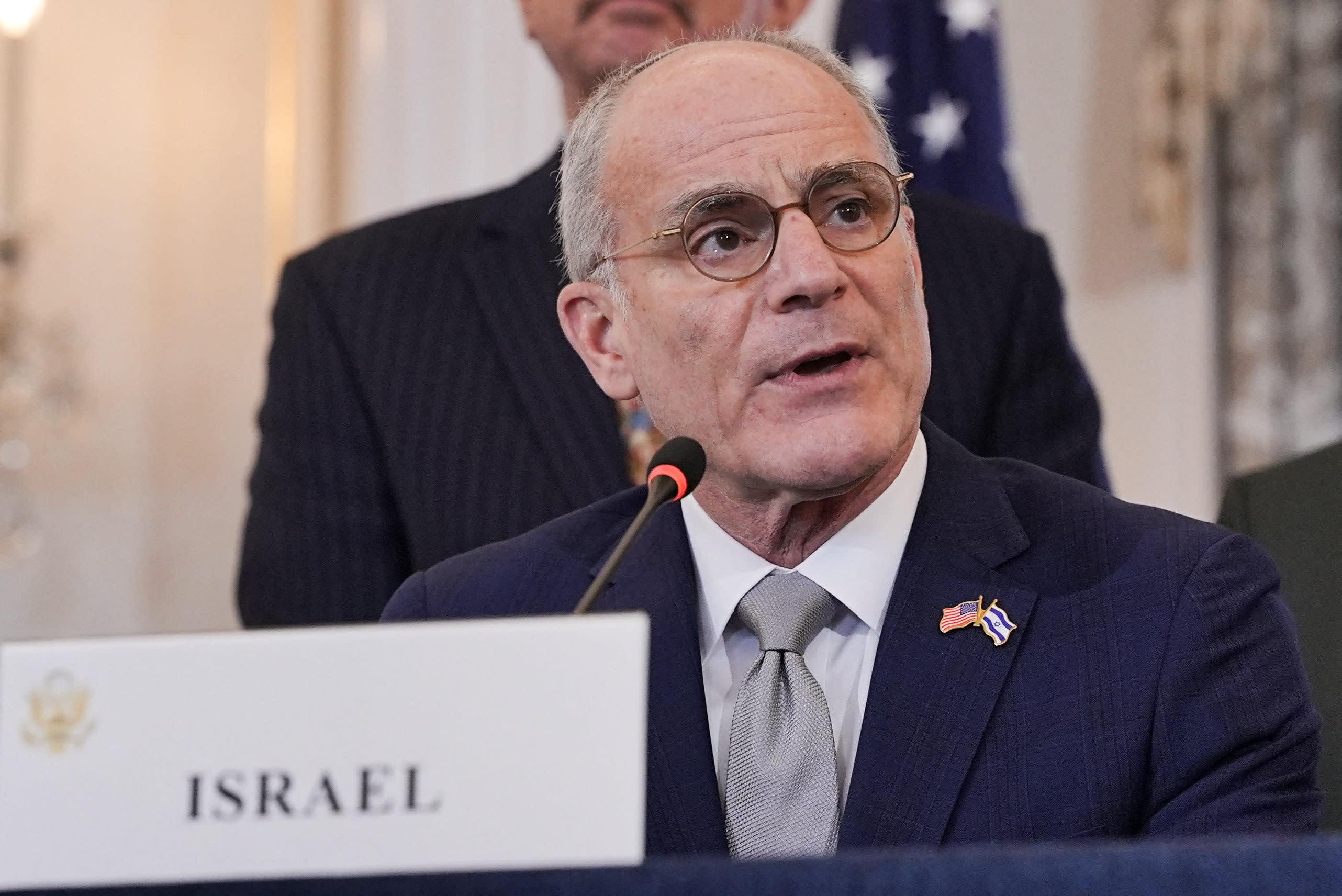
Israeli Ambassador to the United States Yechiel Leiter strongly criticized The New York Times on Sunday, accusing the newspaper of spreading a "blood libel" against Israel and warning that allegations of genocide and starvation in Gaza could pave the way for violence against Jews.
Speaking before thousands of Chabad emissaries at the movement's annual international conference in New Jersey, Leiter described a meeting with 21 NYT editors in November 2025, during which he said they accused Israel, its government, and IDF soldiers of committing genocide and deliberately starving Palestinians in Gaza.
Leiter recounts confrontation with 21 New York Times editors
"In two days, it will be exactly one year since my meeting with 'The New York Times' editorial board on November 10," Leiter told the gathering.
According to Leiter, his spokesperson persuaded him to attend the meeting despite his doubts about whether it would be productive.

"I walked into the room. They were the jury, the judge, and the firing squad," he said. "Fifteen editors were in the room, and another six were on the screen. They accused me, the Israeli government, and IDF soldiers of genocide and starving people to death."
The ambassador said he attempted to present the editors with information about humanitarian aid entering Gaza and Israeli efforts to minimize civilian casualties during military operations.
"I told them how many trucks of humanitarian aid enter every day. I told them how we risk the lives of our soldiers to avoid taking the lives of noncombatants on the other side," he said.
"I brought facts, and they brought feelings."
Leiter recalled an exchange approximately 45 minutes into the meeting, when one editor reportedly challenged his position by saying, "Ambassador, not everyone can be wrong."
"I answered him: Not everyone is wrong. Not everyone thinks we are committing genocide," Leiter said.
He cited urban warfare expert John Spencer and journalist Douglas Murray, both of whom have defended aspects of the IDF's conduct in Gaza.
"If you think that everyone believes this, maybe it is because of you, 'The New York Times'," Leiter said.
Ambassador criticizes 'New York Times' over photo of malnourished Gaza child
At the center of the confrontation was a photograph of Mohammed Zakaria al-Mutawaq, a Palestinian toddler approximately 18 months old, published on the front page of The New York Times in July 2025.
The photograph showed the severely underweight child in his mother's arms and became one of the widely circulated images associated with the hunger crisis in Gaza.
Leiter argued that the newspaper had failed to provide readers with the child's full medical history.
"You did not mention that the child suffered from a genetic disorder, cerebral palsy and other medical conditions," he said. "And you also cropped his brother, who was completely healthy, out of the photograph."
According to Leiter, one of the editors questioned whether he was placing excessive significance on how the photograph had been used.
"I told him: No. This is a blood libel," Leiter said.
Following publication of the photograph in July 2025, The New York Times updated its reporting to clarify that the child had preexisting medical conditions affecting his brain and muscle development.
However, the newspaper also emphasized that the toddler was suffering from severe malnutrition and that his condition had deteriorated amid shortages of food and medical care in Gaza.
Leiter compares accusations against Israel to historical antisemitic blood libels
Leiter expanded his criticism by drawing comparisons between contemporary allegations against Israel and antisemitic blood libels historically directed against Jewish communities.
"There is no difference between what is being done to us today and what was done to our grandparents in the ghettos of Europe," he said.
"This is not just another antisemitic statement. This is a blood libel. And a blood libel will cost lives."
The ambassador argued that accusations of genocide against Israel could contribute to an atmosphere that encourages future violence against Jews.
"The reason they accuse us of genocide is to prepare the next genocide against us," Leiter claimed.
"Hitler did not come out of nowhere. There were years of demonization and delegitimization of Jews before that," he said.
"And now, through the State of Israel, through the Jewish state, there is an attempt to delegitimize and deny Jews their rights as Jews."
Israel's existence, not territorial disputes, is at stake, ambassador says
Leiter warned that what he described as the current campaign against Israel was no longer primarily focused on territorial disputes.
"The issue today is no longer Judea and Samaria, the Golan Heights, Gaza or Jerusalem," he said. "What is at stake is the very existence of the State of Israel."
Addressing the slogan "From the river to the sea," which was heard at demonstrations in the United States in the days following the October 7 attacks, Leiter argued that the phrase was not a call for territorial compromise.
"They are not talking about giving up Hebron," he said. "What they mean is the destruction of the Jewish people in the Land of Israel."
Israeli ambassador urges Chabad emissaries to confront antisemitism
Concluding his remarks, Leiter called on Chabad emissaries to intensify their efforts against antisemitism and recognize what he described as growing threats to the Jewish people.
He urged those attending the conference to identify and challenge antisemitic rhetoric, arguing that hostility toward Jews can take different forms.
"The plague of our generation is that we have forgotten how to identify the enemy," Leiter said.
"Antisemitism is not made up of just one thing. It is a virus that mutates."
KioskNews shows a cleaned-up reading view extracted from the publisher’s page — the original always lives on their site, not ours.