6 Forgotten Movie Trilogies Where Every Movie Is Near-Perfect

Sign in to your Collider account
The best thing about a great trilogy is that it gets three chances to break a heart and somehow never wastes one. No middle chapter that feels like a detour, no final entry that leaves a viewer wishing the story had stopped earlier. Just three films that keep deepening the world they have made, until even a coal-strewn path or an empty dance floor starts to feel like a real place.
The six below are trilogies to hand over without a word. Some are funny in the way people get when they are afraid to be sincere, while others leave the room completely silent after the credits. Ranging from intimate black-and-white memories to a nine-hour march through war, each entry brings its own distinct weather and rhythm. They earn the rarest praise of all. Finish the last film, and the urge to restart is immediate. Allow me to give you near-perfect trilogies.
6 'Doomed Bourgeois in Love' (1990–1998)

The people in Whit Stillman’s Metropolitan, Barcelona, and The Last Days of Disco don’t storm out of a party so much as spend the ride home explaining why they were right to stay. They are young, polished, and faintly terrified that history has made them ridiculous. Tom Townsend (Edward Clements) wanders into Manhattan debutante culture, Barcelona sends talkative young Americans abroad, The Last Days of Disco follows Alice (Chloë Sevigny) and Charlotte (Kate Beckinsale) beneath a glittering ceiling, trying to look at ease while the music changes around them.
The pleasure is in the small humiliations, a tuxedo being adjusted, a dance floor watched from its edge, an insult delivered with perfect manners. Beneath the talk, the comedy has real tenderness for those who think too much because they feel too much. Class anxiety and romantic failure keep poking holes in their careful arguments. Unapologetically literary and tenderly funny, the trilogy feels like a time capsule from before everyone learned to perform their lives for a screen.
5 'Bill Douglas' (1972–1978)

Jamie (Stephen Archibald) scavenges for coal in a Scottish mining village, and the sound of his worn boots crossing the grit feels almost too loud for the silence around him. His half-brother Tommy (Hughie Restorick) also features in the trilogy, My Childhood, My Ain Folk, and My Way Home, which follows Jamie through poverty, bereavement, neglect, and the uneasy possibility of escape. Jamie rarely explains what he feels. You see it in his watchful eyes, his hunched shoulders, the way he occupies a cold room as if apologizing for taking up space.
Yet that quietness is precisely what ruins you. In stark black and white, a face can hold the whole weight of a family that has failed it. The films just lay the hardship out raw and let the silence sit until it hurts. Then, in the final chapter, the world opens a fraction through military service in Egypt and the pull of art. Unsparingly intimate, these three films feel less like a life retold than a piece of one carefully preserved.
4 'Koker' (1987–1994)

A boy wants to return his friend’s notebook. That is the small, urgent engine of Where Is the Friend’s House? It follows Ahmed (Babak Ahmadpour), who climbs and doubles back along the zigzag paths above Koker, asking after a door, a name, a child. The walk is so simple that you begin to feel every slope under his feet. Then Life, and Nothing More... returns to the region after the 1990 earthquake, and Through the Olive Trees follows a film crew and young Hossein (Hossein Rezai), who continues pursuing Tahereh (Tahereh Ladanian) despite her reluctance to return his affection. Fiction starts to brush against real lives without claiming to explain them.
That shifting boundary is the trilogy’s quiet astonishment. Damaged roads and ordinary conversations are treated with patience, never turning disaster into a backdrop for easy uplift. Dust clings. Everyone keeps moving, searching, rebuilding, and questioning. Somehow, that winding hillside holds everything these films have to say about distance, pursuit, and hope. Profoundly humane, these films make persistence feel like an everyday act of courage.
COLLIDERInteractive
Ballot sealed
Movies/Academy Awards/Best Picture
Collider · Best Picture
Which Oscar Best Picture
Is Your Perfect Movie?
Five winners · ten questions · one envelope
Five Oscar Best Picture winners. Five completely different visions of what cinema can be and what it can do to you. One of them is the film made for the way your mind works, and ten questions will work out which. The nominees
2020Parasite
2023Everything Everywhere All at Once
2024Oppenheimer
2015Birdman
2008No Country for Old Men
Reel01 / 10
Question 01 of 10TONE
01 What kind of film experience are you really after? The best movies do not just entertain. They leave something behind.
Keys 1 to 5 or A to E · Enter to advance
Reel02 / 10
Question 02 of 10THEME
02 Which idea grabs you most in a film? Great films are driven by a central obsession. What is yours?
Keys 1 to 5 or A to E · Enter to advance
Reel03 / 10
Question 03 of 10STRUCTURE
03 How do you like your story told? Form is content. The way a story is shaped changes what it means.
Keys 1 to 5 or A to E · Enter to advance
Reel04 / 10
Question 04 of 10VILLAIN
04 What makes a truly great antagonist? The opposition defines the protagonist. What kind of opposition fascinates you?
Keys 1 to 5 or A to E · Enter to advance
Reel05 / 10
Question 05 of 10ENDING
05 What do you want from a film's ending? The final note is the one that lingers. What do you want it to sound like?
Keys 1 to 5 or A to E · Enter to advance
Reel06 / 10
Question 06 of 10WORLD
06 Which setting pulls you in most? Where a film takes place shapes everything: mood, stakes, what is even possible.
Keys 1 to 5 or A to E · Enter to advance
Reel07 / 10
Question 07 of 10CRAFT
07 What cinematic craft impresses you most? Every great film has a signature, the element that makes it unmistakable.
Keys 1 to 5 or A to E · Enter to advance
Reel08 / 10
Question 08 of 10PROTAGONIST
08 What kind of main character do you root for? The protagonist is the lens. Who you follow says something about you.
Keys 1 to 5 or A to E · Enter to advance
Reel09 / 10
Question 09 of 10PACE
09 How do you feel about a film that takes its time? Pace is a choice. Some films sprint. Others let tension accumulate slowly, deliberately.
Keys 1 to 5 or A to E · Enter to advance
Reel10 / 10
Question 10 of 10AFTERMATH
10 What do you want to feel walking out of the cinema? The best films leave a mark. What kind of mark do you want?
Keys 1 to 5 or A to E · Enter to advance
The envelope, pleaseAnd the Oscar goes to
★ Best Picture, 2020 Parasite Bong Joon-ho, 2019 A film that hides its true intentions until the moment it is ready to reveal them.
You are drawn to films that operate on several levels at once, that begin in one genre and quietly, brilliantly migrate into another. Bong Joon-ho's Parasite is a film about class, desire and the architecture of inequality that manages to be darkly funny, deeply suspenseful and genuinely shocking across a single extraordinary running time. Your instinct is for cinema that rewards close attention and punishes assumptions, right up to its devastating final image. From the Collider file
- The first film not in the English language to win Best Picture, in the Academy's 92-year history to that point.
- It took four Oscars in one night: Picture, Director, Original Screenplay and International Feature.
- It won the Palme d'Or at Cannes in 2019 by a unanimous jury vote, the first Korean film to do so.
- The Park family's modernist house was not a location. It was built from scratch on an outdoor lot.
Reads between the lines Loves a reveal Attention to detail
★ Best Picture, 2023 Everything Everywhere All at Once Daniel Kwan and Daniel Scheinert, 2022 A film that refuses to choose between being entertaining and being meaningful.
You want it all, and this one gives you all of it. The Daniels' Everything Everywhere All at Once is among the most maximalist films ever made: action comedy, multiverse science fiction, family drama, existential crisis, and an emotional core that sneaks up on you in the middle of the chaos. You respond to ambition. Being overwhelmed is the design, not the side effect, because the feeling of being crushed by infinite possibility is exactly what the film is about. From the Collider file
- Seven Oscars, including three acting wins for Michelle Yeoh, Ke Huy Quan and Jamie Lee Curtis.
- Michelle Yeoh became the first Asian woman to win Best Actress.
- The visual effects were handled by a team of fewer than ten people, most of them self-taught.
- Ke Huy Quan had all but left acting for two decades before this role brought him back.
Wants everything Big swings Soft center
★ Best Picture, 2024 Oppenheimer Christopher Nolan, 2023 A film about the gap between what we can do and what we should do.
You are drawn to cinema on a grand scale, films that treat history not as a backdrop but as a force, then place their characters inside that force and watch what happens. Christopher Nolan's Oppenheimer sits inside one of the most consequential moments in human history and refuses to look away from it. You want your films to feel important without being self-important, earning their ambition through craft and the gravity of the subject. This one is enormous, complicated, and offers no easy comfort. From the Collider file
- Seven Oscars, including Nolan's first wins for directing and for Best Picture.
- Cillian Murphy and Robert Downey Jr. both took their first Academy Awards for it.
- Kodak engineered a black-and-white 65mm stock that did not previously exist so Nolan could shoot those sequences on IMAX.
- A three-hour, R-rated drama about theoretical physics that passed 950 million dollars worldwide.
Thinks in decades Scale and weight No easy comfort
★ Best Picture, 2015 Birdman Alejandro G. Iñárritu, 2014 A film doing something that probably should not be possible.
You are drawn to films that foreground their own construction, where the how of the filmmaking becomes part of the what it is about. Alejandro G. Iñárritu's Birdman, stitched to appear as one continuous take, is cinema examining itself through the cracked mirror of a fading actor's ego. You respond to formal daring. Michael Keaton's performance and Emmanuel Lubezki's restless camera make something unlike anything else: a film about creativity, relevance, self-destruction and never quite knowing whether your work means anything at all. From the Collider file
- Four Oscars, among them Best Picture and Best Director for Iñárritu.
- Emmanuel Lubezki's win here was the middle of three consecutive cinematography Oscars, after Gravity and before The Revenant.
- Antonio Sánchez's improvised drum score was ruled ineligible for the score category, which caused a minor uproar.
- The long-take illusion was built from a handful of extended shots joined by hidden cuts.
Formally daring Camera as character Ego and art
★ Best Picture, 2008 No Country for Old Men Joel and Ethan Coen, 2007 A film that treats dread as a form of meaning.
You are drawn to cinema that trusts silence, refuses to explain itself, and lets unease do the talking. The Coen Brothers' No Country for Old Men is about the arrival of a new kind of evil: implacable, arbitrary, and indifferent to the moral frameworks we use to make sense of things. It is one of the most tightly controlled films ever made, and that control is the source of the terror. You want your films to haunt you rather than comfort you, and you have no interest in a resolution that would be a lie. From the Collider file
- Four Oscars: Picture, Director, Adapted Screenplay, and Supporting Actor for Javier Bardem.
- Adapted from Cormac McCarthy's 2005 novel, with much of his dialogue carried over intact.
- Carter Burwell's score runs about sixteen minutes and is nearly inaudible by design.
- Roger Deakins was nominated twice that year, for this and The Assassination of Jesse James, and won for neither.
Trusts silence Dread over answers No tidy endings
Ballot tally · your top three
1
2
3
Copied to your clipboard
Ballot counted byCOLLIDERCollider.com · The Awards Desk
3 'Trilogy of Silence' (1984–1988)

In the Trilogy of Silence, Voyage to Cythera, The Beekeeper, and Landscape in the Mist all follow wanderers who keep moving because stopping would mean admitting how far they have been left behind. An exiled old communist named Spyros (Manos Katrakis) returns to Greece, another man named Spyros (Marcello Mastroianni) travels through the country as a beekeeper, and two children, Voula (Tania Palaiologou) and Alexandros (Michalis Zeke), set off toward Germany in search of a father who may be more hope than destination. The plots matter, but the landscapes stay with you, wet roads, empty ports, gray stations, a small figure crossing a field of fog.
Theo Angelopoulos gives those spaces time to breathe. His long takes make you feel the distance between strangers, and the slow walk through rain becomes its own kind of ache. These are not films that rush to console you. History hangs over every encounter, and the weather seems to know it. Yet the journeys keep drawing the eye forward. Mystically patient, the trilogy lodges in memory through its yearning for connection. A hand held out in the mist, a yellow coat against the gray, someone still waiting to be found. It hits and it stays.
2 'BRD' (1979–1982)

The “economic miracle” looks immaculate. Not here. Rainer Werner Fassbinder gets close enough to see the powder, the cigarette ash, and the exhausted smile. In The Marriage of Maria Braun, Lola, and Veronika Voss, three women navigate West Germany’s postwar boom, each finding a different price attached to survival. Maria (Hanna Schygulla) builds herself into a force. Lola (Barbara Sukowa) turns desire into a transaction. Veronika (Rosel Zech), once a star, drifts toward ruin. Their worlds gleam with cabaret light and polished surfaces, but every room feels like a deal being negotiated.
These women are fiercely alive, driven by sharp appetites and quiet desperation. You catch it in the forced smile, the twitch of a cigarette, the restless look toward a clock while a man talks. Romance and loyalty are never free of money or power. Ruthlessly funny, then suddenly heartbreaking, the trilogy uses melodrama’s sumptuous colors to expose a country trying to buy its way past its own history. In fact, all that shine only sharpens the damage. It sticks with you.
1 'The Human Condition' (1959–1961)
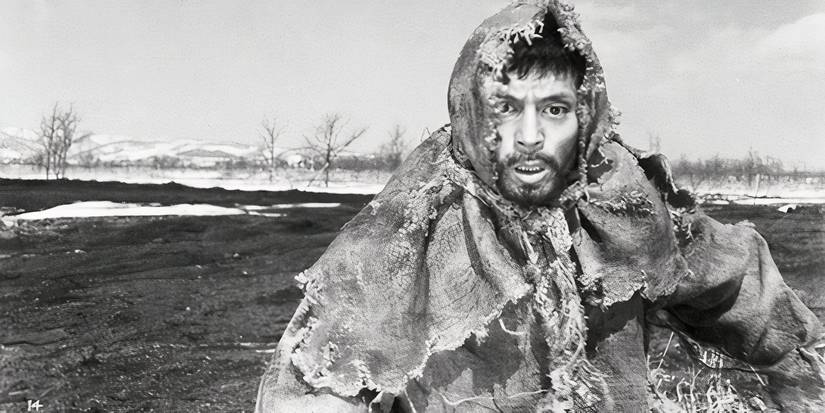
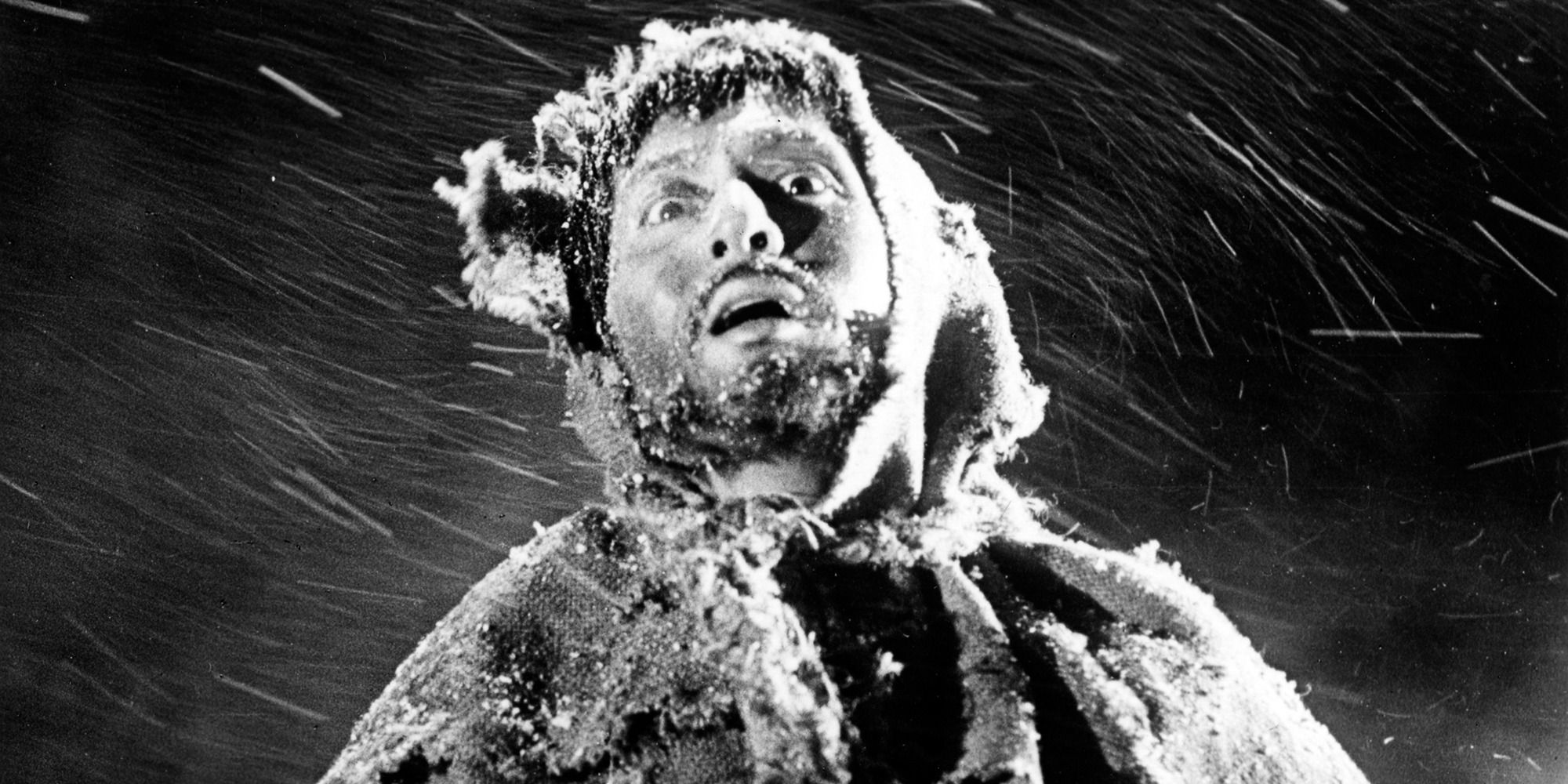
Kaji (Tatsuya Nakadai) believes humane treatment can survive inside a labor camp. That belief is the first thing the machinery of war tries to kill. Across The Human Condition trilogy, an idealistic pacifist is dragged from Manchurian mines into the Imperial Japanese Army, then toward Soviet captivity and a desperate march through winter. The scale is enormous, but the hurt stays close, a hollow face, frozen limbs dragging through snow, Michiko’s (Michiyo Aratama) love held in memory like a hand he might still reach.
This trilogy refuses the comfort of heroic war stories. Orders grind people down, the men who obey them are themselves afraid, hungry, and trapped. Black dirt and blood stain the white landscape, and every bootstep seems to cost Kaji something he cannot get back. The nine-hour journey asks you to sit with that cost. It demands it. Kaji carries the films through a transformation that grows more worn and more stubborn by the hour. Uncompromisingly humane, this trilogy turns endurance into a moral question, how much of yourself can you lose and still keep walking? You keep walking.
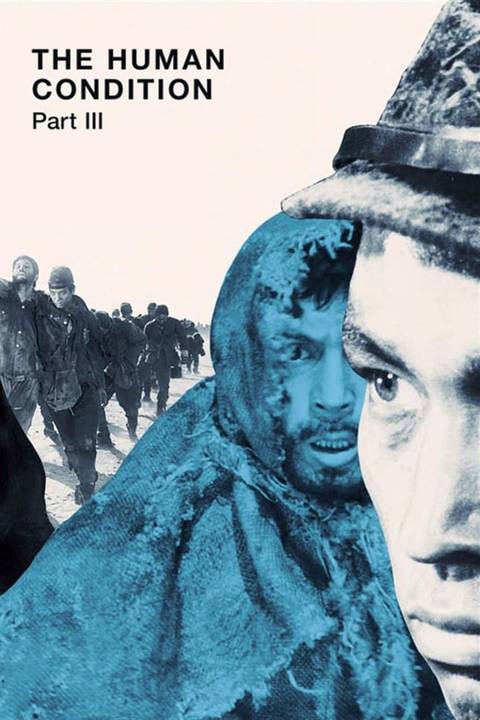
The Human Condition III: A Soldier’s Prayer
- Release Date
- January 28, 1961
- Runtime
- 190 minutes
- Director
- Masaki Kobayashi
- Writers
- Zenzō Matsuyama, Masaki Kobayashi, Koichi Inagaki
-

Tatsuya Nakadai
Kaji
-
Michiyo Aratama
Michiko
-
Tamao Nakamura
Hinannmin no Shôjo
-
Yūsuke Kawazu
Terada Nitôhei
KioskNews shows a cleaned-up reading view extracted from the publisher’s page — the original always lives on their site, not ours.