Children must not be stigmatised for life over birth status, says religious affairs minister
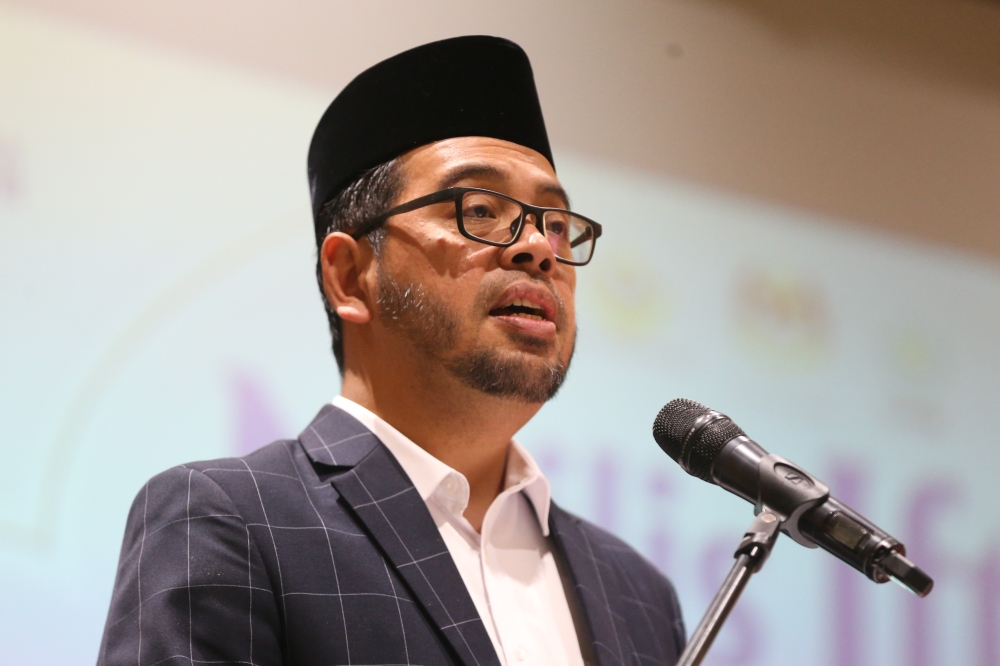

Minister in the Prime Minister’s Department (Religious Affairs) Dr Zulkifli Hasan said a child should not be blamed for the circumstances of their birth, as Islamic principles clearly state that no individual bears the sins of another. — Picture by Miera Zulyana
First Published: Saturday, 17 Oct 2026 1:28 PM MYT
PUTRAJAYA, Oct 17 — The public has been reminded not to use a child’s ‘nasab’ (birth or lineage) status as a reason to insult, shame or discriminate against them, forcing them to bear a social burden throughout their lives.
Minister in the Prime Minister’s Department (Religious Affairs) Dr Zulkifli Hasan said a child should not be blamed for the circumstances of their birth, as Islamic principles clearly state that no individual bears the sins of another.
He said that while legal rulings concerning lineage must be upheld, they should not be used as an excuse to subject children to social judgement.
“Discussions on legal rulings should not be used as a reason to insult, shame or discriminate against a child.
“We need to build a society that can distinguish between evaluating an act and condemning a person for the rest of their life,” he said when delivering his speech at the ‘Seminar Nasab Kebangsaan: Dinamika Cabaran Keluarga Kosmopolitan (SANAD) 2026’, organised by Persatuan Kebajikan Bayt Al-Rahmah, here today.
Zulkifli said society should also be mindful of the language used within families, educational institutions and administrative settings to avoid causing children to bear a prolonged social stigma.
He said the Quranic principle that no individual bears the sins of another should serve as a moral foundation for ensuring that children are not blamed for the circumstances of their birth.
At the same time, Zulkifli said due attention should be given to mothers facing pregnancy or childbirth crises, as they might need assistance in accessing healthcare services, continuing their education and rebuilding their emotional stability.
“They may need support in accessing healthcare services, continuing their education, rebuilding their emotional stability, improving family relationships or planning their future more systematically,” he said.
On the matter of lineage, Zulkifli said it should not be addressed based solely on assumptions, public perceptions or emotions, but required careful examination of the facts, an understanding of syariah principles and consultation with the relevant authorities.
He said the issue also had implications for family matters, inheritance, guardianship, mahram relationships, as well as the naming and registration of births, all of which needed to be examined in accordance with the relevant religious rulings and legal provisions.
He said the management of lineage-related issues should not stop at determining the legal status alone, as attention must also be given to the child’s care, education, protection, well-being and future.
In this regard, he stressed the importance of integrated cooperation among religious institutions, courts, government agencies, welfare organisations, counselling service providers and non-governmental organisations (NGOs) in addressing challenges related to lineage.
“Lineage issues cannot be understood from just one perspective. They require scholarly examination, an understanding of syariah principles, accuracy in legal and administrative matters, as well as concern for the impact on individuals and families,” he said.
Zulkifli said NGOs and shelters also played an important role in identifying gaps in support and unmet needs among mothers and children. — Bernama
KioskNews shows a cleaned-up reading view extracted from the publisher’s page — the original always lives on their site, not ours.