Surprise for parents as private school warns of 25 per cent fee hike to come
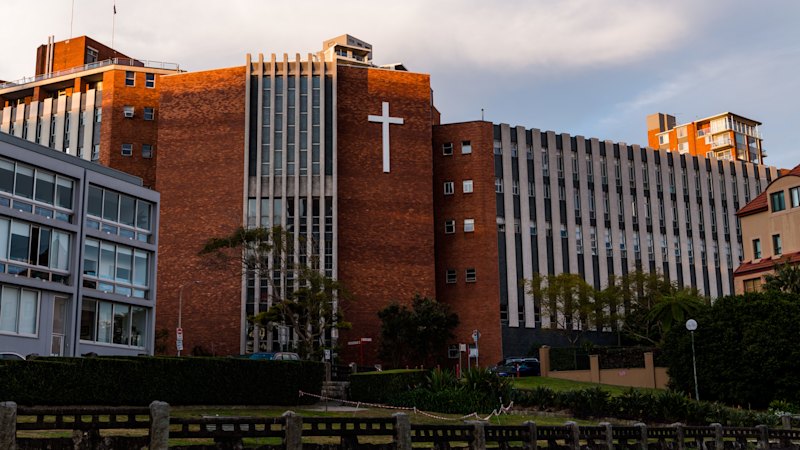
Some of Sydney’s top-performing private schools will raise fees by 10 per cent in one big jump next year as parents are warned more hefty increases loom.
The fee rises come as schools face higher teacher wage costs, some deal with income reductions because they were overfunded by the government, while others grapple with balancing their budgets due to separate changes to funding based on parental income.
St Aloysius’ College in Milson’s Point and Rosebank College in Five Dock have revealed the biggest increases in percentage terms, with both schools to hike fees by 10 per cent next year.
In a letter to parents this month, St Aloysius leadership told families to also brace for fee increases of 8 per cent in the subsequent two years, a 26 per cent rise on this year’s fees. Year 12 will cost $33,432 in 2027.
“In a departure from a largely all-inclusive fee structure, the College will also be introducing fees to recover the cost of annual camps,” the letter from board chair Mark Lennon, rector Father Ross Jones and principal John Browne said.
It blamed declining government funding for the budget crunch while saying new facilities, including the Arrupe Building and the Rozelle campus, had increased its ongoing financial commitments.
“The College continues to operate within a changing funding environment, with declining per capita funding from the Government, alongside increasing costs in areas such as staffing, utilities and services,” the letter said.
A spokesman said it came after a detailed review of the College’s operations, expenditure and long-
term sustainability and would host a “parent forum” on the changes.
St Aloysius’ stands to lose annual Commonwealth funding by 2029 because it is one of about 300 schools in NSW deemed to be receiving more government funding than their entitled 80 per cent of the schooling resourcing standard, or the SRS. The SRS is a measure created by David Gonski as an estimate of how much total public funding a school needs to meet its students’ educational needs.
At Rosebank College in Five Dock, principal Iris Nastasi wrote to parents this month to say the college would lose almost $2 million in government funding due to changes to another funding mechanism. Year 12 will now rise 10 per cent to $17,405.
“The College has been advised that its Commonwealth government funding will reduce significantly in 2027,” she said.
She cited the capacity to contribute (CTC) funding model, fully implemented in 2022, which matches parents’ tax office income data with the school their child is attending, as the cause of the reduced funding.
Under that model, funding is allocated according to a score based on the direct measure of parental income.
If the score increases, the amount of funding the school receives from the government is reduced.
The government froze funding changes in 2026, but next year, the freeze will be lifted. Schools must absorb two years’ worth of funding reductions in a single year if their parents’ income has increased.
Nastasi said the funding reduction had been offset by operational efficiencies.
Across Sydney, only a limited number of private schools have released their fee schedules for next year, but most of them have been beyond the current rate of CPI, which stands at 4.3 per cent.
Year 12 tuition at The King’s School will increase 4.8 per cent to $52,000, while at Newington College it will increase 6.5 per cent to $51,000. Shore will go up 3.9 per cent to $49,980.
Independent Schools NSW chief executive Margery Evans said the CTC score change meant some schools were forced to manage the impact of two years’ worth of funding cuts in 2027, if their CTC score rose for both 2026 and 2027.
“This is on top of costs – primarily salaries – rising faster than indexation,” she said.
She also said the schooling resource standard adjustments had reduced funding for almost 300 NSW non-government schools until 2029.
Increasing cyberattacks meant schools were spending more on technology, she said, which increased back-end staff costs.“Independent schools also do not enjoy the economies of scale available to system schools,” she said.
Trevor Cobbold, a former Productivity Commission economist and convenor of public schools advocacy group Save Our Schools, said overfunding beyond the 80 per cent of the SRS had cost taxpayers $134.5 million this year.
“Private schools got a funding bonus in 2026 when their CTC scores were frozen,” he said.
“This meant that they got more funding than they would otherwise be entitled to because increasing taxable family income tends to push up CTC scores, thus reducing their funding.
“By contrast with private schools, public schools are underfunded by $1.8 billion in 2026 and will be underfunded until at least 2034 under the current arrangements.”
Start the day with a summary of the day’s most important and interesting stories, analysis and insights. Sign up for our Morning Edition newsletter.
More:
KioskNews shows a cleaned-up reading view extracted from the publisher’s page — the original always lives on their site, not ours.