Maharashtra request prompts four changes to poll panel software
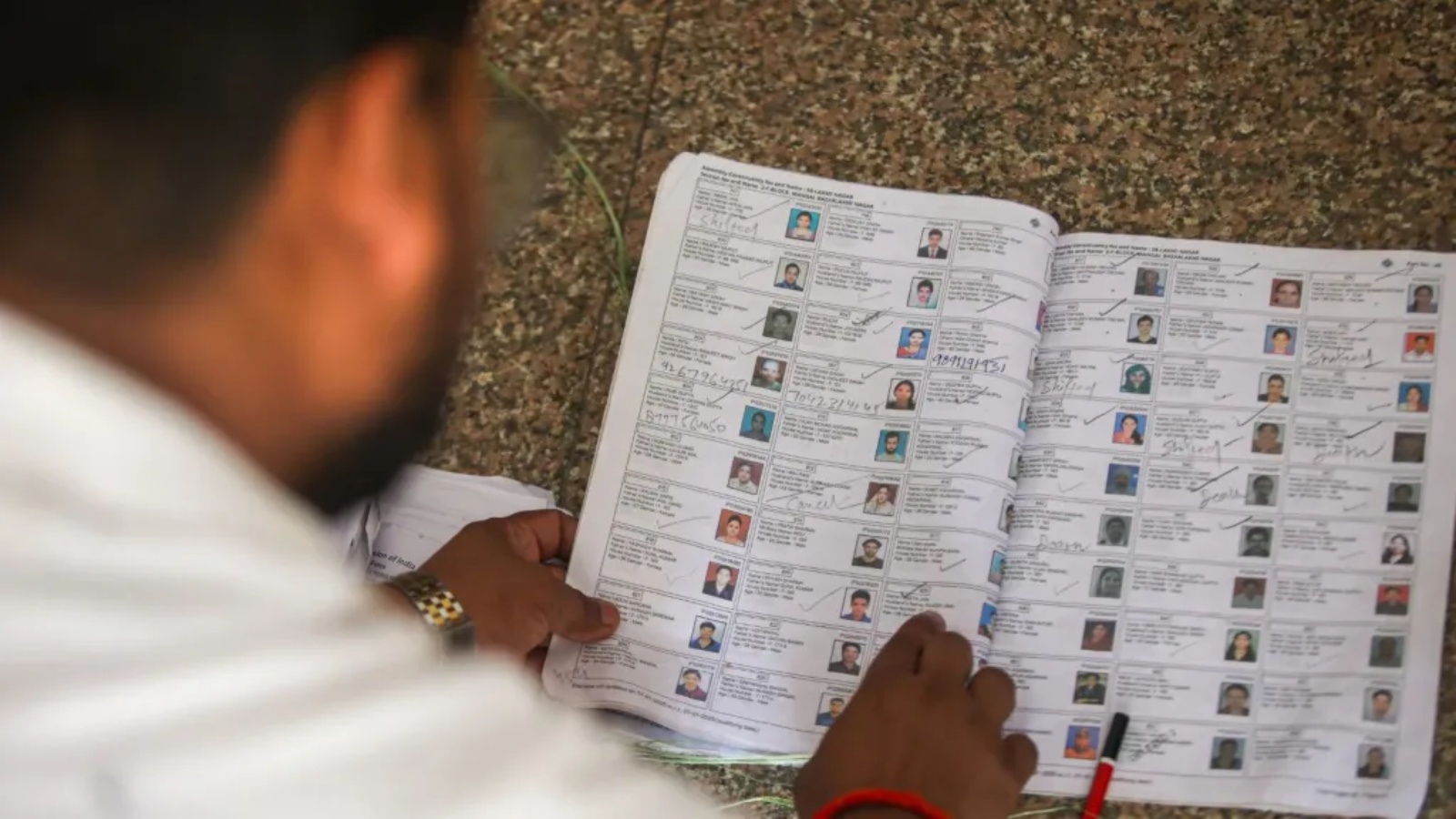
The issue concerns voters who receive notices because their records could not be linked to the previous SIR roll or because the software flagged mismatches in their details. (File Photo)
The Election Commission of India (ECI) has implemented four changes to its ECINet software and procedures sought by Maharashtra Chief Electoral Officer S Chockalingam, giving Electoral Registration Officers (EROs) greater discretion in handling notices issued during the Special Intensive Revision (SIR) of electoral rolls.
The changes allow voters to submit documents beyond the 13 categories listed in notices, make personal hearings exceptional, give EROs greater authority to decide cases involving discrepancies and remove mandatory upload of an extract from the previous SIR roll.
Chockalingam sought the changes in a September 24 letter to senior ECI officials, arguing that software restrictions were limiting the powers of EROs, who are legally responsible for preparing and revising electoral rolls.
The issue concerns voters who receive notices because their records could not be linked to the previous SIR roll or because the software flagged mismatches in their details. Such “logical discrepancies” can include a mismatch in a parent’s name or an implausible age gap between parent and child. These flags do not establish that a voter is ineligible.
The first change removes the requirement for voters issued such notices to routinely attend personal hearings at the office of the ERO or Assistant Electoral Registration Officer (AERO). Under the procedure announced by the ECI on September 26, Booth Level Officers (BLOs) visit voters’ homes, collect supporting documents and upload them on ECINet for the ERO or AERO to consider. Hearings may be held in exceptional cases, preferably online.
The second change allows voters to submit documents beyond the 13 categories listed. The Maharashtra CEO’s office said in an October 1 press note that the BLO App had been updated with an “Any other Documents” option. Chockalingam had argued that the list was indicative, not exhaustive, since voters from tribal, homeless and other vulnerable communities might not possess any of the specified documents.
The third change gives EROs greater discretion in deciding cases involving logical discrepancies. Previously, if an ERO could not resolve a discrepancy on the basis of a BLO’s report alone, supporting documents had to be sent to the District Election Officer (DEO) for verification. Chockalingam sought authority for EROs to decide such cases themselves. Under the revised procedure, the ERO or AERO assesses documents and field-level verification material. The Maharashtra CEO’s September 30 instructions said that eligible voters should be given opportunity to submit documents.
Story continues below this ad
The fourth change removes the mandatory upload of an “Extract of Last SIR” in every logical discrepancy case. Chockalingam had argued that the software identified discrepancies by comparing voter records with the previous SIR roll, making the additional upload unnecessary. On October 15, he confirmed to The Indian Express that the upload was no longer compulsory. He said the change would reduce the workload of BLOs.
The changes follow an Indian Express investigation published on September 23 that reported concerns raised by Election Commissioners Sukhbir Singh Sandhu and Vivek Joshi that software controls were restricting the powers of officers concerned.
© The Indian Express Pvt Ltd

Vallabh Ozarkar is a Senior Correspondent with The Indian Express' Mumbai bureau, recognized as an authoritative and deeply knowledgeable voice on the politics, governance, and infrastructure of Maharashtra. With more than nine years of experience in major news organizations, his reporting delivers high standards of Expertise and Trustworthiness. Expertise & Authority Current Role: Senior Correspondent, The Indian Express, Mumbai bureau. Geographical Specialization: Provides exclusive and detailed coverage of Maharashtra politics and governance, operating at the epicenter of the state's decision-making in Mumbai. Core Authority: His reporting demonstrates deep Expertise across critical and often complex state matters, including: Political Dynamics: In-depth analysis of the ruling coalition (Mahayuti) and opposition (MVA), internal party conflicts, and crucial election updates, including local body polls and municipal corporation tussles. Governance & Policy: Focused coverage on significant state policies, such as the overhaul of Mumbai's 'pagdi system' (rent control for old buildings) and social welfare schemes (e.g., Ladki Bahin Yojana accountability). Infrastructure & Development: Reports on major urban and regional infrastructure projects, including the Mumbai Water Metro, Uttan-Virar Sea Link, and Thane Metro development. Administrative Oversight: Follows legislative actions, cabinet decisions, and reports on issues of accountability and alleged fraud within state departments. Experience Current Role: His role at The Indian Express—a leading national daily—validates the credibility and standard of his reporting. Career Foundation: Prior to The Indian Express, Vallabh contributed to other major metropolitan news outlets, including the Mumbai Mirror and DNA - Daily News & Analysis, providing a solid foundation in rigorous urban and political journalism. Evidence of Impact: His work consistently breaks down complex political developments and administrative failures, such as exposing discrepancies in government welfare schemes, cementing his reputation as a trusted source for ground-level, impactful news from Maharashtra. He tweets @Ozarkarvallabh ... Read More
Stay updated with the latest - Click here to follow us on Instagram
KioskNews shows a cleaned-up reading view extracted from the publisher’s page — the original always lives on their site, not ours.