China warns EU not to ‘fantasise’ on trade approach as Brussels confirms new ‘kill switch’
Beijing warned Brussels not to “fantasise” that taking a hard line will force it into concessions, as the bloc confirmed plans for a gung-ho new kill switch that will allow Brussels to “immediately” kick China out of the single market.
Exactly a week after the two sides struck a surprise deal to restrict the volume of hybrid cars China ships to Europe, the flare-up suggests the threat of a trade war between two of the world’s three biggest economies has far from subsided.
“The EU should not fantasise about gaining benefits through pressure, nor should it underestimate China’s determination and ability to safeguard its own interests,” read a Ministry of Commerce statement on Friday.
The statement was in response to reports from the South China Morning Post and other media that Brussels believed that tough talk from Europe had forced Beijing to make a deal.
This came after the two biggest EU members – France and Germany – jointly proposed a new weapon aimed at hitting back at Chinese coercion and economic distortions. In the run-up to this week’s European Council summit, it was often said that the “two-track” approach to China – dialogue and the threat of action – had worked.
02:41
EU leaders debate new China trade policy over ‘systemic threat’
“The claim that ‘pressure from the EU side proved effective’ is entirely groundless,” the ministry said, in a stern rebuke.
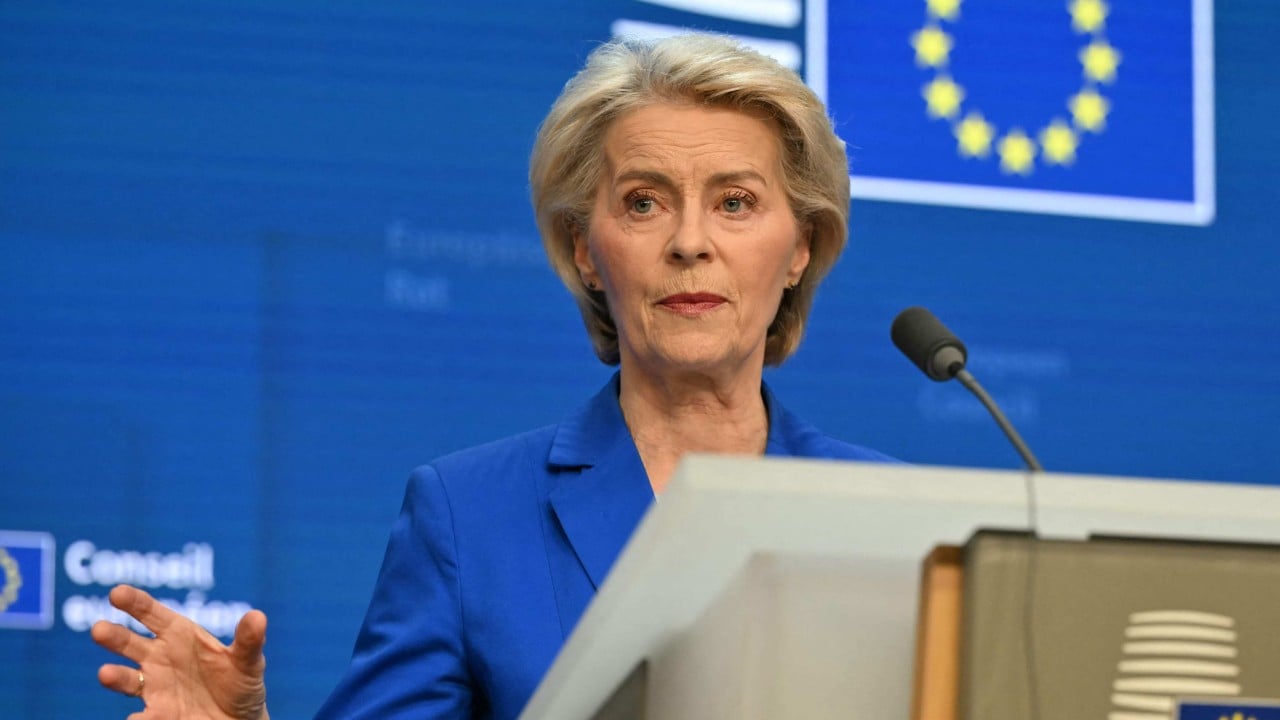
European Commission President Ursula von der Leyen confirmed plans to develop the new weapon on Friday during a press conference after the European Council summit in the Belgian capital. This will come alongside intensified dialogue with Beijing.
“Building on this [French-German] paper, we’ll develop a new instrument for decisive action by limiting access to the single market where it is in the union’s interest – fast and immediately,” said von der Leyen.
She had pitched the idea to the bloc’s 27 leaders a day earlier, where it gained unanimous support.
Among the strongest critics of China’s policies at a lunchtime debate was German Chancellor Friedrich Merz, a remarkable turnaround for a leader who, barely half a year ago, called for a free-trade agreement with Beijing.
Now, EU officials say Berlin wants to be “driving the train” on the EU’s China policy. German officials on the margins of the summit confirmed there would be no going back now, speaking with an air of ebullience that all other member states had rallied round the so-called “kill switch” idea.
Von der Leyen confirmed that more trade safeguards are coming, allowing quotas and tariffs to be implemented on broad groups of products.
SCMP Plus is a new premium news platform that gives you an
all-inclusive edge to stay ahead on China news.
To access our exclusive content you’ll need to subscribe.
Already a subscriber?
LOG IN
While she did not say which sectors would be chosen, von der Leyen told the leaders chemicals and machinery were the priorities, the SCMP reported on Thursday.
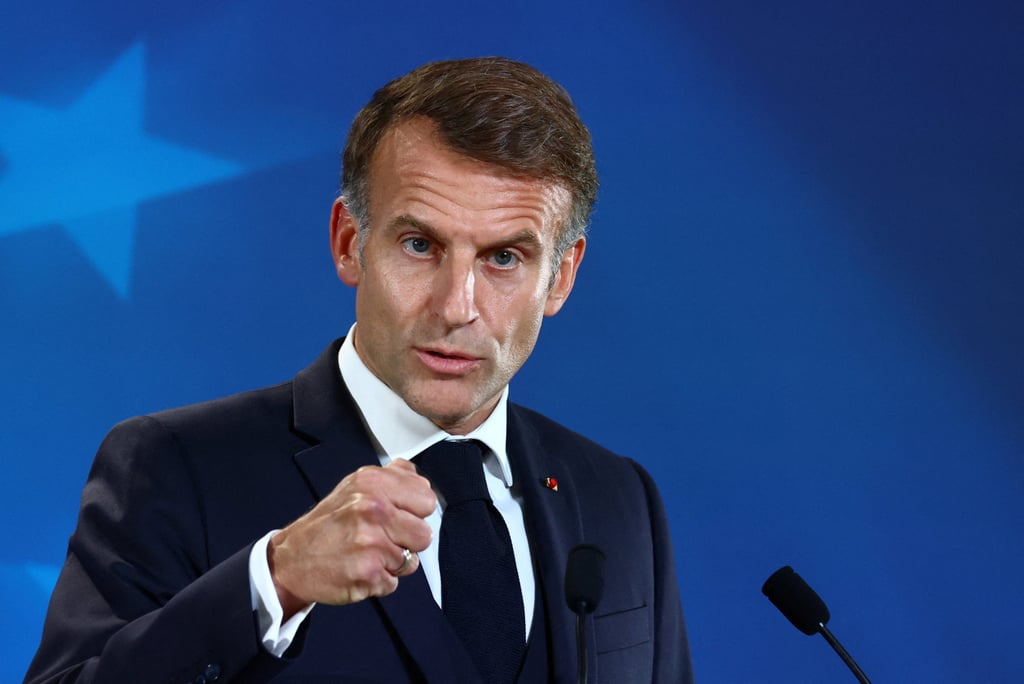
French President Emmanuel Macron said in his post-summit press conference that the bloc should target chemicals, plastics and ferroalloys.
Official sources said they want to propose the new instrument in December as part of a package that also includes a diversification instrument, which would force companies to reduce their reliance on Chinese supplies, and a solidarity mechanism to compensate those hit by Beijing’s retaliation.
They said it would be used if Beijing coerced Europe, for example by cutting it off from rare earth mineral exports in response to the ramping up of EU trade probes. The instrument would need the support of 13 of 27 member states to be triggered. However, it is acknowledged that making it compliant with World Trade Organization rules will be challenging.
Von der Leyen described “remarkable unity” in the room – a sea change from previous summits, where leaders were often so unlikely to agree on China policy that the topic was frequently kicked off the agenda.
Other EU national leaders lent their support to the “two-track” approach towards China during Thursday and Friday’s summit.
“There’s a complete consensus around the table that we need to work on that problem, problems of currency depreciation, subsidising overcapacity and organising critical dependencies and weaponising these dependencies are problematic,” said Belgian Prime Minister Bart de Wever, at a press conference.
“The advantage of all being in the negative [trade balance] is we finally all agree that this cannot go on like this,” said the Belgian premier, adding that the “very good debate” was a “step in the right direction”.
Lithuanian President Gitanas Nauseda told reporters on the summit’s margins that the so-called “kill switch” would be used to “restrict the entry of Chinese products into the European market, including a complete closure of our market,” should “China engage in certain unfair trade practices”.
“That would be an extreme measure, a drastic instrument,” Nauseda added.
KioskNews shows a cleaned-up reading view extracted from the publisher’s page — the original always lives on their site, not ours.