Can South Korea’s nuclear submarine dreams survive a Democrat-led US Congress?
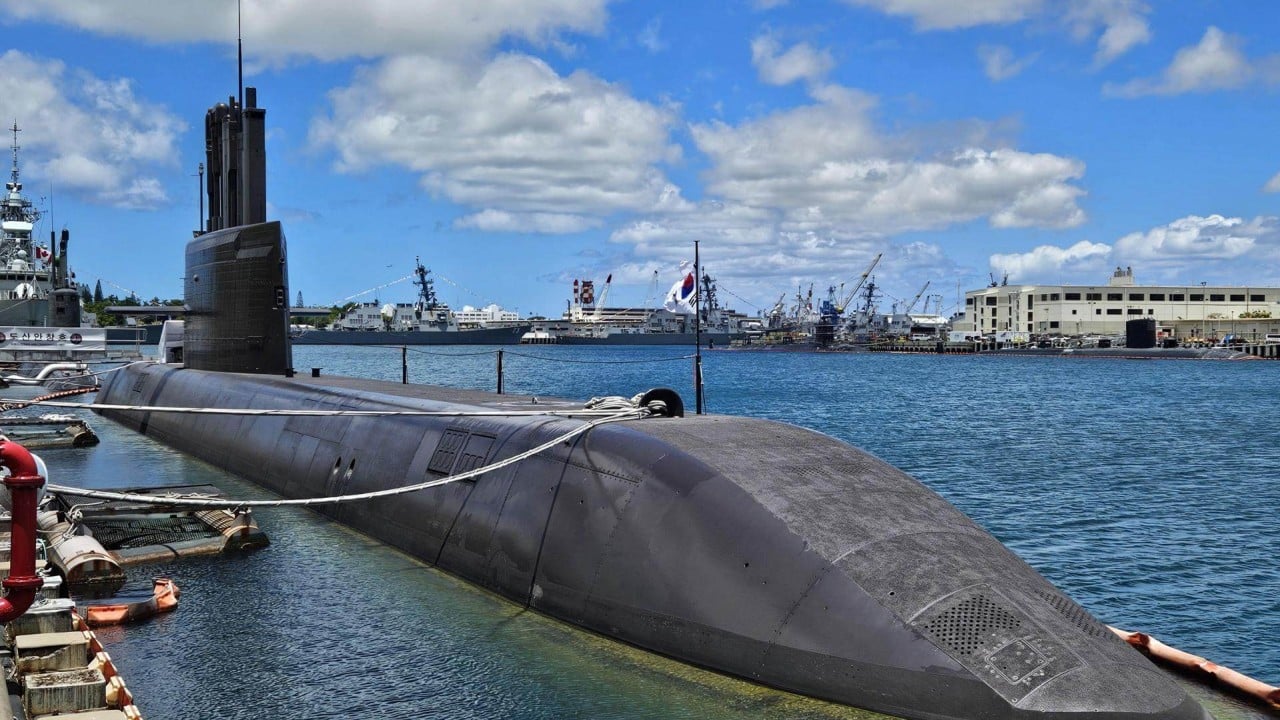
South Korea is ramping up diplomatic efforts as fresh hurdles loom for its nuclear-powered submarine ambitions following a Democratic Party takeover of the US Congress.
Seoul’s Defence Acquisition Programme Administration last week approved preliminary plans for the submarines, with design work set to begin next year under an initial budget of 96.6 billion won (US$72.5 million) and delivery targeted for the late 2030s or beyond.
While US President Donald Trump endorsed the submarine plans at a summit with President Lee Jae Myung in October last year – as part of a broader deal that included Seoul’s pledge to invest US$350 billion in the United States – securing US nuclear fuel remains a major stumbling block.
Under the 2015 US-South Korea Section 123 Agreement on nuclear cooperation, the use of nuclear material for military applications is strictly prohibited. Lifting those restrictions or transferring naval nuclear propulsion fuel requires a separate bilateral agreement and congressional oversight under the US Atomic Energy Act – a process complicated by the Democrats’ midterm election victory.
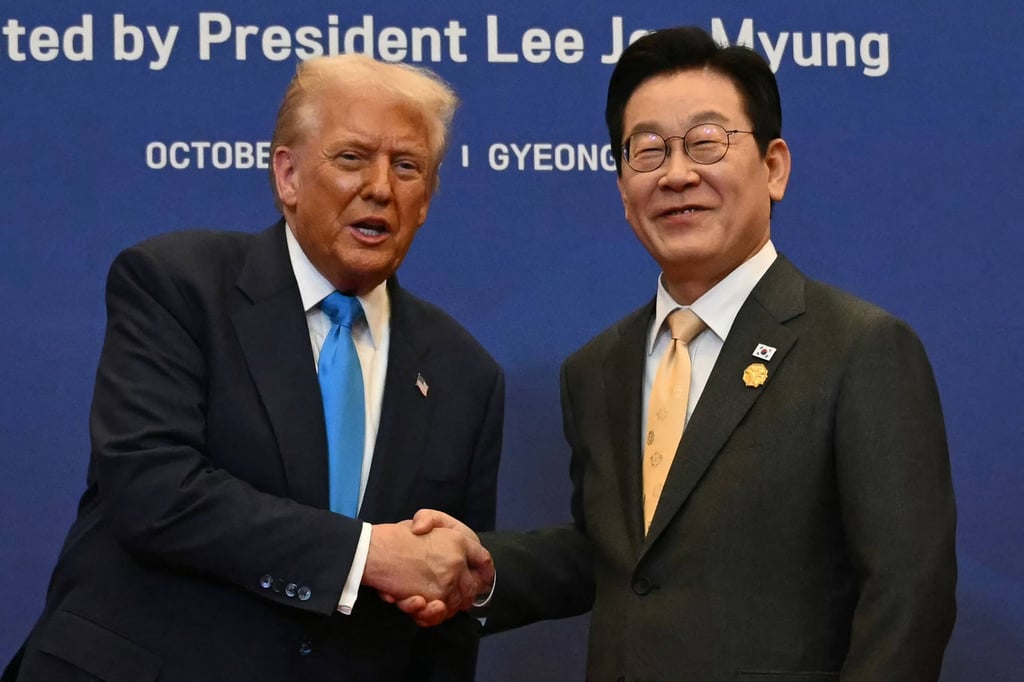
Analysts are divided over the project’s prospects. While some warn that Democratic lawmakers’ staunch opposition to nuclear proliferation could delay or derail the programme – particularly with Trump politically weakened – others argue the submarines would strengthen US regional security, giving Seoul grounds to seek bipartisan support and leverage its investment pledges.
Park Won-gon, a political science professor at Ewha Womans University, said some Democratic lawmakers held “a very hardline stance” on nuclear non-proliferation – highlighted in January when four Democratic senators, led by Senate Nuclear Weapons and Arms Control Working Group co-chairs Edward Markey and Jeff Merkley, urged Trump to maintain strict controls on South Korea.
“With the Democrats set to hold the majority in both the House and the Senate, they are likely to raise objections to the nuclear-powered submarine project, creating another hurdle,” Park said.
“Ultimately, much will depend on how interested Trump is in these initiatives and how strongly he is willing to push them forward,” Park said, warning that a politically weakened Trump facing complicated domestic challenges could lead to “considerable delays and difficulties”.
Beyond the submarine programme, Seoul and Washington also differ over transferring wartime operational control (OPCON) of South Korean troops. Seoul views the transfer as an urgent political priority, whereas Washington has maintained a strictly conditions-based technical approach.
“These are projects that could only realistically move forward under Trump. Even if another Republican were to succeed him, the prospects could become much more difficult,” Park added. “In other words, South Korea now finds itself in a position where it has to secure a final greenlight for these projects within the remaining two years of Trump’s term.”
Kim Byung-joo, a lawmaker from South Korea’s ruling Democratic Party who serves as a special adviser to the president on national defence policy, acknowledged that the US Democrats’ electoral victory had created “some additional hurdles” given their “extreme caution” over nuclear proliferation, but expressed optimism that the programme could win bipartisan support.
“Since the acquisition of nuclear-powered submarines would dramatically enhance South Korea’s defence capabilities – thereby also serving US security interests – I believe both parties in the US would see the value in it,” he said on South Korean broadcaster Channel A.
Former acting US ambassador to South Korea Joseph Yun, however, said on Tuesday that he expected slow progress on several bilateral issues already stalled amid friction over Seoul’s US$350 billion investment pledge and other trade disputes.
“There is no consensus in Washington that Korea ought to have enrichment or nuclear submarines, so those things I find will be very difficult,” Yun said at a forum.
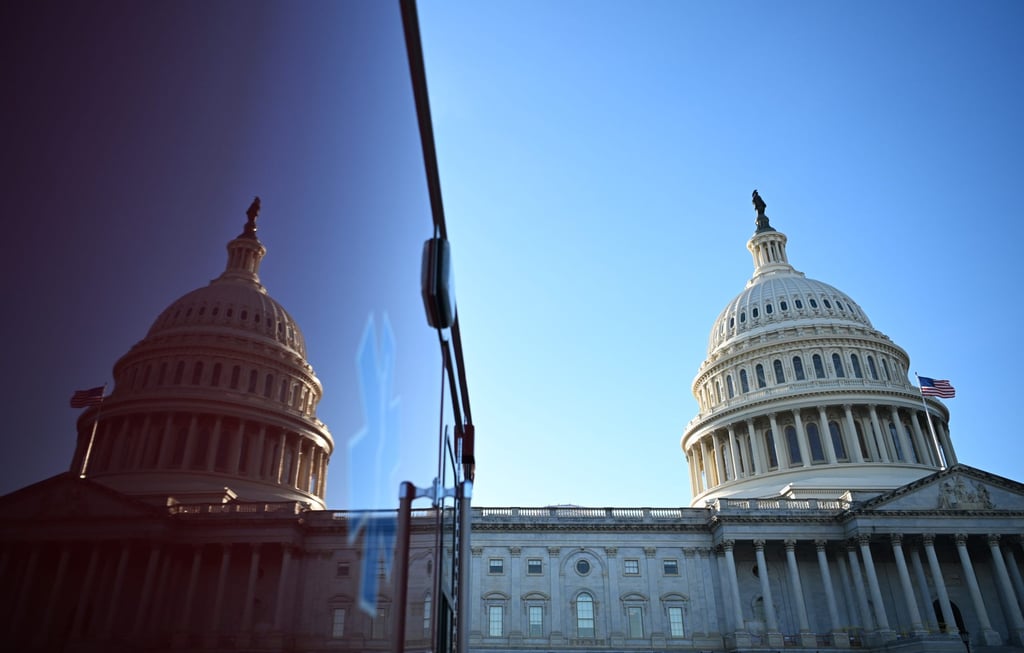
US experts also warned that the Democrats’ sweeping midterm gains would complicate Seoul’s ambitions.
“Democrats may hold on to non-proliferation norms more strongly than Republicans, which may create obstacles to Lee’s path to acquire nuclear-powered subs,” Andrew Yeo, a senior fellow at the Brookings Institution, was quoted as saying by Yonhap News Agency.
Yeo added that Democratic control could stiffen resistance to Seoul’s target of completing the OPCON transfer by 2030 or earlier, despite Trump and US Defence Secretary Pete Hegseth appearing more open to that timeline than other US policymakers.
Patrick Cronin, chair for Asia-Pacific security at the Hudson Institute, also warned that the submarine plans could stall on Capitol Hill.
“Ambitious commitments, such as cooperation on nuclear-powered submarines, could face delays or obstruction, even as long-standing bipartisan support for core alliance commitments, including extended deterrence, remains comparatively resilient,” Cronin said.
Meanwhile, Moon Keun-sik, a professor at Hanyang University’s Graduate School of Public Affairs, pointed to a recent bill introduced by South Korea’s Defence Ministry renouncing the development of nuclear weapons as part of an effort to reassure Washington.
“There is a broad consensus across the aisles in Congress that South Korean nuclear submarines are also necessary for US security, although there would be some delays in procedural matters as the Democrats want to leave no stones unturned,” Moon said.
“If Washington keeps dragging its feet, South Korea also has its own leverage to rely on – cooperation in rejuvenating the American shipbuilding industry, supplying high-end semiconductors and batteries,” he added.
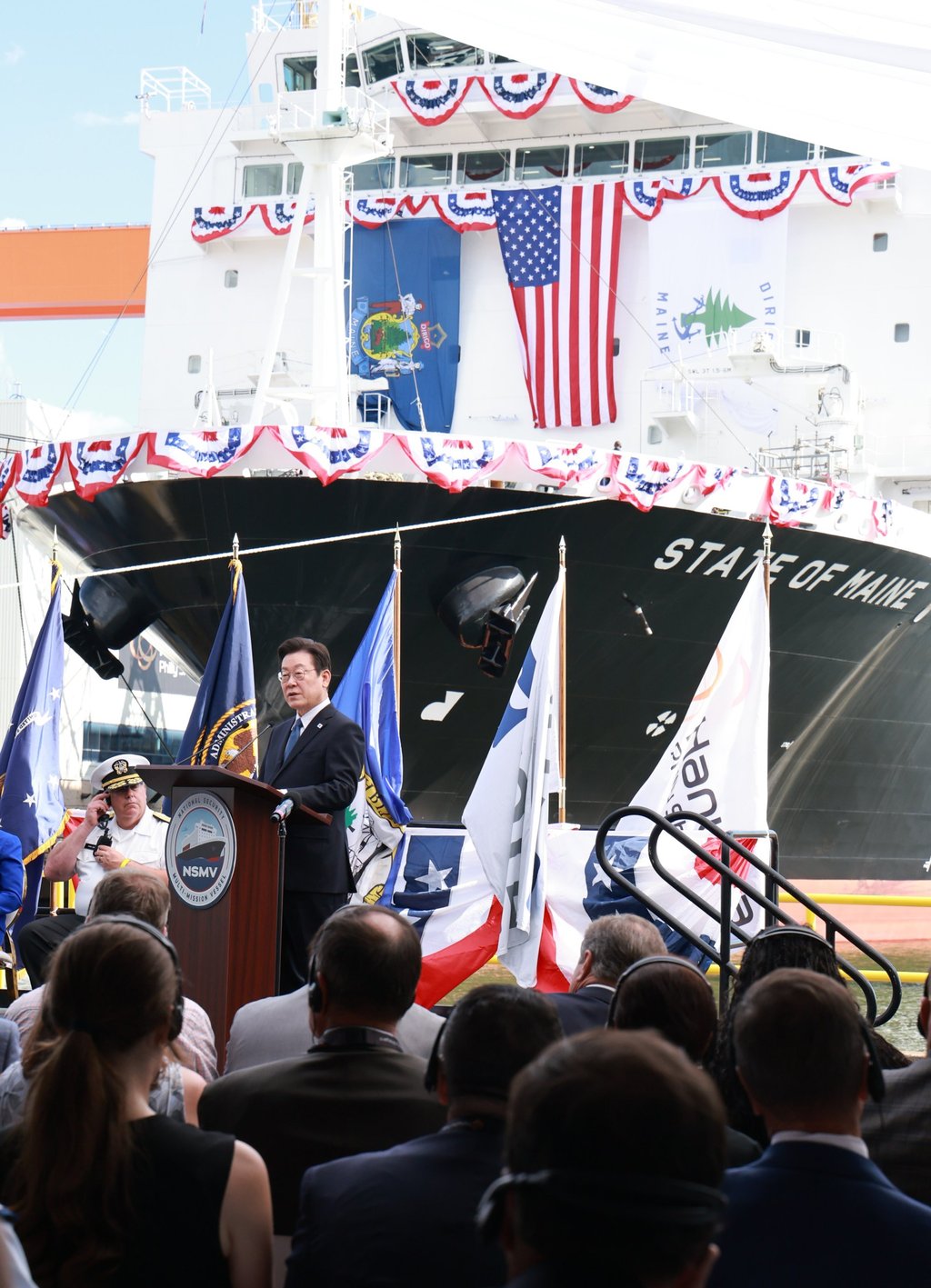
Doo Jin-ho, a research fellow at Kyungnam University’s Institute for Far Eastern Studies, said Seoul needed to step up efforts to persuade both parties by linking the submarine and OPCON plans to regional deterrence.
Against this backdrop, South Korean Ambassador to the United States Kang Kyung-wha wrote in The Washington Post on Wednesday that last year’s Trump-Lee agreement had set out “a road map for the next stage of our alliance” – anchored by Seoul’s US$350 billion investment pledge (US$200 billion in energy and hi-tech industries and US$150 billion in shipbuilding) alongside US support for South Korea’s nuclear-powered submarine plans and civilian nuclear energy cooperation.
“Progress in both would further strengthen our security partnership,” Kang wrote.
KioskNews shows a cleaned-up reading view extracted from the publisher’s page — the original always lives on their site, not ours.