Japan’s manufacturing hub Aichi bets on Asian Games to drive growth despite soaring costs
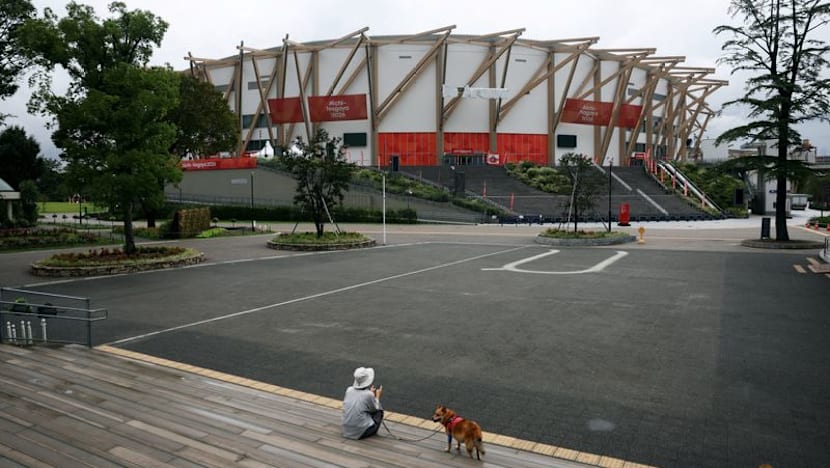
The Japanese prefecture expects the Games to generate trillions of yen in economic benefits, after its budget for hosting the event more than tripled from initial estimates.
New: You can now listen to articles.

This audio is generated by an AI tool.

18 Sep 2026 10:36AM
NAGOYA, Japan: Aichi Prefecture in central Japan is banking on the 2026 Asian Games to deliver an economic boost and deepen its ties with the rest of Asia, even as the cost of staging the event has soared.
The Games in Nagoya and the wider Aichi area officially open on Saturday (Sep 19), although some competitions such as football and basketball are already underway.
This year’s event will feature 45 countries and regions competing across 43 sports. It is the 20th edition of the Games, and the third time to be hosted by Japan after Tokyo in 1958 and Hiroshima in 1994.
But the budget for the Games has ballooned from an initial estimate of 100 billion yen to 370 billion yen (US$2.38 billion).
Aichi-Nagoya won the bid to host the Games in 2016. Since then, organisers have had to weather multiple challenges.
“The biggest problem was the COVID-19 pandemic,” said Aichi governor Hideaki Ohmura. “From 2020, for three years, Japan restricted entry and departures.”
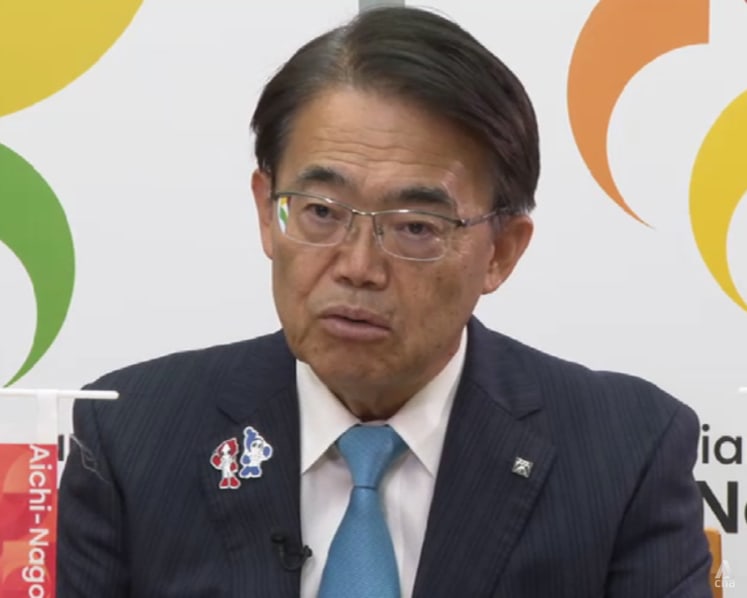
He pointed to “a historic depreciation” of the yen from 2021, followed by geopolitical instability in other parts of the world.
“There was Russia’s invasion of Ukraine and the Middle East and Iranian situation. Prices of resources, including oil, kept rising globally,” he said.
“Our budget was not enough."
The prefecture has also had to contend with extreme weather in the run-up to the Games, with Nagoya hit by record rainfall on Sep 8, forcing hundreds of athletes and staff to briefly evacuate their accommodation.
COST-CUTTING MEASURES
Faced with rising costs, the organisers have taken some unconventional steps to keep spending under control.
"We decided not to build a new athletes’ village and to use a cruise ship as accommodation,” said Ohmura.
“We created a (small) athletes' village with mobile container homes. We built Mizuho stadium and Aichi Prefectural IG Arena, two new facilities. The rest are existing facilities,” he said.
“In total, we cut costs by 100 billion yen.”
He expects the economic benefits to be far greater.
“The whole nation will benefit with an income of 3.7 trillion yen. Aichi alone will make 1.8 trillion yen,” he said.
The Asian Games and the Asian Para Games will altogether draw about 20,000 athletes and delegation members, according to the governor.
Organisers are also expecting an influx of fans and other visitors.
DEEPENING TIES WITH ASIA
For Aichi, the Games are also part of a broader push to strengthen the prefecture’s economic links with Asia and attract more investment.
It is one of the country’s key manufacturing hubs and one of its wealthiest regions, with its per capita income ranking second only to Tokyo.
It is home to major companies such as Toyota Motor Corporation, while the port of Nagoya is Japan’s busiest by cargo volume.
“I think we are number one in the world for hosting a cluster of manufacturers,” said Ohmura.
“We would like to strengthen even more our connection with Asia. So with that thinking in mind, we bid to host the Asian Games and Asian Para Games.”
Nagoya has already begun dressing up for the event, with Asian Games banners appearing around the city and light displays being projected onto buildings at night.
Beyond the expected economic gains, Ohmura hopes the Games can also promote friendship and peace across the region.
KioskNews shows a cleaned-up reading view extracted from the publisher’s page — the original always lives on their site, not ours.