‘Years of hell’: Jewish women describe the fight to obtain a religious divorce
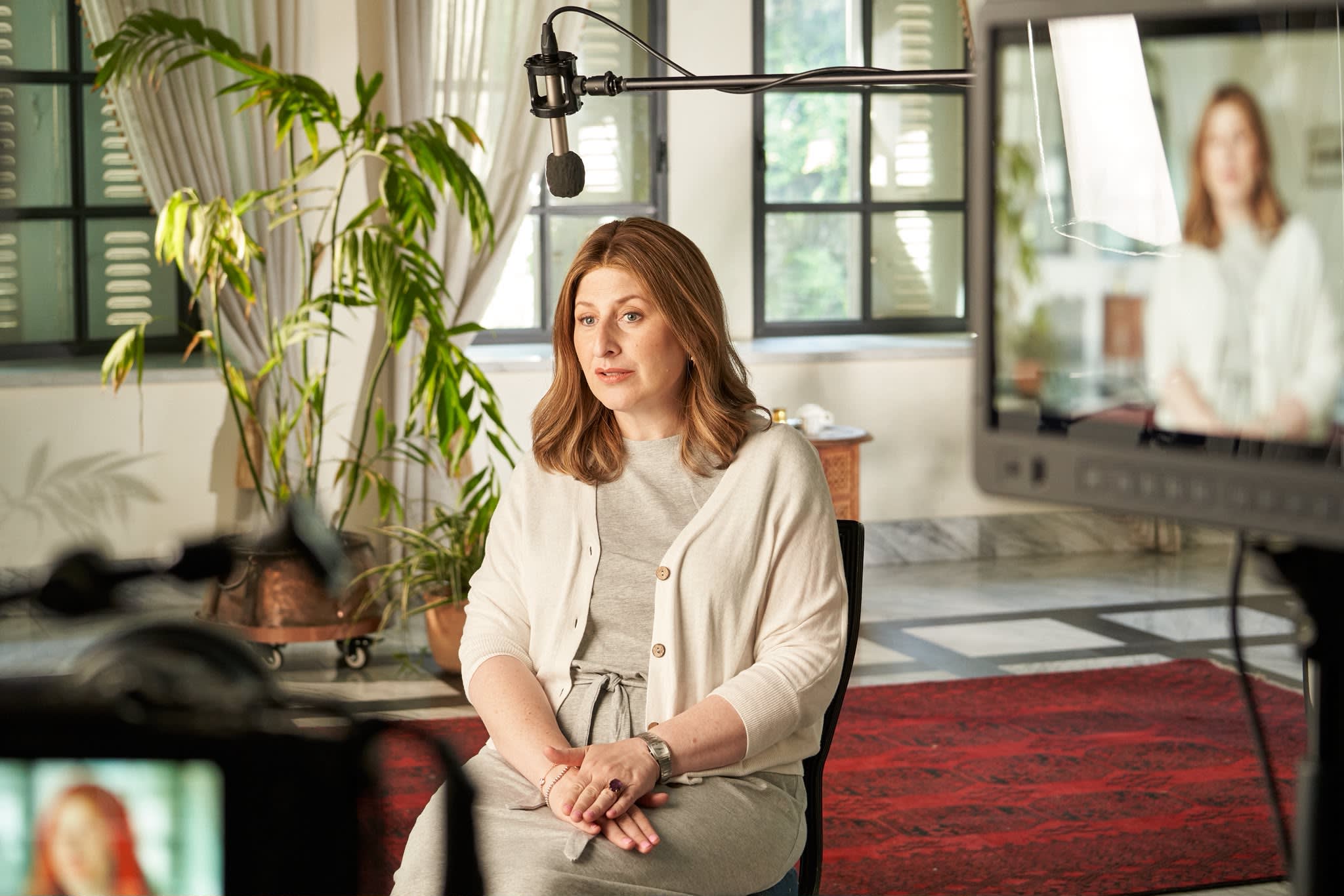
A Jewish marriage requires the consent of both parties under Halacha, and Israeli law prohibits forced marriage. Yet a spouse can still be trapped in a marriage against their will when their partner refuses to grant them a get, the religious divorce required to remarry under Jewish law.
According to data collected by Chochmat Nashim, an Orthodox Jewish nonprofit that promotes women’s roles in public life, 39.5% of more than 400 divorcees surveyed experienced some form of get refusal, 44% were forced to give up something in exchange for a get, and 21% waited three or more years to receive one.
Although precise figures for the number of agunot (chained wives) and agunim (chained husbands) in Israel and worldwide are unavailable, the organization estimates that thousands remain trapped in marriages against their will.
A new documentary, Get Up: Breakthroughs in the Battle for Jewish Divorce, examines the devastating impact of get refusal, a practice recognized in many countries as a form of domestic violence. The Jerusalem Post received an early screening of the film in Jerusalem on Sunday evening, where it spoke with producer Shoshana Palatnik and Caroline Maxwell, who experienced get refusal firsthand.
Documentary explores how get refusal can derail victim's life plans, faith
The emotionally charged 44-minute documentary tells the stories of several agunim, including people who have been trapped in unwanted marriages for decades and one woman who died without receiving a get. It explores how get refusal can damage victims’ relationships with God, jeopardize their hopes of having children, and intersect with financial and coercive abuse.

While secular Jews in the Diaspora can generally remarry after obtaining a civil divorce, those who adhere to Jewish law cannot remarry until they receive a get. For those hoping to start a new family, years of waiting can mean losing precious time to date, remarry, and have children.
Procreation holds a central place in Judaism. In Genesis 1:28, God blesses Adam and Eve and commands them to “Be fruitful and multiply, and fill the earth and subdue it.” The command is reiterated in Genesis 9:7, when Noah and his family are instructed to multiply and repopulate the earth after the flood. For women trapped in marriages without a get, the consequences can extend beyond the inability to remarry, as prolonged delays can consume much or all of their fertile years.
In Israel, where marriage and divorce are governed by religious law and civil marriage is unavailable, the absence of a legal separation can leave agunot burdened with debts accumulated by their abusive spouses. Mavoi Satum documented a case in which a husband who refused to grant his wife a get drained her bank account and amassed hundreds of thousands of shekels in debt. Because the couple remained legally married and held a joint account, the Israel Enforcement and Collection Authority came to the woman’s home to seize her personal belongings.
Other women featured in the documentary described being forced to pay large sums of money, withdraw legal complaints and protection orders, or give up custody arrangements in exchange for their freedom.
'Something has to change,' get refusal victim says
Caroline Maxwell, formerly Caroline Moher, told the audience that the saying “what doesn’t kill you makes you stronger” rang true for her, but that the eight-year fight to obtain her get had brought her dangerously close to breaking point. A court heard how the abuse she suffered at her husband’s hands led her to attempt suicide in August 2015.
Maxwell’s efforts to obtain a divorce in the UK led to what is widely considered a landmark case. Alan Moher was sentenced to 18 months in prison for controlling or coercive behavior between 2016 and 2021 in connection with his refusal to grant her a get.
“I chose to share my story because I don’t want anybody else to have to go through the years of hell that I went through. I spent eight years trying to get my get and continuing to fight. I want people to understand what it’s like for a woman to try to obtain her get when it’s out of her hands,” she told the Post. “Something has to change. Someone has to stand up to these bullies. It’s not right that somebody can hold another person captive, denying them their freedom and refusing to let them go.”
Maxwell said she had received support from the vast majority of the Jewish community. She hopes young men and women will be educated about the importance of Halachic prenuptial agreements before getting married, helping to challenge the stigma surrounding them. The best time for a couple to discuss such a precaution, she said, is when they are still in love, not because they expect to divorce, but because they care enough about each other to provide that level of security.
Throughout the documentary, Judaism emerges as both a potential source of empowerment for agunot and a system that can be used to keep them trapped. Communities have organized protests outside the homes of men who refuse to grant a get, seeking to deny them peace while they deny their spouses freedom. Rabbi YY Jacobson also described imposing temporary bans on men who refuse to grant a get.
“I can not daven to [God] in good conscious, knowing there is somebody here who is abusing his wife,” Jacobson said.
Religious authorities' role in keeping women trapped
Religious authorities, however, can also play a role in keeping spouses trapped. The documentary highlights a landmark 2014 case in Israel in which senior religious figures attempted to overturn a get granted to a woman whose husband had been in a vegetative state for seven years.
The High Court ultimately upheld the divorce, agreeing with the original panel of three judges, who had ruled that the husband would fulfill the mitzvah of granting a divorce if he were able to do so. The case has continued to divide the Orthodox world and has followed the careers of the three rabbis involved.
“This documentary is my love letter to the Jewish community,” Palatnik told the Post. “It was an absolute honor to interview the people featured in the film. I was awed by their resilience, and it was deeply touching that they trusted me to tell their stories in a thoughtful and sensitive way. It took several years to put this documentary together. We finished production just before October 7, and then paused for quite some time. We filmed in England, Israel, and New York, and it has been an honor to bring these stories to the screen. I'm very happy we're here.”
Palatnik said she decided to make the documentary because get refusal is an issue that can easily become a thing of the past with a few changes. These include normalizing Halachic prenuptial agreements and pressuring batei din (Jewish religious courts) to reject attempts to extort concessions in exchange for a get.
Palatnik also said she hoped to raise awareness of Rate My Beit Din, a platform designed to promote transparency in the religious divorce system. The website aims to help people seeking a divorce identify which courts have faced allegations of corruption and which are more likely to treat agunim with respect.
Shoshanna Keats Jaskoll, an activist who co-founded Chochmat Nashim, insisted that the Jewish community needed to start viewing prenups as the ultimate demonstration of love.
"You’re saying that I will protect you from the very worst of me and the potential that something goes wrong, and that is the most beautiful expression of love that anyone can do for anyone else," she said.
KioskNews shows a cleaned-up reading view extracted from the publisher’s page — the original always lives on their site, not ours.