How a small Maharashtra town taught the world a lesson in smart farming
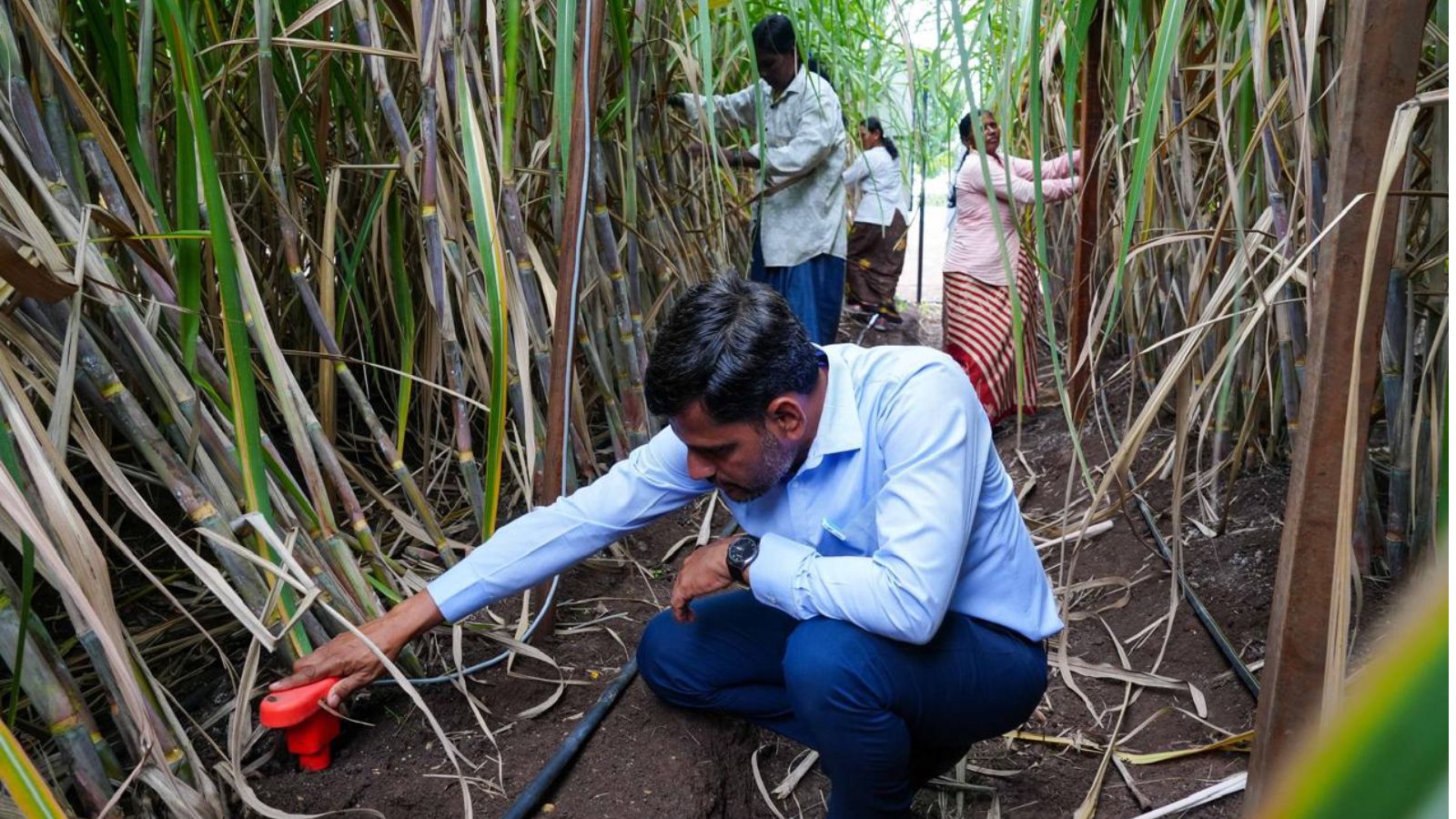
At a United Nations Food and Agriculture Organisation (FAO) summit in Rome on July 3, global experts were comparing notes on the future of farming—data, technology, and sustainability. Then a project from Baramati, a taluka in Pune, walked away with a title nobody expected: “superior to global benchmarks”.
The team behind it had just shown the world something remarkable. In a pilot spanning 10,000 sugarcane farms, yields doubled. Water use dropped by 40-50 per cent. Fertiliser use fell by 30 per cent. Soil health improved. For context, the FAO and International Rice Research Institute (IRRI) studies typically report AI-driven yield gains of 15-20 per cent. Baramati doubled that.
Built small, on purpose
Here’s what makes this story different: most agricultural AI is engineered for sprawling, mechanised farms in the US or Brazil —hundreds of acres, single owners, uniform conditions. India doesn’t work that way. Farms here are small, fragmented, and often share water sources.
So instead of importing a model that wouldn’t fit, the Agricultural Development Trust (ADT) built one from scratch for exactly this reality. They call it Tiny AI – lightweight enough to run over SMS, on ordinary smartphones, in low-bandwidth villages.
“We focused on building this for Indian farmers with fragmented plots with shared water,” says Prof. Nilesh Nalawade, CEO of ADT Baramati.
Co-developed with Oxford University and Microsoft’s FarmVibes team (with roughly 20 Oxford and 70 Microsoft scientists contributing), it proves that cutting-edge AI doesn’t need cutting-edge infrastructure to work.
How it works
Story continues below this ad
The system runs on a simple, economical hub-and-spoke design: one automated weather station covers a 2.5-km radius, while low-cost soil sensors act as the spokes feeding in local data.
“It is based on a hub-and-spoke model. The weather station is a single unit for a 2.5-kilometre radius area, and the sensors work as spokes, which are multiple. So with the installation of one weather station, around 25 farmers’ land can get covered, which makes it economical to use as well,” explains Prof. Yogesh Phatake, Project Coordinator, ADT.
Every 30 minutes, the system captures 12 different parameters – soil moisture, temperature, humidity, rainfall, sunlight – while satellite imagery tracks canopy health. Field teams cross-check everything with real soil samples. “The process begins with the selection of plot land, followed by the installation of field sensors and an automated weather station,” says Tushar Jadhav, AI Operations Team Lead, ADT.
All this data flows into Oxford-designed crop models running on Microsoft Azure, recalibrated specifically for Indian soil and monsoon patterns. The AI doesn’t just react – it predicts, flagging water stress, nutrient gaps, and fungal risks up to a week in advance.
Story continues below this ad
Then comes the part that truly sets this apart: farmers don’t need to interpret graphs or dashboards. They get plain-language alerts in Marathi, straight to their phones. A message might read: “Sugarcane leaves yellowing. Reduce urea by 15 per cent, delay irrigation by 2 days.” No jargon, no app training—just clear, actionable advice in their own language.
“Once these four streams of data are integrated, AI-driven algorithms analyse the information to generate precise, crop-specific advisories,” says Jadhav. “Farmers receive timely alerts on irrigation, nutrients, pest control, and weather risks.”
Why the water savings matter most
The single biggest shift was moving away from calendar-based irrigation – watering on a fixed schedule – to evapotranspiration-based irrigation, where farmers water only when the crop actually needs it. In a drought-prone sugarcane belt, that one change delivered massive water savings and real resilience against climate stress. Splitting fertiliser doses to match crop growth stages did the rest, cutting waste and improving long-term soil health.
Beyond sugarcane, beyond Maharashtra
What started with six sugarcane varieties is now expanding to pigeon pea, turmeric, banana, grapes, cotton, soyabean, and more. Farmers in Uttar Pradesh, Madhya Pradesh, Tamil Nadu, and Karnataka have already adopted the system. The ADT is also piloting hydroponic lettuce and AI-guided banana cultivation, while pushing to bring ‘AI in Agriculture’ into formal college curricula and training women and self-help groups to use the technology.
Story continues below this ad
“The future of agriculture lies in combining farmers’ experience with data-driven technology. When science becomes accessible, every farming decision becomes smarter and more sustainable,” says Nalawade.
Rajendra Pawar, Chairman, ADT, sees the human side as just as critical as the technology: “As technology advances, women and young farmers must be included, digital skills must be developed, and political will is essential.”
The bigger question now isn’t whether AI works on Indian farms – Baramati has already answered that. It’s whether India’s policy and extension systems can scale a model that just outperformed the rest of the world.
KioskNews shows a cleaned-up reading view extracted from the publisher’s page — the original always lives on their site, not ours.