Asia watches from the outside waiting to see if Xi-Trump-Putin talks bear fruit
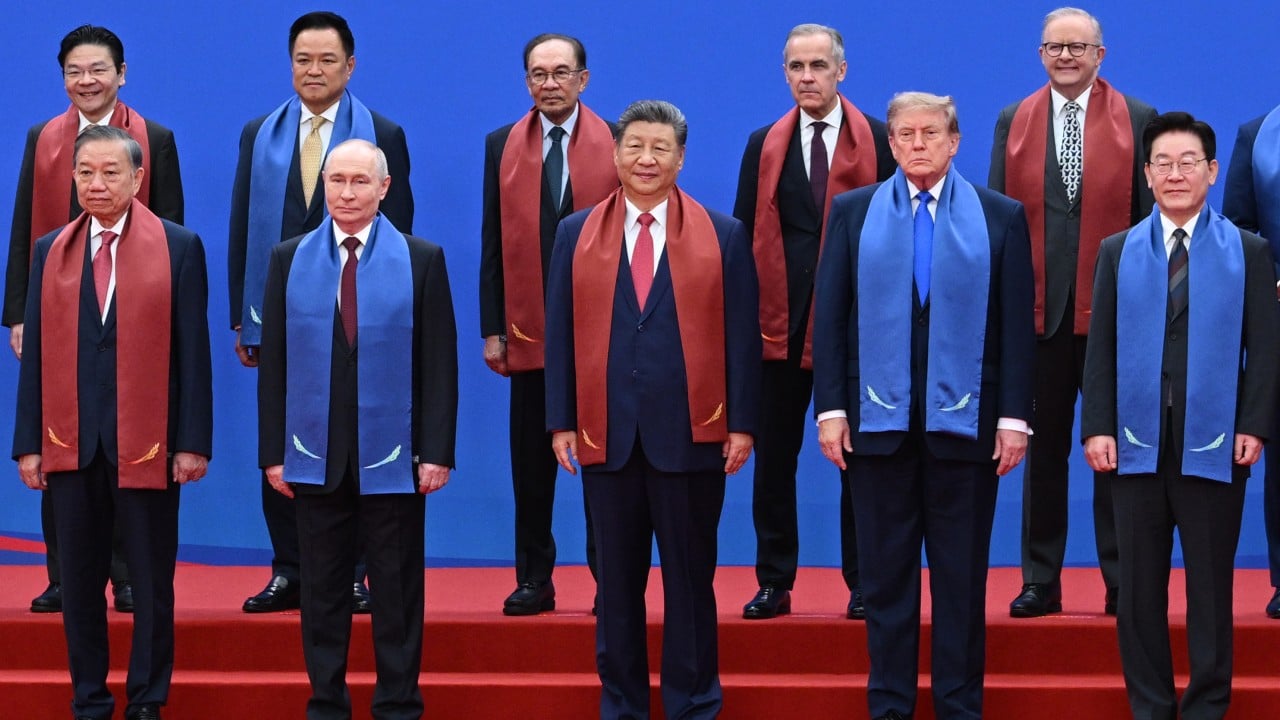
When the leaders of China, the United States and Russia sat down in Shenzhen, the rest of Asia watched with a mix of cautious optimism and wary anticipation – knowing that any deal struck behind closed doors might redraw the regional balance of power.
The historic meeting between Xi Jinping, Donald Trump and Vladimir Putin marked the first-ever three-way talks between the leaders of the world’s major nuclear powers, and another such meeting is a possibility next month when the US hosts the Group of 20 summit.
Thursday’s meeting came against the backdrop of the war in Ukraine and the one in Iran, which has caused major disruptions to global energy supplies.
Malaysian Prime Minister Anwar Ibrahim publicly welcomed the meeting, saying he “should commend” Xi’s initiative in bringing Trump and Putin together at the Asia-Pacific Economic Cooperation summit.
“This effort will certainly ensure and create space for meaningful dialogue and mutual understanding on the path towards lasting peace and harmony,” he said.
Dylan Loh, associate professor of foreign policy at Nanyang Technological University in Singapore, said Southeast Asian countries were likely to take a cautious, wait-and-see approach.
He said it remained to be seen whether the talks were a “one-off or the start something more institutionalised”, adding: “A lot will also hinge on what exactly did it achieve beyond the rhetoric.”
Benjamin Ho, an assistant professor at the S. Rajaratnam School of International Studies in Singapore, said the meeting would have worried Japan and Europe more than Southeast Asia.
“I don’t think there is anything from that trilateral meeting that suggests that smaller and middle countries are going to be irrelevant,” Ho said.
He said that Southeast Asian leaders were “generally pragmatic” and would probably prefer to “see what happens rather than … see this as a good or bad thing”.
Japanese Prime Minister Sanae Takaichi told a press conference on Thursday she did not believe Japan’s interests would be undermined. She added that Tokyo was “closely monitoring the impact” of the meeting and pledged to “respond appropriately”.
Kenichi Doi, a senior research fellow at the Institute of Geoeconomics in Tokyo, said Japan would be wary about any US endorsement of comparisons between the three countries’ World War II alliances.
He noted that the three powers also had divergent interests over Ukraine and Iran, while disparities in their nuclear arsenals would complicate arms control discussions, leaving little prospect of a substantive breakthrough.
Xi calls for Asia-Pacific ‘integration’ and cooperation at Apec summit
“Yet even without a major deal, the meeting risks projecting an international hierarchy that diminishes the voice of other countries, including Japan,” he said.
He also suggested Tokyo would also be wary of Washington becoming more inclined to engage with Beijing and Moscow without sufficient consultation with its allies.
Middle powers could benefit from a more multipolar world, but some analysts have warned it could concentrate decision-making among a few powerful states.
Dhruva Jaishankar, executive director of the Observer Research Foundation America, a Washington think tank, told India’s ANI news agency that “the Ukrainians are not in the room, Europeans are not in the room, and other key stakeholders are not”.
Countries such as India have already been paying the price of a geopolitical balancing act they did not choose as a result of war and great power rivalry.
New Delhi has found itself caught between Washington’s pressure over its purchases of Russian oil and its own strategic and energy dependence on Moscow at a time of rising energy prices.
Kei Koga, an associate professor at Nanyang Technological University, said the meeting could “serve as a stabiliser for [Southeast Asian] regional security in the short term”.
But Koga warned: “If such meetings become regularised, they could evolve into a forum resembling a great-power concert, potentially expanding their agenda beyond immediate security concerns.
“Important decisions on contentious international issues, such as the wars in Ukraine and Iran, could increasingly be made among major powers without sufficient consultation with smaller countries.”
“The post-Shenzhen world will not be tripolar, but it has already taken an important step towards multipolarity,” said Dmitriy Trenin of the Russian International Affairs Council.
KioskNews shows a cleaned-up reading view extracted from the publisher’s page — the original always lives on their site, not ours.