The Pianist review – Władysław Szpilman’s Holocaust memoir retold with his own music
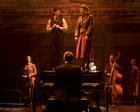
The idea of turning the survival story of the Polish pianist Władysław Szpilman into a musical might, on paper, seem distasteful given the stark subject matter of the Holocaust. There is risk of triteness, too, in the light of Roman Polanski’s acclaimed film, starring Adrien Brody, based on Szpilman’s celebrated memoir.
But those who are acquainted with both those retellings of Szpilman’s second world war experiences will still find something new and affecting here. The form of the musical becomes meaningful through its use of Szpilman’s own compositions. Thom Southerland, who has adapted Szpilman’s book and directs, creates an atmospheric chamber piece, with actors playing instruments, including a piano that twirls on and off stage.
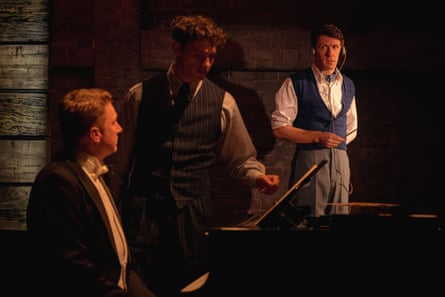
Szpilman (Daniel Krikler, elegantly otherworldly) is narrating his own story, seeing not just the ghosts of his family drift back to life but also himself (played by Malcolm Forbes-Peckham, the show’s musical director). This wartime self is always before the piano, playing Chopin (Nocturne in C-sharp minor) and Szpilman’s compositions, as Krikler’s haunted version watches on. It is a good way to portray out of body experience; he is a man removed from himself, judging himself, too.
Not all the songs suit the subject matter; there is a warm, nostalgic 1930s glow to some numbers that show Warsaw just before and after its surrender, when Szpilman is working for Polish radio. Music accompanies the story in a way that verges on sentimental.
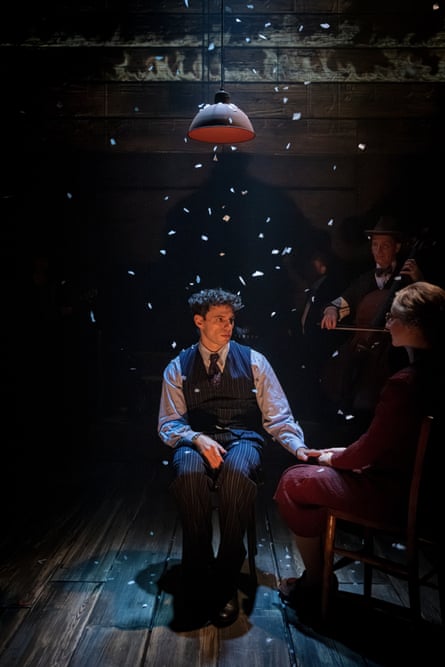
The piece is too smooth, the savagery of the world outside Szpilman’s own seen only in glimmers. But that is also the point, especially in the first part when we see the exceptionally musical family to which he belonged, from Szpilman’s father (TJ Holmes), who uses his cello to escape reality, to his quietly determined mother (Rosalind Ford) and brood of siblings. The actors are accomplished musicians and strong in their roles.
Szpilman’s arguments with his brother Henryk (Nitai Levi) too emphatically hash out the question of an individual’s responsibilities in wartime: whether to resist and protest, as Henryk would have it, or to stay together and just survive, as Władysław does for the main. The place of music is also tacitly explored, though again this could be more penetrating.
The production is good at drawing out class distinctions and the family’s privilege at this point, as well as Szpilman’s survivor’s guilt. It shows effectively the slide into totalitarianism, with denials and disbelief, even as the family’s world narrows. The scene when Szpilman separates from them, just as they arrive at Auschwitz, is terrible, the back wall of Andrzej Goulding’s set design suddenly resembling a cattle truck. There are other chillling moments: when he sees a boy bludgeoned to death; when the person who has been hiding him orders him to leave his home.
The pace just slackens too much in the second half when Szpilman is alone and in hiding. The musical interludes seem protracted, perhaps because Szpilman’s music is being honoured in fullness. It is still a handsomely orchestrated production, and moving, too, when finally Krikler sits down to play the piano himself in Out of the Darkness. A survivor, finally inhabiting his music.
KioskNews shows a cleaned-up reading view extracted from the publisher’s page — the original always lives on their site, not ours.