Israeli man facing early-onset Alzheimer's develops potential treatment for Parkinson's disease
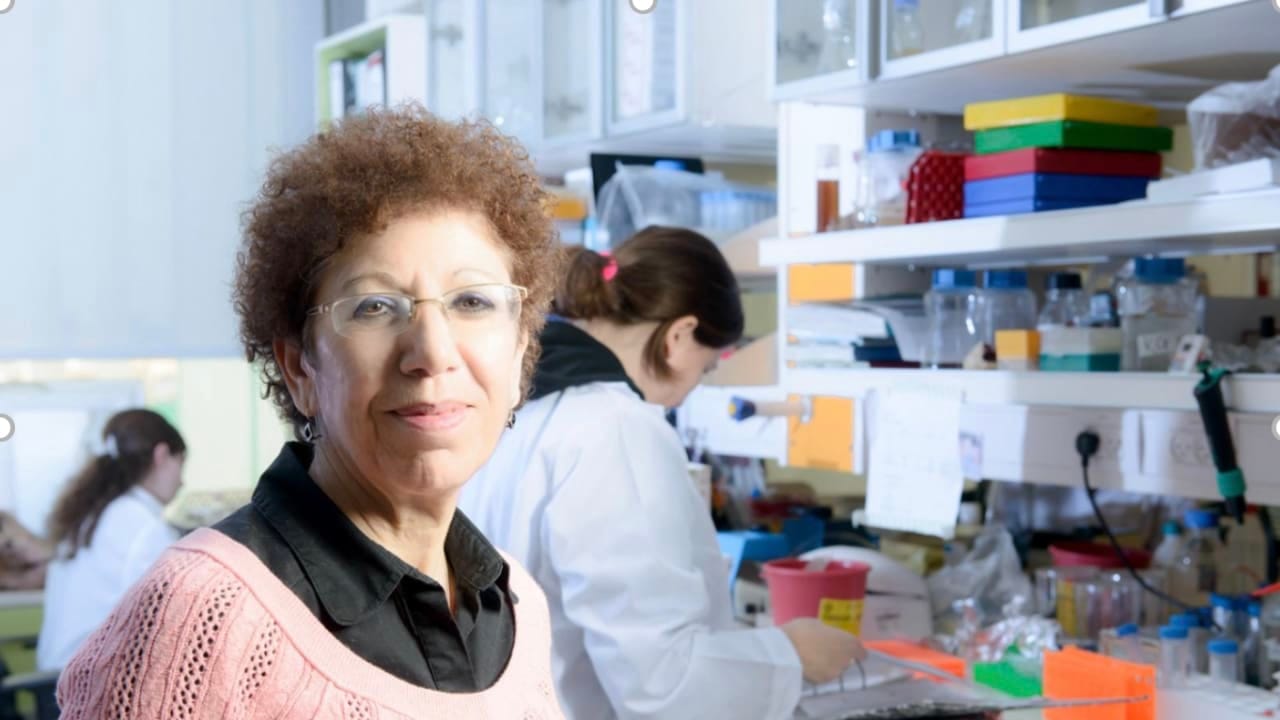
Ofer Shina is 38 and carries a gene that brings on Alzheimer's disease early.
For more stories from The Media Line go to themedialine.org
His father began losing his memory at 40, and an uncle later developed the same symptoms. Genetic testing eventually found the cause: an aggressive mutation in a gene called PSEN1 that runs through about half of his father's side of the family. Shina was tested after his father died. "For me, knowing is more important," he said. "Putting a light on it is better."
Shina, a product manager with 13 years in the tech industry and no training in biology, went looking for a treatment in the scientific literature.
"I taught myself to read a paper every day before I start the day," he told The Media Line. He says he looked at more than 200 possible approaches and thousands of papers. Most of the work he found was aimed at amyloid, the protein that has been the target of hundreds of failed Alzheimer's trials. Then he found the work of Prof. Varda Shoshan-Barmatz at Ben-Gurion University of the Negev.
Shina is co-founder and chief operating officer of X-tosis, Inc., a biotech startup based in Gainesville, Florida, and built on Shoshan-Barmatz's research. The Michael J. Fox Foundation for Parkinson's Research awarded the company a $2.74 million grant, announced in June, to move its lead drug toward human trials. The company is aiming first at Parkinson's, in the hope of slowing the disease itself, and plans to turn later to Alzheimer's, the disease in Shina's family.
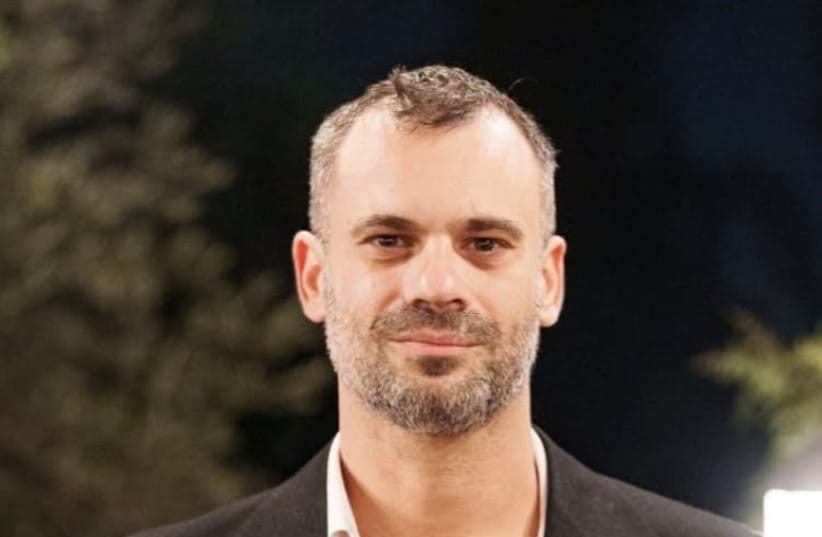
Israeli scientist's research focuses on protein that regulates cell function and death
Shoshan-Barmatz has studied a protein called VDAC1 for about 25 years. It is found in the outer wall of the mitochondria, the structures that produce a cell's energy and help control immunity, inflammation, and cell death. VDAC1 controls what passes in and out of them.
"It is the gate," she told The Media Line. "Everything that goes into the mitochondria must pass through it, and everything that comes out must pass through it too. If you close it, there is no life."
Most researchers once considered the protein unimportant, she said. She kept publishing on it until others followed. "Some people even call me 'the VDAC lady,'" she said.
Her central finding is that cells under stress and in disease make too much of the protein. The extra units link into pores with a large opening in the middle, and the opening can release molecules that trigger cell death and inflammation. Her lab and collaborators have reported elevated VDAC1 levels in models and tissue samples of Alzheimer's, Parkinson's, ALS, Type 2 diabetes, and other diseases. Her lab screened thousands of molecules to find ones that stop the pores from forming, and after several rounds of work with chemists, it produced a drug candidate, VBIT-4, which X-tosis renamed XTS001.
Erin Henderson, the company's chief executive, compares it to plumbing. A healthy cell has a bundle of 2-inch pipes, she said, but under stress they fuse into one 5-inch pipe, and large things leak out that should stay in. The drug keeps the small pipes separate.
In a 2019 paper in the journal Science, written with researchers at the US National Institutes of Health, Shoshan-Barmatz and her colleagues showed that the same pores let genetic material from the mitochondria escape and set off inflammation and an immune response. VBIT-4 blocked that and reduced lupus-like disease in a mouse model.
Shoshan-Barmatz's hypothesis is that amyloid, the protein most Alzheimer's drugs target, may act as a trigger rather than the direct cause. A 2022 study published in the journal Translational Neurodegeneration found that the drug prevented memory and learning loss, as well as neuronal death, in mice genetically predisposed to develop Alzheimer’s disease. Amyloid levels in those mice fell only about 10%, she said, which she takes as a sign that something else was doing the damage.
In her view, amyloid drives the overproduction of VDAC1, which leads to the pores and sets off cell death and inflammation. She estimates that a drug aimed at amyloid alone would have to remove 95% or more of it to stop the disease.
Shoshan-Barmatz said she spent six months presenting the work to a major pharmaceutical company. "Finally they said: this is outstanding, exciting, but it is too early for us," she said. "When you reach Phase 1, we will jump on you."
Other labs have since tested her molecules in a wide range of disease models, she said. "Other people are doing the work for us."
A first company built on her molecules was formed in an Israeli startup incubator. It closed after the Oct. 7, 2023, attack, when its investor pulled out. BGN Technologies, the university's commercial arm, took the license back.
"It is very rare for us to take the technology back and try again," Dr. Galit Mazooz-Perlmuter, senior vice president for business development in biopharma at BGN, told The Media Line. "It is very hard to convince another entrepreneur or other investors to put money in when someone else did not succeed. But in this case, the technology is good."
When Shina approached both women, each of them tried to send him away.
"As he has no money to invest or an investor, I ignored him. I didn't trust him. I didn't want him," Shoshan-Barmatz said.
Mazooz-Perlmuter gave another entrepreneur with stronger credentials six months to raise money, and he failed. "I pushed him away for a year, and he kept knocking on my door," she said of Shina. "He sent emails, he called me, he talked to my boss." Then she went to BGN's chief executive and asked to give Shina six months, and he came back with a team.
"If I had the opportunity to do it again, I would not push him back," she said. "This was a very good idea."
"If I were Ofer, I would have given up. But he didn't," she said. "He had the vision."
It is the only company in her portfolio that BGN has set up in the United States.
"Biotech needs a lot of money, very deep pockets, and we don't have that kind of culture in Israel," Mazooz-Perlmuter said. "When Ofer suggested the US, he actually didn't ask. He just did it."
Israeli biotech startups face funding challenges despite strong scientific research
Israel has strong research at Ben-Gurion, the Weizmann Institute and elsewhere, Henderson said, but drug development takes years to pay back. Israeli investors "are willing to provide seed money, but then it's the next round of investment," she told The Media Line. Shina understood that he would have a hard time raising money at home and a better chance if he set up in the US.
Henderson said the war made things worse, because for about two years Israeli scientists and university officials could not travel to the conferences where investors get to know a lab's work.
Shina said the reasons were speed and money. Israel is good at moving fast in software and defense technology, he said, but drug development runs through the US Food and Drug Administration, and most of the money for this field is in America. "Israel is the brain behind the operation in some way, while the US is the way to push forward as fast as possible," he said.
Henderson said Florida has a similar problem. The University of Florida has strong scientists, but Gainesville has no local biotech funds like those in Boston or San Francisco.
Henderson, a chemical engineer trained at Auburn University, grew up in Gainesville. She and co-founder Josh Pan had both worked on companies that went public on the Nasdaq, and they brought Shina the ties to bankers and investors he lacked. "I live in Florida, and the population here is aging," she said. "We have the second largest population of Alzheimer's disease patients in the entire country, behind California."
The company has no lab of its own. Shina and chief scientific officer Yotam Nisemblat work from Israel. Pan is in the Seattle area. The board chair, Naz Bashir, is in Britain. Research is contracted out in India, the US, Europe, and Shoshan-Barmatz's lab.
X-tosis was put together during the war. Mazooz-Perlmuter recalled meetings broken up by sirens as Iranian missiles struck Israel. "In one hour we could stop the meeting four or five times," she said. On June 19, 2025, an Iranian missile hit Soroka Medical Center, southern Israel's largest hospital. She said Bashir was patient through every interruption and "very sensitive throughout the war."
Both the science and the license came to X-tosis from women, and a woman runs the company. "I want to believe that it doesn't matter. But it does," Mazooz-Perlmuter said. "We have a lot of women at the executive level, but we don't have a lot of CEOs."
Vincere Biosciences won a $5 million grant from the same Fox Foundation program last year for a different mitochondrial drug. It was still in animal safety testing in June. A trial in the Netherlands is testing another in Parkinson's patients.
No approved drug has been shown to slow Parkinson's. At the World Parkinson Congress in Phoenix in May, Simon Stott, research director of the British charity Cure Parkinson's, said, "The results coming this year will tell us whether our fundamental understanding of this disease is correct."
X-tosis is developing its drug as an oral treatment. The newest approved Alzheimer's drugs are antibodies given by infusion or injection, and they carry a risk of brain swelling and bleeding. "If you look at the history of clinical trials associated with Alzheimer's and Parkinson's, most of them have failed," Henderson said.
Experimental Parkinson's drug moves toward human trials as startup seeks funding
The company is now "in active diligence with multiple investors," she said. If the money comes, she expects a first human trial in 12 to 18 months, most likely in the US, Britain or Australia. Australia has built up its early-trial industry, and trials there cost about 30% less than in the US. Israel is "not off the table," she said.
The first study, known as Phase 1, would test safety in 25 to 60 healthy volunteers, Henderson said, first with single doses and then with a week of daily doses, along with a group of healthy people over 65, before enrolling any patients. Venture funds that back brain-disease drugs often wait for safety data before they invest, she said, and a final, large-scale trial can cost close to $300 million.
BGN will hold an investor conference in Tel Aviv on Dec. 9. Mazooz-Perlmuter plans to present seven more life-sciences technologies she says are ready to become companies.
Henderson said no one knows whether the drug will come in time for Shina. "It's possible it could." At best, she said, approval is about six years away.
In five years, Shina said, X-tosis should be in Phase 3, treating a large group of patients. "Everybody is warning me all the time not to use 'cure,'" he said.
KioskNews shows a cleaned-up reading view extracted from the publisher’s page — the original always lives on their site, not ours.