India’s TB incidence missing from WHO’s 2026 global report
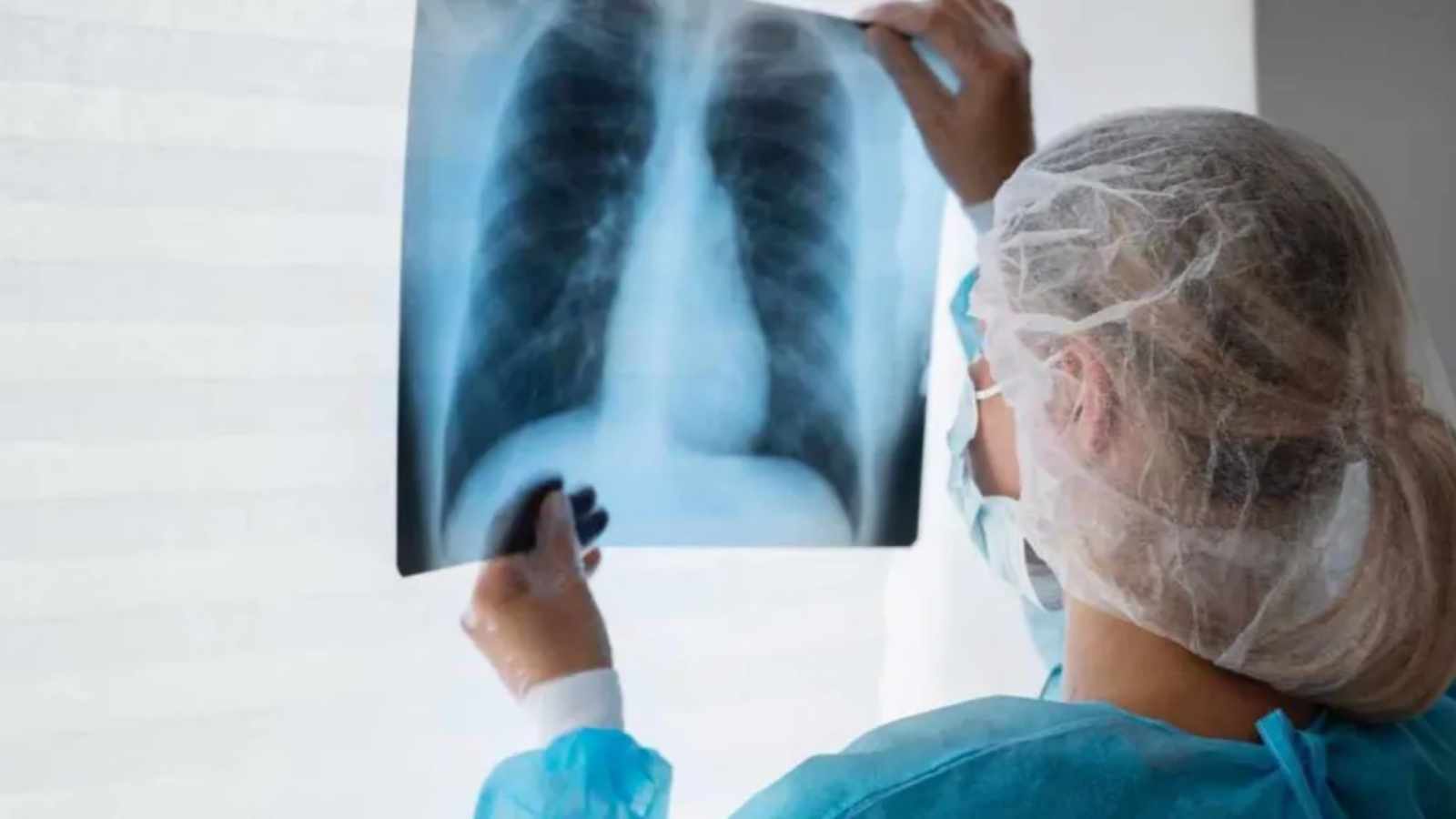
While India continues to account for nearly a quarter of the global TB cases, the country’s estimated incidence is missing from this year’s Global TB report. “Estimates of TB incidence and associated indicators are under review, pending finalization and use of data from district-level sentinel surveillance. Estimates are expected to be updated in early 2027,” the dataset says.
Significantly, India has not released its own TB report, which used to be released annually in March on the occasion of World TB Day. This report usually provides granular state-level data on various indicators.
New data available from a district TB surveillance conducted in 2025 is currently being analysed to come up with new country-level estimates. “A population level TB disease prevalence was conducted in 2025 in 50 representative districts. But there is a process to finalise the data. We need to look at the trends and see whether the data is comparable to the previous round of national TB prevalence survey in 2020-21… Once any required adjustments are made, the estimates will be released,” explained Dr Katherine Floyd, Unit Head, Monitoring, evaluation and strategic information, Department for HIV, TB, Hepatitis and STIs at World Health Organisation.
Gap between estimated and reported cases indicates undetected infections
This number is important considering that the gap between the estimated incidence and the actual number of cases reported by a country is considered to be the number of undiagnosed and untreated cases who may continue to spread the infection.
India has conducted two national TB surveillance surveys, one between 1955 and 1958 and one between 2020 and 2021, which have served as the basis for the estimated incidence for India. “Instead of a national surveillance, the government conducted a district level surveillance last year, where the prevalence was recorded in 50 randomly selected, representative districts. This surveillance can be repeated from time to time to provide a basis for revised estimates,” said an expert in the field on condition of anonymity.
“While national surveillance is a superior way to calculate the estimates, it cannot be repeated very often as it is very resource intensive. Even a country like China has done it only three times. A district level surveillance can be repeated more frequently,” the source added.
Story continues below this ad
They said that the new methodology is likely to bring down India’s incidence, some of which can be attributed to the programme actually working.
India reports 25.3 lakh TB cases in 2025
While the estimated incidence was missing in the current report, it did provide details on the number of TB cases actually diagnosed. There were 25.3 lakh people diagnosed with TB under the national programme, with 2.63 lakh deaths reported due to the infection in 2025. To compare, 26.18 lakh cases and just over 3 lakh deaths had been reported in 2024.
TB mortality declines 38% since 2015
With the reduction in the number of deaths, India has brought down the mortality by 38% as compared to 2025, achieving an important “End TB” milestone albeit five years late. One of the WHO targets was to reduce mortality by 35% as compared to the baseline of 2015 by 2020. By 2025, it should have been reduced by 75%.
Sources said India had achieved a significant milestone in its fight against TB, recording a 38% reduction in mortality since 2015, compared to a global decline of 35%. “The progress reflects the impact of intensified interventions under the National TB Elimination Programme (NTEP), including proactive case finding including use of AI enabled X-rays, rapid diagnostics, prompt treatment initiation, differentiated TB care, and nutritional support through the Ni-kshay Poshan Yojana and Ni-kshay Mitra initiative…. India’s commitment is further reflected in 96% of TB programme funding requirements being met through domestic resources,” the sources added.
Story continues below this ad
While the numbers globally are moving in the right direction, they remain far from the 2030 goal of eliminating the infection. Globally in 2025, an estimated 10.6 million people and 1.13 million people died from TB.
Diagnose earlier and take screening closer to vulnerable communities
Dr Vikas Oswal, chest consultant, TB specialist and global technical expert member with PEERLINC, Philippines, said India needs sustained investment across the entire TB care journey, from early diagnosis and effective treatment to recovery and prevention. He said the 35% reduction in TB mortality was a milestone, but stressed that timely and complete care must become accessible to every patient in every district.
He called for chest X-ray screening and rapid molecular testing to be made more accessible to vulnerable communities, backed by reliable referral systems and sample transportation. Screening, he said, must lead promptly to diagnosis and treatment.
Oswal stressed that public-private partnerships should become a permanent part of TB care, ensuring patients have access to quality diagnostics, drug-resistance testing, medicines and support wherever they first seek treatment. “Shorter treatment regimens must be supported by strong healthcare systems,” he said, calling for comprehensive evaluation of household contacts, exclusion of active TB and appropriate preventive treatment, along with support to ensure patients complete their treatment.
Story continues below this ad
Oswal urged authorities to track diagnostic delays, loss to follow-up before treatment initiation, deaths, recurrence and catastrophic household expenditure, alongside routine case notifications and screening figures. He also called for every TB death to be reviewed to identify preventable gaps in care.
KioskNews shows a cleaned-up reading view extracted from the publisher’s page — the original always lives on their site, not ours.