Days after Xi-Trump summit, top Taiwan diplomat opens de facto consulate in US
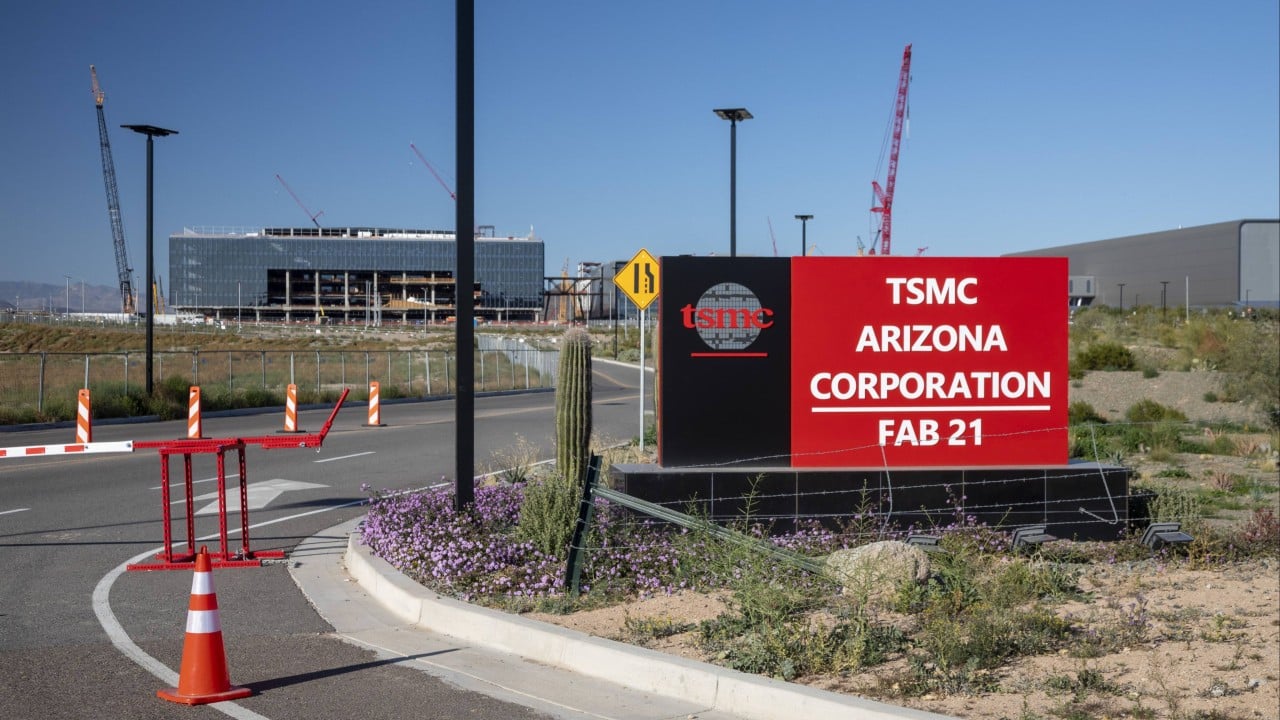
Taipei’s top diplomat is in Arizona this week to open a de facto consulate and tour the state’s semiconductor corridor, even as US President Donald Trump has just wrapped up the pageantry of a state visit for President Xi Jinping.
Lin Chia-lung, Taiwan’s foreign minister, arrived in Phoenix late on Saturday for a three-day visit that highlights the deepening economic ties between Washington and Taipei.
His visit will not include stops in Washington or meetings with anyone at the State Department, according to two sources familiar with the matter.
A trip to Washington just days after Xi’s visit could have risked a blow-up with Beijing, which used the summit to press the US to harden its line on Taiwan.
Beijing sees Taiwan as part of China and has never ruled out the use of force to reunite it with the mainland.
04:52
‘New joint arrangement’ on trade as Xi meets Trump at White House
Most countries, including the island’s main international partner, the United States, do not recognise Taiwan as an independent state. Washington is opposed to any attempt to take it by force and is legally bound to supply it with weapons to defend itself.
Taipei framed Lin’s trip as economic rather than political. “The unveiling of the office in Phoenix also symbolises the Taiwan-US economic and trade partnership moving towards a new milestone,” it said in a statement on Sunday.
According to the statement, the government would use public-private collaboration to deepen ties with Arizona and New Mexico “in trade, culture, education and supply chains”.
It would also provide frontline services to Taiwanese companies and expatriates, and “anchor Taiwan’s influence in the southern United States”, it said.
The Taipei Economic and Cultural Office in Phoenix will be Taiwan’s 14th representative office in the US.
As well as presiding over the office’s official opening, Lin will meet Taiwanese investors and expatriate leaders, and call on Arizona Governor Katie Hobbs and Phoenix Mayor Kate Gallego.
Lin will also witness the signing of a memorandum of understanding between the Arizona Commerce Authority and Taiwan’s National Innovation and Entrepreneurship Association.
SCMP Plus is a new premium news platform that gives you an
all-inclusive edge to stay ahead on China news.
To access our exclusive content you’ll need to subscribe.
Already a subscriber?
LOG IN
Ingrid Larson, managing director of the American Institute in Taiwan, flew in from Washington to accompany Lin throughout the trip. The programme includes a visit to a Taiwan AI and biomedical display centre.
“Minister Lin’s trip is mainly aimed at understanding the practical needs of Taiwanese companies’ layout in the United States, so as to help them build closer links with local governments, industry and communities,” the ministry said.
Larson’s presence, it added, showed “the importance both sides attach to deepening local and industrial cooperation”.
The Arizona trip also comes as the US and China compete over the advanced-chip supply chain. Taiwan Semiconductor Manufacturing Company (TSMC) remains the key producer of leading-edge chips, including the AI accelerators sold by Nvidia and AMD.
Trump has pushed to move more chip production to the US to reduce reliance on Taiwan, while restricting Beijing’s access to advanced chips.
He initially tightened those controls, including on Nvidia’s H200, before later allowing Nvidia and AMD to sell some advanced chips to mainland Chinese clients in exchange for a share of the revenue. Top-end Blackwell processors remain restricted.
The contrast was visible at the White House state dinner for Xi. Nvidia CEO Jensen Huang and his AMD counterpart Lisa Su – both born in Taiwan and dependent on TSMC – were seated at the head table with Trump and Xi.
The new representative office is seen as Taipei’s way of serving the companies and families that have followed TSMC to Phoenix, where it is building a cluster of chip factories.
About 300 babies were born to TSMC-related employees in Arizona over five years.
02:14
Donald Trump unveils US$100 billion investment plan by Taiwanese chip giant TSMC
TSMC’s first factory in Arizona began mass production in late 2024. A second is finished and due to start production in the second half of 2027, while a third is still under construction.
According to a New York Times report in December 2024, about half of TSMC’s roughly 2,200 Arizona employees were brought over from Taiwan.
The company later put the Phoenix workforce at about 3,000, including hundreds from Taiwan, with a target of about 6,000 once the second and third factories are running.
The transfer of employees led to a lawsuit that remains open. Deborah Howington, a TSMC talent-acquisition executive, sued the company in August 2024 in federal court in San Jose.
She accuses the company of an “anti-American” culture that favoured Taiwanese hires, recruited them through a confidential “Asian headhunter” and sidelined workers who were not Taiwanese.
Lin’s Arizona stop follows a week in Belize and Guatemala, the two remaining countries in Central America with official diplomatic ties to Taipei.
Over the weekend, Taipei also announced plans for former leader Tsai Ing-wen to deliver the opening keynote address at Stanford University on Wednesday, on her first US visit since leaving office in 2024.
The Stanford Gordian Knot Centre for National Security Innovation said that during Tsai’s eight years in office, Taiwan had strengthened its position in critical technologies and semiconductor manufacturing.
The island had also “deepened partnerships and invested in defence “amid an increasingly complex security environment in the Indo-Pacific, it said.
Tsai will also speak on Thursday at an event hosted by Stanford’s Hoover Institution on democracy, resilience and global security.
The events come less than two weeks after Trump hosted Xi in Washington, when the two sides extended their trade truce into early 2027 and Xi urged the US to “oppose” Taiwan independence.
In May, after his own trip to Beijing, Trump said he was holding “in abeyance” an arms sale to Taiwan, described as a package worth about US$14 billion, calling it a “good negotiating chip” with Beijing.
KioskNews shows a cleaned-up reading view extracted from the publisher’s page — the original always lives on their site, not ours.