Got a buzzing or ringing in your ears? Here’s what the experts say
Diane Green can recall exactly the day unbearable tinnitus entered her life. On December 27, 2025, she suddenly experienced both the loss of hearing in one ear and the unpleasant acquisition of a constant and loud ringing noise that she describes as sounding like Big Ben. She was rushed to hospital in Brisbane, where they tested her every which way for two months, only to conclude they didn’t really know what was causing the problem, just that it wasn’t life-threatening. “They don’t know,” she tells us. “It just happened.”
Fellow sufferer Jennifer Bettess dates her tinnitus back seven years, a noise in her head that sounds like “a thousand cicadas”, an ordeal that has yet to relent. When it appeared, she says, “I thought I had a tumour, I was dying or something.” Emergency examinations quickly ruled out anything sinister. So why couldn’t they figure out what was causing the phantom sound?
Paul Maye’s tinnitus also emerged suddenly, caused, he deduces, by his taking a new medication in 2022. “One day my hearing was fine, the next there was this extremely loud, relentless sound in my head, like a steaming kettle that just never switched off, and I had no idea what it was. At first, it was overwhelming. The noise would not stop. It followed me into work, into conversations, quiet relaxing evenings were now gone. I tried to keep myself busy every minute I could. Living with tinnitus changed every part of my day. Every waking second was now torture. I had to find a completely new way to live.”
Tinnitus, generally described as experiencing a sound that has no external source, affects about one in eight people worldwide, possibly more. For many, the condition is mild, typically a gentle ringing or buzzing usually experienced in particularly quiet times, a sound the brain can often mostly ignore.
For some, though, it can be chronically debilitating, affecting sleep, relationships, work and even the will to live. While the word itself is derived from the Latin for ringing bells, tinnitus can also sound like a jet engine, a fire alarm, escaping steam, buzzing mosquitoes: inescapable, unrelenting and infuriatingly difficult to overcome. What do we know about tinnitus? What are the causes? How is it best treated?

What is tinnitus?
Tinnitus may well be triggered or exacerbated by the audible intrusions of modern life – ear-splitting cinematic sound effects, live music amplified up to 11, constant headphone use and anything else that contributes to hearing loss, one of its main causes (more on that below). But it is far from a contemporary phenomenon. In 1853, Sir William Wilde (father of Oscar) observed tinnitus patients describing the sound as like hearing “water, birds, bees, trees”, if they hailed from the country; “while in towns [people] say that they hear the rolling of carriages, hammerings, steam engines”.
The ancient Egyptian tome Ebers Papyrus contains passages describing ringing in the ears and “a buzzing in the ear like the roar of a waterfall”. Babylonian clay tablets mention ringing, whispering and roaring in the ear, write Doreen Huppert and colleagues in the Journal of Neurology. The ancient Greeks described patients suffering from “quiet sound”, the physician Hippocrates speculating it was caused by the brain swelling into the ear canal, for which he recommended “cooling agents” – whatever they were – and “drawing off blood”. The ancient Chinese encyclopedia of medicine the Huangdi Neijing, linked tinnitus, along with most other things, to the life force Qi, suggesting, “If Qi is insufficient above, the brain is not sufficiently filled by it, the ears suffer a ringing noise, the head is bent low by it, the eyes [experience] dizziness.”
If you enclose people with perfect hearing in a soundproof space for long enough, their brains will start to generate noise.
Today we are closer to understanding some of the causes of tinnitus, though major gaps remain. Broadly, it is divided into two camps: “objective” tinnitus, which may be heard close to the ear canal by an outside examiner such as an audiologist or ear, nose and throat specialist; and the insidious and much more common “subjective” version, which can be heard only by the affected person themselves, and which “doesn’t really obey acoustic principles because it is a neurological phenomenon,” says audiologist Myriam Westcott. “It’s heard as a sound because this neurological phenomenon is taking place in the part of the brain that’s processing sound.”
Many of us are likely to experience it at one time or another: experiments have even demonstrated that if you enclose people with perfect hearing in a soundproof space for long enough, their brains will start to generate noise, apparently to compensate for the lack of audio input. So why does it become a problem for some but not others?
“When we’ve got normal hearing, we can hear a huge amount of stuff, so the brain is being swamped with sound,” says Westcott. “At a subconscious level, it will filter out the unimportant sounds, so only the important sounds reach conscious awareness. For many people, over time, tinnitus becomes an unimportant sound. It’s annoying, but not particularly problematic to that person’s functioning. But for a smaller proportion of people, and that’s considered to be about 2 per cent of the population, people become severely distressed. It can affect their cognitive functioning. They are in a state of fight or flight all the time. It’s rare that people have to stop work, but sometimes that does happen. They become really overwhelmed by the impact on their lives.”

What causes tinnitus?
Tinnitus can be triggered by illnesses such as Meniere’s disease, an ear disorder that typically also causes episodes of severe vertigo and dizziness; by some antibiotics and drugs for chemotherapy; by head injuries; by problems in the jaw or neck that cause sounds to be referred into the inner ear; by ear infections; and, in very rare cases, by tumours such as the sinister-sounding vestibular schwannoma, which is benign but interferes with the nerve that connects the inner ear to the brain.
In people with no obvious cause, genetic or age-related hearing loss is often considered the culprit, the theory being that the brain is over-compensating for the reduction in perception of naturally occurring sounds, often in the higher ranges, by generating its own white noise, attempting to adapt to a lack of information that is no longer coming from the ear – a malfunction that has been likened to phantom limb syndrome (where amputees feel pain or itchiness in an arm or leg that is no longer there).
‘Tinnitus is a strange thing because it’s not proportional to hearing loss. So you can have severe tinnitus and have normal hearing, and you can have severe hearing loss and no tinnitus.’
Ear, nose and throat surgeon Nigel Biggs
“The commonest physical cause by far and away is hearing loss,” says Nigel Biggs, a leading ear, nose and throat surgeon based in Sydney’s Darlinghurst. “Around 80 per cent of patients who have tinnitus that’s a constant sound will have some sort of underlying hearing loss, no matter how small.” But, he notes, “tinnitus is a strange thing because it’s not proportional to hearing loss. So you can have severe tinnitus and have normal hearing, and you can have severe hearing loss and no tinnitus.” Indeed, Biggs operates on patients to remove tumors (vestibular schwannomas), resulting in complete hearing loss, but their tinnitus remains.
(Jennifer Bettess is one of those who has unbearable tinnitus and has been examined by specialists and found to not only be otherwise healthy but to have had no hearing loss at all.)
Mini Gupta, an audiologist specialising in tinnitus in Melbourne, noted a sharp rise during the COVID pandemic, though it’s unclear whether it was a side effect of the virus itself or simply due to people spending more time in quiet environments and noticing internal sounds, which then spiralled to the point of needing to see a clinician. “They started becoming aware that there’s a problem, which I believe was one of the reasons why so many people suddenly started coming with tinnitus.”
It can also likely be caused by trauma or a change in stress levels, says Philippa James, a Melbourne audiologist who specialises in tinnitus and the related disorders hyperacusis (super-sensitivity to everyday sounds) and misophonia (strong reactions to specific, ordinary sounds). “I’ll see a bunch of people where they might have a mild underlying hearing loss that’s been sitting there for many years that hasn’t necessarily impacted them, but then they’ve had something stressful happen in their life or they’ve been involved in a traumatic incident, and what can happen from that is that they start clenching the jaw more, and that can in itself cause tinnitus.”

Sometimes, if the tinnitus is found to have a physical, or somatic, cause, says James, “if that is treated by a physiotherapist very quickly then, yes, that could switch off their tinnitus”. But tinnitus is a tricky customer. “It’s pretty natural for someone to start to become pretty worried about that tinnitus, and the distress will then cause them to go into feedback cycles, and it will turn into neurological tinnitus because they’re stressed by it,” James says. “It’s considered a threat, and then when it’s considered a threat, you get the whole stress response in the body, and then the subconscious brain starts to learn, OK, we don’t like this sound. We need to keep sending it up to the conscious brain for this person to notice it to keep them safe. That’s a survival mechanism, and then once we’re noticing that sound prominently, that then drives the emotional reaction, and then it kind of goes around and around in a circle.”
‘We know that in around 55 per cent of people with bothersome tinnitus or distressing tinnitus, they will also become less tolerant to loud sounds and noise.’
Audiologist Philippa James
Christopher Cederroth, a researcher at Sweden’s Karolinska Institute, told the journal Medicinsk Vetenskap in 2017: “Animal studies have shown an increased activity in the brain’s auditory centre, but the emotional and cognitive areas of the brain can also contribute to reinforcing tinnitus. If we feel stressed, anxious or think about tinnitus, the activity in the brain’s auditory centre increases and the burden accompanying tinnitus is exacerbated.”
Some sufferers go on to develop hyperacusis apparently because they are so aware of their tinnitus that they seek to protect themselves from any further potential hearing damage. “We know that in around 55 per cent of people with bothersome tinnitus or distressing tinnitus, they will also become less tolerant to loud sounds and noise,” says James. “That stems from a hypervigilance to protect their auditory system.” Similarly, some might experience tensor tympani syndrome, in which a tiny muscle attached to the eardrum that tightens to protect us from loud noises becomes over-sensitised, which can cause pain, a sensation of fullness or pressure in the ear and mild vertigo and which can itself exacerbate tinnitus.

How is tinnitus treated?
The rapid onset of tinnitus should be investigated immediately in case it is a symptom of an underlying issue that requires urgent medical attention. “Some patients need surgical intervention,” says Mini Gupta. “A patient whose tinnitus is caused by chronic middle-ear effusion [also known as glue ear], for example, is referred to an ENT [ear, nose and throat] surgeon, and once the effusion resolves, the tinnitus may go away.”
Once any obvious (usually rare) causes – illnesses, tumours, possibly even earwax – have been treated or ruled out there is, unfortunately, rarely a quick fix. Audiologists typically recommend a multi-faceted approach that combines physical stimuli with counselling.
‘There’s no doubt that for some people that I’ve seen … tinnitus is the most traumatic thing that’s ever happened to them. The impact of that emotionally, and the stress that can cause, is really intense.’
Audiologist Myriam Westcott
“There’s no single solution,” says Myriam Westcott. “People need a really comprehensive, personalised and targeted therapeutic approach that manages the psychological aspects of distress as well. There’s no doubt that for some people that I’ve seen, over 30 years that I was practising in this field, tinnitus is the most traumatic thing that’s ever happened to them. The impact of that emotionally, and the stress that can cause, is really intense. People really need to know in that situation they are strongly supported. Tinnitus causes stress, and stress can aggravate tinnitus.” Gupta concurs. “We are using our expertise and joining the puzzle pieces together to treat it,” she says. “For us, tinnitus is a multi-system phenomena. And each system, on its own, is not probably causing the tinnitus, but they influence each other in a very complex way, and the result is the tinnitus.”
Treatments include retraining the brain using sound waves from hearing devices so the tinnitus becomes less apparent or disappears entirely – known as tinnitus retraining theory, or TRT – and employing psychological efforts such as cognitive behavioral therapy, to try to reduce focusing on the sound (as in, forget to hear it and it’s at least briefly gone).
“Habituation is the aim,” says Philippa James, “so the subconscious part of our brain that evaluates all external and internal sound reloads and reconsiders the tinnitus as going from a threat to a safe sound, going from an important or interesting sound to a not-important sound. Once it starts to evaluate it as less of a threat then it won’t be a sound that is sent up to the conscious brain as much, and people won’t consciously notice it as much.”
For some patients, physiotherapy can be effective, if their tinnitus originates from a physical trigger. Peter Selvaratnam, a specialist musculoskeletal physiotherapist, looks at whether neck and jaw movements contribute, “or if there are other causes like grinding their teeth”. “We also look at ... life stressors or if they have a heightened nervous system. Then we show them how to reduce it,” he says. “We don’t want to laud and say all the patients get better, but they come to acceptance, and then their tinnitus is not a big deal in their life.”
Kerrie Bor, a myotherapist who works with Selvaratnam, says there are numerous jaw muscles that can contribute to tinnitus. “By normalising the activity of these muscles via different treatment modalities such as manual therapy approaches, dry needling, breathing, visualisation and specific exercises it’s possible to impact the severity of the tinnitus. We can then start to change the messaging that’s running in a particular loop between these muscles, and the trigeminal nerve that supplies these muscles and the brain.”
Anti-anxiety or depression medications can also ameliorate the distress, and sleeping pills can give some relief in the short term – sleep being a major problem for some with distressing tinnitus – but all have their downsides too. Alternative therapies such as acupuncture, yoga, breath work and meditation can help, possibly because they reduce the anxiety and stress that can exacerbate tinnitus, or because of the placebo effect, which has also been shown to reduce symptoms. “Hypnotherapy can work for certain brains,” says James. “Some people respond really well to it and others don’t.”
Probably less effective, except as placebos, are supplements such as zinc, ginkgo biloba and magnesium that are marketed online for tinnitus, despite little clinical evidence that they do anything. “There are lots of problematic forums online,” says James, “mis-messaging about tinnitus, and that puts people in a really sort of dangerous position where they’re just spiralling: ‘I can’t do anything about this. I can’t cope.’ Even in severely distressed patients, there are multiple strategies to support the brain to habituate. It is at least somewhat possible in any brain at any age and stage.”
Diane Green, who flew from Brisbane to see Mini Gupta, has found relief with sound desensitisation therapy using a device that can play different levels of background sound in response to her environment. Five months in, Green says, “it’s a huge improvement”. If the noise was 10 out of 10 to start with, now it’s around four or five.
Jennifer Bettess, another of Gupta’s patients, tells us she has tried everything. “Kinesiology, physiotherapist, medications like Valium and antidepressants and sleeping pills. I’ve tried dietary changes. I’ve tried red light therapy, the oils, the sprays. Everything.” The only relief, she says, has been from tinnitus retraining therapy, playing a soft background noise such as the sounds of rain or wind.
![Biomedical engineer Ross O’Neill with the Lenire device his company created: “I just couldn’t believe how many people had [tinnitus].”](https://static.ffx.io/images/$zoom_0.738%2C$multiply_0.7725%2C$ratio_1.5%2C$width_756%2C$x_0%2C$y_0/t_crop_custom/q_86%2Cf_auto/a514eabe542adf657321c98779abb539caea7f3f)
Could there one day be a cure?
There are promising treatments in the field of neuroplasticity, efforts to rewire the brain so that the tinnitus is at least diminished. Studies of patients stimulated with both sound waves and electrical stimulus of the nerves that surround the ear canal have suggested this is possible, with many people reporting a drop in the severity of their symptoms.
Pioneers in the field include Susan Shore, an auditory neuroscientist and researcher at the University of Michigan, who has developed a device designed to retrain damaged nerve cells in the brain stem and who is on a pathway to commercialisation through her company Auricle. Neuromod, meanwhile, uses audio combined with mild electrical stimulation of the tongue tip to reinforce brain retraining.
Its device, called Lenire, was approved for use in Australia by the Therapeutic Goods Administration last year and is now being rolled out to patients through specialist clinics. In March, the American Journal of Audiology published the results of a trial on real-world patients treated at an independent clinic using the Lenire device, which found a clinically significant response in a majority of patients with “bothersome” tinnitus. Lenire has also been proven effective in three large-scale clinical trials conducted at independent sites by Neuromod’s chief scientific officer, University of Minnesota’s Professor Hubert Lim.
‘When I was talking to [ear, nose and throat specialists] and audiologists, asking them what are the big unmet needs in the space, this tinnitus topic kept coming up.’
Biomedical engineer Ross O’Neill
Neuromod’s founder, biomedical engineer Ross O’Neill, tells us his quest began in earnest around 15 years ago, after his daughter was diagnosed with hearing loss. “I became more aware of hearing healthcare and of the hearing industry. And when I was talking to [ear, nose and throat specialists] and audiologists, asking them what are the big unmet needs in the space, this tinnitus topic kept coming up. And then when I just talked to friends and family, I just couldn’t believe how many people had it. I realised actually this is very like chronic pain.”
Inspired by the success of the Cochlear implant, “we decided that we would try to become that category creator for tinnitus, do for tinnitus what Cochlear did for profound deafness.” (The Cochlear, first successfully implanted in 1978 in Melbourne by a team led by Graeme Clarke, is a tiny electronic device that allows sound to bypass damaged parts of the inner ear to stimulate the auditory nerve directly.)
Neuromod’s approach is what’s called “bimodal neuromodulation”: by combining electrical stimulus with an audio signal, the device encourages the brain to focus on healthy sound and to gradually ignore the tinnitus inside, O’Neill says. “And then you get that long-lasting effect that hearing aids and sound therapies were looking for but weren’t achieving.” It’s been available for some three years overseas, typically helping 80 or 90 per cent of users, including Paul Maye, a public servant from the west coast of Ireland whose tinnitus was so bad when it emerged four years ago that he couldn’t go into the office for six months. “I had to end up listening to nature sounds all day while I worked, and had an air purifier here on full blast, just to drown it out.”
After eight weeks using the Lenire device, he began to notice a change. “Slowly but surely, I kept at it for month after month, it kept going, reducing, reducing. Eventually, it wasn’t as intrusive at all. I’d be going around chatting all day, and what I found I was doing was not hearing the tinnitus for most of the day.” It still fluctuates, he says – alcohol and lack of sleep might exacerbate it – but “I have a very normal life now, where tinnitus isn’t a problem. I don’t wake up going, oh, how’s it going to be today? I’ll say it’s manageable.”
There are two caveats, however, with the Lenire: it costs several thousand dollars and it has little or no effect on between 10 and 20 per cent of users. “There are definitely some patients that don’t respond,” says O’Neill. “That’s a question that the whole field is trying to figure out as well.”
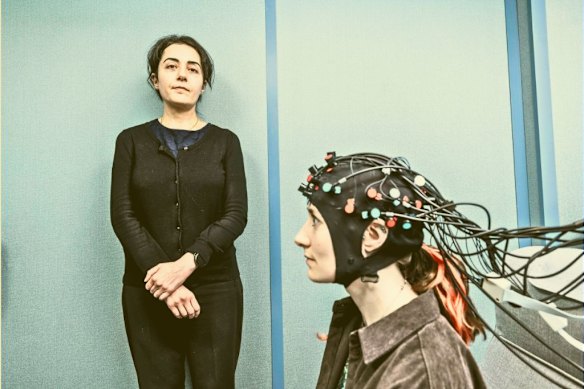
At Melbourne’s Bionics Institute, (founded by Graeme Clarke), researcher Mehrnaz Shoushtarian is conducting trials with tinnitus patients to reveal more about what’s actually happening within the brain, with the goal of leading to better targeted treatments. “We hope that if there are ways to objectively show tinnitus presence and severity, then we can better track the effect of treatments and hopefully improve current treatments, but also help develop new ones.”
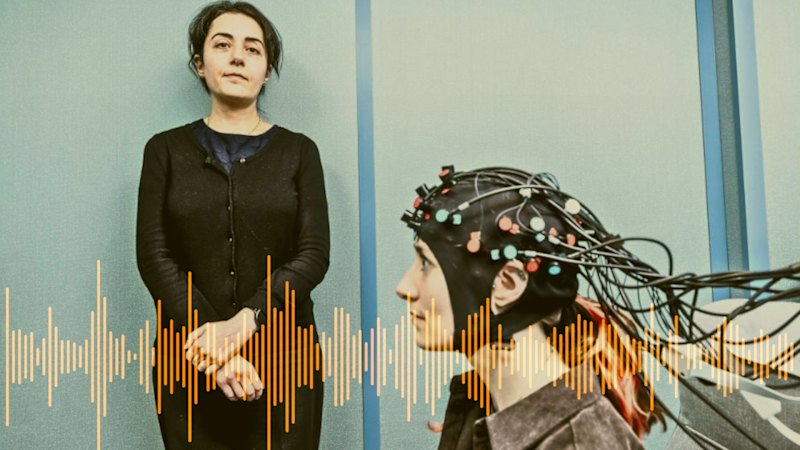
Using a cap fitted with light sensors that show changes in blood oxygen levels, she can measure differences in brain activity before and after a patient has had treatment for their tinnitus. “Broadly, we do a recording before they get any treatments and get a baseline of what those signal features are for this person, and then we track them over time and as they use the treatment to see what happens.”
The bottom line, says Myriam Westcott, is when it comes to subjective tinnitus, a cure is still quite elusive. “But I’m quite close to tinnitus neuroscientists who do believe a cure is possible. We wait and see.”
Get fascinating insights and explanations on the world’s most perplexing topics. Sign up for our weekly Explainer newsletter.
KioskNews shows a cleaned-up reading view extracted from the publisher’s page — the original always lives on their site, not ours.