CBI probes $6 million tech, identity theft fraud involving over 20 US citizens
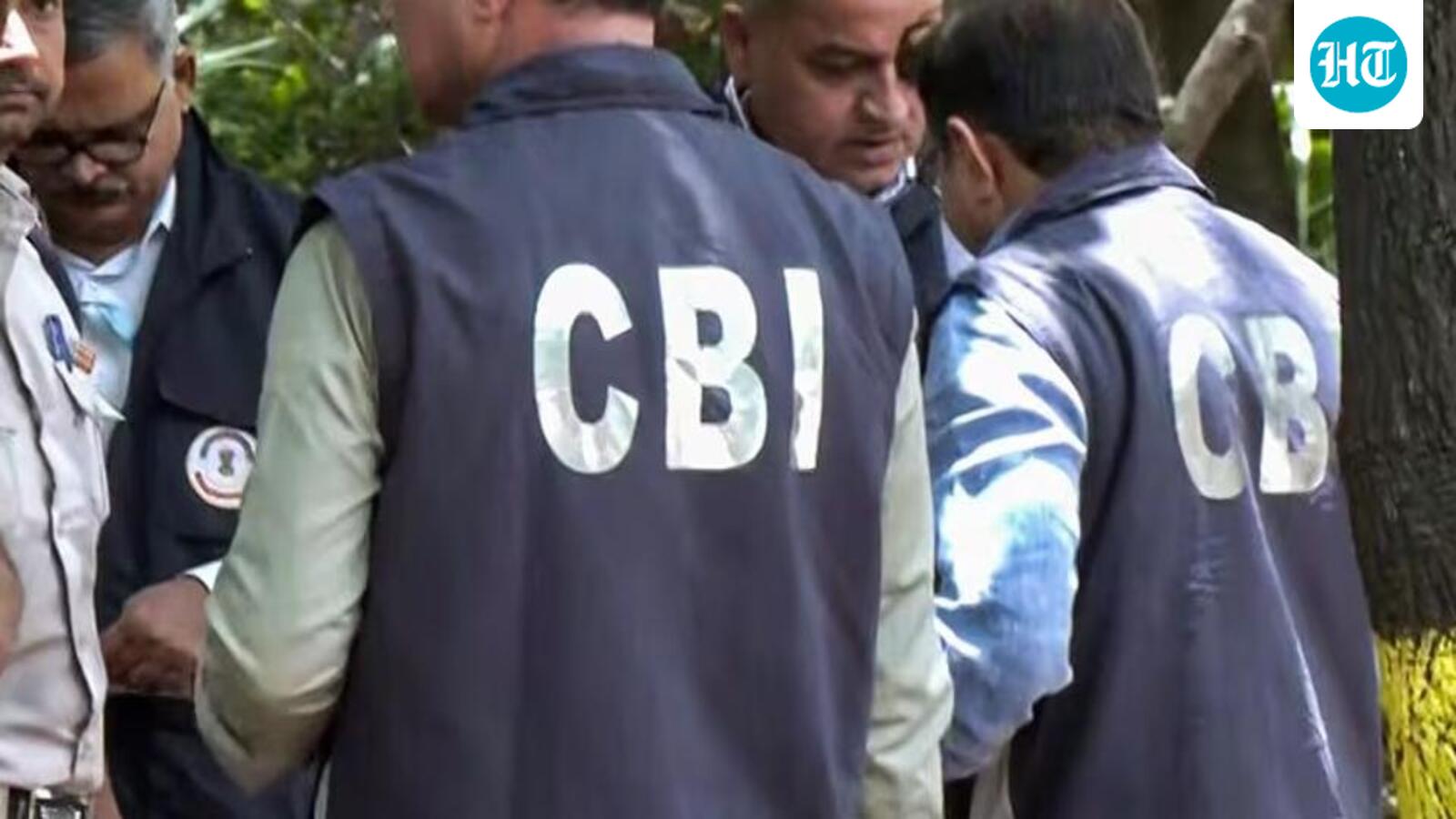
The Central Bureau of Investigation (CBI) booked an Ahmedabad based individual and his unknown associates for allegedly targeting US citizens through technology-enabled fraud and identity theft by impersonating as American federal agents and defrauding more than 20 victims of $6 million, people familiar with the development said.
The accused persons allegedly ran illegal call centres since 2024 and sent pop-up messages to the victims claiming that their computers had been compromised.
Once the victims called on the numbers sent by the accused, they posed as officials of agencies including the US Federal Trade Commission (FTC), US Attorney’s Office and the Cybersecurity and Infrastructure Security Agency (CISA).
Also Read:Delhi HC dismisses plea seeking CBI probe into violence against young lawyers
A first information report (FIR) has been filed by CBI naming Ankit Satish Chandra Pandey, a resident of Ahmedabad, and “unknown others” for cheating, criminal conspiracy, forgery and sections of information technology act.
The FIR states: “A reliable information has been received that the accused persons have been running illegal call centres at Ahmedabad since 2024 and targeting US citizens online and subjecting them to tech fraud or identity theft impersonation fraud”.
Detailing the modus operandi, CBI said that pop-up messages were sent to the victims claiming their computers had been compromised and asking them to call a number for assistance. “When the victims contacted on the number displayed on their computer screen, the accused communicated with the victims under pseudonymous identities of officers of Federal Trade Commission (FTC), US Attorney, Critical Infrastructure Security Agency (CISA) and other federal agencies, falsely informing the victims that their identities have been used by someone else and child pornography had been accessed from their computers”.
Also Read:Xi Jinping may press Trump to halt Taiwan arms sales during US visit
Thereafter, CBI says, the victims were induced to purchase gold bars or gift cards by withdrawing funds from their accounts and hand them over to couriers, or provide gift-card numbers and that their assets were being safeguarded by the US government. The gang members even allegedly sent fake emails and messages posing as government officials.
For instance, a victim Helen Loughlin, 79, of Georgetown, Texas, while working on her computer in January 2024, received a pop-up notification on her screen stating that her computer had been compromised. When she called on the number showing on the screen, she was told that she was talking to a person from Apple Security. The accused then said her call was being transferred to Randy Selzar of the Federal Trade Commission (FTC), who informed her that $4,800 was debited from her bank account for purchasing child pornography in China. She was induced to purchase $4,800 in Home Depot Gift Cards to prevent the money from being removed from her account, the CBI FIR states.
Once the victim purchased the gift cards, she was provided a fake receipt from FTC informing that her money had been safeguarded in Home Depot Gift Cards in a federal locker assigned to Selzar.
CBI adds that Loughlin was later contacted by another person impersonating Alamdar Hamdani, the US Attorney for the Southern District of Texas, who told her to convert her funds into gold and hand them over to a driver being sent by him. She purchased gold worth $96,966.13, $99,205.29, $72,391.29 and $72,811.05 on four occasions between January and February 2024, which was then handed over to a pickup driver. The accused persons, CBI says, issued her a fake Department of Justice letter claiming that the gold had been placed in a federal locker.
Using the same modus operandi, another victim - Mark Meilke, 68, from Texas, was targeted in February 2024 by this gang, CBI has alleged.
CBI alleged that “so far, the accused persons have defrauded more than 20 US victims to the tune of $6 millions”.
During investigations, the agency traced the internet activity for these frauds to Ahmedabad.

Neeraj Chauhan is a senior journalist with Hindustan Times and an investigative reporter specialising in national security, terrorism, organised crime, narcotics, corruption, financial crime and complex investigations. With over 21 years of experience across Hindustan Times, The Times of India, The Indian Express and The Pioneer, he has built deep expertise in India’s internal security and law-enforcement landscape. Neeraj has extensively covered India’s principal investigative, intelligence and security agencies, including the NIA, CBI, ED, IB, R&AW, MHA and other central security forces. His work has included deeply reported investigations into terrorism, terror financing, cross-border crime, narcotics trafficking, cybercrime, financial fraud and political and corporate corruption. He has reported on some of the most significant terror attacks and security developments in India over the past two decades, including the Delhi serial blasts, the 26/11 Mumbai attacks, the 2019 Pulwama terror attack and the recent Pahalgam attack. His reporting has also chronicled the rise and decline of the Indian Mujahideen, the activities and subsequent crackdown on the Popular Front of India (PFI), Islamist extremist networks, the conflict in Jammu and Kashmir, insurgencies in the Northeast and Maoist violence. Some of Neeraj’s major breaking stories are in Aryan Khan drug case, Sushant Singh Rajput suicide, interception of a 3,000-kg Afghan heroin consignment worth about ₹21,000 crore at Mundra port, Sri Lanka easter bombings, Aarushi-Hemraj murders in Noida, 2G scam, coal block allocation scam, AgustWestland VVIP chopper deal and major bank frauds and extradition cases involving Mehul Choksi, Nirav Modi and Vijay Mallya. His reporting is marked by an ability to cultivate sources, analyse confidential and complex documents, and follow investigations over several years—from the initial breakthrough to chargesheets, trials and international legal proceedings. He specialises in making complicated security and investigative developments accessible while examining their wider implications for governance and public policy. A Chevening South Asia Journalism Programme Fellow at the University of Westminster, Neeraj also spent time at the Financial Times as part of the fellowship. He was also a Robert Bosch Media Ambassadors India-Germany Fellow, studying at the University of Tübingen and working with Der Tagesspiegel in Berlin. He has previously taught investigative journalism and crime reporting as a guest faculty member at the Times School of Journalism. Over more than two decades, Neeraj has established himself as an authoritative voice on India’s national security and investigative landscape, with his reporting closely followed by officials, investigators, lawyers, policymakers and readers seeking insight into some of the country’s most complex and consequential developments.Read More

KioskNews shows a cleaned-up reading view extracted from the publisher’s page — the original always lives on their site, not ours.