6 Best Crime Books of the 2000s, Ranked

Sign in to your Collider account
A great mystery book essentially turns its readers into detectives. The author knows that the story is meant to feel like a subtle contest between the characters and the audience, with each clue raising the question of who will figure things out first. When the payoff is great, even losing the contest feels like a reward. However, if it’s bad or delivered at the wrong time, the entire buildup falls apart in a single second.
Now, the 2000s were a turning point for the mystery genre because it got darker and more literary. Some of the best writers of the decade stopped asking who did it and started exploring the consequences of crime and the ways it can change people’s lives forever. That shift gave the genre a new emotional depth and gave us some of the best mystery books of the 2000s. Here are the top six mystery books of the 2000s.
6 ‘The Curious Incident of the Dog in the Night-Time’ (2003)

The Curious Incident of the Dog in the Night-Time is the rare mystery that’s narrated by someone who sees the world completely differently from everyone around him. Mark Haddon’s novel follows Christopher Boone, a brilliant 15-year-old boy who loves math and hates being touched. One night, he discovers his neighbor’s dog, Wellington, lying dead on the lawn with a garden fork through it. Inspired by his hero, Sherlock Holmes, Christopher decides to investigate the crime himself and writes it all down as his own mystery novel.
The joke hidden in the title is that the dog barely matters. Christopher’s detective work leads him straight to the truth about his own parents, and Haddon lets readers figure it out a few pages before Christopher does. Watching him process absolutely heartbreaking news with the innocence of a teenager is one of the most painful parts of the book, to the point where readers can practically feel his confusion and fear as his whole world falls apart. The Curious Incident is a mystery that’s really about love and honesty, and it remains one of the most original novels of the decade.
5 ‘Shutter Island’ (2003)
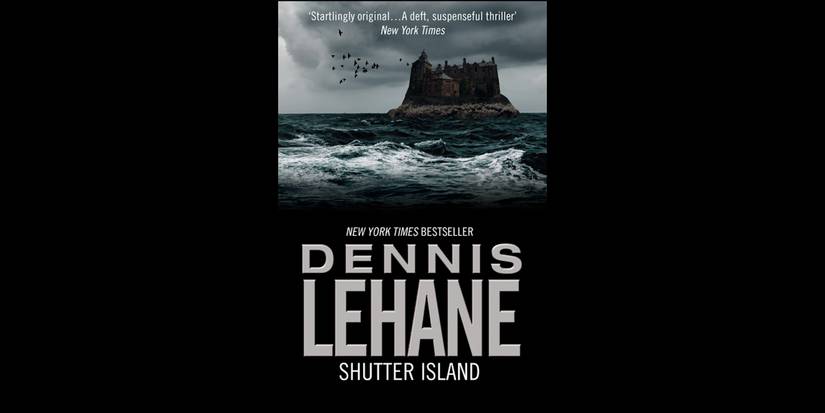
Dennis Lehane’s Shutter Island spawned one of Martin Scorsese’s biggest blockbusters, but the eerie, gothic novel deserves to be appreciated on its own. The story takes place in 1954, when U.S. Marshal Teddy Daniels and his partner, Chuck Aule, take a ferry to Ashecliffe Hospital, an institution for the criminally insane on a remote island in Boston Harbor. They go there to look for Rachel Solando, a patient who vanished from a locked room as if she had walked straight through the walls. When a hurricane traps them on the island, Teddy grows convinced that the hospital’s doctors are conducting secret experiments and hiding some very dark secrets.
From there, Shutter Island works like a classic pulp mystery with coded messages and a confined setting that keeps tightening the noose on its characters. Lehane’s old-fashioned style of storytelling is the book’s greatest strength. The readers get so caught up in the mystery of Rachel’s disappearance that they barely notice the inconsistencies in Teddy’s actions. By the time the book delivers its big twist, it’s clear that the clues hidden along the way were never really about the missing patient. Shutter Island is designed to be read twice, and is still a genre-defining book today.
COLLIDER The Mystery Desk
Case File 0481 · Open
Collider/ Movies/ Mystery/ Which Classic Mystery Movie Are You
8 Questions · 2 Minutes Which Classic Mystery Movie Are You? Every answer counts toward the verdict.
Four films that solve a mystery four completely different ways, from a comedy with three separate endings to a thriller told backwards. One of them has been describing you all along.
The Suspects01🕯Clue1985
02🪟Rear Window1954
03📦Se7en1995
04📸Memento2000
Prime suspect
Evidence logged automaticallyExhibit 01 of 08Film Night
What kind of film night are you after? Pick the one that sounds most like you
Press 1 to 4 to log an answer
Prime suspect
Evidence logged automaticallyExhibit 02 of 08Character Witness
How would your friends describe you? Be honest
Press 1 to 4 to log an answer
Prime suspect
Evidence logged automaticallyExhibit 03 of 08Whereabouts
What do you do when you are stuck at home? One answer only
Press 1 to 4 to log an answer
Prime suspect
Evidence logged automaticallyExhibit 04 of 08The Twist
How do you react to a plot twist? Pick the closest answer
Press 1 to 4 to log an answer
Prime suspect
Evidence logged automaticallyExhibit 05 of 08The Scene
Pick a room. No wrong answers here
Press 1 to 4 to log an answer
Prime suspect
Evidence logged automaticallyExhibit 06 of 08Testimony
What is your memory like? Pick the closest answer
Press 1 to 4 to log an answer
Prime suspect
Evidence logged automaticallyExhibit 07 of 08Closing Argument
How do you feel about endings? Think about the last film that got you
Press 1 to 4 to log an answer
Prime suspect
Evidence logged automaticallyExhibit 08 of 08The Verdict
What should a mystery film do to you? Last one
Press 1 to 4 to log an answer
Case Closed Verdict Your Mystery Movie Is
🕯 Clue Jonathan Lynn · 1985 You are the most fun thing in the room, and you are not remotely in control of it.
Clue is a murder mystery built from a board game, played at farce speed by one of the best comic ensembles ever assembled, and it refuses to commit to a single answer. That is you: loud, quick, impossible to plan around, and the reason anybody had a good time. Case Notes
- You keep the energy up and the plan loose, and people have a much better evening because of it.
- Three different endings were sent to different cinemas in 1985, so the answer depended on which screen you walked into.
- It flopped completely, found its audience on video, and went back into cinemas for its fortieth anniversary with the endings randomised again.
- Your flaw is that chaos is excellent company and a terrible plan.
Chaotic Quick Sociable Unserious
🪟 Rear Window Alfred Hitchcock · 1954 You watch, and you notice the thing everybody else walks past.
Hitchcock trapped James Stewart in one room with a broken leg and a view of his neighbours, and built an entire thriller out of a man looking out of a window and being right. You are the one who clocks the detail nobody announced, and you are usually correct before you can prove it. Case Notes
- You are quietly the most observant person in your circle and you notice changes before anybody mentions them.
- The courtyard was one of the largest sets ever built at Paramount, with thirty-one apartments and working plumbing.
- It was nominated for four Academy Awards including Best Director and is still taught as the cleanest thriller ever constructed.
- Your risk is that watching and doing something about it are not the same, and you know it.
Observant Patient Curious Detached
📦 Se7en David Fincher · 1995 You take things on, and you do not put them down.
Fincher made a serial killer film where the detectives are losing the entire time, shot it so dark the studio complained, and refused to change an ending that everybody told him would sink the film. You have that same refusal in you, and it has cost you more than you let on. Case Notes
- You are the one who keeps going after everybody else has accepted it cannot be solved.
- New Line wanted a different ending and Brad Pitt reportedly refused to make the film without the one they shot.
- It turned Fincher from the director who had a bad time on Alien 3 into the defining thriller director of his generation.
- Your weakness is that carrying something this long does real damage, and you are usually the last to notice.
Relentless Serious Principled Haunted
📸 Memento Christopher Nolan · 2000 Nobody can quite follow your thinking, and you get there anyway.
Nolan told the story backwards, so the audience knows as little as the man at the centre of it does, and the whole film becomes an argument about how much of what you believe you simply decided to believe. You arrive at the right answer by a route nobody else would have taken. Case Notes
- You work things out sideways, and explaining the route takes longer than the answer did.
- It was nominated for Best Original Screenplay and Best Film Editing in 2002 and won neither, which still annoys people.
- It cost around nine million dollars, made over five times that, and built the career that led to everything after.
- Your flaw is trusting your own version of events slightly more than the evidence supports.
Lateral Private Analytical Unreadable
Evidence Log
Clue
Rear Window
Se7en
Memento
Copied to clipboard
Case filed by COLLIDER Collider.com · The Mystery Desk
4 ‘The Shadow of the Wind’ (2001)

The Shadow of the Wind is a mystery for anyone who has ever fallen in love with a book. Carlos Ruiz Zafón’s novel is set in Barcelona in the years after the Spanish Civil War and begins when a young boy named Daniel Sempere is taken by his bookseller father to the Cemetery of Forgotten Books, a secret library hidden in the heart of the city. Daniel is allowed to choose one book, and he picks a novel by an obscure author named Julián Carax. He soon discovers that someone has spent years tracking down and burning every copy of Carax’s work — and that he may own one of the last ones left.
Zafón’s novel feels like stepping right into an old film. Daniel’s hunt for a forgotten writer soon evolves into a story about doomed love and family secrets. However, the most interesting part is how Daniel’s life begins to mirror the author’s in unsettling ways, especially when a brutal police inspector named Fumero starts taking an interest in him. Zafón fills the city with unforgettable characters and romantic prose that is easy to get lost in for hours. The novel became a global bestseller for good reason, given that it feels like a love letter to reading itself.
3 ‘Mystic River’ (2001)

Mystic River is another Lehane murder mystery that actually feels haunted. The story picks up in 1975, when three boys from a working-class Boston neighborhood are playing on the street when two men posing as police officers drive off with one of them, Dave Boyle. Dave escapes days later, but he comes back a completely different person, and the friendship between the three boys quietly falls apart. Twenty-five years later, Jimmy Marcus, now an ex-con running a corner store, learns that his teenage daughter has been murdered. Their old friend Sean Devine is the detective on the case, and on the night she died, Dave came home covered in blood.
Dennis Lehane is at his very best here, and Mystic River is often called his masterpiece. The mystery of who killed Katie Marcus is gripping, but the book is really about how one terrible day can quietly shape the rest of three men’s lives. The author moves between all three men, so readers always know a little more than any one of them, and that is where the book’s primary sense of tension comes from. Lehane also captures the loyalty and suspicion of a tight-knit neighborhood, where everyone knows each other’s secrets but no one wants to say them out loud. The ending is one of the most gut-wrenching in modern crime fiction, and it lingers long after the last page. Clint Eastwood’s Oscar-winning film adaptation of the novel is excellent, but Mystic River hits even harder in its original form.
2 ‘In the Woods’ (2007)
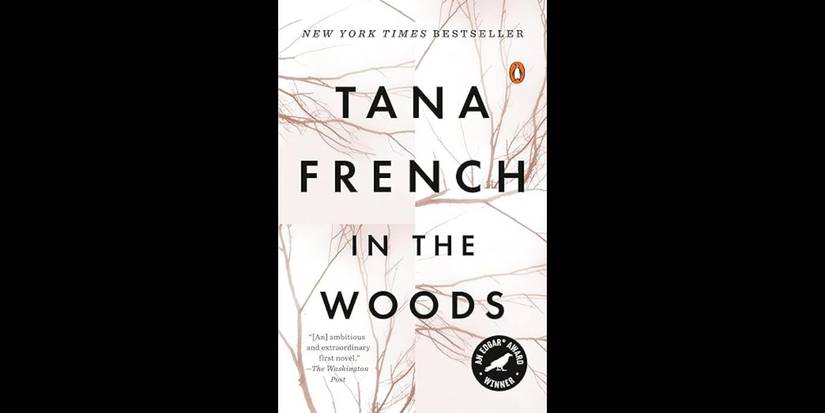
Very few narrators admit they’re liars in the first few pages, but Rob Ryan does in Tana French’s In the Woods. The story opens in 1984, when Rob was one of three children who wandered into the woods near their Dublin suburb. He was found clinging to a tree with blood in his shoes, with no memory of what happened, and his two best friends were never seen again. Twenty years later, he is serving as a detective on the Dublin Murder Squad when a 12-year-old girl is found dead at an archaeological dig in those same woods. Rob and his partner, Cassie Maddox, take the case, but the catch is that Rob keeps his connection to it a secret.
French’s debut reads less like a police procedural and more like a confession from someone who still hasn’t made peace with his past. The present-day murder is gripping, but the real tension comes from watching Rob slowly unravel as the woods pull him back in. His friendship with Cassie is warm and funny, and it adds to the story’s emotional stakes. The fact that the readers know he is not always honest makes the whole thing feel slightly off-balance. It’s also why the ending of the novel and its refusal to give easy answers have divided readers ever since.
1 ‘The Girl with the Dragon Tattoo’ (2005)
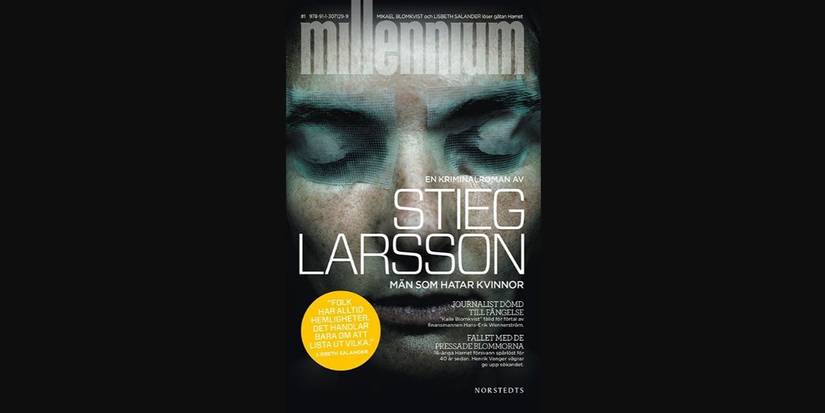
In Sweden, The Girl with the Dragon Tattoo was published under a much harsher title, Men Who Hate Women. This is a big clue to what Stieg Larsson really wanted to say with this story. The novel follows disgraced journalist Mikael Blomkvist, who is hired by aging industrialist Henrik Vanger to solve a 40-year-old mystery. Henrik’s niece Harriet vanished from the family’s private island on a day when the only bridge was blocked by an accident, which means someone on the island must have been responsible. Mikael soon realizes that he needs help from the brilliant but extremely private hacker Lisbeth Salander, who trusts almost no one. The Vanger case is a classic locked-room puzzle, built on old photographs and family members who all have something to hide.
However, Lisbeth’s is the reason the book became a global phenomenon. She is a character who has been failed by every institution that was supposed to protect her, and her refusal to be anyone’s victim gives the novel a unique kind of fury. She and Mikael are total opposites, but their partnership is one of the genre’s greatest odd pairings. The book covers a solid amount of ground. Despite its size, the story never wastes a page, and every thread pays off by the end. Larsson spent years as a journalist exposing extremist groups, and that anger at powerful men who escape consequences is felt on every page. He died before the book was published, sadly never seeing it become a hit that sold millions of copies around the world. Two decades later, Lisbeth Salander is still the gold standard for the modern crime heroine, and The Girl with the Dragon Tattoo remains a cultural phenomenon that mystery fans still talk about.

- Release Date
- February 27, 2009
- Runtime
- 152 minutes
- Director
- Niels Arden Oplev
- Writers
- Nikolaj Arcel, Rasmus Heisterberg
- Producers
- Søren Stærmose, Martin Strömberg
KioskNews shows a cleaned-up reading view extracted from the publisher’s page — the original always lives on their site, not ours.