NBC’s Best ‘Law & Order’ Series Broke the Franchise’s Formula

Chelsea Adelaine Hassler is an award-winning editorial, social, and creative director with two decades of media and entertainment experience and an all-consuming obsession with TV. A native New Yorker, she always completes the Sunday crossword, reads at least 100 books per year, and has Knicks season tickets.
Sign in to your Collider account
Dick Wolf is the undisputed king of network TV, having built a primetime empire on procedural storytelling. At the center of it all is Law & Order, the iconic franchise that redefined the crime drama with a deceptively simple formula where each episode introduces a new case and follows it through both sides of the justice system, from the police investigation to the criminal prosecution, to tell a standalone story in 45 minutes. The brilliance of that two-part structure – half law, half order – enabled the crime-of-the-week franchise to become one of television's most enduring and successful institutions, spawning eight spin-offs over more than three decades.
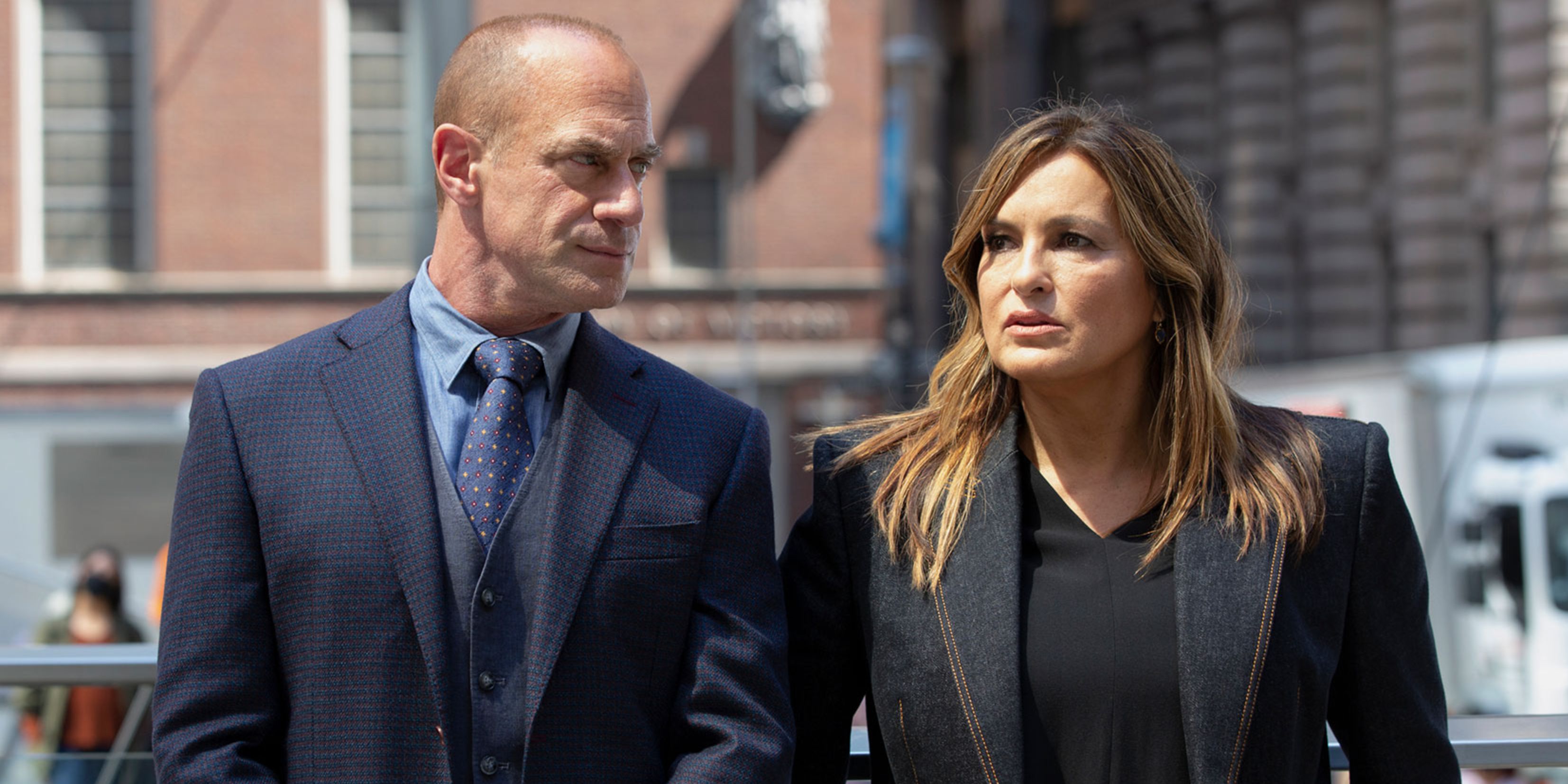
After turning Wolf's other massive franchise, One Chicago, into a programming powerhouse with a linear binge lineup – an entire evening of back-to-back episodes, keeping viewers locked in for hours – NBC expanded its strategy with "Law & Order Thursday," doubling down on the procedural formula that made Wolf an institution. Anchored by the longest-running primetime live-action scripted series in American TV history, Law & Order: Special Victims Unit, its success would ultimately pave the way for the flagship Law & Order series to return after a 12-year hiatus. But when the block first launched in 2021, SVU was paired with Law & Order: Organized Crime, bringing back Christopher Meloni's beloved Elliot Stabler after more than a decade away and turning the franchise's signature formula on its head in favor of a darker, intensely personal crime saga that used serialized storytelling instead.
'Law & Order: Organized Crime’ Swaps Episodic Crime for Serial Investigations, Criminals for Empires

There's no question that Meloni's return to primetime was the initial hook for the series, but Organized Crime did far more for the franchise than bring back one of its most beloved detectives – it took it in an entirely new direction. Its premise is simple, and exists in real-time continuity: Stabler has been abroad fighting crime for a decade, but after his wife, Kathy (Isabel Gillies), is murdered by a car bomb, he returns to New York to join a specialized task force, the Organized Crime Control Bureau, to bring her killers to justice while dismantling dangerous crime syndicates. But instead of tackling a new case in each episode, it presents a new chapter in an ongoing, serialized saga, where investigations and undercover operations develop not over the course of a 45-minute episode but over large chunks of a season, making Organized Crime feel closer to a prestige crime drama or thriller than a comfortable, predictable procedural.
Over the course of the show's five seasons, Stabler finds himself undercover not to solve a single case, but to take down extraordinarily violent, ruthless factions that don't simply disappear with the arrest of a single person and every organization is somehow connected to the next. Unlike other shows in the franchise, Stabler's part-time life as an undercover criminal is shown in-depth, displaying the shifting loyalties in the moral gray area he inhabits while he tries to prevent innocent people from becoming human collateral. These extended engagements allow the bad guys to develop from suspects-of-the-week into true antagonists that are familiar to the viewer, have clear goals and motivations, and raise the stakes in a way that standalone episodes could not. It elevates Organized Crime from a weekly puzzle into a complicated, ongoing battle between good and evil that's impossibly addictive in its own right.
In 'Law & Order: Organized Crime,' Stabler's Darkness Becomes Something Bright

The Elliot Stabler of Organized Crime is a changed man. No longer the hot-headed, impulsive, and aggressive detective of his SVU days, he's methodical, reflective, and collaborative. He's still the same intensely loyal, emotional guy with an insane amount of baggage, but instead of merely acknowledging that baggage and moving on, the series explores it in depth. Stabler's personal losses and his struggles to keep his home and work life separate become central to the show's narrative, making him as important to the story as the criminals he's trying to bring down. It gives Organized Crime the room to tell a more character-driven story than the traditional formula ever allowed, one with far higher stakes that extend well beyond working hours, and encompasses not just the criminals and the victims but the detectives who are working to bring them down, and the families and friends who are impacted by decisions made on the job – and, somehow, even managed to make Stabler's relationship with Olivia Benson (Mariska Hargitay) even more complicated.
As the seasons of Organized Crime progress, the show fills the procedural squad room to courtroom void with a deeper, far more personal exploration of the psychological state of its protagonists, and their relationships beyond the confines of the warehouse where OCCB is staged. Much like Stabler, his coworkers also have complicated lives, and they're explored in depth; from Sergeant Ayanna Bell (Danielle Moné Truitt) coping with a painful divorce and interdepartmental throwdowns, to Detective Jet Slootmaekers (Ainsley Seiger) embracing humanity after a life spent distancing herself from it, to Detective Bobby Rayes (Rick Gonzalez) dealing with a traumatic past that continually resurfaces in the field. The boundaries between personal and professional increasingly blur, but the show's focus on crime and law enforcement remains the same, just seen from a different perspective, and Organized Crime proves the franchise can handle a different kind of rhythm to its storytelling without losing its hit-making core identity.
Ultimately, Organized Crime was moved from NBC to Peacock before being canceled after its fifth and final season. And while Stabler may be heading back to SVU soon, his spin-off remains a standalone testament to the power of Law & Order and its incredible, iconic characters. The series broke the mold of what the franchise was, embracing something entirely new – while never losing sight of where it came from, and what made us fall in love with Stabler in the first place – and Organized Crime was better for it, making the third-longest running spin-off in Wolf's NYPD-centric universe a truly excellent serialized drama in its own right.

- Release Date
- 2021 - 2025-00-00
- Network
- NBC, Peacock
- Showrunner
- Bryan Goluboff
- Directors
- Jean de Segonzac, John Polson, Jon Cassar, Stephen Surjik, Alex Hall, Alex Zakrzewski, Bethany Rooney, Eriq La Salle, Jonathan Brown, Ken Girotti, Michael Slovis, Tess Malone, Gonzalo Amat, Milena Govich, Simón Brand, Sharon Lewis, Carlos Bernard, Cherie Nowlan, Jim McKay, John David Coles, Juan José Campanella, Kate Woods, Laura Belsey, Leslie Hope
- Writers
- Amy Berg, John Shiban, Liz Sagal, Will Pascoe, Davon Briggs, Katrina Cabrera Ortega, Nichole Beattie, Josh Fagin, Michael Konyves, Alec Wells, Bridget Tyler, Candice Sanchez McFarlane, Emmy Higgins, Rick Eid, Gwen Sigan, Sean Jablonski, David Graziano, Daniel Beaty, Katie Letien, Nick Culbertson, Jean Kyoung Frazier, Christina Piña
KioskNews shows a cleaned-up reading view extracted from the publisher’s page — the original always lives on their site, not ours.