Delhi: Pollution may be worse in your kitchen than on your balcony; study finds 50% more fine particles in some houses
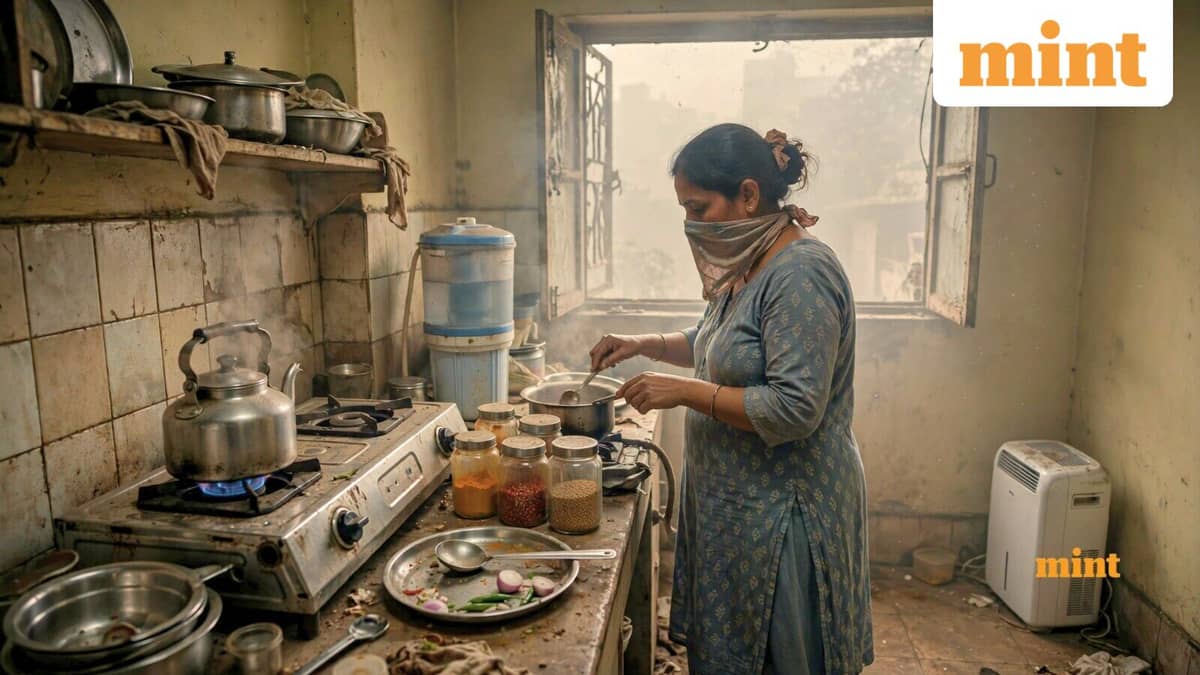
Researchers monitoring 24 homes in four south Delhi neighbourhoods found indoor PM2.5 averaged 45% higher than outdoor levels while PM10 was 46% higher.
Fine particle pollution was roughly 50% higher inside poorly-ventilated south Delhi homes than outdoors. The study covered 24 homes across four neighbourhoods, PTI reported.
Even homes with working kitchen exhaust systems recorded higher air pollution indoors than outside. But their indoor readings were lower than those in homes with poor ventilation.
In poorly-ventilated homes, indoor PM2.5 averaged 119.17 micrograms per cubic metre. The outdoor average was 79.34 micrograms per cubic metre. In well-ventilated homes, indoor PM2.5 averaged 77.34, compared with 56.14 outdoors. This put indoor levels about 38% above outdoor readings in those homes.
PM10 readings followed a similar pattern. Poorly-ventilated homes averaged 138.63 micrograms per cubic metre indoors and 91.19 micrograms per cubic metre outdoors. That put the indoor reading around 52% higher. Well-ventilated homes averaged 89.51 micrograms per cubic metre indoors and 64.81 micrograms per cubic metre outdoors, a difference of about 38%.
Indoor PM2.5 was about 54% higher in poorly ventilated homes than in well-ventilated ones. For PM10, the gap was about 55%. Across all 24 homes, PM2.5 averaged 98.25 micrograms per cubic metre indoors and 67.74 micrograms per cubic metre outdoors.
PM10 averaged 114.07 micrograms per cubic metre indoors and 78 micrograms per cubic metre outdoors. The indoor averages were about 45% higher for PM2.5 and 46% higher for PM10.
How researchers measured pollution
Researchers monitored homes in Shaheen Bagh, Jasola Vihar, Batla House and Okhla Vihar. They collected readings from February to April 2023.
They measured indoor pollution in kitchens and outdoor pollution on balconies. Each home was monitored for 8 hours each day over 3 consecutive days.
The researchers skipped night-time monitoring because of privacy concerns. They classified homes according to whether working kitchen chimneys or exhaust fans operated during monitoring.
The study linked better ventilation with lower indoor particle levels. Still, both groups recorded higher average particle levels inside kitchens than on balconies.
The researchers linked higher indoor readings to household activities and poor ventilation. They also pointed to Delhi pollution entering homes from outside.
Cooking, cleaning, smoking and burning incense can add particles to indoor air. Poor ventilation can allow indoor-generated particles to accumulate. The team did not measure how much each contributed to cooking, traffic, or dust.
The team included researchers from Jamia Millia Islamia in New Delhi. Researchers from Jazan University in Saudi Arabia also took part. Others came from Baba Ghulam Shah Badshah University in Rajouri, Jammu and Kashmir.
The journal Discover Environment published the study in 2025. The researchers said improving ventilation, maintaining exhaust systems and reducing indoor pollution sources could help.
About the Author
Sounak Mukhopadhyay covers trending news, sports and entertainment for LiveMint. His reporting focuses on fast-moving stories, box office performance, digital culture and major cricket developments. He combines real-time updates with clear context for everyday readers. <br><br> Sounak brings newsroom experience across breaking news, explainers and long-form features. He has a strong emphasis on accuracy, verification and responsible storytelling. His work tracks audience behaviour, celebrity influence and the business of sport and cinema. He helps readers understand why a story matters beyond the headline. <br><br> Sounak has contributed to widely read digital publications. He continues to build a body of journalism shaped by consistency, speed and editorial clarity. He is particularly interested in the intersection of media, popular culture and public conversation in contemporary India. <br><br> At LiveMint, he writes daily coverage as well as analytical pieces that interpret numbers, trends and cultural moments in accessible language. His approach prioritises factual depth, balanced framing and reader trust. The reporting aligns with modern newsroom standards of transparency and credibility. <br><br> Outside daily reporting, he explores storytelling across formats including podcasts, filmmaking and narrative non-fiction. Through his journalism, Sounak aims to document the rhythms of modern entertainment and sports while maintaining rigorous editorial integrity. <br><br> Sounak continues to develop audience-focused journalism that connects speed with substance in a rapidly-changing information environment. His work seeks clarity, trust and lasting public value in every story he reports.
KioskNews shows a cleaned-up reading view extracted from the publisher’s page — the original always lives on their site, not ours.