Mint explainer: why HPV vaccination is critical for girls as India crosses 10 million doses
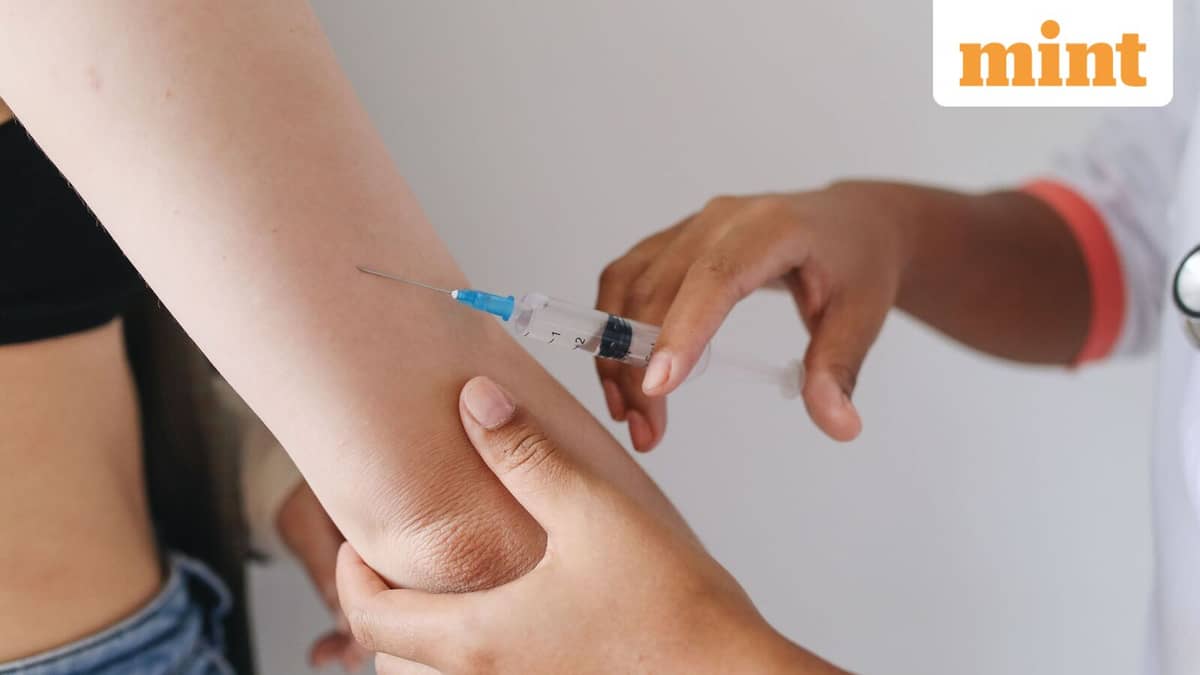
India has vaccinated over 10 million 14-year-old girls against HPV in less than nine months. Mint explains the campaign’s progress, the science behind it and the challenges ahead.
India has administered more than 10 million doses of the human papillomavirus (HPV) vaccine to 14-year-old girls in less than nine months under a campaign by the Union health ministry. The drive has covered nearly 87% of the annual target cohort of about 12 million girls, drawing praise from the World Health Organization’s (WHO) South-East Asia Region.
The milestone comes against a stark public-health backdrop. According to estimates by the WHO’s cancer agency, India records 1,27,526 new cervical cancer cases and 79,906 deaths every year, making it the second most common cancer among Indian women after breast cancer.
The rapid vaccination marks a shift from treating cervical cancer at later stages to preventing it at the source. But the campaign’s long-term impact will depend on sustained coverage, awareness and access to screening and treatment. Mint explains why the vaccination drive matters, how it works and how states are faring.
Why is HPV vaccination critical for girls in India?
India reports more new cervical cancer cases and deaths than any other country, accounting for one-fifth of global cases and nearly a quarter of all cervical cancer deaths worldwide. According to GLOBOCAN 2022 estimates, India records 1,27,526 new cases and 79,906 deaths annually, making cervical cancer the second most common cancer among Indian women after breast cancer.
Because persistent infection with high-risk HPV strains—which are linked to over 80% of cervical cancer cases in India—drives the vast majority of the disease, immunising girls offers direct, long-term protection against a largely preventable cancer.
Which vaccine is being used, and why is it given at age 14?
The national campaign uses Gardasil-4, a quadrivalent recombinant vaccine manufactured by MSD (Merck), which protects against high-risk, cancer-causing HPV strains. The vaccine is procured with support from Gavi, the Vaccine Alliance.
The shot is administered at age 14 because the vaccine works best when given well before any potential exposure to the virus. Nearly two decades of scientific research and real-world experience, backed by more than 800 million doses administered globally, show strong, lasting protection against vaccine-targeted HPV strains and precancerous lesions.
Meanwhile, Serum Institute of India’s indigenous quadrivalent vaccine, CERVAVAC, received WHO prequalification in September 2026, expanding future domestic supply options for public programmes and UN agencies.
What is the policy framework behind the rollout?
India’s campaign aligns with the WHO’s global 90–70–90 strategy to eliminate cervical cancer by 2030. The strategy calls for vaccinating 90% of girls by age 15, screening 70% of women by ages 35 and 45, and treating 90% of women diagnosed with cervical disease.
Following recommendations from the National Technical Advisory Group on Immunisation (NTAGI) and the Union government’s push in the Interim Budget 2024–25, Prime Minister Narendra Modi launched the nationwide campaign in February 2026.
India adopted a single-dose regimen, endorsed by the WHO as offering comparable protection to multi-dose schedules in young adolescents. The approach lowers procurement costs, simplifies cold-chain logistics and removes the risk of dropouts between doses.
After an intensive 90-day campaign phase, the shot is being integrated into Routine Immunisation days at Ayushman Arogya Mandirs, primary health centres (PHCs), community health centres (CHCs) and district hospitals.
Why can’t India rely on cancer screening alone?
Screening through Visual Inspection with Acetic Acid (VIA), Pap smears or HPV-DNA tests can detect precancerous changes early. But national screening uptake among Indian women aged 30–49 remains around 1.9%, far below global benchmarks. Low awareness, social stigma and weak follow-up for confirmation and treatment mean that roughly 60% to 70% of cervical cancer cases in India are detected only at advanced stages.
Vaccinating adolescents interrupts the chain of infection upfront, reducing the future burden of disease and the need for expensive, late-stage cancer care. However, vaccination does not replace screening, which remains important for women who are already eligible.
India crossing the milestone of 10 million HPV vaccine doses is a significant step towards strengthening preventive healthcare for women. It reflects the government’s commendable commitment to protecting women’s health from an early age. HPV vaccination is one of the most effective interventions for preventing cervical cancer, said said Dr Archana Dhawan Bajaj, gynaecologist and fertility expert at Nurture Clinic.
Ideally, girls should receive the vaccine between 9 and 14 years of age, preferably before exposure to HPV. Catch-up vaccination is recommended up to 26 years, while women aged 27–45 may consider it after medical consultation. Vaccination, complemented by regular cervical cancer screening, can significantly reduce India’s cervical cancer burden and save lives, she added.
How are states managing the rollout, safety and digital tracking?
Under Centre-State coordination, six states—Gujarat, Uttar Pradesh, Andhra Pradesh, Mizoram, Madhya Pradesh and Bihar—have achieved 100% coverage of their identified target populations, while 12 states have crossed 80%.
Uttar Pradesh leads in volume, with more than 29.33 lakh girls vaccinated, followed by Bihar with over 13.70 lakh and Gujarat with over 7.75 lakh. Uptake has also been strong in Assam (95.63%), Telangana (95.28%), Karnataka (93.16%) and Uttarakhand (90.17%). State-led drives in Bihar, Tamil Nadu and Sikkim have been folded into the national mission.
All sessions are free and voluntary, require parental consent and are conducted under trained medical officers, with links to 24×7 facilities to manage any rare adverse events following immunisation (AEFI).
Specialists from AIIMS, alongside teachers, ASHAs and ANMs, lead grassroots awareness efforts. The U-WIN digital platform enables slot booking, digital certificates and real-time district-level tracking of coverage gaps.
KioskNews shows a cleaned-up reading view extracted from the publisher’s page — the original always lives on their site, not ours.