Afternoon front page: What happened to Block Parents?; October 7 attacks praised in government-funded journal; and more
It’s Friday, October 9. Here are the top stories we’re following today.
Sign In or Create an Account
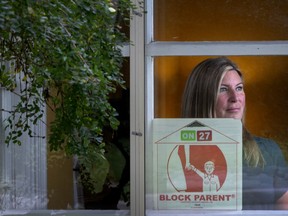
Started in 1968 by a group of Jewish moms in London, Ont., the Canadian program gave generations of children a familiar place to turn when they needed help. But from its peak in the early 1990s, when it counted more than 500,000 participating households across Canada, Block Parent has now disappeared from much of the country. Its decline traces a broader shift in the way Canadians raise children, know their neighbours and think about safety.

The poem, called Flood, was written by Bahar Orang and is featured in the latest issue of The Ex-Puritan, a journal funded by the Canada Council for the Arts. Flood describes the events of an October morning, a reference to Oct. 7, 2023, when 1,200 Israelis were murdered by Hamas terrorists. “Praise the paragliders, their gentle ascension, their unbroken morning, and of course their triumphant descension,” starts one line.
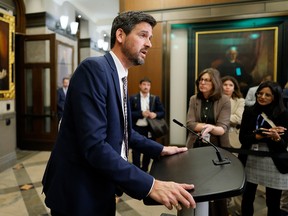
The Criminal Code generally requires that a person has the capacity to consent to receive medical assistance in dying immediately before death is administered. However, the federal Liberals are proposing to allow people with a serious and incurable disease that will eventually lead to incapacity — Alzheimer’s disease, for example — request MAID in advance if their health reaches certain conditions that they outline. Critics say the government is preparing to cross a new line that raises a number of ethical concerns.

Hikvision never notified the Canadian government when it began operating in Canada in 2015, a mandatory step that allows Ottawa to review it for national security concerns. The company, which is partly owned by the Chinese government, has been blacklisted by governments around the world over concerns about espionage and cybersecurity. Today, there are over 28,700 of the company’s devices connected to public-facing internet connections in Canada and likely far more on private connections.

The Supreme Court of Canada is due to rule on the constitutionality of Quebec’s Bill 21, which forbids school boards from hiring teachers who wear a hijab, kippah or turban. The court will also rule on the constitutionality of the province’s pre-emptive use of the Charter of Rights’ “notwithstanding” clause when it passed the contentious legislation. The ruling has the potential to reignite separatist sentiment in Quebec and reverberate further. “There has been an unsteady balance of power between the judicial and legislative branches of government ever since (the adoption of the Charter), and it is now teetering as never before,” Ivison writes.
Join the Conversation
This website uses cookies to personalize your content (including ads), and allows us to analyze our traffic. Read more about cookies here. By continuing to use our site, you agree to our Terms of Use and Privacy Policy.
KioskNews shows a cleaned-up reading view extracted from the publisher’s page — the original always lives on their site, not ours.