UP eases building map, plot approvals in industrial development authority areas
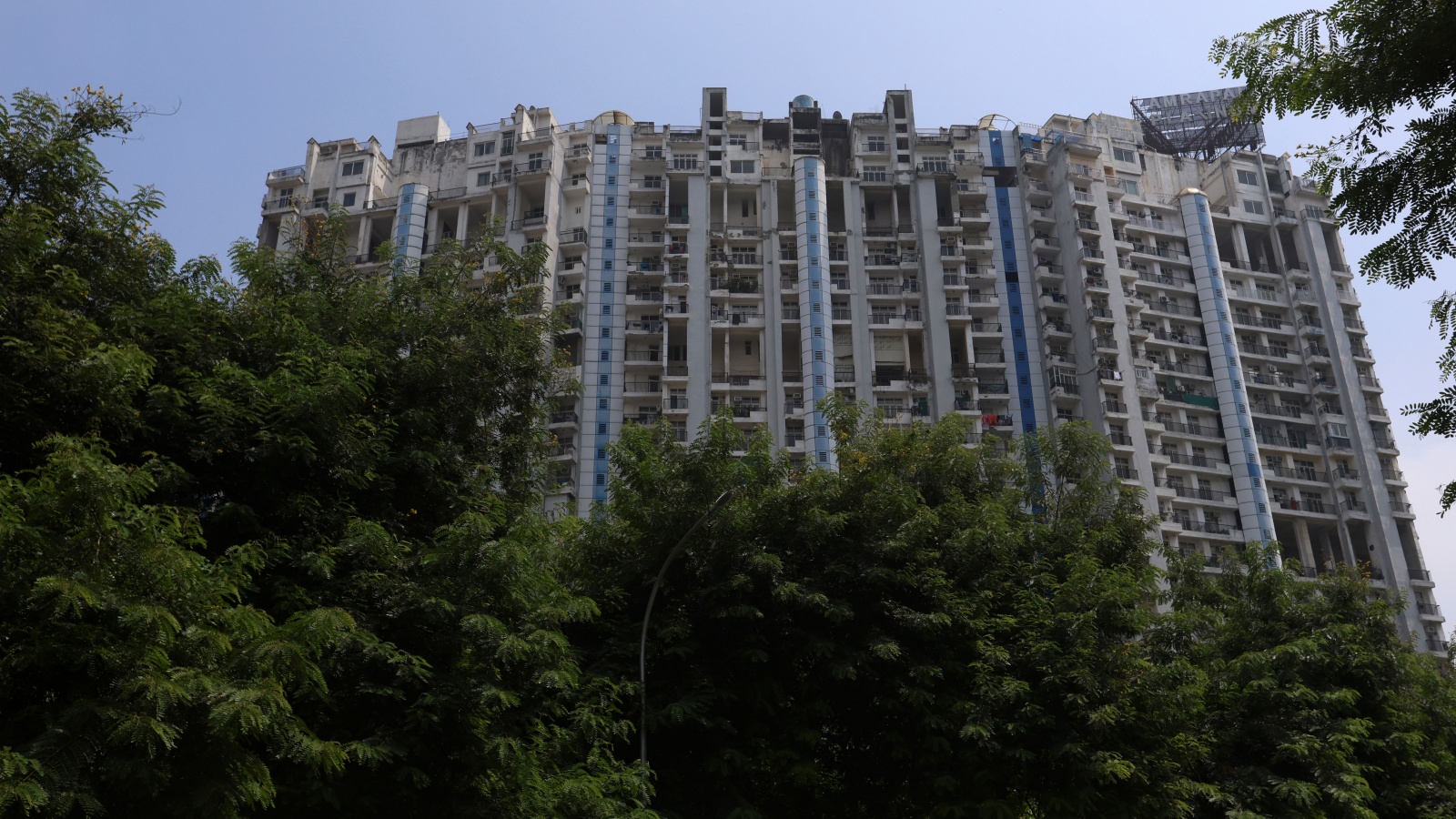
In an attempt to simplify the process of approvals for building maps and plots in areas under industrial development authorities across the state, the Uttar Pradesh Cabinet on Friday gave the go-ahead to the implementation of the Model Building Regulations, 2026.
In a meeting chaired by Chief Minister Yogi Adityanath, the Cabinet approved 39 proposals related to development, industrial investment, agriculture, employment, technology and public welfare.
The move to implement the Model Building Regulations, 2026, is being seen as crucial for accelerating urban expansion, infrastructure development and private investment, in line with the state government’s goal of achieving a one-trillion-dollar economy.
The new regulations will ensure better utilisation of valuable land suitable for development and will encourage private investment across various sectors, including manufacturing, tourism, IT/ITeS, logistics, healthcare, education and real estate, the government said in a statement.
Also, the Cabinet approved the renaming of Bhadohi district as Sant Ravidas Nagar Bhadohi, days after CM Adityanath announced this during his visits to Varanasi and Bhadohi.
It also okayed the proposal to implement the Uttar Pradesh Interest Waiver Scheme-2026, under which interests and penalties on outstanding dues arising under various tax laws will be waived up to December 31, 2025. The relief will remain effective for three months, it was stated, adding the scheme will cover outstanding dues under the Uttar Pradesh Sales Tax Act, 1948; Central Sales Tax Act, 1956; Uttar Pradesh Entertainment and Betting Tax Act, 1979; Uttar Pradesh Trade Tax Act, 1995; Uttar Pradesh Entry Tax Act, 2007; and Uttar Pradesh Value Added Tax Act, 2008.
Besides, cases covered under the rules relating to entertainment tax and the Uttar Pradesh Cable Television Network Rules, 1997, will also fall within the ambit of the scheme.
Story continues below this ad
Finance Minister Suresh Kumar Khanna said, “The scheme is being introduced to waive interest and penalties levied on outstanding dues up to the stipulated date. It will provide relief to taxpayers with pending dues under the relevant tax laws.”
Sustainable aviation fuel
The Cabinet approved the implementation of the Uttar Pradesh Sustainable Aviation Fuel Manufacturing Promotion Policy-2026, with a stated view to promote decarbonisation in the aviation sector, strengthen energy security, encourage private investment and innovation, and create new green employment opportunities in the state. It also emphasises developing new value chains in rural areas and diversifying farmers’ income by promoting sustainable aviation fuel production using locally available feedstock such as agricultural residues, municipal waste and non-edible oilseeds.
Uttar Pradesh has abundant agricultural residues, including rice husk, wheat straw and sugarcane bagasse, which can be used to produce sustainable aviation fuel through technologies such as pyrolysis and gasification, the government said.
The policy classifies sustainable aviation fuel manufacturing units into three categories based on capital investment. Units investing Rs 200 crore to Rs 500 crore will be classified as “large”, those investing Rs 500 crore to Rs 1,500 crore as “mega”, and those with investments exceeding Rs 1,500 crore as “ultra-mega units”.
Story continues below this ad
These units will be eligible for various incentives, including exemption or reimbursement of stamp duty, exemption from land-use conversion charges and development fees, reimbursement of net SGST, interest subsidy, 100% exemption from electricity duty for up to 10 years, skill development subsidy and reimbursement of patent registration fees.
The Uttar Pradesh New and Renewable Energy Development Agency (UPNEDA) has been designated as the nodal agency for the approval and disbursement of financial incentives to sustainable aviation fuel manufacturing units. An evaluation committee will be constituted under the Director, UPNEDA, to assess the applications.
The policy will remain in force for five years from the date of its implementation or until a new policy comes into effect, whichever is earlier, it was stated.
Artificial Intelligence Mission
The Cabinet approved establishment, implementation and operation of the Uttar Pradesh Artificial Intelligence Mission (UP-AIM) aiming to lead in the field of AI and promote a safe, effective and responsible use of the technology in governance and citizen services.
Story continues below this ad
Alok Kumar, Principal Secretary, IT and Electronics Department, said that through UP-AIM, which will operate in mission mode, the state will strengthen AI-based innovation, research, skill development, startups and entrepreneurship, high-capacity computing, and AI-based digital public infrastructure.
Under the mission, an integrated UP AI Stack will be developed, comprising an AI-ready data ecosystem, AI operating framework, departmental AI applications, a secure data exchange platform and GPU-based AI computing facilities.
More than 100 AI use cases will be developed or implemented, while 25 to 30 use cases will be scaled up on a large scale as part of the plan. The targets include providing financial and non-financial support to at least 100 AI startups, developing the skills of 5 lakh AI-fluent youth and preparing 50,000 forward deployed AI professionals.
UP-AIM will be implemented through seven key pillars, including the UP AI Stack and Data Exchange, AI Talent and Future Skills, AI Research and Centers of Excellence, AI Startups and MSMEs, AI Compute and Digital Infrastructure, AI Trust and Assurance and District AI Enablement, the government said.
Story continues below this ad
Under the mission, the state will develop these centers in all 75 districts, it said, adding that these units will promote AI-based innovation, training, employment, startups and entrepreneurship to address local problems.
The government will also develop an AI Trust and Assurance Framework to ensure the safe and responsible use of AI.
UP-AIM will be established as an independent society under the IT and Electronics Department. An apex body, governing body, and executive committee will be constituted to operate it and a CEO will lead the mission. A Master System Integrator (MSI) will be selected for the development and operation of the UP AI Stack. The MSI will be responsible for the design, development, integration, deployment, operation, and maintenance of the AI Stack and AI solutions, which will be reviewed against SLAs and prescribed milestones, it was stated.
In the future, the UP AI Stack operating platform will be made available to all departments, the government informed, adding that AI startups and technology partners associated with the departments will also have access to facilities such as open-weight models (SLMs/LLMs), development sandboxing and test sandboxing.
Story continues below this ad
UP Startup Procurement Scheme-2026
The Cabinet also approved the Uttar Pradesh Startup Procurement Scheme-2026, to facilitate market access for eligible startups in the state and promote the use of their innovative products, services and solutions by government departments and other agencies.
Under the scheme, a dedicated UP Startup E-Marketplace will be established to list innovative products, services and solutions developed by eligible startups and facilitate their procurement by government departments. This platform will enable government departments to procure innovative products and services offered by startups.
The procuring departments will make purchases from their approved budgetary provisions.
The Uttar Pradesh Startup Mission will be responsible for establishing, operating and maintaining the UP Startup E-Marketplace, ensuring its continued implementation, the government said.
Story continues below this ad
Eligible innovative enterprises registered under the Uttar Pradesh Startup Policy will also have opportunities to secure work orders from government departments, it added.
Meanwhile, the Cabinet approved the Sardar Vallabhbhai Patel Skill Training and Employment Zone (SVPSTPZ) Development Scheme to develop the state as a “sourcing hub of skilled manpower’ and a “global manpower hub”. Under the scheme, an integrated skill training and employment ecosystem will be developed across nine zones, covering all 75 districts of the state. This will help train young people to meet industry requirements and connect them with employment opportunities in India and abroad, the government said.
The Micro, Small and Medium Enterprises (MSME) sector has nearly 96 lakh MSME enterprises, accounting for 14.2 percent of the country’s 6.77 crore enterprises, it was stated. The sector contributes around 60 percent of the state’s industrial production and approximately 45 percent of its exports. More than 3 crore people are employed in this sector.
The scheme will play an important role in ensuring a skilled workforce to meet growing industry demand and connecting young people with employment opportunities on a wider scale.
Story continues below this ad
The state will be divided into 9 zones, with an integrated skill development and employment ecosystem established on a hub-and-spoke model. Training arrangements in each zone will align with local industrial activities, market demand, and employment prospects, it was stated.
In the first phase, the government will establish skill training and employment centres at five key locations — Lucknow, Kanpur, Gorakhpur, Gautam Buddhnagar and Jhansi.
Under the scheme, youngsters with non-technical educational backgrounds, such as humanities and commerce, will receive basic skill training. The government will also arrange technical skill upgrades for young people with backgrounds in ITIs, polytechnics, and engineering. The project will also provide need-based training in Indian and foreign languages, aligned with employment opportunities in other states and abroad.
The scheme will provide for hostel facilities, along with an employment office and placement cell. The project will arrange connections between trained youth and employment opportunities by coordinating with recognized and reputed placement agencies in India and abroad.
The project estimates total expenditure of Rs 1,725 crore over the next three years. Viability Gap Funding (VGF) may also be provided to private developers and training providers as required, the government said.
KioskNews shows a cleaned-up reading view extracted from the publisher’s page — the original always lives on their site, not ours.