NASA issues long-awaited call to industry for private space stations
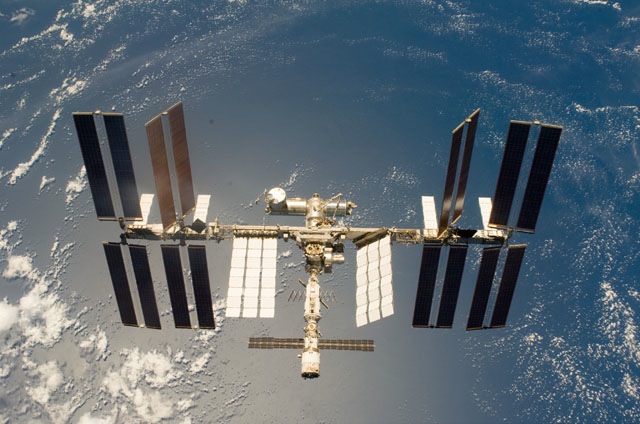
This is problematic because SpaceX has said it plans to retire the Crew Dragon spacecraft as soon as possible, and almost certainly when the International Space Station is deorbited in 2030 or 2032. SpaceX, which has the only operational US vehicle for such transportation, has not offered to sell seats to private space station operators. This led NASA, two weeks ago, to provide an additional $359 million to support Boeing’s ongoing efforts to certify its Starliner spacecraft for crewed missions to low-Earth orbit.
But in the new request for proposals (RFP), the space agency goes further in support of would-be space station operators. As part of their bids, contractors do not need to provide proof of a signed contract with Boeing (or another transportation provider), or even a letter of intent. NASA is even offering to “furnish” transportation for the first four NASA service missions to the private stations, likely meaning it will help broker deals between the private companies and Boeing.
Notably, in the new documents, NASA assigns an explicit price to crew and cargo missions. For 2030, it estimates a four-seat crew flight will cost $325 million, and a cargo flight $300 million. In offering to furnish these initial flights, NASA is taking a significant burden off private space station providers, which are already undertaking a challenging task in constructing, testing, and flying orbital space stations.
Early industry reactions
The potential bidders were still reviewing the lengthy proposal on Friday afternoon, but several offered their initial thoughts on the new NASA documents.
“The release of the RFP is an important milestone,” Marshall Smith, the chief executive of Voyager’s Starlab space station, said. “We appreciate that NASA has incorporated both industry and government feedback. We believe Starlab has the strongest business plan and technical solution to be America’s next space station and we look forward to competing.”
Axiom Space said it also welcomed the release of the final RFP.
“Our team is actively reviewing the RFP now and is energized for the next steps in the process,” an Axiom Space spokesperson said. “With years of experience executing human space flight missions and developing orbital hardware, we are confident the proposal we provide NASA will demonstrate that Axiom Space is the clear choice to meet NASA’s objectives in low-Earth orbit.”
KioskNews shows a cleaned-up reading view extracted from the publisher’s page — the original always lives on their site, not ours.