Making global inclusivity more than just a buzzword
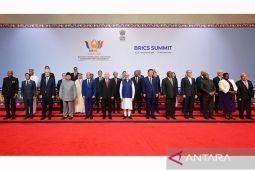
Jakarta (ANTARA) - Looking at the current global turmoil, it appears that many have abandoned the spirit of "united we stand, divided we fall" in pursuit of their own self-interests.
Today, wars and conflicts rage across multiple regions. If only the energy expended on these hostilities were redirected toward an increasingly urgent, shared threat: climate change.
We are now witnessing the vulnerability of nearly every sector to environmental shifts - spanning agriculture, fisheries, public health, infrastructure, and the broader global economy.
These challenges are compounded by geopolitical tensions that disrupt global supply chains, burdening societies worldwide with shortages and inflation.
Against this backdrop, Indonesia is striving to reignite the spirit of global unity and equality, just as mandated by the Bandung Declaration of the 1955 Asian-African Conference.
By rallying developing nations - often referred to as the Global South - Jakarta aims to build inclusive and comprehensive cooperation for mutual progress.
During the 2026 BRICS Summit, Indonesian President Prabowo Subianto emphasized that the collective strength of the Global South is essential capital for unlocking new development opportunities.
Many developing nations such as China, India, Indonesia, and Pakistan represent massive populations that offer vast economic potential and consumer markets — a demographic reality that has earned the bloc the title of the Global Majority.
By enhancing cooperation as well as integrating markets, capital, resources, and technology, developing nations can maximize their potential to achieve lasting national prosperity.
Collaborative Industrialization
Geopolitical friction has severely disrupted the supply of critical commodities, notably oil, natural gas, wheat, corn, fertilizers, and raw plastic materials.
Yet, within these challenges lies an opportunity. Through the BRICS forum, developing countries can strengthen logistics connectivity and stabilize global supply chains.
President Prabowo said that BRICS serves as a vast interconnected supply chain that must be optimized to yield greater domestic benefits for its members and partners.
Developing nations possess complementary resources and production capacities that can be leveraged to generate significant added value. This comparative advantage can attract investment, fortify domestic industries, and generate significant employment.
Many developing countries - including Saudi Arabia, Iran, the United Arab Emirates, and Venezuela - are among the world's leading oil and gas producers as well as reserves holders.
Others are rich in rare earth metals and critical minerals essential for modern advanced technology and the green energy transition. It makes these commodities crucial for sustainable development in this green economy era.
To capitalize on these resources, the president has urged developing nations to collaborate on advancing domestic industrialization.
In this regard, BRICS can provide robust support through financing and capacity building via its New Development Bank (NDB).
Established by the bloc on the principles of equality, the NDB offers greater flexibility, free from the stringent conditions and demanding structural adjustment requirements often imposed by other institutions.
Consequently, the international organization has the potential to be a game-changer for developing nations striving for inclusive development.
Championing inclusivity
Developing nations do not lack the potential to escape the middle-income trap. However, they are frequently marginalized by systemic inequities and structural barriers that echo neocolonial legacies.
Recognizing this, Prabowo has expressed his hope that BRICS can act as a transformative platform to elevate national economies and improve public welfare across the developing nations.
The consolidation of interests and the harmonization of priorities among BRICS members must align seamlessly with broader Global South aspirations, allowing the bloc to amplify the voices of developing nations on the world stage.
In doing so, BRICS can deliver tangible benefits and expand the opportunities needed to strengthen the resilience and independence of developing nations.
The Indonesian president firmly believes that national resilience is paramount. No nation should remain overly reliant on external parties or subject to the dictates of external powers.
Every country holds the sovereign right to chart its own course and forge partnerships that align with international as well as domestic laws, regulations, and norms.
Moreover, the 2030 Agenda and its Sustainable Development Goals (SDGs) - the world’s action guide for the past 11 years - will conclude in just four years.
As the United Nations (UN) prepares to draft the post-2030 action plan next year, developing countries have a critical window to act as architects of the global development trajectory, rather than remaining mere spectators.
The current world order undeniably privileges certain groups, but true global stability requires that all nations stand on equal footing.
At the 2026 BRICS Summit, President Prabowo issued a resounding call for global unity to forge a more just, equitable, and inclusive world order. Achieving this requires a recommitment to multilateralism, with the UN at its center.
Only by setting aside narrow national interests can the international community find genuine solutions to the global crises that impact the daily lives of billions.
Related news: Indonesia's Prabowo champions three key messages at BRICS Summit
Related news: Prabowo highlights unity, Bandung spirit at BRICS Summit
KioskNews shows a cleaned-up reading view extracted from the publisher’s page — the original always lives on their site, not ours.