Indonesia to revitalize Kretek Museum, Patiayam Site in Kudus C. Java
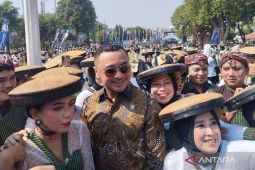
Kudus, Central Java (ANTARA) - Deputy Culture Minister Giring Ganesha Djumaryo said the ministry has planned to help revitalize the Kretek Museum and the Patiayam Museum in Kudus, Central Java, to make them more appealing and attract more visitors.
“President Prabowo Subianto has directed Culture Minister Fadli Zon and the entire Culture Ministry to ensure that museum improvements are not limited to the physical buildings, but also ensure that every collection has a narrative,” he said here on Saturday.
According to Giring, some museums have valuable collections but lack adequate narratives to explain each item to visitors.
He said he and Culture Minister Fadli Zon had visited various museums across Indonesia and found this to be one of the challenges in museum management.
“That is why regional museums can certainly follow the example of national museums. Every collection on display should be accompanied by a complete narrative so that visitors get an explanation of what they are looking at,” he said.
The improvement program for the two museums in Kudus District is targeted for completion by the end of the year.
Meanwhile, Kudus District Head Sam’ani Intakoris expressed gratitude to the Culture Ministry for providing assistance to renovate the two museums, saying the program is expected to further attract visitors.
“The budget for each museum is estimated at Rp1.5 billion, so the two museums combined are expected to receive assistance of around Rp3 billion,” he said.
The Patiayam Museum houses ancient fossils discovered at the Patiayam Site, which now number 10,147 fragments. However, only around 200 fragments are currently displayed in the museum’s exhibition hall.
Fossils discovered at the Patiayam Site include Stegodon trigonocephalus (ancient elephant), Elephas sp. (a type of ancient elephant), Cervus zwaani and Cervus lydekkeri (types of deer), and Rhinoceros sondaicus (rhinoceros).
Other fossils include Brachygnathus dubois (pig), Felis sp. (big cat/tiger), Bubalus palaeokarabau (ancient water buffalo), Bos palaesondaicus (ancient bovine), Crocodylus sp. (crocodile), as well as hand axes.
Meanwhile, the Kretek Museum’s collection depicts the production process of clove-laced tobacco cigarettes, from traditional manual methods to modern technology. Its exhibits also cover various types of tobacco, cigarette products through the years, and statues of figures who played roles in the development of Indonesia’s cigarette industry.
Related news: Indonesia to restore fire-damaged National Museum with Danantara
Translator: Akhmad, Kenzu
Editor: M Razi Rahman
Copyright © ANTARA 2026
KioskNews shows a cleaned-up reading view extracted from the publisher’s page — the original always lives on their site, not ours.