Why the Philippines is turning to India to boost defence capabilities
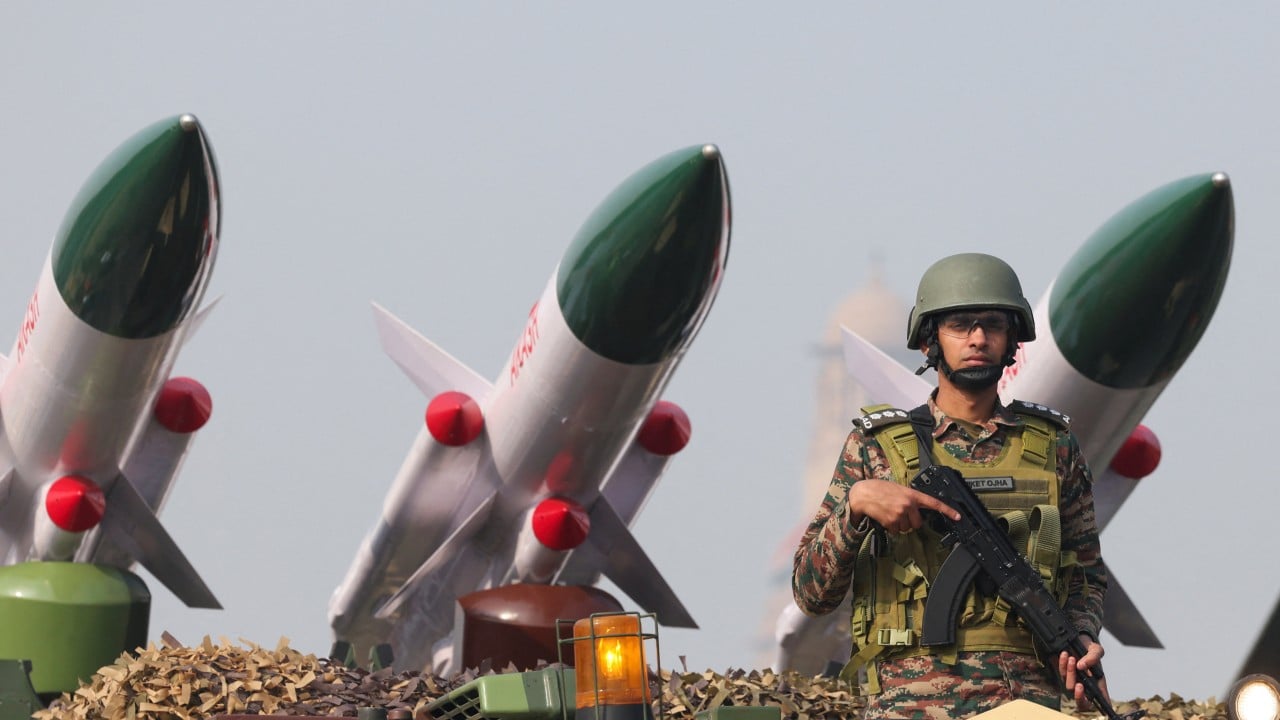
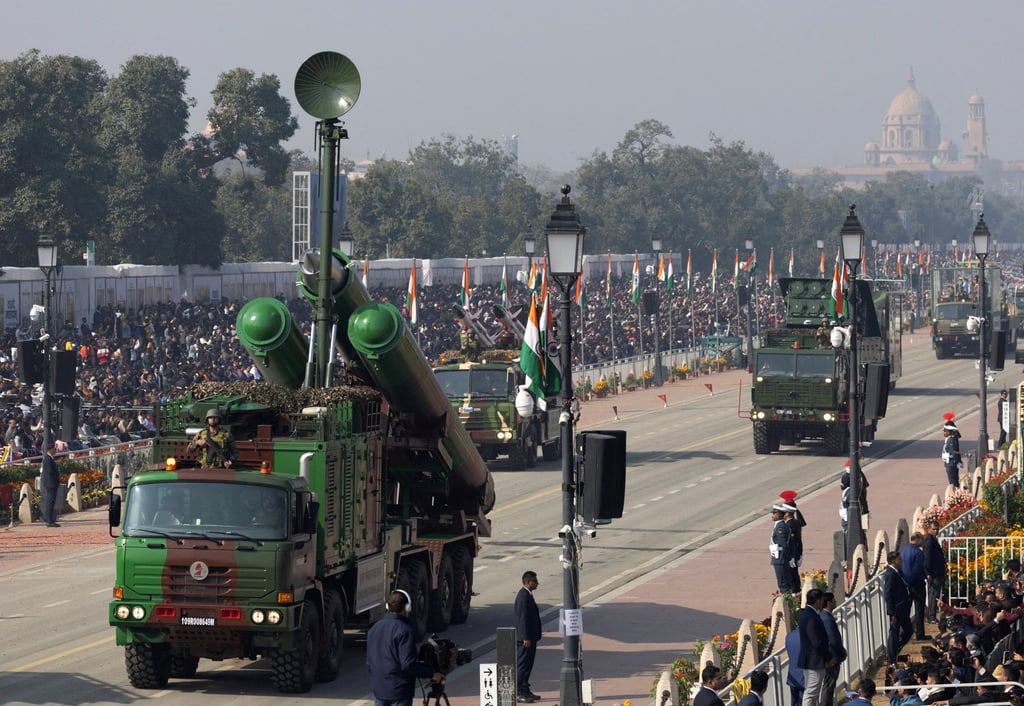
After purchasing India’s BrahMos anti-ship missiles, the Philippines is reportedly considering two more Indian weapons systems that analysts say could help Manila build a more formidable deterrent while laying the groundwork for closer military integration with New Delhi.
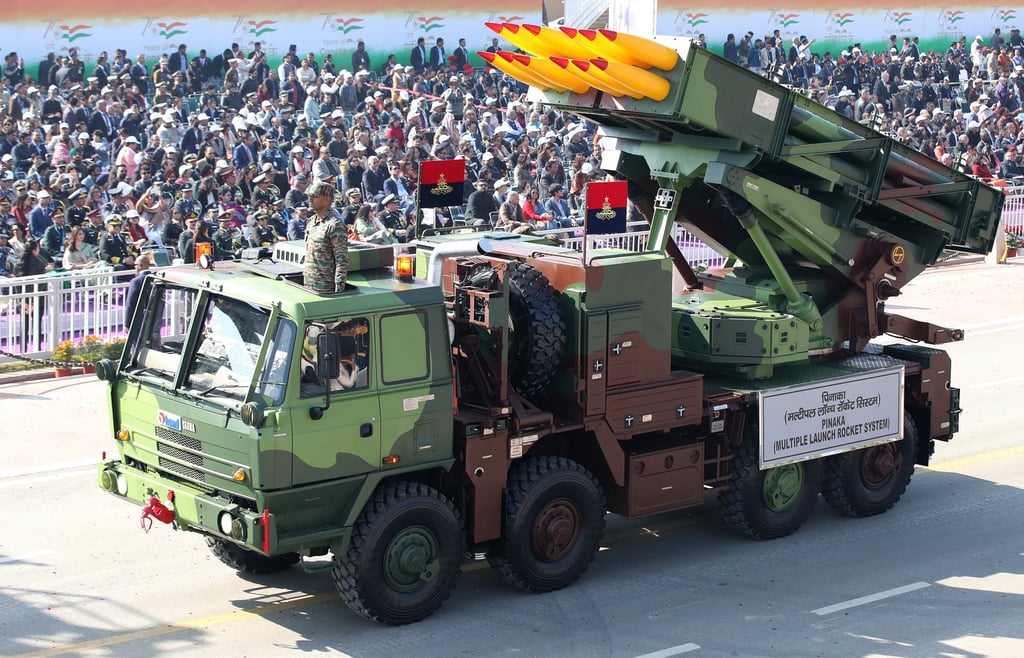
The Philippines is reportedly eyeing the acquisition of more than five regiments of Akash air defence systems and several batteries of Pinaka rocket launchers, according to Indian digital news outlet Firstpost, which cited sources in both countries’ defence and security establishments.
The report came just two weeks after Philippine Defence Secretary Gilberto Teodoro confirmed that his country wanted to buy more BrahMos missiles and had submitted a proposed list of modifications to better suit its geography and infrastructure.
Firstpost said Manila was considering buying six additional BrahMos missile system batteries, and discussions on these proposals were at “advanced stages”.

Observers said the new systems would fill a gap in the Philippines’ capabilities, as it looked to strengthen its anti-access and area denial capacities.
“The direction of the India-Philippines defence partnership underlines the growing strategic trust and defence cooperation, which are essential ingredients,” Abhishek Sharma, an associate fellow at the Delhi-based think tank Observer Research Foundation, told This Week in Asia.
He said the BrahMos deal laid the foundation for this partnership, making a case for further cooperation and collaboration.
“If the deal goes through, this would make the Philippines India’s first defence partner with whom we will be sharing multiple systems,” he said.
Vincent Kyle Parada, a defence analyst at FACTS Asia, predicts the Akash system will strengthen Manila’s air defences, which currently comprise a mix of Israeli-made SPYDER-MR air defence systems, mobile fire teams and a small fleet of FA-50 fighter jets.
The Pinaka would fill a similar role to the BrahMos in its ability to sink ships, firing high-explosive rockets in quick succession to saturate the target’s defences, Parada added.
“The idea is to deny a hostile force access to a particular area of operations and limit their freedom of action on the battlefield. In this case, we’re talking about the Philippines’ maritime approaches and the airspace above them,” Parada said.
Longer-range systems like the Akash, Pinaka and BrahMos would “allow you to threaten the enemy from a distance, projecting force past the front lines and thereby extending your defensive depth”.
Sharma agreed that the Akash would help Manila protect critical military assets and installations against incoming aerial threats, while the Pinaka would provide artillery firepower against any ground attack.
Observers say the Akash and BrahMos are complementary systems that can provide a layered defence for the Philippines by engaging targets at different ranges.
“Both the Akash and the guided version of the Pinaka can be deployed in regions where the BrahMos is positioned, protecting the supersonic missile systems from threats, especially unmanned aerial systems,” said Tuneer Mukherjee, a non-resident associate fellow of the Observer Research Foundation’s strategic studies programme in India.
The Akash and Pinaka could provide coastal defence, clearing the air to deploy the BrahMos missiles efficiently, he added.
Prisie Patnayak, a doctoral candidate at the Centre for Indo-Pacific Studies, School of International Studies at Jawaharlal Nehru University, said the missiles complemented each other in terms of cost asymmetry, or the deployment of inexpensive weapons that could drain an opponent’s stockpiles.
“BrahMos is a costlier weapon that cannot be procured in excess or used excessively,” she said. “However, cheaper options like Pinaka, which has now also successfully carried out its maiden test of a long-range guided missile with growing accuracy and destructive power, are affordable options that can be procured in large stockpiles and deployed repeatedly.”
Patnayak said India’s missile and rocket systems also offered platform flexibility and reliability, and “are available on the market without complicated political or logistical baggage.”
Oorja Tapan, a doctoral candidate at the Centre for International Politics, Organisation and Disarmament at Jawaharlal Nehru University, pointed to the missiles’ combat record as an appealing consideration, with the BrahMos and Akash missiles used in India’s Operation Sindoor, a military campaign that targeted Pakistan last year.
“India’s defence secretary has spoken openly about how well they did … India fields all three in large numbers, so buyers plug into a live production line and upgrade path. And they’re priced for regional budgets and arrive fast,” Tapan said, noting that Manila’s first BrahMos batteries arrived about two years after the contract was signed.
Deeper defence
Observers point out that India is quickly establishing itself as a preferred provider of missile and missile defence systems, which could lead to deeper defence integration agreements with the Philippines.
Parada said India was filling a void in the missile market previously catered to by Israeli defence companies. The October 7, 2023, attacks, in addition to geopolitical pressure, bad optics and Israel’s own domestic wartime requirements, “have forced Manila to downscale engagement”, he noted.
“With India slowly ramping up arms exports, this is looking to be a long-term partnership. The Philippines’ continued patronage validates its status as a viable defence supplier in the eyes of potential partners,” Parada said.
Tapan agreed that deeper Delhi-Manila defence relationships were “heading that way”.
“India and the Philippines only became strategic partners in August 2025. A BrahMos tailored to Manila’s wish list, backed by Indian air defence and rocket systems, would give that label real military weight,” she said.
“The test is the unglamorous part: training, spares, maintenance and financing terms Manila can live with. That’s where defence partnerships are actually built.”
Patnayak agreed that the deals could pave the way for defence industrial collaboration. “The Philippines can be next to bolster its defence industry in partnership with India.”
Mukherjee pointed out that the BrahMos contract Delhi offered Manila already included operator training, maintenance and logistical support.
“If that relationship matures with the purchase of the Akash and Pinaka systems, the two states could develop a deeper integrated relationship that could lead to long-term military-to-military engagement,” he said.
Manila could then seek favourable terms, including multi-year maintenance support and better rates for spares and ammunition, Mukherjee added.
Tapan pointed to India’s pitch as a defence supplier that provided capability without dependency.
“The systems are proven in Indian service, adapted to the buyer’s geography and sold without alliance conditions. Indonesia’s BrahMos deal this year shows the pitch travels beyond Manila,” she said.
KioskNews shows a cleaned-up reading view extracted from the publisher’s page — the original always lives on their site, not ours.