Bihar Museum is among world’s best. Can a museum change how the state sees itself?
Where should the Didarganj Yakshi reside? For several months in 2017, as the Bihar Museum was being designed, the question of where to place the exquisite, 2,500-year-old Mauryan sculpture became the subject of heated debate. After all, for over a century, the one-armed figurine, made of polished Chunar sandstone, had occupied the pride of place at the old Patna Museum. Shouldn’t the institution’s star exhibit be an entry point into the new museum?
At her new home, however, she became a destination in herself. Visitors must journey through several galleries tracing Bihar’s history, from 400,000 BCE to the late 18th century, before encountering what is one of the most recognised sculptures of ancient India.
This was part of a deliberate strategy, explains Anjani Kumar Singh, Director General of the Bihar Museum and the man who got the project off the ground. “Think of the Louvre in Paris. One has to cross so many galleries before finally meeting with the Mona Lisa.” The idea, he says, was to encourage visitors to imbibe the rich history of Bihar, before encountering its most prized possession.
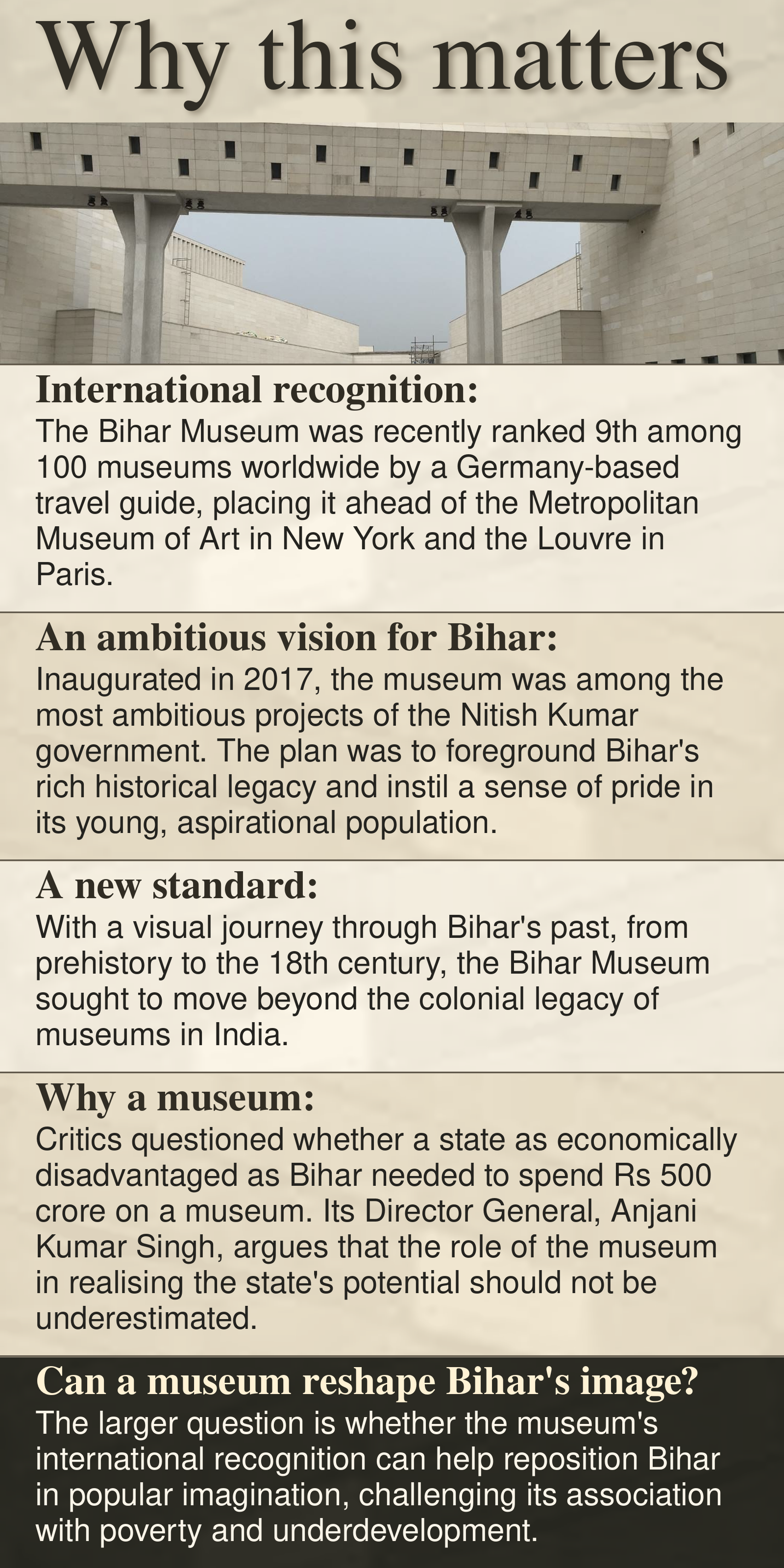
The brainstorming wasn’t reserved for the Didarganj Yakshi alone. Almost every sculpture, painting and artifact in the Bihar Museum had to earn its spot. It’s an attention to detail that has offered visitors a museum experience unlike few others in India, and won the Bihar Museum international recognition, including a recent one by a German travel guide that placed it ninth on a list of the World’s 100 Best Museums for 2026, ahead of some celebrated institutions such as the Metropolitan Museum of Art in New York, the British Museum in London and the Louvre in Paris.
 ⠀
It’s a welcome bragging point for a state that rarely draws attention beyond its politics and instances of administrative neglect.
Curating Bihari pride
Seated in his office on the museum campus, where he has spent more than a decade as the nodal officer in charge of the project, Singh speaks of a time when Bihar, with Pataliputra as its capital, held sway over much of the subcontinent.
It’s this pride in Bihar’s “glorious ancient past” that the museum intends to instil in the young, aspirational Bihari, says Singh, who retired as Chief Secretary in 2018 after a long stint in the government.
One of the most ambitious cultural projects of the then Nitish Kumar government, the idea of the museum first came up in 2009, four years into the JD(U) leader’s first full-term government.
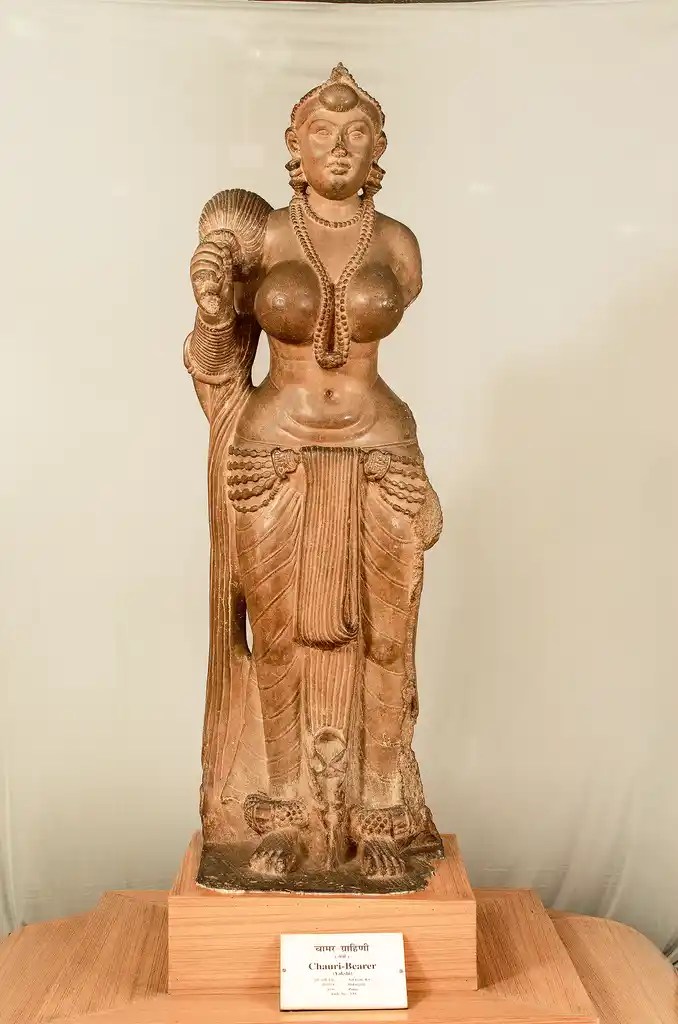 The Didarganj Yakshi is a 2,500-year-old Mauryan sculpture (Express Photo by Adrija Roychowdhury)
As part of his research, Singh travelled to some of the most well-known museums around the world, including the Louvre in Paris.
“But I also realised there was no point in reinventing the wheel. I had to improvise. For example, in many children’s museums abroad, I noticed signboards saying, ‘Do not touch’. I overturned that in the Bihar Museum’s children’s gallery by saying, ‘please touch, please feel'”.
EXPRESS INFOGENIE · IMMERSIVE
Opens a full-screen, scroll-driven story right here on this page. Works on mobile. Best with sound.
Inside the immersive story: tap a chapter to jump in
Created by Chandrashekar Srinivasan
Express InfoGenIE
The idea for setting up two large exhibition halls within the museum came from London’s Tate Modern, a power station-turned-museum with unusually large spaces. “We wanted a space to accommodate massive art pieces that often don’t get the display they deserve,” he says.
With the broad curatorial plan in place, the team had to shift the large repository of artifacts located in Patna Museum, a colonial-era provincial institution dating back to 1917, to a new state-of-the-art building, and consequently, tell a “new story of Bihar”.
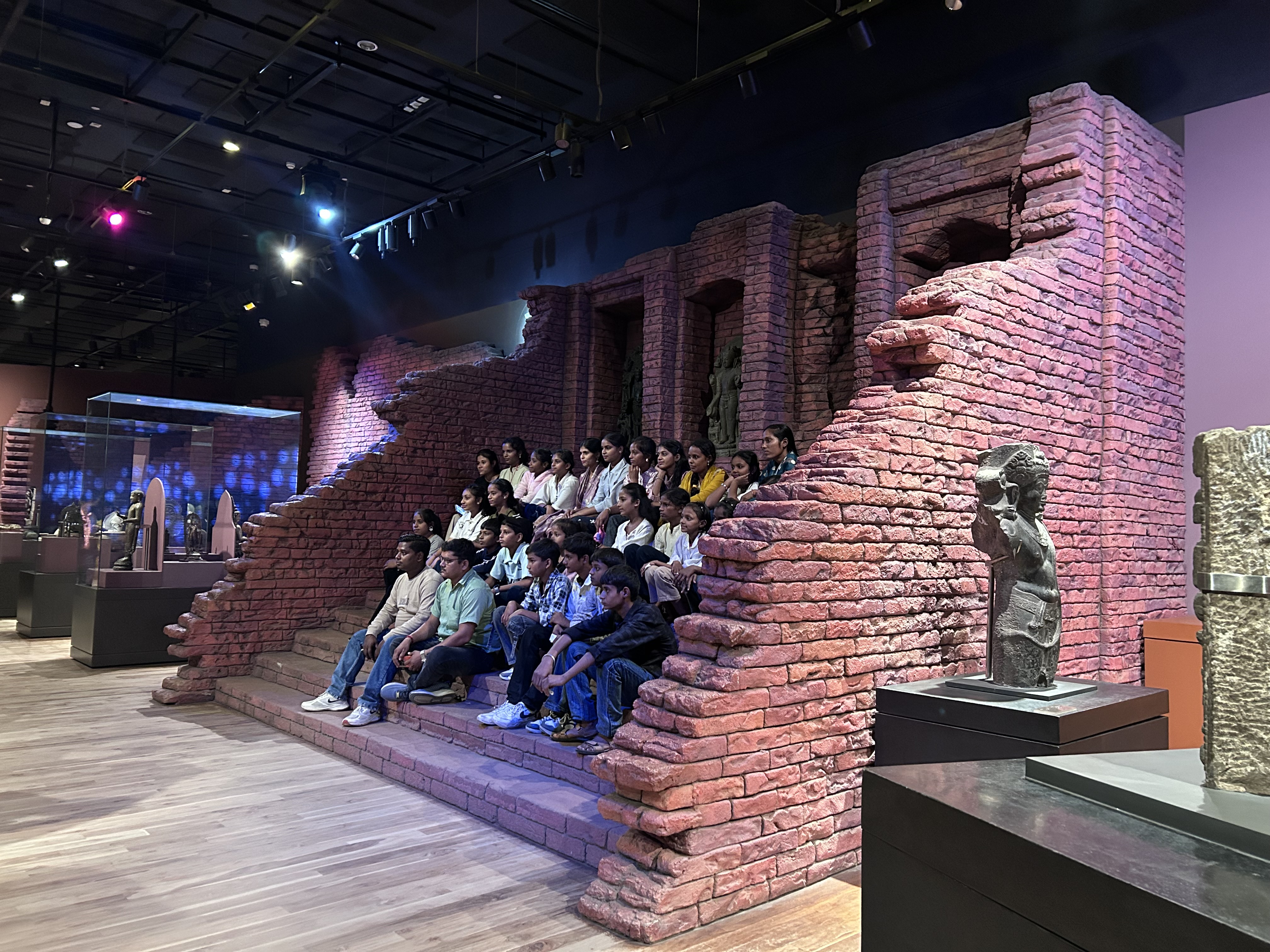 At the museum, Nalanda is represented by a large replica of the flights of steps leading up to its different terraces (Express Photo by Adrija Roychowdhury)
Ranbeer Singh Rajput, Deputy Director at Bihar Museum, who is among its curators, says that in line with “institutional conventions of the period”, the older Patna Museum had simply preserved the antiquities they excavated and collected. The findings were then assembled in separate galleries dedicated to sculptures, coins, paintings and so on.
The Bihar Museum, however, broke away from this colonial inheritance, and instead placed objects in their historical context. “Our curation philosophy was to tell the story of Bihar in a chronological manner and show how the art, sculpture and architecture kept changing from the period of pre-history to the 18th Century,” says Deputy Director Moumita Ghosh, who was also part of the curation team.
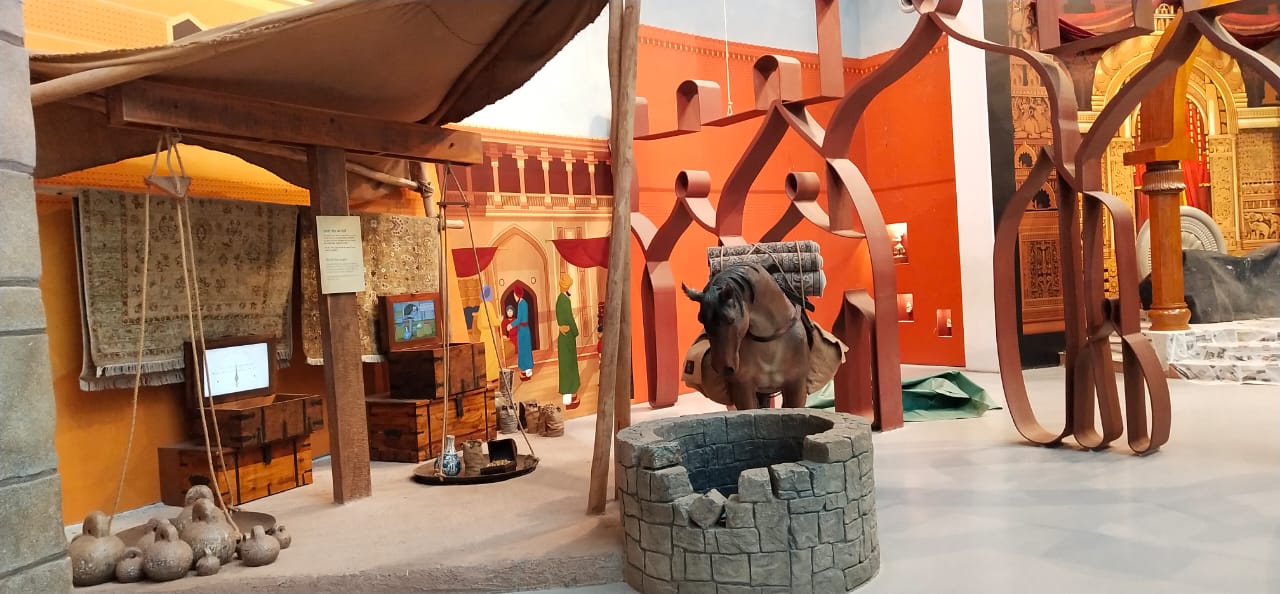
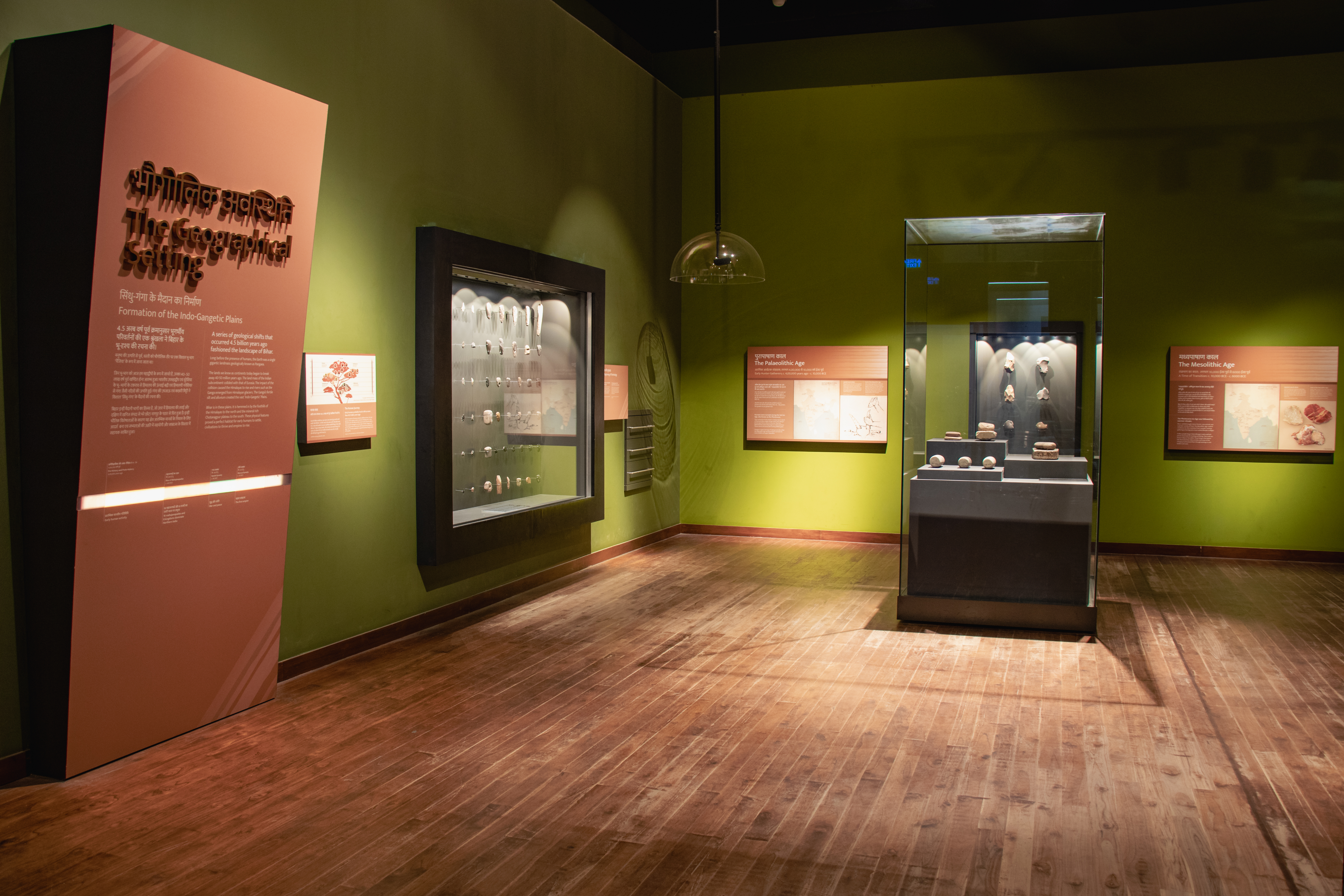
After an orientation gallery that details what to expect in the museum, the first chamber, with its stone objects and tools, is dedicated to pre-history and the Harappan Civilisation. “The idea was to place Bihar in a global pre-historical context, when all of mankind was in essence the same,” explains Rajput.
Bihar’s own pre-historic past is brought alive in the gallery through a large vinyl print of the cave paintings found in the Kaimur Hills of southwest Bihar.
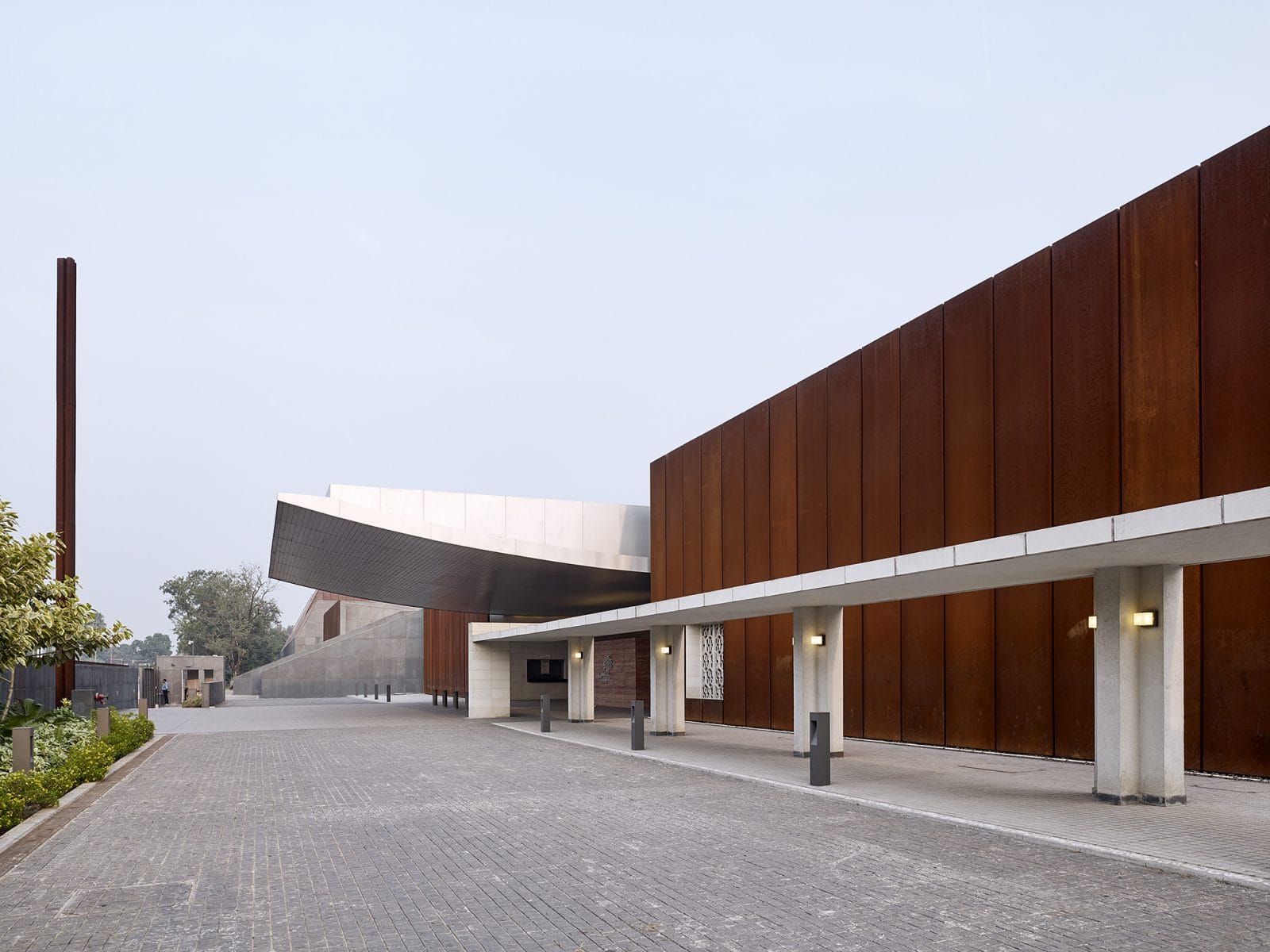 One of the most ambitious cultural projects of the then Nitish Kumar government, the idea of the museum first came up in 2009 (Express Photo by Adrija Roychowdhury)
Rajput, who was in charge of the pre-history gallery, recollects that it took him nearly two years to curate it. Each display would undergo at least four-five mock ups, before being finalised.
Thereafter, the story of ancient Bihar begins with the rise of Magadh janapada or kingdom. Artifacts from Magadh such as silver punch-marked coins, considered to be among the earliest metal coins of the Indian subcontinent, are shown against a representation of its first capital, Rajgir.
The subsequent galleries move across the major empires of the region, from the Mauryas to Sungas, Kushanas and Guptas. “There were some periods for which we had very little artifacts. For example, that of the Guptas,” says Deputy Director Ghosh. “But we know of the Mundeshwari Temple in Kaimur district from the Gupta period. We made a replica of it, and placed it in the gallery, alongside the artifacts that were discovered from the temple and around it.”
Similarly, Nalanda, which emerged as a major centre of Buddhist learning under the Guptas in the 5th Century CE, is represented by a large replica of the flights of steps leading up to its different terraces. Ghosh explains that at the actual archaeological site, visitors are not permitted to touch or physically interact with the structures. “We wanted visitors to experience Nalanda at the museum. Therefore, we recreated each and every brick in the same style and dimensions. Here, we welcome people to walk around, sit, or pose for photographs,” she says. The replica has since become one of the museum’s most popular spots for photographs and selfies.
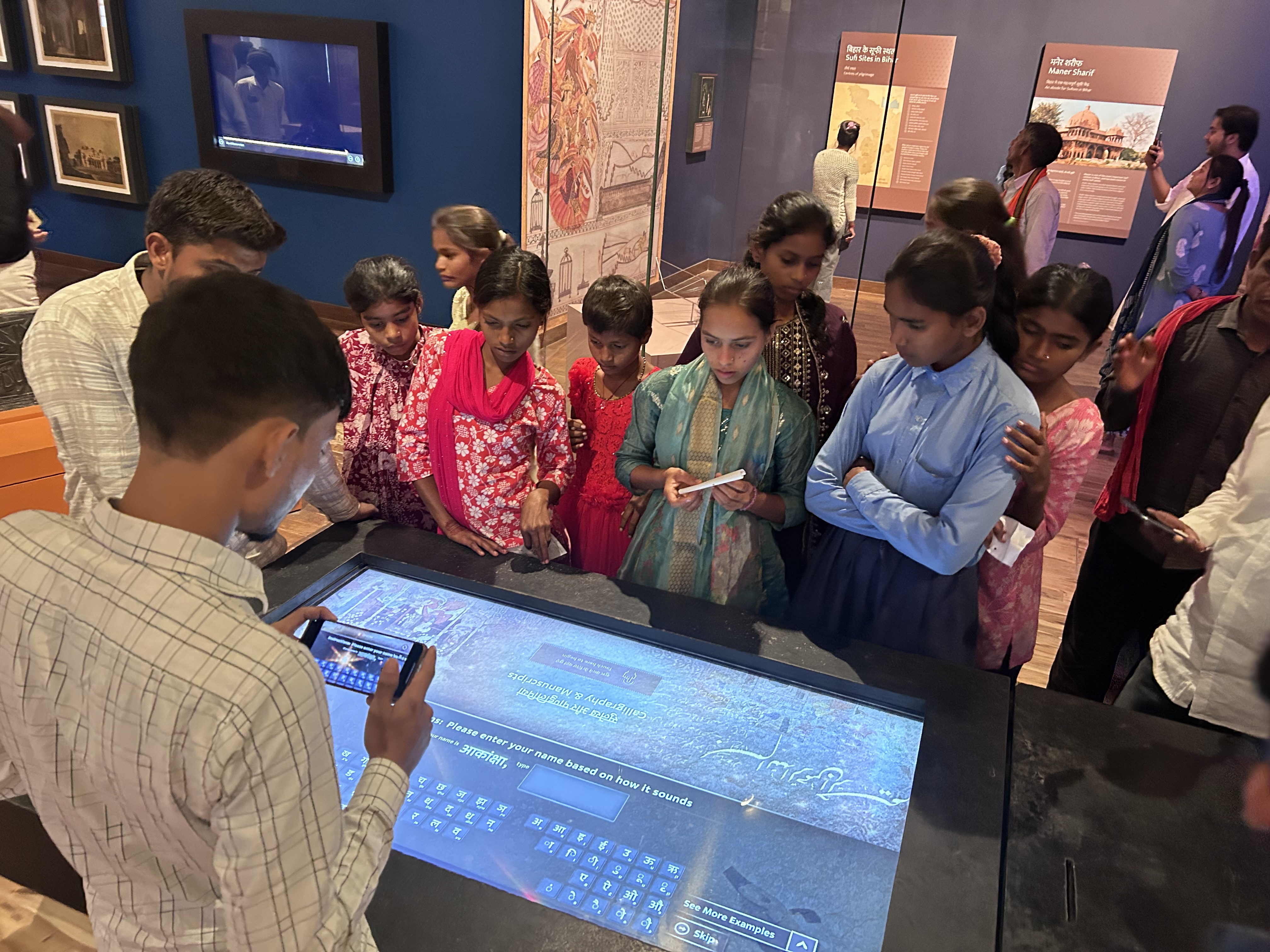 Audio-visual screens, touch screen panels, and interactive games have been incorporated into each of the galleries (Express Photo by Adrija Roychowdhury)
Audio-visual screens, touch screen panels, and interactive games have been incorporated into each of the galleries. “But we were careful to restrict the use of technology to nothing more than 10 per cent of the curation. We want the visitors to engage with the artifacts,” says Rajput.
The historical galleries culminate with the Battle of Buxar in 1764, after which visitors enter three galleries dedicated to art. It is here that the Didarganj Yakshi was eventually placed, following considerable debate over her relocation.
Deputy Director Ghosh draws attention to the sculpture’s remarkable beauty and realism, particularly given its conventional dating to the 3rd Century BCE, several centuries before comparable naturalism became prominent in European art. “The idea was also to allow the visitor to admire her with a breath of fresh air, after having traversed through the long history of Bihar,” she explains.
Two other galleries cater to specific groups of visitors: a children’s gallery, which brings history alive through games and interactive activities, and a diaspora gallery tracing the migration of indentured labourers from Bihar to countries such as Mauritius, Suriname and Fiji.
The making of a museum
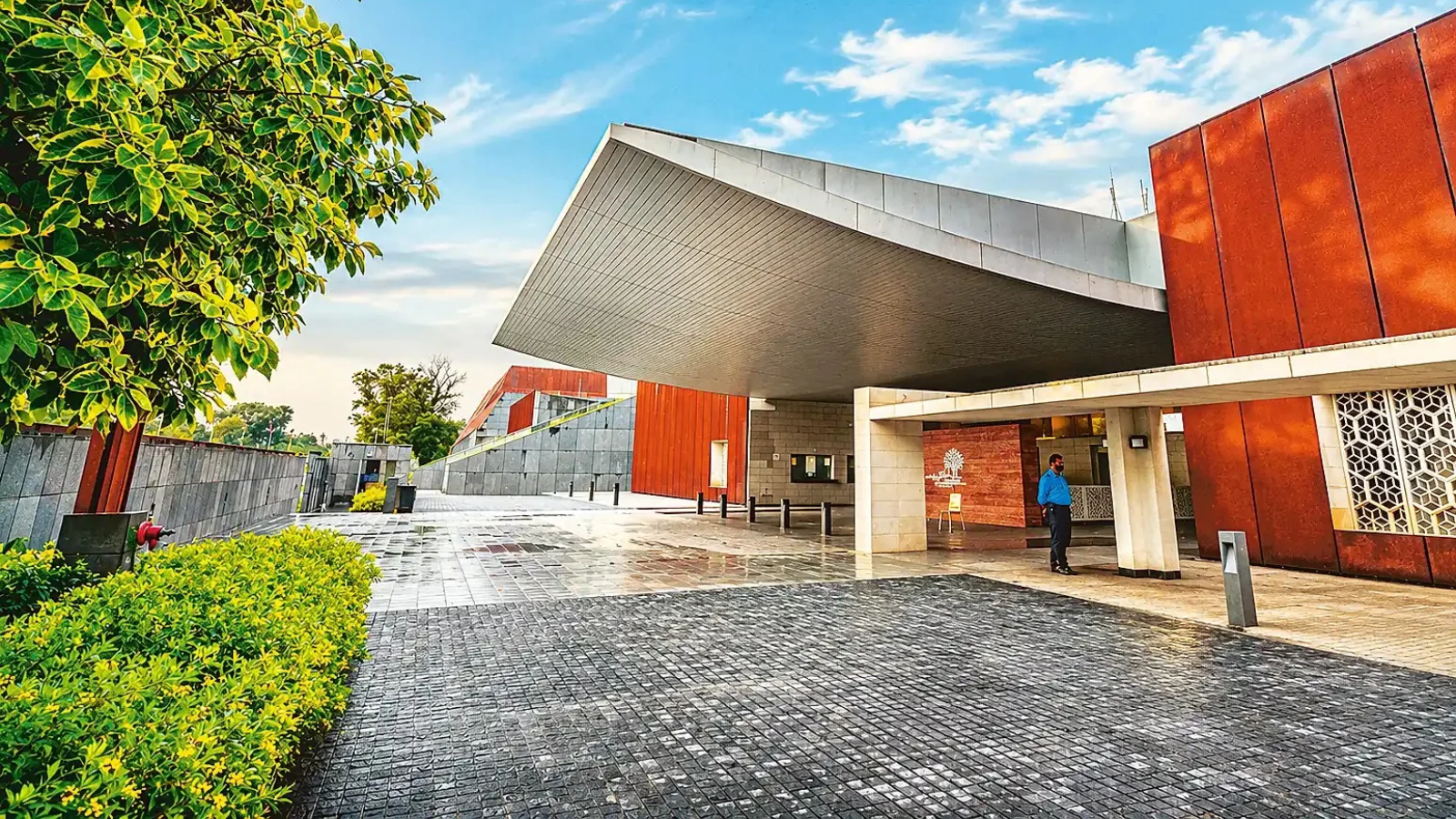
Spread across 13 acres on Bailey Road, one of Patna’s busiest arterial roads, the museum building cuts through the heart of the city and connects its older neighbourhoods to its newer administrative and residential districts.
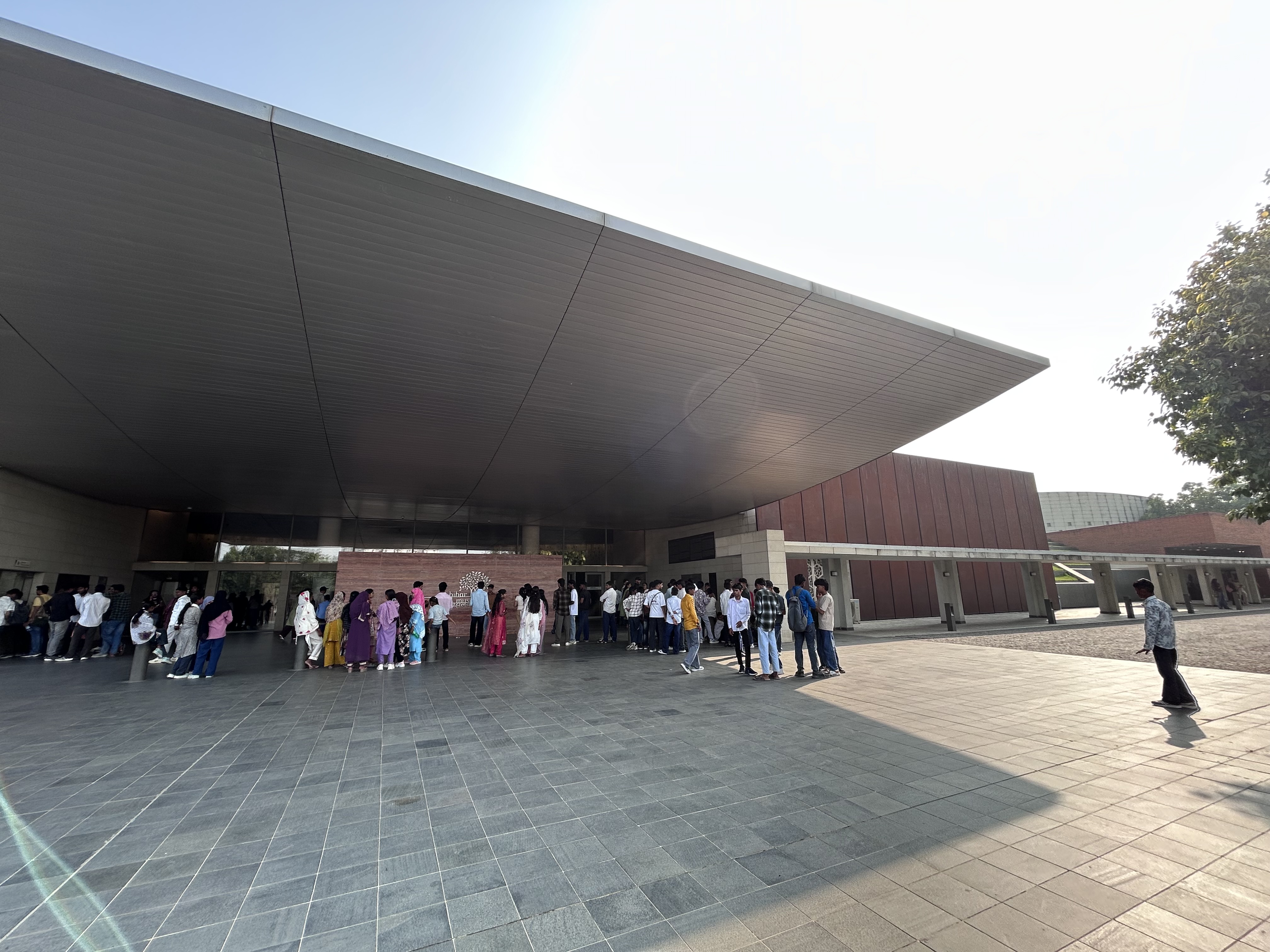 The museum’s design plan was simple: it had to blend in with the surroundings in Patna (Express Photo by Adrija Roychowdhury)
There was always the question, and with it criticism, of whether a state like Bihar needed an extravagant Rs 500-crore museum. “It was said that the money would be better spent on public amenities like bijli, paani, sadak,” says Anjani Kumar, referring to a 2012 court petition against the museum.
There were other roadblocks too, such as finding a curator in Patna. In December 2014, when Rajput was chosen for the job, he was working at the Indira Gandhi National Centre for the Arts in New Delhi. “Patna at that time had a very poor reputation. It was a small city with little development. I was very clear that I would not want to move here and settle in this city,” recollects Rajput, who is from Sanchi in Madhya Pradesh.
After spending a week in Patna, he was no longer that sure. “I was blown away by what I saw. Artifacts like the Didarganj Yakshi and Kurkihar bronzes that I had until then only seen and read about in my books were in front of me, with the prospect that I could see them everyday. Even the collection of pre-historic artifacts in Bihar is among the best in the world,” Rajput says.
Consequently, after two and a half months of deliberation, in February 2015, he decided to take up the job.
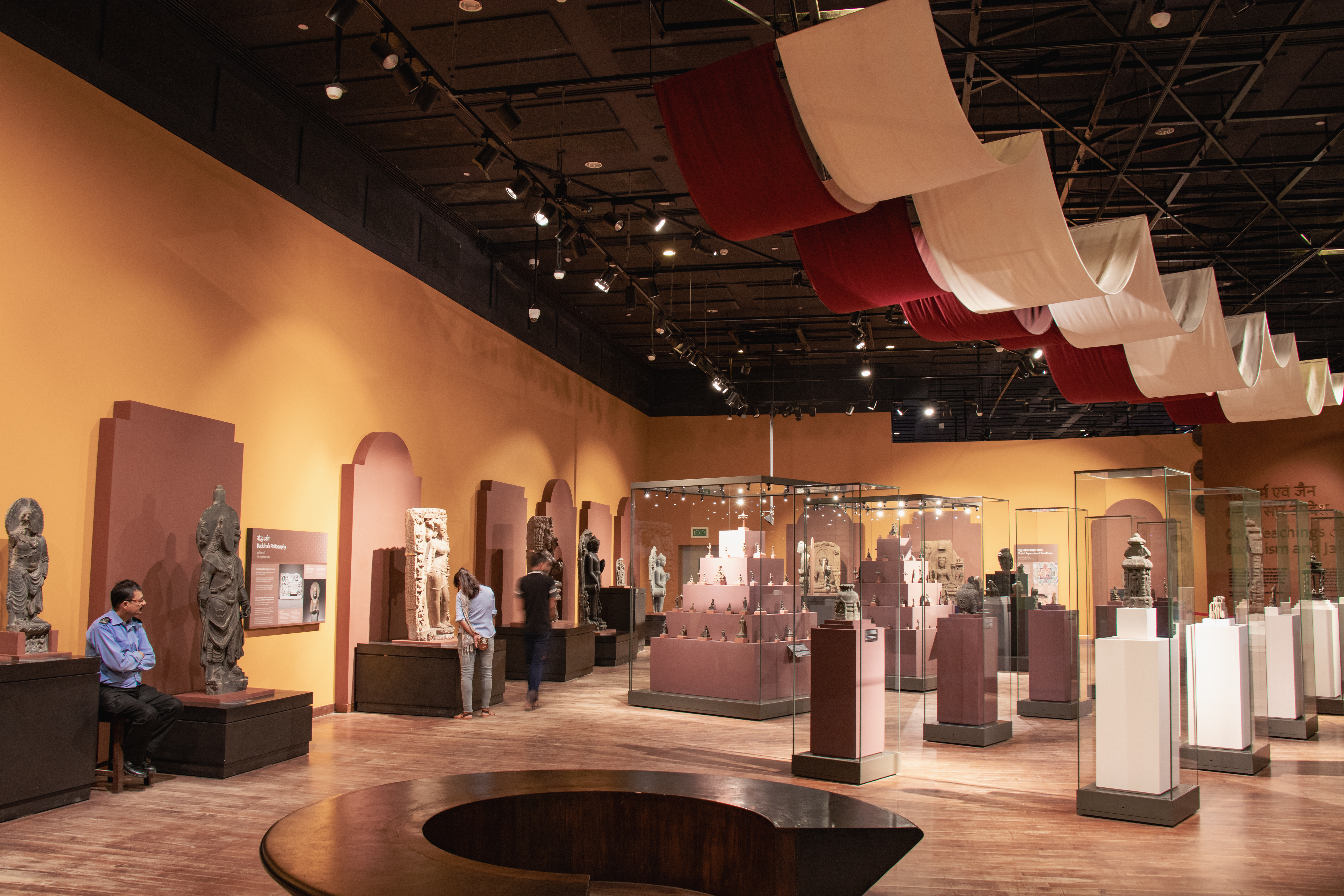 The museum design submitted by Japanese firm Maki and Associates was spread out across seven courtyards (Source: Bihar Museum)
Ghosh too recollects the apprehensions of her family about her safety when she decided to move to Patna to take up her new job. She was at that time working in the arts section of the Indian Museum in Kolkata.
She moved to Patna in 2013, where her first office consisted of little more than a table and four chairs within the premises of the Patna Museum. It was another two years before the team moved to the Bihar Museum.
Despite the many challenges, the museum and its artifacts are extremely close to her heart, with her personal favourite a bronze sculpture of Avolikiteshwar from the Pala period. “The craftsmanship is marvellous. Staring at it for a while is almost meditative.”
Beyond the curation, the process of designing the building was just as ambitious and daunting a task. A Toronto-based museum planning firm, Lord Cultural Resources, was appointed to develop the master plan, while its architectural design was decided through open competition. The only brief: the architecture must not shock the visitor. “It had to blend in with the surroundings in Patna,” says Singh.
 The museum offers an abstract, timeless sense of Bihari identity, argues author-historian Pankaj Jha (Express Photo by Adrija Roychowdhury)
The Japanese firm Maki and Associates, along with its India partner Opolis, Mumbai, emerged as the winner, overcoming the likes of Foster + Partners led by the British architect Norman Foster, who is best known for his association with the British Museum.
The design submitted by Maki and Associates was spread out across seven courtyards and had no more than two floors, a design that gave it the feel of the ancient Nalanda campus. The choice of Corten Steel (a group of steel alloys that form a stable external layer of rust) for the building exterior was in keeping with Bihar’s once leading role in metallurgy.
For Mumbai-based architect Rahul Gore from Opolis, the experience of designing the Bihar Museum came with several learnings. “Patna then seemed around two decades behind the rest of India. For instance, when the piling work was to begin, I had imagined that a drilling rig would be brought in to bore the piles. Instead, they set up a conventional tripod-like structure and drove the piles into the ground using a hammer,” he recalls.
The politics of remembering Bihar
On a pleasant November afternoon, a group of school children are on an excursion to the museum. They stream into the galleries, gather around the interactives, laughing and elbowing each other out in front of the touchscreen panels. There are also members of the Bihari diaspora visiting for Diwali, those from smaller towns and villages who are in Patna on work or for competitive examinations. For many of them, a visit to the museum is an added attraction.
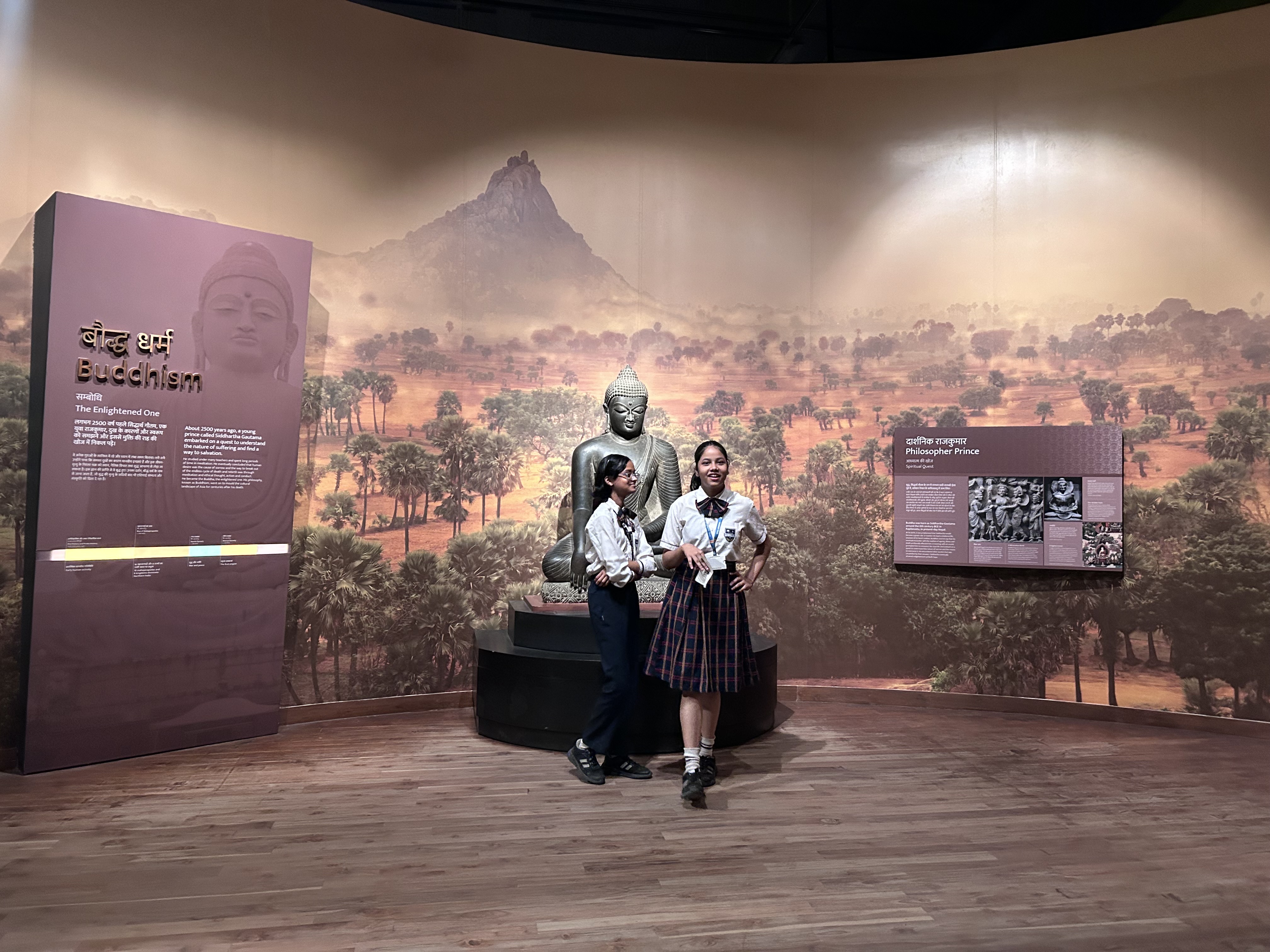 School children on an excursion to the museum (Express Photo by Adrija Roychowdhury)
Singh is clear that this is exactly what he had in mind for the museum, a democratic space that would draw both the serious cultural buff and a family that simply wants a day out.
“This is not a university or an academic institution. I don’t expect every visitor to be an expert in Mauryan art. Some will be interested, and for them, we have a library and further resources. But for the majority, the museum is also a source of entertainment. Why do we think of these spaces in such serious ways?,” he says.
He recalls a suggestion on separate timings for children so that the museum can be a solemn space for the “serious” visitor. “But I was very clear that this should be a space for families to come together and have a great time. In the process, they can get to know a bit about our history and heritage, feel proud of their past, and go back happy.”
In a state with few modern markers of progress to boast about, the museum and its curation almost single-handedly take on the task of stirring Bihari pride.
 The role of a museum is to encourage one to reflect on one’s intellectual and cultural legacy, says economist N K Singh (Express Photo by Adrija Roychowdhury)
In doing so, the museum makes some deliberate choices. Its narrative tends to dwell on periods of political and cultural achievement, while giving less attention to the more difficult aspects of the state’s past. The gallery on Ashoka, for instance, makes only a passing reference to the bloody wars fought by the Mauryan emperor, focusing instead on his transformation following the Battle of Kalinga and the art produced during his reign.
Similarly, Bihar’s post-Independence experience, marked by caste conflicts, social upheavals and political violence, is entirely absent from its historical narrative.
This, critics say, is unlike what some of the most prominent history museums do to reckon with their controversial past, such as the Topography of Terror museum in Berlin.
N K Singh, economist and former Rajya Sabha member from Bihar, disagrees. “You need to ask yourself, what is the role of a museum? It’s to reflect on one’s intellectual and cultural legacy rather than to learn about contemporary politics,” he says.
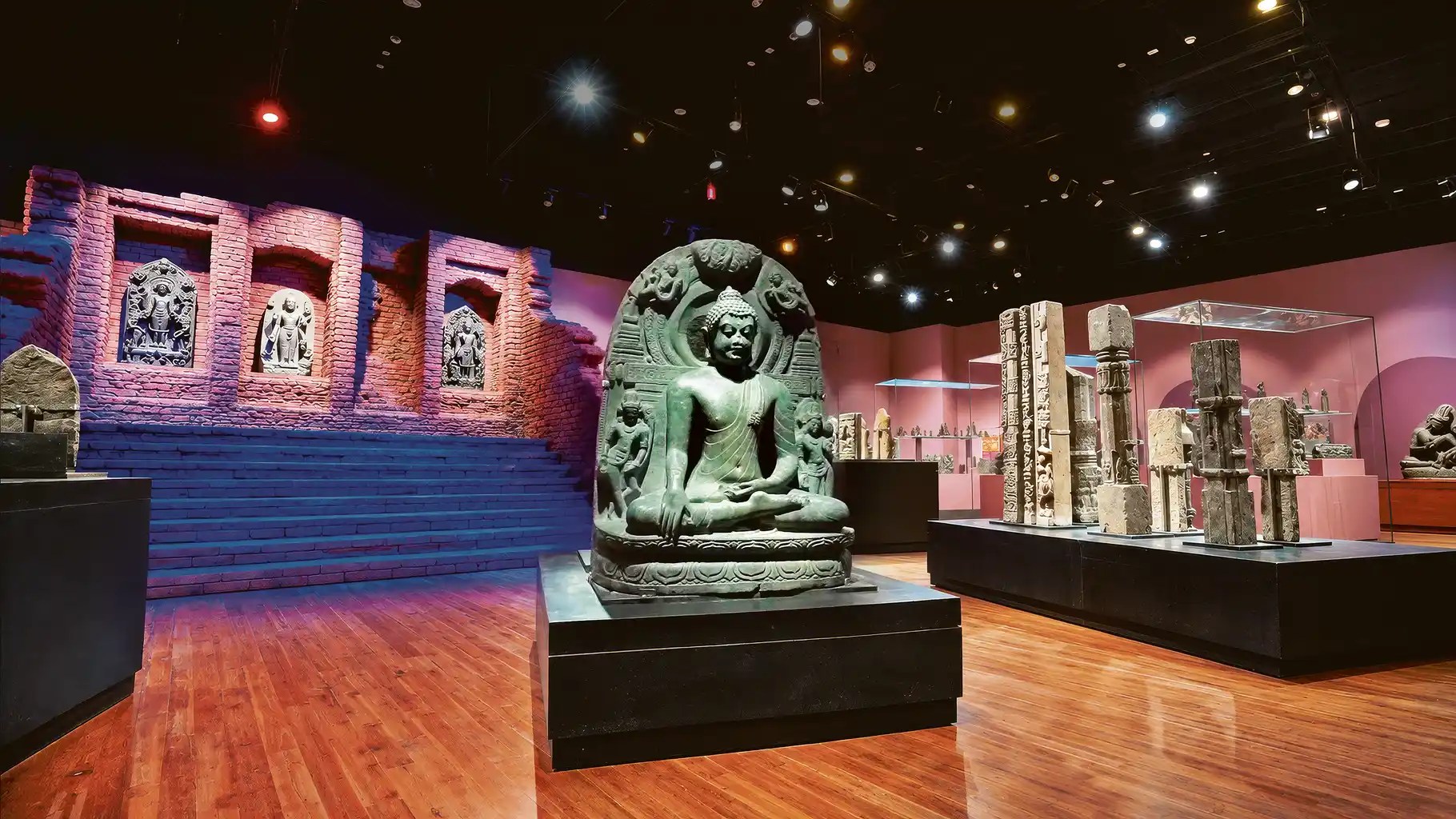 A sculpture of Buddha in the museum (Express Photo by Adrija Roychowdhury)
But can a carefully curated museum reposition a state in popular imagination?
“The museum offers an abstract, timeless sense of Bihari identity, even though both the idea of ‘Bihar’ and a Bihari identity is no older than 150 years or so,” argues author-historian Pankaj Jha, who has written extensively on Bihar’s Mithila region.
He says that while the recent international fame achieved by the museum might help in blunting the many stereotypes attached to the state, “the image of a violent, poor and caste-beholden Bihar is largely resident among the non-Biharis for whom the figure of Samrat Choudhary and the stories of bridges coming apart every other day are not very reassuring”.
N K Singh says the Bihar Museum can be a trigger for realising the greater tourism potential of Bihar. “After all, a visit to the museum can encourage visits to other significant parts of Bihar such as the Khuda Baksh Library in Patna, Bodh Gaya, Nalanda, etc,” he argues.
He points to Cambodia, saying the Angkor Wat Temple alone became a trigger for realising the tourism potential of the country and arguing that the Bihar Museum can play a similar role in the economic development of the state.
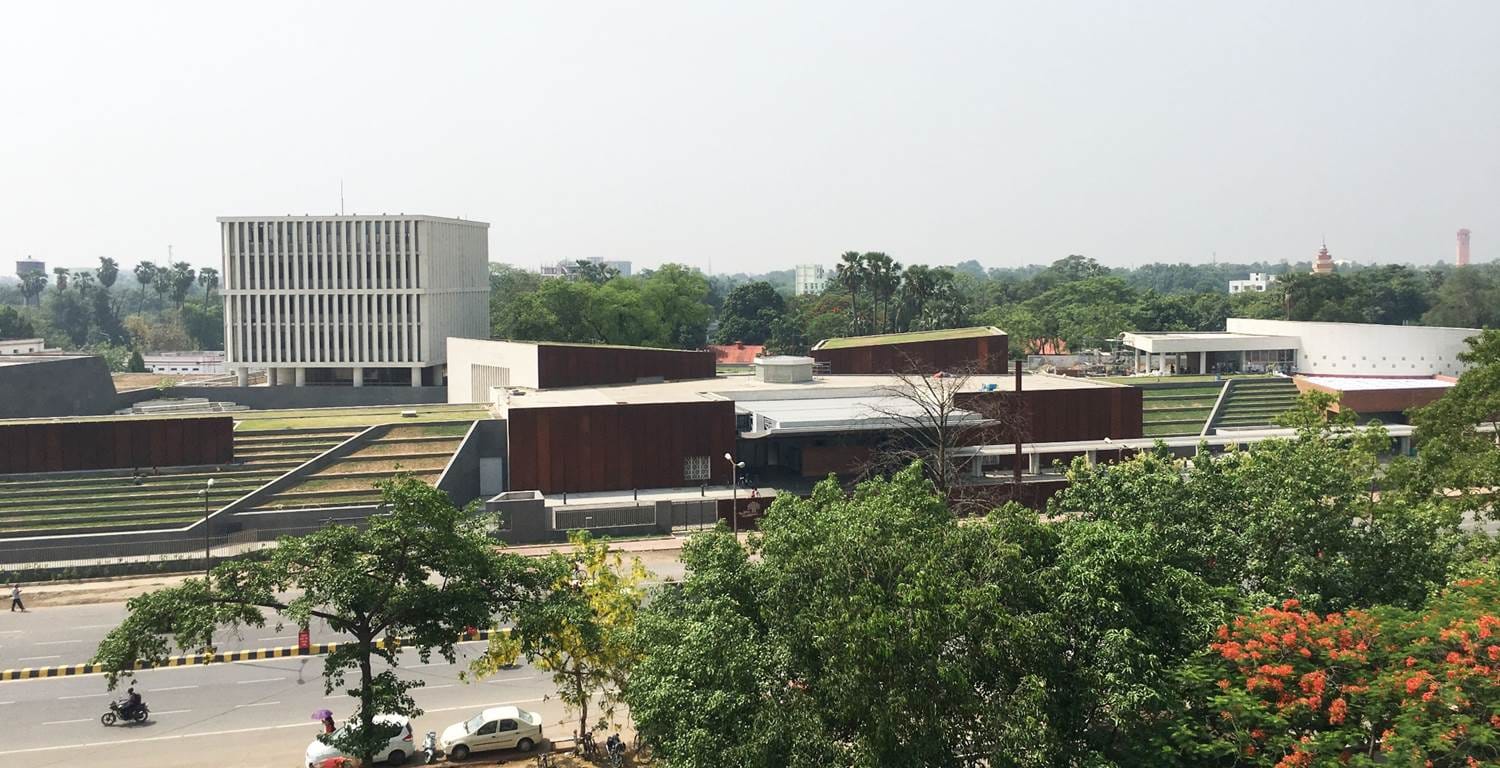 The museum spreads across 13 acres on Bailey Road (Express Photo by Adrija Roychowdhury)
Yet, can a narrative built around select periods of political and cultural glory truly capture the complexities of a state’s past and identity? For now, the Didarganj Yakshi stands at the end of a journey through this carefully assembled history. Whether visitors leave with a fuller understanding of Bihar remains an open question.
KioskNews shows a cleaned-up reading view extracted from the publisher’s page — the original always lives on their site, not ours.