Punjab’s Dalit vote: Why no party can take the numbers for granted
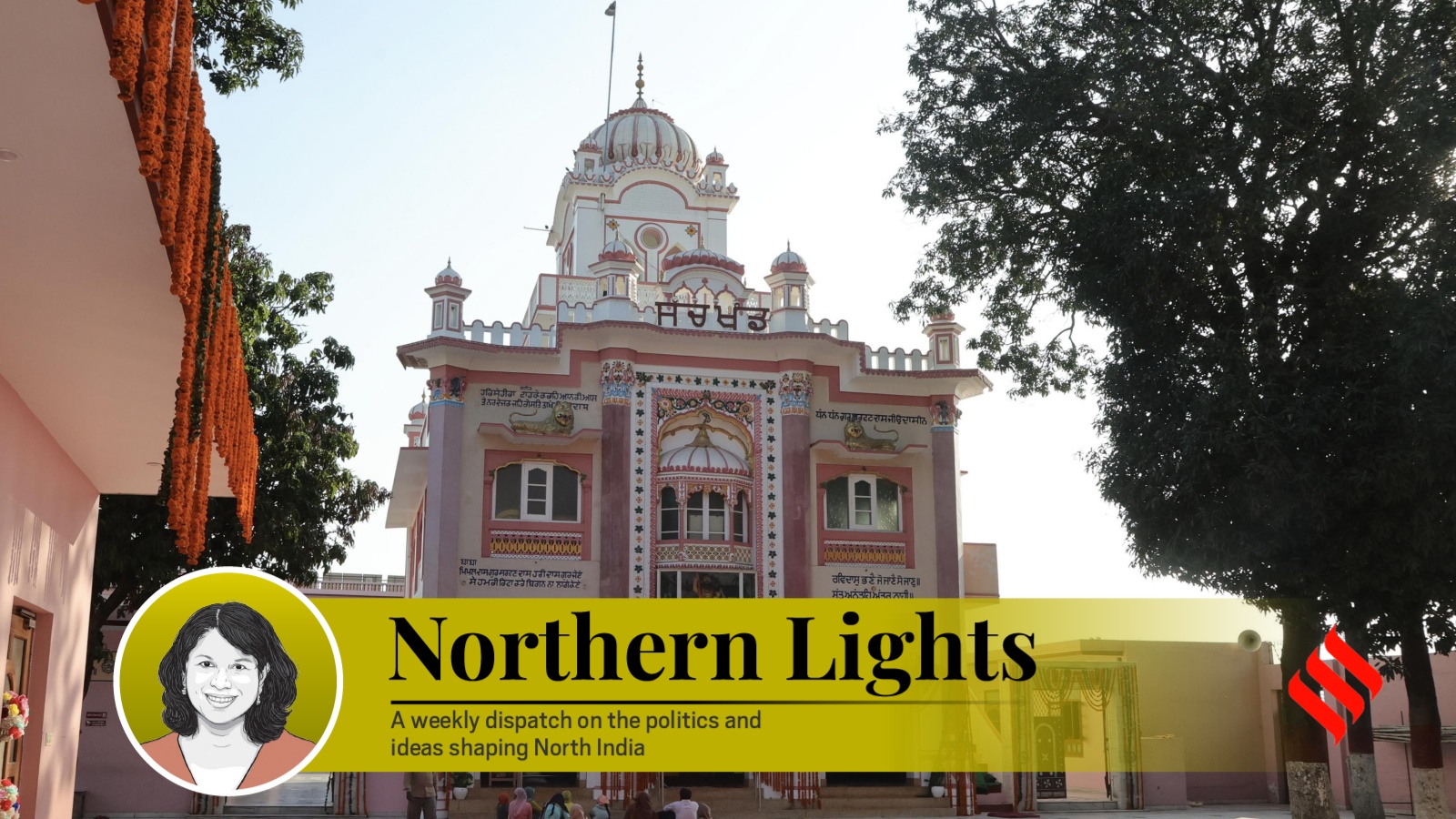
“They see us as a vote bank,” laughs the tawny-eyed Navdeep Dakoha of the Students & Youth Front, a national body of SC/ST students, as he watches party leaders of different political stripes make a beeline for Dera Sachkhand Ballan, a pink shrine set in a green village with a quiet canal flowing nearby.
This February, Prime Minister Narendra Modi visited this dera, a spiritual centre of the Ravidassias, to seek the blessings of its head, Sant Niranjan Das. Congress leaders stop by too. Former Chief Minister and Jalandhar MP Charanjit Singh Channi is said to be a regular, sometimes spending a night there. Last week, BJP national president Nitin Nabin launched the party’s national yatra to mark the 650th birth anniversary of Guru Ravidas after visiting the dera. The AAP government has earmarked Rs 100 crore for year-long events and Chief Minister Bhagwant Mann laid the foundation stone in August for a research centre spread over 10 acres nearby.
In an era of number-crunching politics, Punjab’s Dalits are an attractive proposition. At 31.9% in the 2011 Census, the state has the highest proportion of Scheduled Castes in the country. Some estimates now put the figure at over 40%, though the numbers are disputed. Little wonder the parties are keen to tap them. But the arithmetic is deceptive: Punjab’s Dalits have never voted as a single bloc.
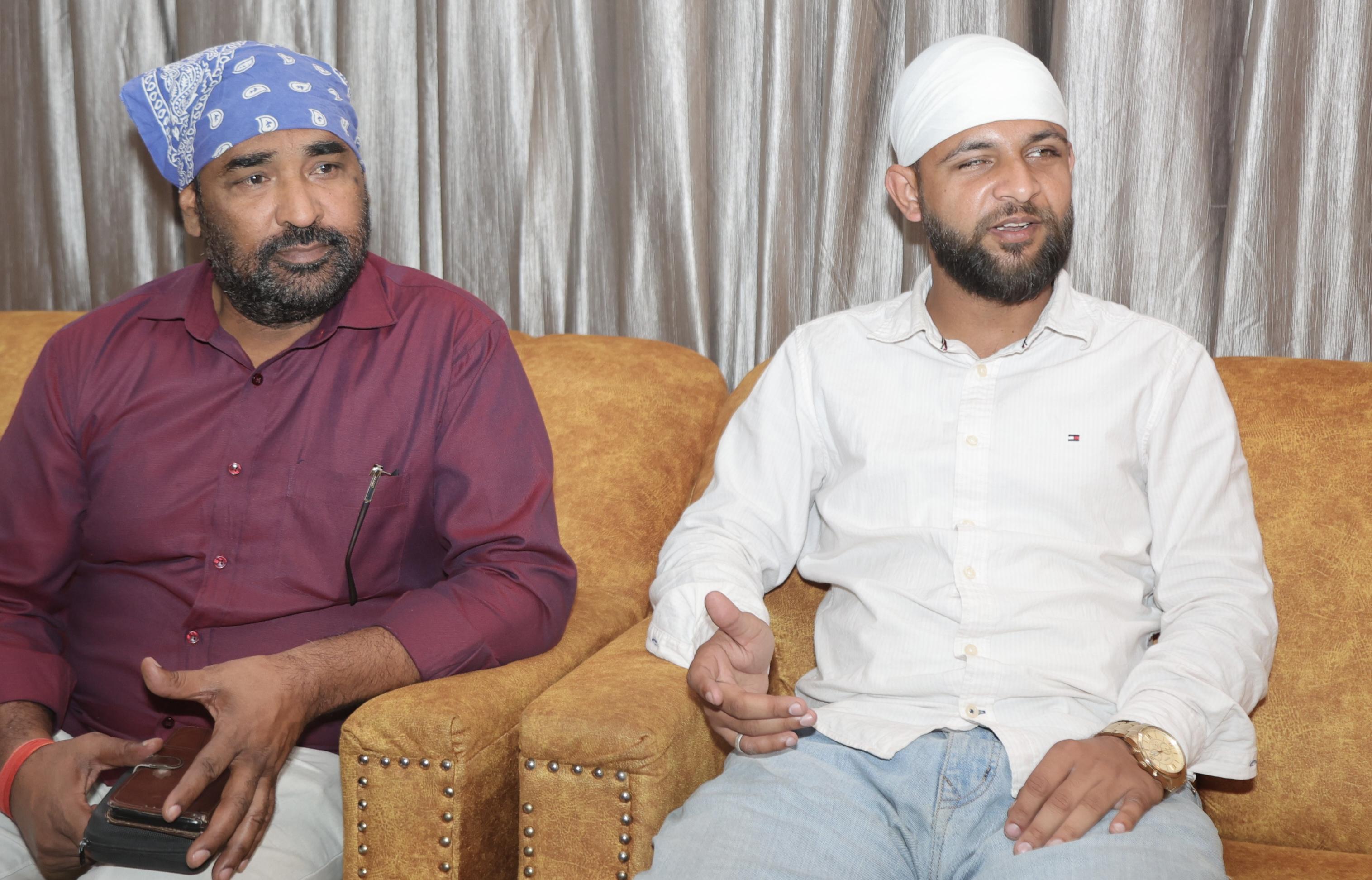 Navdeep Dakoha (right) of the Students & Youth Front, a national body of SC/ST students, at Ballan village near Jalandhar. (Express photo by Jasbir Malhi)
Sub-categorisation issue
The August 2024 Supreme Court verdict allowing states to sub-classify Scheduled Castes (SCs), a case that originated in Punjab, has only sharpened the existing fractures.
“The community is fragmented along caste, religious and social lines,” says the long-haired Ronki Ram, Professor Emeritus at the Institute for Development and Communication, Chandigarh. Ravidassias, Mazhabi Sikhs, Valmikis, and others have distinct identities and political aspirations. Some profess Sikhism, others are Hindus, yet others have embraced Christianity. Mazhabi Sikhs and Balmikis, historically among the most marginalised even within the SC category, largely support sub-classification because they were the original beneficiaries of Punjab’s 1975 preference (later re-enacted in 2006) that reserved half the SC quota for them. Many Ravidassia and Ramdasia groups view this with suspicion, fearing it will dilute their share.
This fragmentation explains the BSP’s patchy record. Though party founder Kanshi Ram was born in a Punjab village, the BSP’s best showing of nine seats came in 1992 when the Akalis boycotted the polls. In 2022, it won just one seat after drawing a blank in four successive elections.
This time too, the community is unlikely to vote en bloc. “From starting a special train to Varanasi to naming the Adampur airport after Guru Ravidas, the BJP has tried hard and may get a section of the community’s votes, but it is unlikely to vote for them en bloc,” says Ronki Ram.
A Dalit CM
Dakoha welcomes the BJP’s overtures but is quick to add that the Dalits’ bond with the Congress is that of a cow and its calf. The sentiment echoes elsewhere. Though 34 of the 117 Assembly seats are reserved for Dalits, Punjab has almost always had a Jat Sikh CM since reorganisation in 1966.
The Congress made history in 2021 by appointing Charanjit Singh Channi as the state’s first Dalit CM. Earlier, it had elevated Giani Zail Singh, from a Ramgarhia Sikh family. It was Zail Singh’s government that first introduced the preference for Mazhabi Sikhs and Balmikis in 1975, the very policy that eventually reached the Supreme Court and produced the 2024 verdict.
The AAP’s record is more mixed. The party spoke of a Dalit Deputy CM but never delivered. It has, however, given SC women an extra Rs 500 under the Maawaan Dheeyan scheme, taking their monthly support to Rs 1,500 against Rs 1,000 for other eligible women. The AAP government also backed the legal case for sub-classification. Yet, Valmiki and Mazhabi organisations have accused it of slow and incomplete implementation in recruitments and admissions after the 2024 verdict.
The BJP’s outreach has brought deeper ideological questions. At Boota Mandi in Jalandhar, a savvy Ramesh Chander, a career diplomat and former ambassador whose blog is published by Ambedkar Times in California, says the party must make its position on the Manusmriti and caste hierarchy unequivocal. “Both the RSS and the BJP should say clearly that they do not believe in Manuwad. They cannot woo Dalits while continuing to promote the Manusmriti and the varna system it espoused,” he says.
At Dera Sachkhand Ballan, an aide to Sant Niranjan Das says the institution keeps away from politics. “The dera has never asked its followers to vote for any particular party,” he says.
Outside its precincts, Dakoha hopes the Modi government will recognise the Ravidassias as a separate religion. “We have a large population not just in Punjab but also in Uttar Pradesh and overseas,” he says. But this too divides the community. While the Ravidassias seek a separate religious identity, citing the Lingayats’ demand in Karnataka, others advocate the revival of Adi Dharam, a movement that started before Independence and marks its anniversary next year.
Regional differences
Regional differences further complicate the arithmetic. In Doaba, where Dalit communities have traditionally been more upwardly mobile — some even adopting Jat Sikh surnames — caste barriers may be less overt, yet separate gurdwaras remain a marker of social divisions.
In Majha, Mazhabi Sikhs, known for their martial tradition, dominate the countryside and many join the Sikh Light Infantry; Valmikis populate urban centres such as Amritsar and Pathankot. It is also in Majha that Dalits began to convert to Christianity in search of an equal status.
In Malwa, Punjab’s largest and most agrarian region, relations between Dalit communities and Jats are shaped by economic dependence and caste. Disputes over wages and working conditions are common and often reveal the sometimes brutal inequality.
Social barriers persist. Inter-caste marriages are still taboo, and in some cases lead to honour killings.
Dalit leaders in Punjab are also notably upwardly mobile. The AAP’s Kulwant Singh, who won the unreserved Mohali seat and belongs to the Ramdasia Sikh community, is the state’s wealthiest legislator, having declared assets of over Rs 238 crore in his 2022 affidavit. Dr Raj Kumar Chabbewal, the Hoshiarpur MP, and his son Ishank, who represents the Chabbewal assembly seat, show how a section of the community has produced a highly educated and prosperous political class.
Punjab’s Dalits, then, cannot be won over with doles or deference alone. Political representation, social equality and recognition of their distinct religious and sub-caste identities remain central to the community. For parties courting its votes ahead of 2027, seeking blessings at the deras is only the beginning.
KioskNews shows a cleaned-up reading view extracted from the publisher’s page — the original always lives on their site, not ours.