M Riaz Hamidullah at Idea Exchange: ‘Ready to engage with India on even keel… must pass through intersection of dignity and shared benefits’
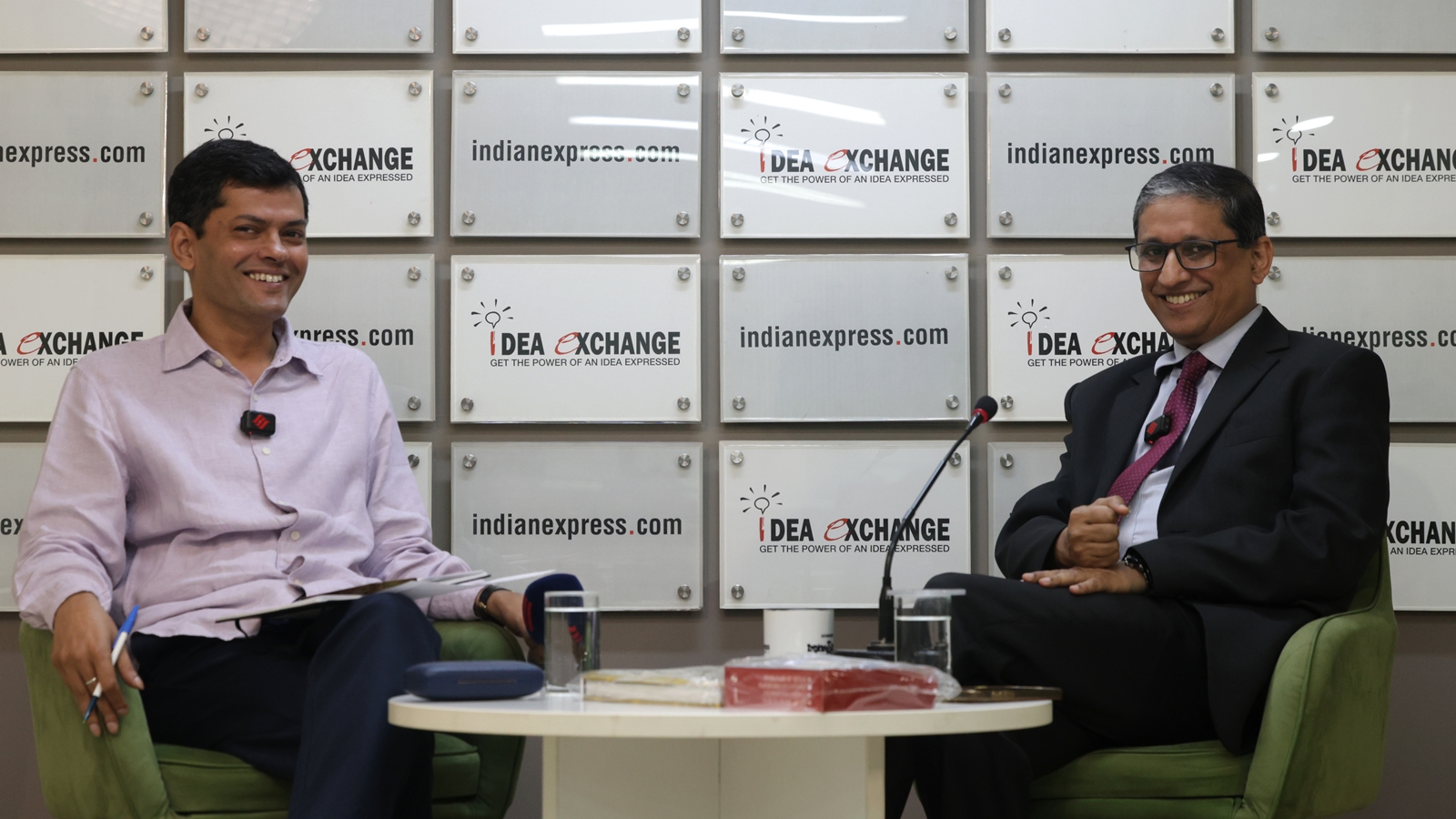
M Riaz Hamidullah, the outgoing High Commissioner of Bangladesh to India, on cross-border mobility concerns, expanding bilateral trade, power and river ecosystem sharing, and the need for cooperation beyond the limited security lens. He was in conversation with Shubhajit Roy, Diplomatic Editor, The Indian Express
Shubhajit Roy: You came to India when there was an interim government in Bangladesh led by Muhammad Yunus. After that the elections took place. What has been your key takeaway in the India-Bangladesh relationship in the last 17 months that you have been here?
We are trained to approach any relationship — in this case, India-Bangladesh — in terms of State-to-State. If you ask someone, ‘How is the relationship going?’ People often ask, ‘How is trade going?’ Progressively, it dawned upon me that the State is one thing; and, the people are another. We tend to believe that understanding people is easier but we have not really gone deeper in terms of unpacking and understanding demographics. The issue now is: How do we strike a balance between the State-to-State interactions and the real one with people?
Shubhajit Roy: The India-Bangladesh relationship is going through turbulence. Between the Yunus government approach and the Tarique Rahman government’s approach, what are the differences and similarities towards India?
When you talk of people and politics, things are fluid. With the current government in Dhaka, there is absolute openness and candour. My reference would be the letter that Prime Minister Tarique Rahman addressed to Prime Minister Narendra Modi on February 26, within nine days in the office, where Mr Rahman spoke about the expectations and aspirations of people. We can go for big projects but if the common people have to wonder what it has got to do with them… that was a major challenge in the past. So that is one significant positive departure that has come into Bangladesh. The message has been that we are ready to engage with India on an even keel but everything better passes through the intersection of dignity, trust, respect and shared benefits.
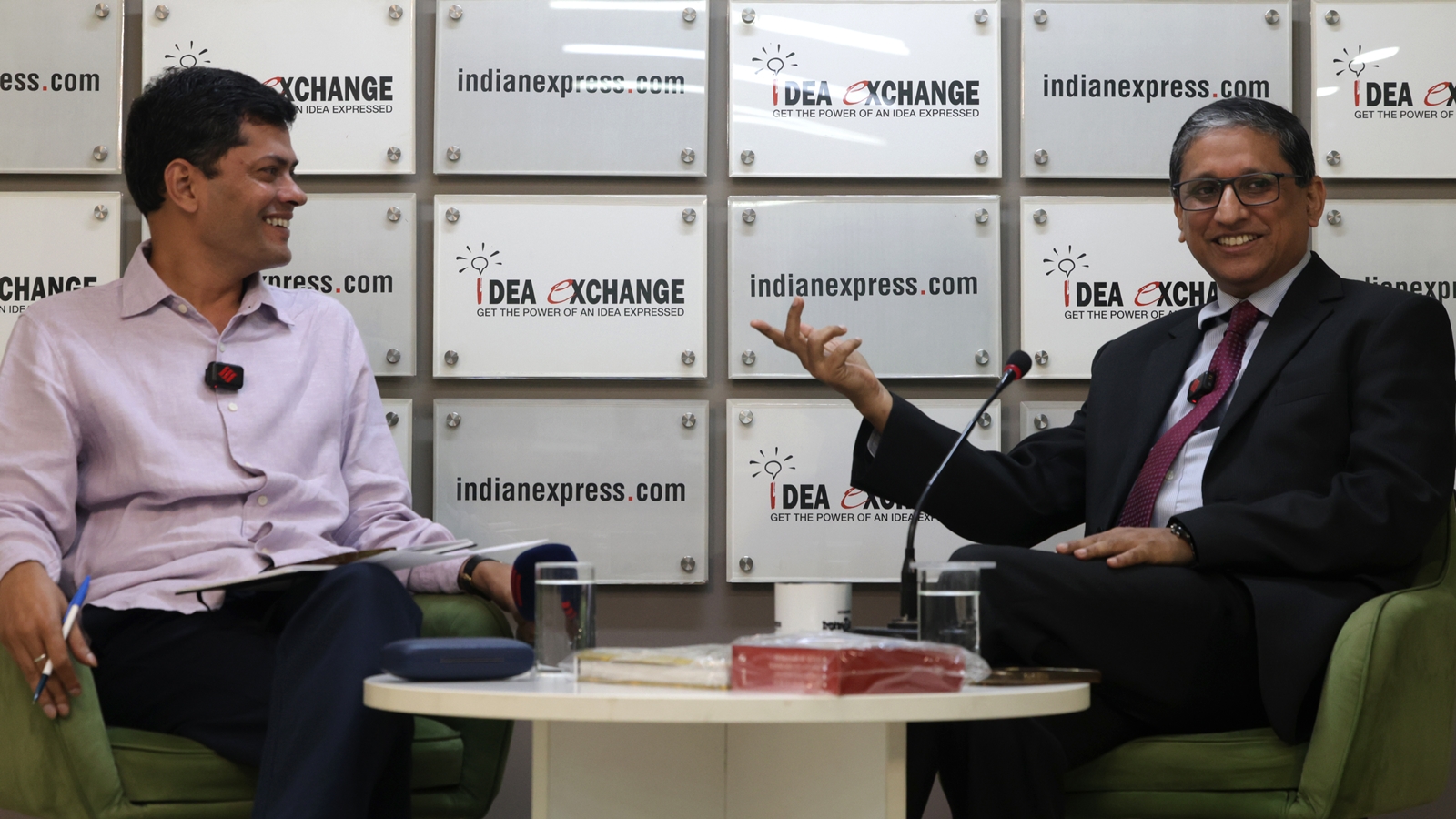 (Right) M Riaz Hamidullah, outgoing Bangladesh High Commissioner, with Shubhajit Roy, Diplomatic Editor, The Indian Express (Photo by Renuka Puri)
Shubhajit Roy: You talked about shared benefits. The Indian side reached out to the Tarique Rahman government in February. What was Bangladesh’s impression of India then, and did you foresee that by the end of September, we would be in a different place than where we started?
One can’t foresee everything. Although, there has been complete openness in regard to understanding India, approaching India, engaging with India, not because of history but also because of the future we share. When talking of shared benefits, let me bring up the instance of security. Quite often, I was told that if we can appreciate each other’s security needs and concerns and address those in mutually beneficial ways, the sky is the limit. I can attest, within a month of the new dispensation in Dhaka, the security establishments started interacting seamlessly. Such trustful and forthright engagement has assured India that there is a different Bangladesh.
On renewal of Ganga Water Treaty | Water needs to be understood in the intersection of identity, culture and ecology. Our collective approach needs to be a techno-political one, based on mutuality of interests
Story continues below this ad
Shubhajit Roy: India had an elevated sense of trust with Sheikh Hasina. Is it possible to replicate that with the new government?
I don’t think it would be right to employ any relative lens. For everything, there is a context. There are also circumstances and drivers which led to something. While it’s absolutely fair and right for you to express, convey and flag India’s concerns, can you ever imagine what Bangladesh’s concerns are? What happened in 2024 (July-August protest and what led to that), was brutalisation, decimation of institutions and our economy.
Cross-border mobility of ordinary people was closed… people were arbitrarily pushed in across the border, disregarding long-agreed norms and procedures. Domestic political expediency is one thing but it must not be at the cost of India’s larger foreign policy pursuit, that is to have an even-grounded relation with Bangladeshi people. That brutally pushed us aside from where we could be, and I feel, this could have been avoided in the long-term interests of both people within our shared geography.
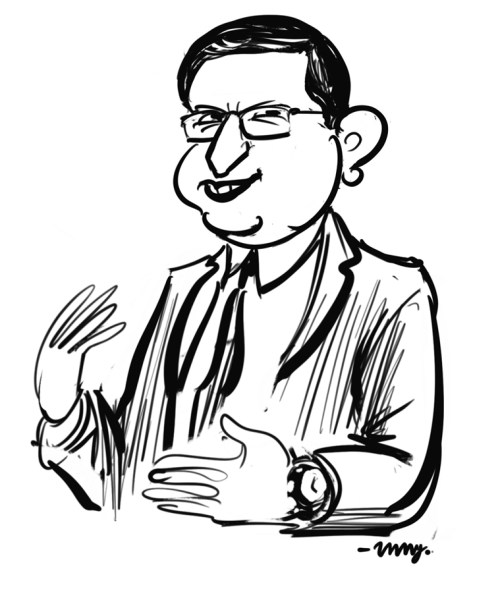
Shubhajit Roy: During the Bengal elections in India, the rhetoric around illegal immigration from Bangladesh dominated the political discourse. Then we saw detentions. How difficult was it for the relationship to return to normalcy?
Story continues below this ad
Uncharitable words were rupturing the relationship between people. For instance, in addressing the question of irregular mobility of people, our point was very clear: If there is an issue, we will engage with seriousness and sincerity. Dhaka said, ‘Let’s sit down, go through each name, one by one and find out the merit in each case.’ Dhaka noted that the concern over ‘illegal immigration’ has too often been used and raised in India with little regard to context and causation.
It’s fitting to look at how an ordinary Bangladeshi ends up in India. Essentially, there is a far deeper nexus of nefarious operators who prey on people and it is the nexus that has to be dismantled in our collective interests.
On cross-border mobility between the two nations | Domestic political expediency is one thing but it must not be at the cost of India’s larger foreign policy pursuit. That brutally pushed us aside from where we could be
Shubhajit Roy: In India, Sheikh Hasina is seen as a friend of India. When she addressed a press conference at the Foreign Correspondents’ Club (FCC) in Delhi, how damaging was it? And from a Bangladeshi perspective, why?
Things didn’t happen overnight. It happened over time. Is the killing of even one civilian person justified? What is justice? Many of you from India would know how thousands injured or disabled by brutalities by state machinery are still languishing in hospitals or homes quietly, how people were made to disappear, how children standing on the balcony lost their eyes or lives to metallic bullets. There is little admission, little regard to what Bangladeshis went through or were subjected to. That is one aspect where, even now, people feel hurt vis-à-vis India.
Story continues below this ad
Shubhajit Roy: How do you see the relationship moving forward?
The key word is ‘appreciating aspirations’ of the masses, not just the youth. As long as you come and connect with the fulfilment of my aspiration, I am here with you.
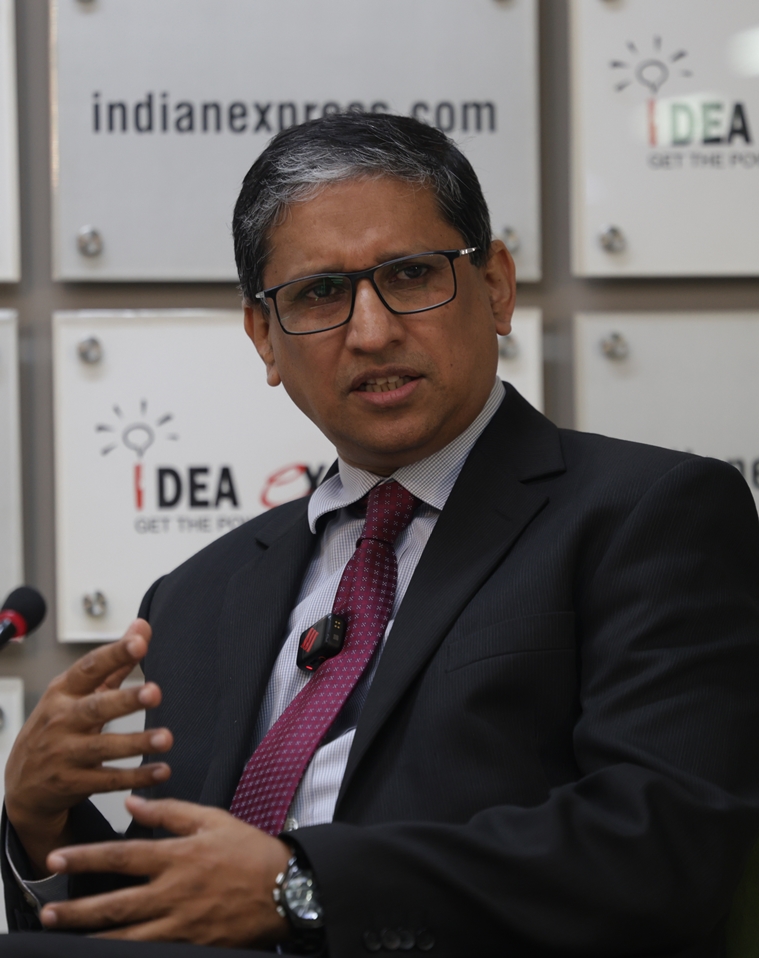 Bangladesh High Commissioner Riaz Hamidullah
Shubhajit Roy: So, the idea is that you can insulate facilitationship from the Hasina factor. Is it possible to move beyond?
When the Bangladesh Foreign Minister chose to come to Delhi, within two months of the government in office, he engaged without any inhibition. He drove straight from the airport to the table with NSA Ajit Doval. Both the principals were in conversation for over three-and-a-half hours. Then, at Hyderabad House, he had a candid conversation with Dr Jaishankar. What else should signify openness?
Story continues below this ad
Shubhajit Roy: Tarique Rahman was supposed to come to India for the bilateral visit but that didn’t work out. His visit during the BRICS Summit didn’t happen. What is your prognosis: Will the visit happen in the near future? And what conditions need to be met to make it happen?
There have been multiple times in the past seven months where Dhaka and Delhi got very close to materialising the August interaction between the two leaders. The government in Dhaka was absolutely willing. Efforts were under way. Yes, visits are important but we have to get both a mix of sufficient and essential conditions together, where dignity, respect, mutuality and interdependence manifest aptly. These are not too much of an ask. Surely, geography and nature, on either side, show that neither of the two countries can afford disharmony in ties.
On divisive politics affecting ties | In the longest timeframe, it is the values that got Bangladesh and India together. If that is little understood or appreciated, then we risk putting the relationship in jeopardy
Harikishan Sharma: The India-Bangladesh Ganga Water Treaty is due for renewal this December. Have the talks for it started? In India, states are demanding that the treaty not be renewed. Second, Bangladesh has been buying power from Adani Power Ltd. What is the present status of power supply from India?
Water has long been an emotional issue. In the long shot, water needs to be understood in the intersection of identity, culture and ecology. People often may not reckon that five months of the year, Bangladesh is water abundant but that’s runoff. But, the rest seven months of the year, we are practically dry. Also, Bangladesh carries over one billion metric tons of sediment load through the Ganges-Brahmaputra-Meghna (GBM) Basin, ending in the Bay of Bengal. Whereas Bangladesh shares just 7 per cent of the GBM Basin, we bear far greater proportionate brunt. Clearly, our collective approach to water and sharing of waters needs a techno-political approach based on mutuality of interests and inter-dependence. On power, at the moment, we are buying 2,500 MW of power from India: Adani is 1,500 MW and the other 1,000 MW from different parts, including Northeast India.
Story continues below this ad
Amrita Nayak Dutta: India and Bangladesh have typically shared cordial and stable defence relations over the years. But, in the last one-and-a-half years, we have seen an increased dependence on Chinese military products by Bangladesh and Pakistan also wants to have a share in Bangladesh’s defence space. Considering these factors, how have the defence relations between India and Bangladesh changed?
Our defence and security establishments build-up is guided by the Forces Vision 2030. The tri-forces pursue their acts objectively. Their demonstrated professionalism to date attests to little room for creating any competition or concern whatsoever. The desirable continuity is there as manifested in undeterred interactions between the defence sector institutions like National Defence College, and seamless contact between the military counterparts at different levels. There is considerable comfort and confidence between them, while any of the sides goes by its sovereign consideration in deciding on defence architecture planning and procurement.
Aakash Joshi: In both India and Bangladesh, especially in the last few years, domestic politics, foreign policy, bilateral relations or even people have become part of divisive rhetoric. Given the reality of our geography, our historical ties, how challenging do you think politics is in growing ties?
We must guard this relationship from domestic political expediency. For long, it is the values that actually got — and ought to get — Bangladesh and India together. If that is little understood or appreciated, then we risk putting the relationship in jeopardy. That’s why, I say, our ties are organic. In Assam, the vice-chancellor of Guwahati University reminded me, ‘We are connected by Brahmaputra civilisation.’
Story continues below this ad
Aakash Joshi: Information now doesn’t know borders. How do you see that affecting your job and the ties?
The media has to assume and conduct with responsibility. If any media trades it off, the amount of disruption it causes, leads to an isolation paradox. Who is to correct the false narratives prevalent all over? Ours is a relationship which should have been the easiest, deepest and most to be celebrated in South Asia. And, place and frame that in the intersection of values and interests rather than limited sectoral trade offs.
Nikhil Ghanekar: In the wake of the tragedy in Nepal and climate change linkage, Nepal has raised loss and damage. Will Bangladesh, which faces rising seas, cyclones etc., join Nepal in claiming compensation?
It was Bangladesh which, for one-and-a-half decades since COPs in Copenhagen (2009) and Warsaw (2013), brought the whole architecture of loss and damage under UNFCCC framework. Sadly, we witnessed that the global South was in two minds to bring that to fruition. A genuinely sustainable answer must redeem the objectives of securing shared prosperity through shared responsibility. One cannot have a divisive approach or selectivity as far as nature and ecology are concerned.
Story continues below this ad
Saikat Bose: During the events of 2024, we saw the golden statue of Mujibur Rahman being vandalised and the Dhanmondi house being attacked. How do you respond to that? In the event that Sheikh Hasina returns, what can we expect? And how do equations change with political developments in Bengal and Dhaka?
History, as it stands, is known. No one can wipe it out. Whosoever deserves whatever space, respect and regard in terms of history in Bangladesh, that is there. Please leave it to the Bangladeshis of today. They are sovereign, sensitive and appreciative of history, in terms of the present. In history, if anyone does things improperly, in the natural process of correction, people will fault you and put you in the right place.
Saptarshi Basak: Historically, Bangladesh and Pakistan have had difficult relations. But that seems to be changing post-August 2024 with ministerial visits and considering the Mecca Pact. How does the new regime see Islamabad?
Both are sovereign States. Our interactions with Pakistan have been driven, guarded and judged across all attributes — people, economic, social, political, defence. The pulse of the people is clear: We enjoy cultural aspects like music or cuisine but that is not to be traded off in respect of history, where several aspects remain unsettled. This March 25th, Prime Minister Tarique Rahman spoke out in an unambiguous manner on the Bangladesh genocide, referring to the Pakistani forces in 1971. So, Bangladesh engages with Pakistan just as it does with every other State. As for the Mecca treaty and others, there are some things in continuum.
Khushi Sinha: You are expected to be a part of Bangladesh’s permanent representative role in Geneva. What would be your immediate priorities there?
Diplomats enter an ongoing stream where mechanisms are laid out to protect national interests and also promote creative ideas. Priorities are guided by instructions from the Capital.
Shubhajit Roy: You talked about people-to-people relationship, and the issue of visas has been a challenge. How do you see that being unlocked?
There are two ways to approach the visa regime: It can either be looked at as a security concern or liberated as an opportunity. For Bangladesh, consular services for Indian nationals have remained seamless. One may check out sustained flight mobility between Dhaka and Delhi or Indians travelling to Bangladesh on various economic imperatives. Let’s ponder upon the bigger picture where the economic interaction between Bangladesh and India stands at a minimum of US$ 28 to $30 billion, more than double the formal $13 billion trade both ways. One may consider inwards remittances (from Bangladesh), medical tourism, general tourists, students and unmapped services trade. I am not even counting Indian investments. So, we need to move from simple enumeration of cooperation to far wider ‘collaboration’ — across higher education, research and sustaining our natural ecosystems (rivers, wetlands) — and rise over seeing every issue through the limited lens of security.
KioskNews shows a cleaned-up reading view extracted from the publisher’s page — the original always lives on their site, not ours.