The Best Book From Every Year of the 1980s

Michael Block is a 14 time GLAM Award nominated writer, producer, and host of the podcast Block Talk. Throughout his time in the entertainment industry, he has worked on and off Broadway as a stage manager, written several produced plays, critiqued hundreds of theatrical performances, drag and cabaret shows, and has produced events randing from drag competitoons to variety concerts!
On Block Talk, he interviews nightlife personalities, covers the wide world of entertainment through features, ranking episodes, and recaps ALL of Drag Race, as well as Dragula and Survivor. He has interviewed hundreds of RuGirls that span the globe at DragCon NYC, DragCon LA, and DragCon UK.
In his free time, he makes one-of-a-kind jewelry and gift baskets with his mom. He is a proud member of the LGBTQ+ community.
Sign in to your Collider account
Long before we relied on Kindles or audiobooks as our primary way to read, we had to go to the library or bookstore to get our hands on the best books of the time. Perhaps one of the greatest decades for books was the 1980s. The 10-year span uniquely combined the peak of traditional literary prestige with the birth of groundbreaking modern genres.
From extraordinary award winners to the rise of cyberpunk and dystopian masterpieces, the ‘80s produced timeless classics that continue to shape pop culture today. We're honoring 10 of the best novels, one from each year. Though some years had multiple contenders, the final decisions reflected an overall diverse and influential lineup. If your favorite work of literature didn’t make the list, just know how extraordinary the decade truly was.
'The Name of the Rose' by Umberto Eco
1980

The decade kicked off with a juicy historical murder mystery, The Name of the Rose by Umberto Eco. Set in an Italian monastery in 1327, the novel follows clever Franciscan friar William of Baskerville and his young helper, Adso of Melk, as they travel to a remote abbey where a series of bizarre and terrifying deaths suddenly disrupts their visit. Brother William uses logic, science, and sharp observation to act as a detective. The Name of the Rose explores how people search for truth through religion, science, and reason. Through semiotics, Eco shows how people interpret the world differently. Though it may not be the easiest read to start, those who make it through are met with a labyrinth of interpretation.
The Name of the Rose masterfully bridges the gap between high intellectual postmodern theory and a gripping, accessible thriller. The novel depicts how strict religious authority and fear of new ideas can lead to fanaticism and violence, a theme that remains poignant today. Translated into English by William Weaver in 1983, The Name of the Rose became a worldwide phenomenon, selling over 50 million copies, establishing a legacy with a variety of adaptations, including a film starring Sean Connery and Christian Slater in 1986 and a 2018 series starring John Turturro and Rupert Everett. The Name of the Rose goes beyond just the Sherlock in a momentary trope; it’s jam-packed with medieval history, theology, semiotic theory, and debates on the nature of truth, power, and laughter.
'The Hotel New Hampshire' by John Irving
1981

When it comes to coming-of-age stories, the best of the decade may be John Irving’s The Hotel New Hampshire. The tragicomic family saga narrated by John Berry chronicles the eccentric, turbulent, and star-crossed lives of the Berry family. Known for its catchphrase, "keep passing the open windows,” the novel is a story about pushing through grief and hardship as the Berry family faces a plethora of trouble, from shocking deaths to revenge. A cultural touchstone of the decade, The Hotel New Hampshire is a sprawling global epic about perseverance. While some point to The Cider House Rules as Irving’s peak literary performance, The Hotel New Hampshire helped shape his voice.
The Hotel New Hampshire combines guttural humor with devastating tragedy for a well-rounded look at reality. Though dysfunctional, the family at the center of the story strongly depicts people who are facing the highs and lows life thrusts at them. They are deeply charming and eccentric, but they’re rooted in resilience. Irving crafts bizarre yet utterly human backstories that make the family's journey magnetic. And who can forget the iconic bear that helped make the story so iconic? He handles heavy topics with care and honesty. The three hotels — New Hampshire, Vienna, and Maine — represent childhood, adolescence, and responsible maturity, yet unite the Berrys at all phases of their lives. The novel was turned into a film starring Jodie Foster, Beau Bridges, and Rob Lowe.
'The Color Purple' by Alice Walker
1982

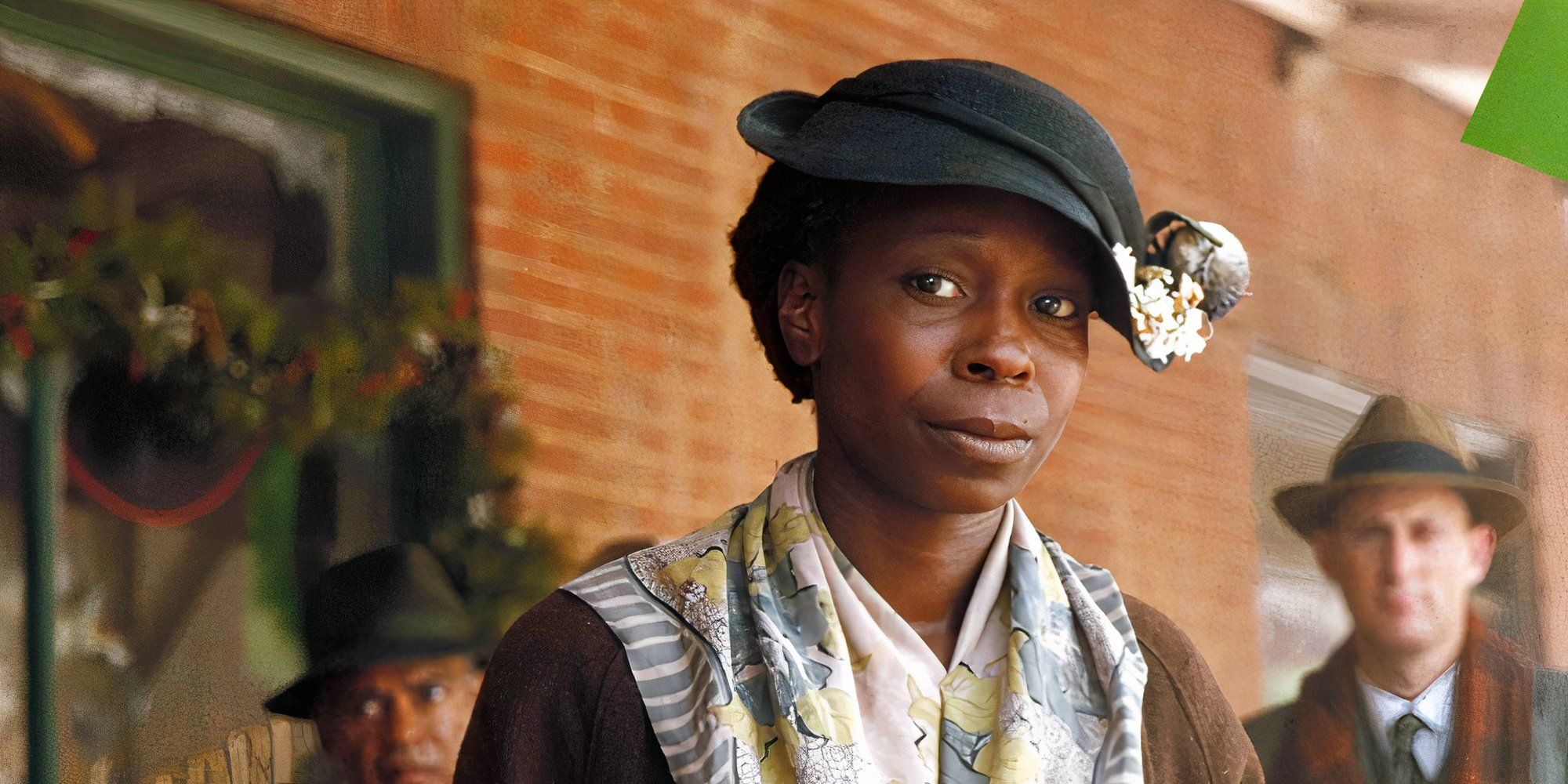
There have been quite a few influential novels in history, and there's no doubt that The Color Purple is one of them. Written by Alice Walker, the powerful epistolary novel tells of the life and self-discovery of Celie, a young African American woman living in rural Georgia in the early 20th century. Through her letters, Celie writes about enduring horrific sexual and physical abuse, the bond with her sister Nettie, and the transformation she had thanks to the love and kindness she received from Shug Avery. An incredible story about the bonds between Black women, the emotional survival and strength needed to overcome abuse, and overcoming oppression in the American South, The Color Purple remains one of the most empowering stories ever written.
Walker's novel shattered boundaries in literature by giving a platform for an authentic voice to an experience often ignored in media. Earning the Pulitzer Prize for Fiction and the National Book Award, The Color Purple is a celebration on multiple levels. The Color Purple revolutionized the Black feminist perspective in literature, while also depicting an explicitly queer narrative through the genuine love of two women at a time when stories like that were nearly non-existent. Walker's narrative structure provided a raw, intimate portrayal of a profound woman that allows for a truly personal experience to be shared. With enduring resonance, The Color Purple went on to find itself adapted on screen, first in 1985, directed by Steven Spielberg and starring Whoopi Goldberg, Oprah Winfrey, and Danny Glover, and then in 2023, starring Fantasia Barrino, Taraji P. Henson, and Colman Domingo. The latter, of course, is based on the musical.
Collider Exclusive · 8 Questions · 2 Minutes Which Iconic Romance Is Your Favorite? Harry & Sally · Love & Basketball · Heated Rivalry · Titanic
Four great love stories, and four completely different ideas of what love actually is. One is a friendship that took twelve years to admit itself. One is two people who refuse to stop competing. One happens entirely behind closed doors. And one lasts five days and never stops mattering. Eight questions decide which one is really yours.
🍂Harry & Sally(1989)
🏀Love & Basketball(2000)
🏒Heated Rivalry(HBO Max)
🚢Titanic(1997)
01
How does your love story start? The first scene tells you what kind of story this is going to be.
02
What do the two of you keep arguing about? Every great romance has one fight it has over and over.
03
How do you show somebody that you love them? Grand gestures are easy to write. This is the harder question.
04
What is actually standing in the way? There is always something. Which something tells you the genre.
05
Which romantic moment gets you every single time? Be honest. There is one that works on you and you know which.
06
What would you actually risk for the right person? Every romance asks this. Most people find out far too late.
07
Where are the two of you in ten years? Some love stories are about the meeting. Some are about the staying.
08
Which of these sounds most like something you would say? Eight questions in, this is the one that decides your romance.
Roll The Credits Your Romance Is…
Four love stories, four completely different ideas of what it means to be somebody's person. This is the one that matches how you actually fall, and what it would ask of you.
Harry & Sally
You do not fall for strangers. You fall for the person you have already been talking to for years, which is the slowest and by some distance the most durable way anybody has found to do this.
- When Harry Met Sally made the case that the best romance is an argument you enjoy, conducted over a decade, by two people refusing to admit what is happening.
- You want to be known rather than swept away. Somebody who remembers your worst story is doing better work than anybody arriving with flowers.
- The film is unusually honest about timing. These two are wrong for each other repeatedly until suddenly they are not, and neither of them engineered it.
- You would still be talking about everything at eighty. That is the entire promise.
Love & Basketball
You want a partner, not an audience. Somebody who wants their own life as badly as you want yours, and who would never ask you to be smaller to make the relationship easier.
- This is the rare romance where both people have a real career and the film takes both of them equally seriously.
- You would rather be pushed than protected. The right person for you is also a bit of a rival, and that never entirely goes away.
- It understands the actual problem in ambitious relationships. Not whether you love each other, but whose turn it is this year.
- You would still be competing at forty. That is how you would know it was working.
Heated Rivalry
The intensity was never the problem. The secrecy is. You are drawn to a love that lives entirely in private, and to the particular ache of wanting somebody you are not supposed to want.
- Heated Rivalry runs on the oldest engine in romance: two people on opposite sides, meeting in secret, getting far more attached than either of them planned.
- You keep your private life genuinely private, and something in you finds hidden things more real than public ones.
- The tension is not only between the two of them. It is between what they have and what it would cost either one to say it out loud.
- Years of this, and the whole story is really about whether either of them will finally stop hiding.
Titanic
You do not do this cautiously. When it happens for you it is immediate and total and it rearranges everything, and you would not accept a smaller version of it.
- Titanic gave us the biggest romance in film history and then made it last about five days, which is precisely the point of it.
- You measure love by intensity rather than duration. A few days of the real thing beats decades of something merely comfortable.
- The film is not only about the romance. It is about a woman who went on to live an enormous life afterwards because of it.
- You would still be telling this story at a hundred years old, and telling it exactly the same way.
'The Woman in Black' by Susan Hill
1983

We all deserve a juicy ghost story now and then. Susan Hill's The Woman in Black satisfies that desire. Reviving the classic, chilling Victorian ghost story, The Woman in Black tells the story of a young London lawyer, Arthur Kipps, haunted by a vengeful, tragic phantom in the isolated mansion Eel Marsh House. Known as the woman in black, the ghost's unending sorrow becomes a malignant force that targets innocent children out of bitter jealousy. The Woman in Black captures themes of unburied grief and hidden secrets and how they trap individuals in an inescapable cycle.
The Woman in Black revives the traditional classics for modern readers. Hill creates a masterful atmosphere where a spooky, isolated setting builds enduring dread. Hill builds tension through slow-burning suspense, unexplained noises, and never-ending past trauma. By writing in a formal 19th-century voice, Hill allows the ghost story to feel timeless and authentic. A masterclass in eerie Gothic horror, The Woman in Black delivers a shocking, emotional, and truly terrifying conclusion. Hill's novel was adapted into a stage play in 1987 before being adapted for television, radio, and film, though the Daniel Radcliffe movie strays from the original storyline.
'Neuromancer' by William Gibson
1984

Single-handedly inventing the cyberpunk genre, William Gibson's Neuromancer is a masterpiece in science fiction writing. The thriller follows Henry Dorsett Case, a washed-up computer hacker with a damaged nervous system, who is hired by a mysterious man named Armitage for a high-stakes heist. Teaming up with Molly, a cybernetically enhanced mercenary and cyborg, their mission is to merge an artificial intelligence called Wintermute with another powerful AI, Neuromancer. Responsible for inventing the word "cyberspace," Gibson prophetically depicted a dystopian future ruled by powerful global corporations and AI motives.
Neuromancer broke free from traditional, clean-cut space travel science fiction to deliver a fast-paced, gritty vision of tomorrow. By combining new technology with low-life urban culture, Neuromancer established a new aesthetic for the genre. Noting how cyberspace was a "consensual hallucination," Gibson described a digital matrix into which individuals could plug their nervous systems. The creation came long before the invention of the World Wide Web. Neuromancer concluded that the true villains are the unchecked corporations that control society. Examining our own world today, Neuromancer surely can be considered timeless. Earning the triple crown of sci-fi — the Hugo Award, the Nebula Award, and the Philip K. Dick Award — Neuromancer established itself as one of the most influential novels in the genre's history. Next year, after a long wait, the novel once deemed "unfilmable" will finally be adapted for television.
'The Handmaid's Tale' by Margaret Atwood
1985

Though written in 1985, Margaret Atwood clearly had a clue about what the future could hold. The Handmaid’s Tale, set in the Republic of Gilead, depicts a world taken over by a totalitarian, religious society. Narrated by Offred, she is a handmaiden, a fertile woman forced into sexual servitude to bear children for elite men known as Commanders and their wives. Offred remembers her past life, her stolen daughter, and searches for small ways to survive and resist. A defining masterpiece of the decade, The Handmaid’s Tale captured the chilling anxiety of a terrifying political climate that was easily plausible.
Atwood established a rule for the story: she would not include any event, law, or punishment in the Republic of Gilead that had not already happened in real-world human history. Keeping this in mind, it allowed this dystopian setting to be believable. By drawing on the past, including Puritan New England, the Iranian Revolution, and state-enforced control over women's labor and bodies during wartime, Gilead was achievable. Atwood explained how a free society can fracture under the guise of "traditional values" when combined with environmental decay, declining birth rates, and religious extremism. The novel was an immediate response to the rise of the Christian right at the time. Coincidentally, when the Hulu series starring Elisabeth Moss arrived, the story resonated in a similar manner. Through iconic imagery and exceptional relevance, The Handmaid’s Tale remains timeless.
'IT' by Stephen King
1986

Few individuals are as prolific as Stephen King. The undisputed King of Horror has haunted our nightmares for decades with his brilliant storytelling. He continued his dominance in 1986 with the novel It. The iconic horror thriller tells of an ancient, shape-shifting monster that terrorizes a fictional Maine town by feeding on children every 27 years. Seven outcast kids, who call themselves the Losers' Club, bond over their personal struggles and face the monster who appears as Pennywise the Dancing Clown. The story jumps ahead as the childhood friends, now grown up and scattered, must reunite in their hometown to face the terror a final time. Depicting how childhood scars can dictate adult lives, It represents the nature of evil linked to the darker trauma of small-town America.
The '80s were a solid decade for King, who also released hits like Cujo and Pet Sematary prior. It's dual timeline captures how memories and past experiences forge an enduring bond between friends. King writes the Losers’ Club as individuals we know and can relate to. When it comes to the shape-shifting titular figure, the villain is bigger than just a figure; it exposes the psychological baggage, societal prejudices, and buried traumas. Pennywise became a cultural staple, especially following the 1990 miniseries starring Tim Curry. Since then, It has been adapted into a two-part film, as well as an HBO prequel series, It: Welcome to Derry.
'Beloved' by Toni Morrison
1987

Novelist Toni Morrison is a literary genius. Proof came in 1987 with the release of Beloved. The Pulitzer Prize-winning novel depicts the brutal legacy of American slavery and the heavy psychological trauma it leaves behind. Set just after the Civil War in 1873 Ohio, Sethe, a formerly enslaved woman, lives with her teenage daughter, Denver, in a house haunted by the angry ghost of Sethe's baby daughter, who was killed to prevent her from being taken by slave catchers. A mysterious young woman who calls herself Beloved appears and moves in with them, acting as a physical incarnation of her deceased child. Beloved captures the agonizing choices a mother must make, as physical freedom does not erase the psychological scars of the past.
Beloved transforms a rich historical drama with a deeply emotional ghost story that tackles the psychological trauma of slavery. Through the lens of a haunting supernatural framing, Morrison shows the physical and psychological scars of slavery as Sethe explores the high cost of freedom and the painful power of motherhood. Morrison employs an evocative and lyrical nature in her text to bring out graphic imagery. The narrative seamlessly shifts between different characters' points of view and timelines, mirroring how trauma disrupts memory and healing. Beloved is a heavy piece of literature, but an important one. Through her introduction of “rememory,” Beloved is a masterwork of psychological history.
'Matilda' by Roald Dahl
1988

Though there may be some great works from 1988 geared toward adults only, there’s something special that lets Matilda stand out above them all. A pinnacle work of Roald Dahl, the children’s novel tells the story of Matilda Wormwood, a brilliant, neglected young girl who uses her sharp mind and secret telekinetic powers to stand up to cruel adults, namely her parents and the violent, tyrannical headmistress of Crunchem Hall Primary School, Miss Trunchbull. Through a deeply empowering underdog story and timeless themes of justice and self-advocacy, Matilda taught children and adults alike about the power we carry within.
Matilda, both the book and the character, was immediately beloved. The book-loving little girl inspired many readers because she is accessible. Readers instantly root for her as she uses her sharp mind and inner strength to fight back. One may be small and mighty, but we all possess the agency to stand up to unfair authority and change our circumstances. Matilda is an ode to reading. She finds solace and escape in her local library, leading generations of young readers to fall in love with books. Dahl fuses a mix of dark humor through its antagonistic villains with immense heart, specifically through Miss Honey. The book has a lasting legacy: it was adapted into a 1996 film, then a 2010 stage musical, and later a 2022 film starring Emma Thompson.
'The Joy Luck Club' by Amy Tan
1989

A truly, deeply moving drama, The Joy Luck Club by Amy Tan was the perfect way to close out the decade. The story centers around four Chinese immigrant mothers and their American-born daughters. The four women start a club, lovingly known as the Joy Luck Club, where they play mahjong, eat food, and share stories about their difficult pasts in China. After one of the mothers dies, her daughter takes her seat at the table, sparking a deeper sharing of hidden histories and family secrets. Through themes of generational gaps and inherited pain, The Joy Luck Club broke new ground for Asian American representation and deeply explored complex family dynamics.
A New York Times bestseller captured hearts by turning intimate immigrant struggles into a universally resonant narrative. The Joy Luck Club masterfully details the emotional, unrequited love between parent and child. Tan writes her piece like a game of mahjong. It features 16 interconnected stories that weave a rich, symmetrical tapestry of memory and identity. By moving fluidly between place and time, the narrative lets each woman's distinct voice and hidden past shine. Even outside its specific cultural context, The Joy Luck Club celebrates identity, belonging, and parental understanding, resonating with readers ofall backgrounds. The book was adapted into a 1993 film directed by Wayne Wang.

The Joy Luck Club
- Release Date
- September 8, 1993
- Runtime
- 139 Minutes
- Director
- Wayne Wang
- Writers
- Amy Tan, Ronald Bass
KioskNews shows a cleaned-up reading view extracted from the publisher’s page — the original always lives on their site, not ours.