How Europe’s most wanted cocaine trafficker turned Sierra Leone into the world’s first true narco state
As abductions go, few have been more brazen. Alan Jalloh was with two friends outside Goodies supermarket, frantic as usual with late afternoon shoppers. Rush hour in downtown Freetown, Sierra Leone’s capital, was under way with familiar gusto.
A black Toyota Rav4 forced its way through the Peninsula highway traffic. Witnesses describe burly white men leaping out, yanking on balaclavas. Jalloh, 40, seemed to freeze. As did his two friends, one a famous Freetown footballer. All three were dragged into the waiting SUV. None of them have been seen since.
Two days later, on 25 October 2025, another three men disappeared. Within a week, nine people had been seized from the city’s streets, most in broad daylight. They were dismembered, police sources were told. At least one was beheaded. An officer investigating Jalloh’s abduction, says: “They were exterminated to hide the truth.”
No bodies have been found.
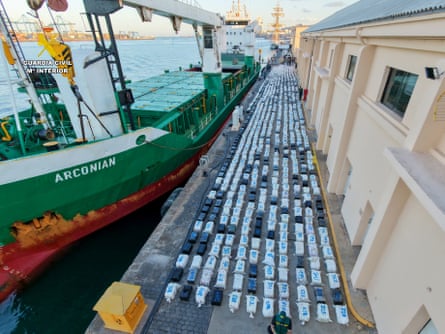
Five months after Jalloh disappeared, an ageing cargo ship, the Arconian, left Freetown. By May, it was navigating savage seas 100 miles off the coast of Morocco when Spanish civil guards boarded. Lucas Fernández*, clutching his assault rifle on the ship’s lower deck, stumbled across figures in the Arconian’s darkened cargo hold.
Fernández raised his gun, finger on the trigger. A man pointed an assault rifle back at him. Time stood still. Fernández says the man became agitated, yelling in English, incomprehensible above the storm outside. “It was crazy,” Fernández says.
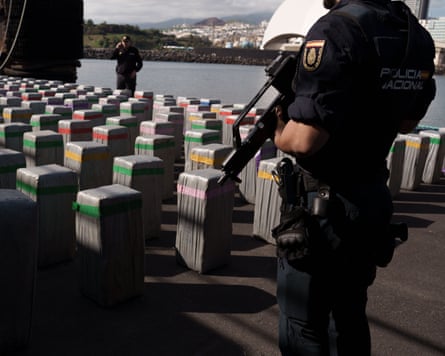
Within minutes, he and his fellow officers had disarmed six gunmen found hiding in the bowels of the ship. Nearby, were 1,279 bales of cocaine wrapped in plastic; weighing between 30 and 45 tonnes, it is the largest amount of the drug ever seized.
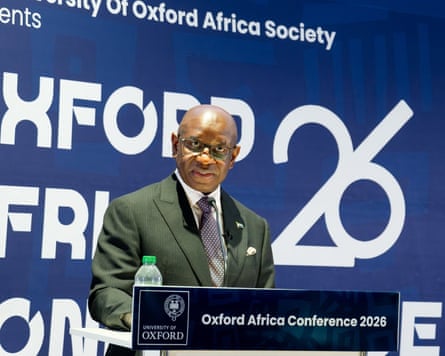
Seventeen days later, the audience at Oxford University rose to applaud the guest speaker. Julius Maada Bio had nailed it once again. His address – eulogising robust leadership – was the latest in a whirlwind year for the president of Sierra Leone.
The chair of Ecowas – the Economic Union of West African States, a region home to more than 400 million people, Bio is among the most influential African voices in the UN. The EU sees Bio as one of its most reliable allies in Africa and has a long history of showering the impoverished country with aid stretching back more than 45 years.
But the most important figure in Sierra Leone is not this ambitious politician, but the man who ordered the abduction of Jalloh; the man responsible for the Arconian’s monumental cocaine stash. A man called Jos Leijdekkers. He also happens to be Bio’s son-in-law.
At 35, Leijdekkers is Europe’s pre-eminent cocaine baron. Intelligence assessments credit the Dutchman with importing volumes vast enough to repeatedly crash Europe’s cocaine market. Last year, he halved the drug’s wholesale price. Multiple intelligence sources confirm he has also transformed Sierra Leone into the world’s first true narco state.
“It is state capture by a criminal network on a scale never seen,” says a western official.
At least 14 people have been killed inside Sierra Leone on Leidjekkers’ orders. High-ranking police are believed to have been murdered on his say-so. Officers have fled the country fearing they will be next.
“If you get in his way, he wipes you out,” says an intelligence source.
Like most, they spoke on condition of anonymity, aware of Leidjekkers’ capacity to reach those who cross him.
Sierra Leone’s fate is a tale of western duplicity. Despite detailed intelligence of the extraordinary volumes of cocaine being exported to Europe, the EU continued to woo Bio and his government. The UN did the same: overlooking its own evidence.
And intelligence sources warn that Leijdekkers’ network is rapidly expanding. “The entire west Africa region is at risk,” says a Dutch official.
Leijdekkers’ prodigious transcontinental network brings deadly violence.
Dozens of his gunmen descended on a sleepy Dutch village last month intent on retribution. A European police source said: “We’ve had cocaine disputes before, but nothing like this. We’ve entered a new era.”
The first recorded sighting of Leijdekkers in west Africa came in October 2022. A six-vehicle convoy thundered down Aberdeen Road, towards Lumley beach, leaving Freetown traffic police baffled. No one had briefed they were expecting VIPs. “‘The convoy was bigger than our president’s,” says one officer.
Unaware of Europe’s most wanted cocaine trafficker, Freetown police were sufficiently concerned to begin surveillance on the mysterious convoy, which had stopped outside the Sky Bar, a nightlife institution in the city.
At 4am, the group were trailed to a waterfront house near Hamilton beach. There, the covert surveillance team were stunned: revellers included their own bosses.
At the time, western intelligence agencies had no idea of Leijdekkers’ whereabouts. One of Europe’s most wanted men had simply vanished. For years, authorities had tracked his rise in the Dutch underworld, watching how the local hitman from the well-heeled town of Prinsenbeek accrued key contacts for transatlantic cocaine shipments.
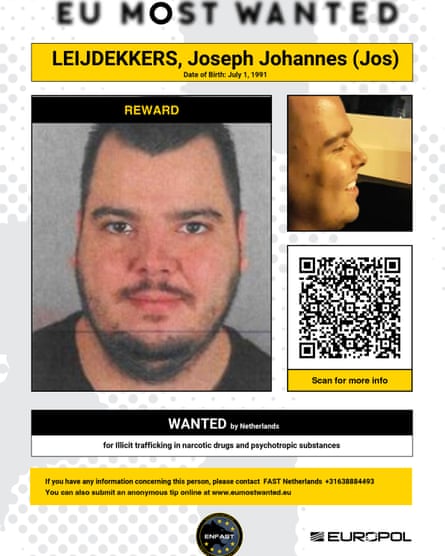
When Dutch intelligence traced Leijdekkers to Sierra Leone in 2024, he had created something remarkable: a sprawling cocaine empire from scratch.
“He’s very adept at adaptation, cultivating ties,” says an official. “A new country, but he won over its most influential people.”
That included marrying the president’s daughter, Agnes Bio, and starting a family. Sierra Leone’s top officials partied with the moneyed new guy. Immigration chiefs secured him a diplomatic passport. The person whose job it was to investigate cocaine traffickers became a drinking buddy.
Leijdekkers’ wealth corrupted. According to intelligence, he was generating a $150m (£113m) monthly profit – greater than the running cost of Sierra Leone’s entire state.
Hundreds of people were on his payroll, say sources, including senior military and police figures. But what Leidekkers coveted most was Freetown’s seaport: the Queen Elizabeth II Quay, perfectly sited between cocaine-producing South America and Europe’s booming markets.
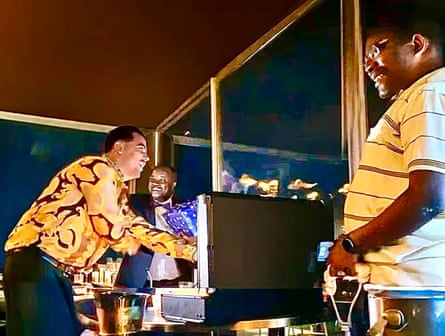
In August 2023, his wife’s uncle, Yankuba Bio, became head of the port. Yankuba Bio denies a close relationship with “any individual called or identified as Jos Leijdekkers”. Sources, though, say port officials on Leijdekkers’s payroll make $2,000 a month – more than 30 times the national average.
In January 2025, the Dutch sent an extradition request to Sierra Leone for the fugitive, who had been sentenced in absentia to more than 100 years in prison for crimes including attempted murder.
Sierra Leone denied knowing the man. For Leijdekkers, it was a defining moment: he had state protection. His confidence culminated in the arrival into Freetown’s port on 18 April of the Arconian, a green cargo vessel the length of a football pitch. Over the next four days, about 30 tonnes of cocaine were hauled onboard, according to western intelligence.
“From experience, the maximum you can hide is eight tonnes. Thirty tonnes says you’re operating in plain sight,” says a UN agent. Yankuba Bio says such claims are “false, completely untrue and without foundation” adding that the port “does not engage in or facilitate the export” of cocaine.
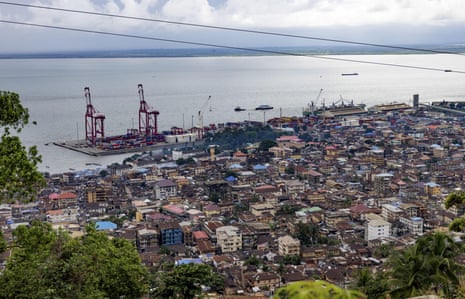
On 26 April, a cryptic tip-off electrified European investigators. An unidentified vessel had left west Africa carrying 18 tonnes of cocaine, the second-largest such cargo identified in Europe.
Within 70 hours, the Arconian had been identified. At 8pm on 1 May, with the vessel pitching in brutal, black seas, Fernández, of Spain’s civil guard central operational unit, was first onboard.
Having arrested the 23-strong Filipino crew, the officer spotted a gun lying on the deck. “We started to search more deeply,” says Fernández.
After his team stumbled across the six-strong paramilitary detail guarding the cocaine, it became chillingly evident the gunmen had orders to kill anyone who threatened Leijdekkers’ drugs. They had no idea Fernández was a police officer.
“They thought we were an organisation come to rob the drugs,” he says. “It was very tense. Anyone – them, us – might have fired.”
It took interminable seconds for Leijdekkers’ men to appreciate the truth. “They knew then it would be worse to open fire.”
The Arconian seizure shattered previous understanding of cocaine trafficking. Firstly, Leijdekkers appeared certain that his €812m (£687m) cargo would reach Europe. No attempt was made to conceal the drugs. “There was a 60-metre-long corridor full of it,” says Fernández.
Such nonchalance corroborated intelligence assessments that Leijdekkers had repeatedly flooded Europe with shipments, utilising a vast narco fleet and driving the wholesale cocaine price to a record low.
In the weeks before the raid, the Arconian completely changed its identity. Analysis for the Guardian by the maritime AI company Windward tracked at least three “suspicious” vessels from Freetown in the months before the Arconian. All rebranded themselves before leaving Sierra Leone.
In January this year, a cargo boat changed its registration details just before arriving in Freetown. After a month, it left for an unspecified destination. On 15 March, the vessel loitered off the Canary Islands for four hours. Investigators say the Arconian intended to linger off the Spanish archipelago, offloading the cocaine to a flotilla of speedboats.
Last Christmas Eve, another suspicious ship altered its name, flag and identifying traits when anchored off Freetown. With no destination declared, it left on Christmas Day. Approaching the Canary Islands on 9 January, it slowed and remained there for 13 hours before heading to Libya, which was also the Arconian’s stated destination.
Exactly the same pattern was observed with a ship leaving Freetown on 15 December, too.
Another eight vessels with near-identical traits to the Arconian have departed Freetown for Libya via the Canary Islands since 2024.
These include the White Labeille, which left Freetown in November 2024, was tracked off the Canary Islands and later “went dark”, switching off locator devices. Four months earlier, the White Eagle departed Sierra Leone before going dark off Morocco and being mysteriously abandoned. On the same day, another vessel – the White Arrow – was discarded in Libya with its Filipino crew, weeks after leaving Freetown.
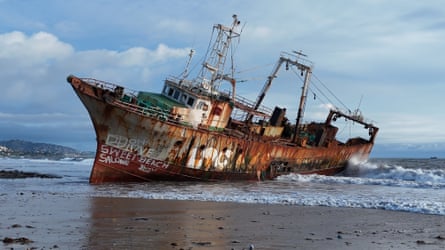
Other ships were found abandoned close to Freetown. One trawler, Sky 777, ran aground on Lumley Beach last year. No one has claimed it.
Months later, the Agios Basseterre drifted on to nearby Hamilton beach. Witnesses described white men hurriedly retrieving packages from the boat. It, too, was never claimed.
As investigators pored over the Arconian, Sierra Leonean authorities claimed its cargo originated from a mystery maritime transfer. However, analysis for the Guardian of its final voyage by Lloyd’s List Intelligence confirmed that the ship’s speed was consistent. There were no stops for a ship-to-ship transfer.
Something else did not seem right. Usually, the loss of even a modest cocaine cargo unleashes a wave of underworld violence. Intelligence agencies waited for the bloodshed.
Two days after the Arconian’s seizure, Leijdekkers chaired a Freetown summit to pinpoint what had gone wrong. Who gave the tip-off? Did he have a mole?
But no violence followed. “Mind-boggling amounts of cocaine had gone,” says a police source, “but Leijdekkers behaved like nothing had happened. Extraordinary.”
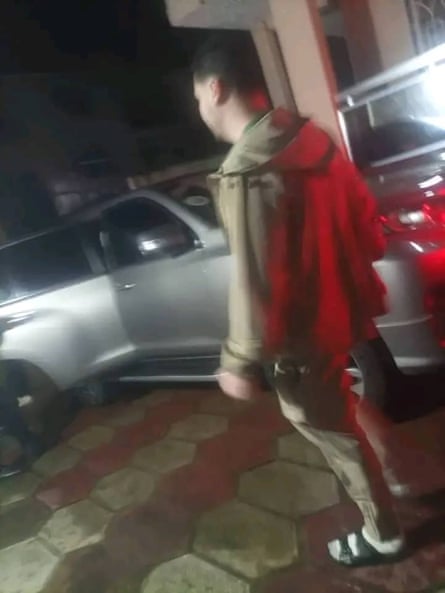
Perhaps Alan Jalloh underestimated Leijdekkers? Or maybe he was blinded by greed? Either way, intelligence indicates he was seen to have “betrayed” the Dutch fugitive over a cocaine deal. Police investigating the kidnapping made a swift breakthrough. Officers tracked down the black Toyota SUV. “We recognised it from our surveillance work on Leidjekkers,” says one.
Three kidnappers were arrested, but before they could be questioned, senior officers intervened. “They were released the same day,” says a source.
The investigating team’s caseload snowballed. Two days later, inquiries prompted a police raid on a Freetown warehouse. Inside were two teenagers and the property owner, guarding blocks of cocaine.
Halfway through the arrest, 40 armed troops turned up. At gunpoint, police were ordered to release the suspects. “Officers were told to leave everything with the military. Nobody saw those boys again,” says a police source.
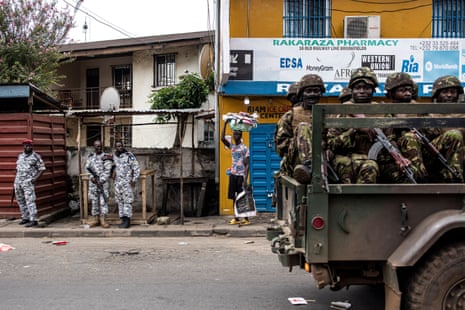
Over the following days, other people went missing, including the owner of a Lumley beach bar. A name linking the disappeared kept cropping up: Leijdekkers. Detectives, though, felt their inquiry was increasingly thwarted. The lead investigator was abruptly transferred: Jalloh’s family could no longer contact them.
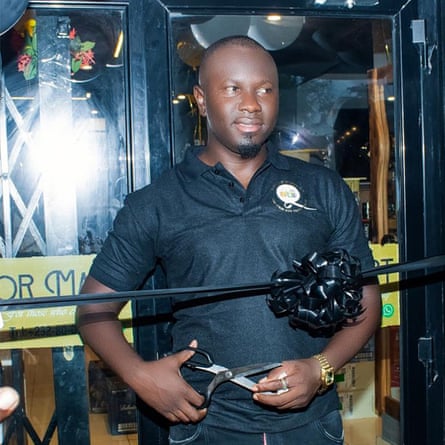
Nine people had disappeared, yet not a single police statement was issued. Such silence is even more striking because Jalloh, a shopkeeper, was related to Sierra Leone’s vice-president, and kidnapped alongside Alusine “Bokay” Koroma, a lauded Sierra Leonean international footballer.
Asked for details of its investigation, Sierra Leone police did not respond. The military also declined to comment. Western intelligence reports, though, are unequivocal: Leijdekkers’ enforcers murdered Jalloh. “His mercenaries were supported by the police and military,” says one report.
Witness statements reveal that hours before he was abducted, troops visited Jalloh’s Freetown Liquor Mart and looted its contents. Some of those kidnapped, police learned, were buried at Freetown’s police cemetery.
“Reliable sources say they were sliced with a power saw while alive. A pit was dug, the bodies dissolved with chemicals and concreted over,” said a Sierra Leonean police officer. Another source with knowledge of the burials informed investigators that a “head was missing”.
Other deaths occurred, such as John Conteh, who worked at Freetown’s port, checking container seals at the quayside. Intelligence sources reveal Conteh began “monitoring and inspecting containers” linked to Leijdekkers.
At about 1am on 2 June 2024, Conteh was crushed in work machinery. In the commercially sensitive heart of one of west Africa’s most critical ports, his death was apparently not caught on CCTV.
Conteh, who worked for Mediterranean Shipping Company (MSC), the world’s largest shipping group, is the only MSC employee to have died in Freetown since it started operations there 14 years ago.
Eight days after Conteh’s death, Sierra Leonean authorities concluded the incident was a “work-related accident”.
MSC declined to comment, referring to port authority statements. Sierra Leone police similarly chose not to respond. Western intelligence believe Conteh died in “suspicious circumstances”.
Even high-ranking police officers are at risk. On 8 April 2023, Supt Matthew “Boyka” Banya was in a marked police car near Makeni’s famous clock tower. Banya was adjusting to the northern city, having been ousted from Freetown after allegedly falling foul of Leijdekkers’ network.
An assassin shot Banya in his vehicle at point-blank range.
“Boyka wanted to expose Leijdekkers so an assailant was sent,” a Sierra Leonean police source claims.
The president himself urged police action but no killer was caught. “There was no proper investigation. They let it go,” added the source. Justice campaigners claim they were “obstructed” by the authorities. Police would not comment.
Such unsolved killings have chilled the country. Residents describe a climate of fear. “Targeted assassinations, cover-ups and impunity. We are terrified,” says one local politician.
Most feared are the “commandos”, Leijdekkers’ Turkish, Dutch and Serbian bodyguards, armed with pistols and assault rifles.
Journalists attempting to document Leijdekkers risk arrest, as happened to the Dutch reporter Sophie van Leeuwen, who travelled to Freetown last year.
A 24/7 police surveillance operation was instigated. At one point, officers watched her drive past Leijdekkers as he drank in the Sky Bar.
On her sixth day in Freetown, she was detained for several days on spying charges before being released. Her media files were deleted.
Politicians are similarly silenced. Abdul Kargbo, leader of the opposition, alleges that he was threatened after raising trafficking concerns. “They sent people to advise me to stay off [the issue],” he says.
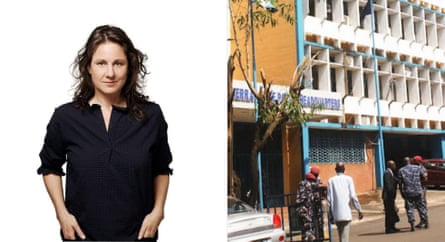
Leidjekkers shows little sign of lying low, openly enjoying his favourite nightspots, Scarlet, Lor and the Sky Bar.
But observers report an increase in security; more armed guards, more lookouts and increasingly rigorous counter-surveillance. Drivers are frequently rotated. His fleet of vehicles are routinely changed. When Leijdekkers makes a journey, reconnaissance teams are dispatched 24 hours in advance. “He seems more paranoid,” says a source.
His caution might be valid. Twice, Dutch special forces have been positioned off the west African coast preparing to seize him. Aborted at the last minute, the operations will have jangled nerves. “His biggest fear is a mole,” says a Sierra Leonean source.
Several trusted lieutenants aside, Leijdekkers’ business is largely a one-man show. “It makes his network difficult to infiltrate; it can absorb the arrest of senior figures while easily getting rid of juniors.”
His willingness to eradicate any perceived weak links can be seen, sources allege, in the deaths of a specialist police unit. Leijdekkers, they claim, feared the team knew too much, including where Jalloh was buried. Two months after the shopowner disappeared, a police vehicle crashed, killing three officers. The official account was that it was an accident.
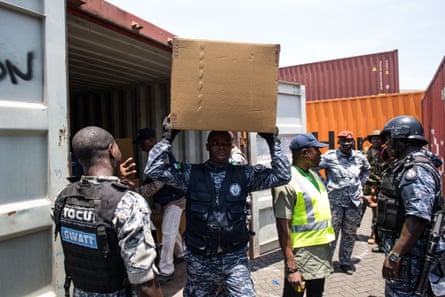
Days later, a fourth officer of the unit was found hanged. “His family knows their son would not hang himself. No investigation was mounted,” says a police source.
Leijdekkers’ arrival has also brought a surge in cocaine’s popularity among Freetown’s middle classes, particularly the Lumley beach nightclubs. The drug’s street price is the lowest in west Africa.
Abubakar Sesay, 32, a cocaine addict in Freetown, says dealers operate with political protection: “The bulk is mainly for export to Europe, but a small quantity is sold locally through criminal networks facilitating the trafficking trade.”
Experts already warn that cocaine poses a serious public health concern, particularly if processed into cheaper crack cocaine. “We’re already seeing overdoses,” says a drugs campaigner.
Despite its relatively low street price, the drug’s wider popularity in Sierra Leone is still limited by its cost, as nearly half of the population live in extreme poverty.
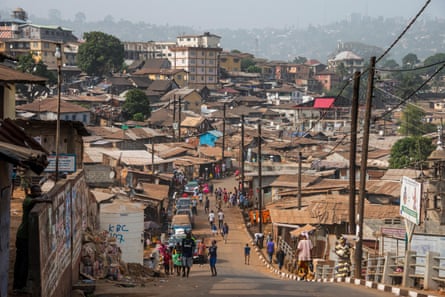
Very few people benefit from Leijdekkers’ largesse, with sources estimating only a “few hundred” of the country’s nine million people share in the profits. Yet cocaine has warped the country’s economy. One dish at Lor restaurant can cost £270 – five months’ pay for the average Sierra Leonean.
A slew of luxury car showrooms line Wilkinson Road; new apartments abound. “My driver showed me a huge multi-storey building built by a police officer. Not a regional commander – a traffic cop!” says the politician.
Fresh construction linked to Leijdekkers is emerging across west Africa. Operating bases have been established within Liberia, Guinea Bissau and now Ghana. Using diplomatic passports, Leijdekkers and his men roam the region with ease. Witnesses describe Liberian police applauding his convoy as it crossed the border.
On 21 July, the biggest drugs bust in Liberia’s history was announced when almost 4 tonnes of Leijdekkers’ cocaine, worth £235m, was found near its capital, Monrovia.
The previous day, sources say Leijdekkers returned to Freetown from Liberia. They also recognised the man arrested with the Monrovia cocaine, who was seen with Leijdekkers in Freetown.
Leijdekkers “frequently” visits Guinea Bissau, courting the junta that seized power last November.
There is scrutiny, too, in Ghana where last month several of Leijdekker’s network were arrested.
As gifts go, they caught the eye. On 23 June 2026, EU officials gave two sleek speedboats to Bio’s government at a ceremony in Freetown. The vessels were for the same military co-opted by Leidekkers to help tackle drug trafficking – one of many EU offerings made despite detailed warnings over Leijdekkers’ influence in Sierra Leone.
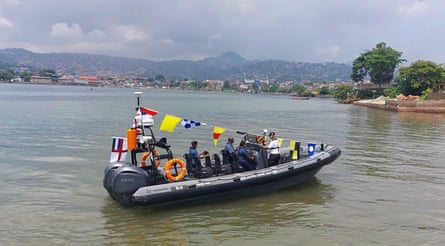
In a deal signed before Leijdekkers arrived in Freetown, Brussels sanctioned a €352m aid package running until 2027. So far, €245m has been paid.
In August 2024 – weeks after Dutch intelligence confirmed Bio’s government was harbouring Europe’s chief cocaine importer – the EU agreed to give an extra €90m to Sierra Leone.
In January 2025, another €35m was unlocked at a Freetown meeting with EU officials. Other deals involved tens of millions of EU taxpayers’ money paid directly into Sierra Leone’s treasury.
After the Arconian seizure, on 9 June 2026, Brussels opened the European chamber of commerce in Freetown to boost investment. Its inaugural president was the Sierra Leonean head of the shipping company whose employee John Conteh died at Freetown’s port.
Strengthening democracy was a core ambition of European investment in Sierra Leone. Since Leijdekkers arrival, the EU has spent €5.6m on the issue: not enough to prevent recent allegations that he financed $100,000 bribes in an attempt to corrupt its electoral system.
The Dutch justice minister, David van Weel, exasperated with Bio’s refusal to extradite Leijdekkers, wants Brussels to freeze development aid to Freetown. To date, just €18m of funding has been suspended.
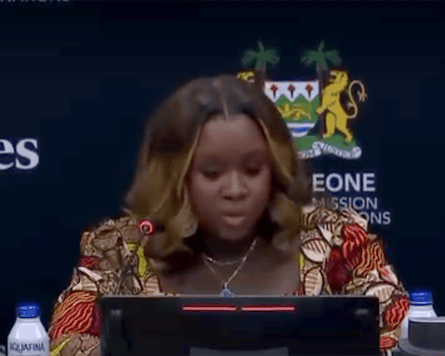
In summer 2024, as evidence indicated that Bio’s government was protecting Lijdekkers, Sierra Leone assumed the rotating presidency of the UN security council.
In June 2025, after becoming chair of Ecowas, Bio led a committee demanding a permanent African seat on the security council. The UN body, which is mandated to impose sanctions on a country controlled by a drug lord, seems unwilling to target one of its lamentably few African voices.
“There was no appetite. Leidjekkers never came up,” says a European diplomat.
Bio doubled down on his statesman persona. Ten days after the Arconian was seized, he met the French president, Emmanuel Macron, before flying to London for his speech at Oxford.
In September, Bio addressed world leaders at the UN general assembly with a speech on “restoring trust”. A New York meeting with Kristalina Georgieva, managing director of the International Monetary Fund, saw Bio’s economic policies feted. Anti-narcotics investigators were gobsmacked.
Even Leijdekker’s 32-year-old wife, Agnes, is accredited to Sierra Leone’s UN mission in New York.
In London, where Bio’s wife, Fatima, until recently had a council flat, a dedicated team is investigating Leijdekkers’ sprawling UK connections.
Sharing daily briefings with their Dutch counterparts, Britain’s National Crime Agency has identified interlinked trafficking networks. “Intelligence is telling us that he’s linked to an awful lot of things. We have a number [of UK cocaine importations] we think he was involved in,” said a UK source.
The British government has not aired any concerns over Bio’s government.
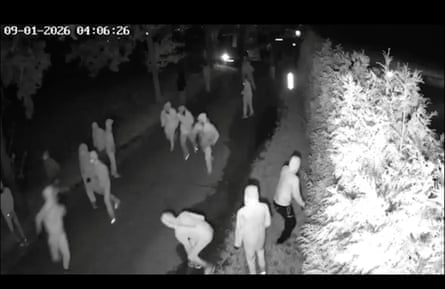
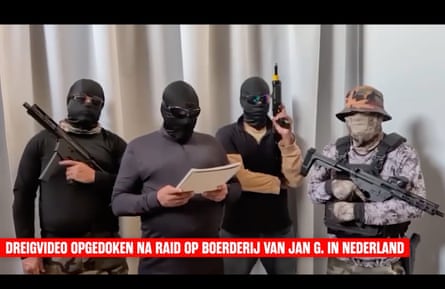
It resembled a scene from Sinaloa, the Mexican region where drug cartels use brazen violence to subjugate the state and send a show of force. It was the quiet Dutch village of Overasselt where, on 1 September this year, dozens of heavily armed men descended. Leijdekkers’ hastily assembled “narco-army” opened fire on a rural warehouse, killing a security guard and, when police arrived, seriously wounding two officers.
In the pre-dawn chaos, 34 of the narco trafficker’s foot soldiers were arrested. A cache of high-velocity weapons was found nearby.
For Europe’s police, it was the realisation of a long-dreaded nightmare: Latin America’s cartel-style violence had arrived.
Leijdekkers attack on Overasselt was completely out of character. Intelligence updates had long chronicled a trafficking network characterised by meticulous paperwork and finely tuned logistics to remain under the radar. Overasselt was the precise opposite. “He’s getting desperate,” a Dutch police source believes.
Having lost €812m on the Arconian, the Overassalet raid was prompted by the loss on 29 August of 1.2 tonnes of cocaine near the French-Spanish border.
Leijdekkers believed a rival had nabbed it. Within two days, he and associates had recruited for this outlandish raid. But Leijdekkers was wrong. It was police, in fact, who had intercepted the €50m cargo.
Days later, the fugitive faced another egregious blow when police officers confirmed they had caught Leijdekkers’ chief financier, a senior operator in a clandestine money transfer system dubbed “Dubai bank”.
Since the Arconian was intercepted, Leijdekker has lost up to 12 shipments – and the wholesale price of cocaine in Europe has risen from €12,000 to €22,000 a kilo.
His cumulative losses, police believe, have left him in debt to the Colombian Cali cartel.
He also faces a gigantic monthly payroll inside Sierra Leone. A cornered Leijdekkers is a dangerous proposition. Having outlasted former accomplices, such as the alleged crime boss Daniel Kinahan, recently extradited from Dubai to Ireland, and the convicted Moroccan-Dutch trafficker Ridouan Taghi, sentenced to life in prison in 2024, Leijdekkers retains extensive influence within the sprawling criminal ecosystem in north Africa and Europe, the so-called Mocro mafia.
Police sources, who once insisted Freetown would “never, ever” extradite their wealthy guest, are now wondering if that might change. And for the Bio family, international pressure is escalating. Van Weel, the Netherlands’ justice and security minister, said work was under way to “sanction” individuals linked to Leijdekkers. The president’s office declined to comment, though there is no suggestion he is implicated in any suspected illegal activity linked to Leijdekkers.
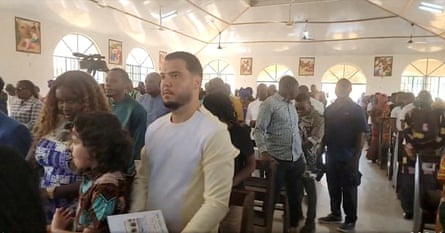
Leijdekkers’ lawyer dismissed the allegations as “politically driven”. A subsequent statement read: “My client wants you to know that the information you got from anonymous sources is complete nonsense, probably nourished by the Dutch authorities and therefore not fit for publication.”
Sierra Leone stands on the brink, along with the rest of west Africa. A regional narco-economy, where fragile states are overwhelmed by entrenched corruption and ruthless criminal networks, remains a distinct possibility.
Like Jalloh, Leijdekkers may disappear from Freetown. He will probably surface elsewhere to assemble a fresh empire.
“There’s no sign of him retiring,” says a police source. “Every day, the guy’s growing his wings, expanding his network.”
KioskNews shows a cleaned-up reading view extracted from the publisher’s page — the original always lives on their site, not ours.