‘I wanted to create the female version of a man’s suit’: how Roland Mouret’s Galaxy dress took over the world

The story of one of the most photographed and ripped-off dresses of the last 50 years came together with a simple zip. It was 1998; the designer Roland Mouret had shown his first collection at London fashion week and was looking for a way to produce good clothes at speed. He connected with a small British atelier and it was there that some old-school industry wisdom would alter his course: he learned that a longer seam doesn’t actually cost any more than a shorter one.
Despite his brilliantly instinctive approach to design, it was like cracking a code – and steered him towards the dress that would make his name. “My brain was buzzing!” he says. “I hadn’t thought about it before – if you extend a top by 50cm, it becomes a whole outfit. You just need accessories. Focusing on dresses gives you a signature piece at the right price.”
The hyper-bodycon Galaxy dress, with its industrial zip on the back, was born, embedding itself in the public consciousness via the backs of Beyoncé, Halle Berry and Victoria Beckham. Creating a singular silhouette, it helped Mouret define the look of the late 90s and early 2000s in London as much as John Galliano or Alexander McQueen did a few years before him.
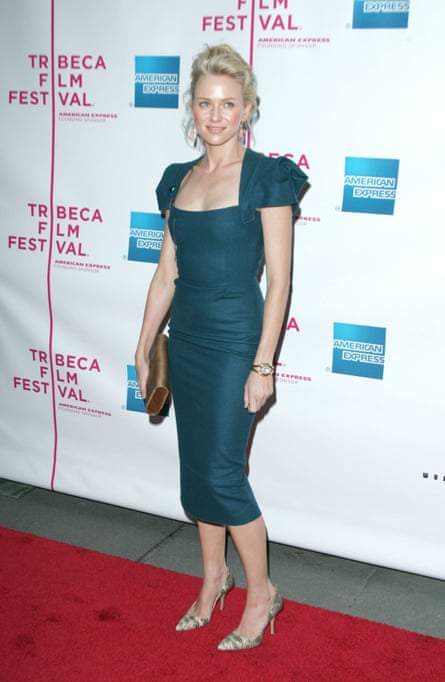
“I really earned my two lines in the fashion bible,” says Mouret, whose new autobiography, I Am Roland Mouret – The Butcher’s Boy Who Dressed the World, documents the era. “It had what we call in French ‘the lunch neckline’, with the sharpness of a table, and a waistline cinched in like that of an iconic 1950s actress, but comfortable and not too girlie. It had masculinity.”
While Elizabeth Hurley culturally owned that Versace safety pin dress after wearing it on the red carpet in 1994, leaving its second life solely to museums, the Galaxy reappeared in Mouret’s collections “in the colour and fabric of the season” for years – and continued to be seen on a who’s who of Hollywood, from Scarlett Johansson to Naomi Watts.
“I always saw the people I was dressing from the back,” he says now over a video call from his home in London. “I wanted to position myself behind them so I could see their point of view. The zip was part of that – it was at the back of the dress. As soon as you see a face, your imagination stops and the real person is there.” It was a way of designing clothes that he would later impart as a mentor to Victoria Beckham; the Galaxy’s silhouette could be seen in her early collections.
In the book, which is a candid and moving account of his life in rural France, Paris and London, Mouret writes about sexual exploration as a teenager. It would become part of the R&D for the Galaxy: “I had sex with women but knew I wasn’t straight,” he says. “It was a collaboration. I wasn’t trying to prove my masculinity, it was just an amazing experience, discovering a body in a carnal way. The dress was about equality. I wanted to create the female version of a man’s suit.” One of the celebrities who wore it, Dita Von Teese, who Mouret describes as “an athlete”, epitomised the woman who suited it best after a period of size zero ubiquity.
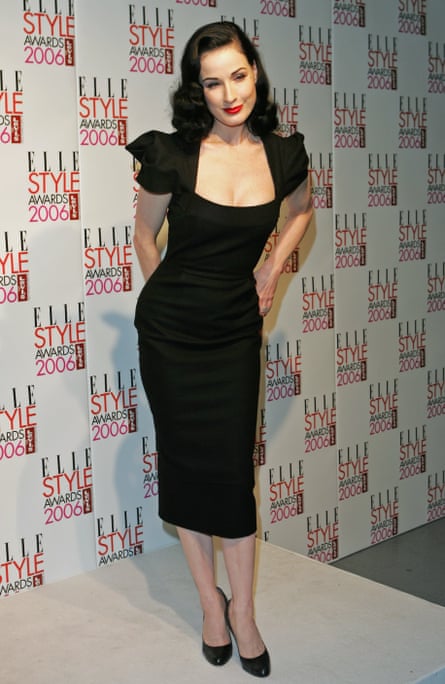
The way the Galaxy fastened was practical, but also part of the pleasure of wearing it. It was literally sensational. “It was lined in power mesh fabric,” says Mouret, “and when you unzip it at the back, whether yourself or with your partner, the flesh jumps out – it’s a rollercoaster of carnal experience, an explosion of emotion.”
But while Mouret describes the zip as about “strength and choice”, some notable women chose to wear it minus the hardware. Catherine, Princess of Wales, had one made without it because, when faced with paparazzi, it was a weak spot. Ditto the female president on House of Cards, Claire Underwood. The actor Robin Wright, who played her, explained to Mouret that his usual gold zip needed to go. In the book she explains: “I love it as a woman but as a woman in charge, a female president … that part of me has to be invisible.”
Perversely, some of Mouret’s Galaxy energy is now evident on podiums in Trump’s America. While the Galaxy is no longer being made new, similar sheath dresses by the Mouret label are still finding their way on to women including Ivanka, Melania and Lara Trump. And that bodycon silhouette, favoured by so many in the Trump administration, which has always been severe, now connotes a Trumpian aesthetic and style of politics, accented with extreme eyelashes, ironed hair and injectables.
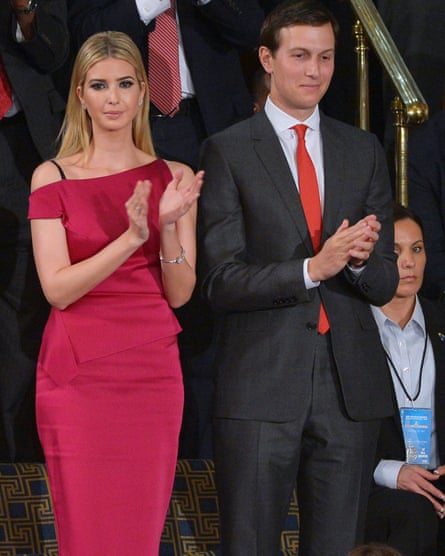
Does Mouret know why the look has been co-opted? “Fashion is just a reflection of the sociopolitics of its time,” he says. What “[Maga women] wear is extreme now. The clothes are so tight, and heels so high, that you couldn’t run from anything to protect yourself. The future is fear, and the look is decadent.”
The past was a better-looking place, according to the memoir, which documents the optimism and subsequent collapse of possibilities in fashion for independent designers. But the book is a full stop on fashion as Mouret knew and lived it – it doesn’t define him today. He is no longer at the helm of his brand: after Covid depth-charged his niche of eveningwear and event dressing, the label went into administration in 2021 and then changed hands. Mouret now describes himself as a queer artist, and a lot of his imagery still harks back to being the rural butcher’s son who wanted to explore bodies regardless of gender.
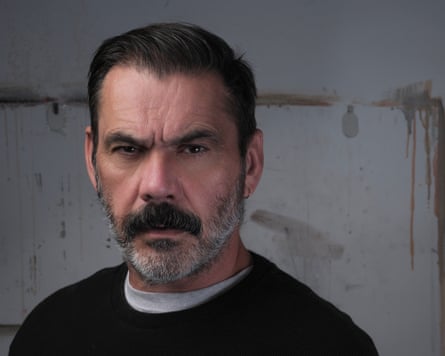
Clothes are still made with Mouret’s name sewn into them, but they are not his. It’s unlikely lightning will be caught in a bottle again. As he says in the book: “The Galaxy proved to me that my signature was not my name, but my technique.”
In 2015, 10 years after the dress first appeared, customers could buy one for £1,750 new. Now you can get one on resale sites for not much more than £200. Its time has passed, but it has also passed into fashion history, along with Mouret’s journey. It was autobiographical. As he writes in the book: “It was a dress born out of my collective consciousness; it was my mum getting dressed in the morning, it was my dad’s precision with meat, fat and bone.” It was the product of his biggest inspirations, Azzedine Alaïa and Yohji Yamamoto, filtered through his psyche. “Making it,” he writes, “was like the moment you find yourself speaking another language without thinking.”
KioskNews shows a cleaned-up reading view extracted from the publisher’s page — the original always lives on their site, not ours.