IEBC: Opposition walkout denied Kenyans chance to address electoral concerns
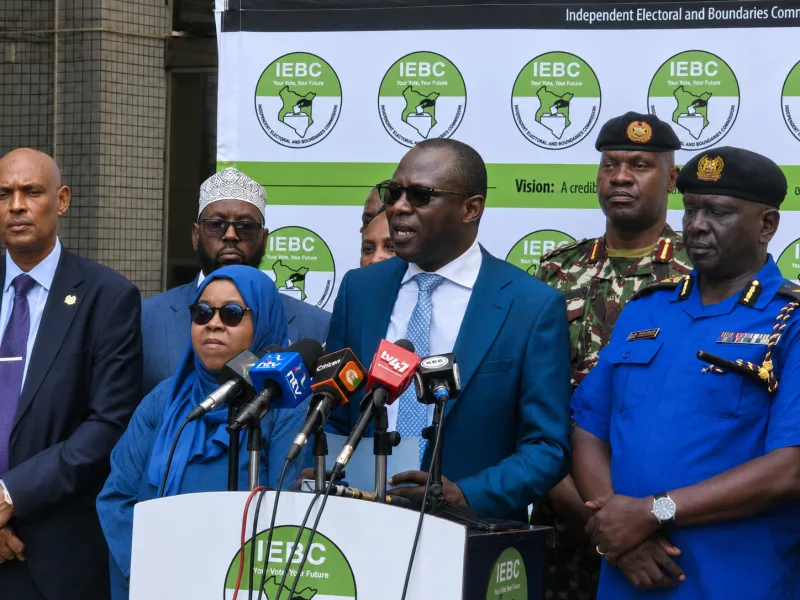
NAIROBI, Kenya Nov 21 – The Independent Electoral and Boundaries Commission (IEBC) has challenged opposition leaders who walked out of a consultative meeting over preparations for the 2027 General Election, insisting that abandoning dialogue will not resolve concerns about the credibility of the polls.
The commission, in a strongly worded statement issued on Friday, accused the leaders of leaving before substantive discussions could begin, saying their departure denied them an opportunity to scrutinise its election preparedness and deprived the country of a chance to hear their proposed reforms.
The Thursday meeting at Iconic Plaza in Nairobi descended into a confrontation after opposition leaders, led by former Deputy President Rigathi Gachagua, Wiper Party leader Kalonzo Musyoka and Nairobi Senator Edwin Sifuna, rejected the agenda presented by the electoral agency.
The leaders argued that the programme did not capture fundamental concerns they had repeatedly raised about the management of the August 10, 2027 General Election.
They demanded that the commission first address their proposals on electoral reforms before proceeding with its own presentation on preparations for the polls.
IEBC hits back
In its Friday statement, IEBC Chairperson Erastus Ethekon expressed regret over the walkout, saying the commission had adjusted its programme to accommodate requests from opposition leaders, including changing the scheduled starting time.
He said the leaders left after presenting their preliminary remarks and demands, before the commission could make its presentation or begin substantive discussions.
“The Commission, however, regrets that a section of the Opposition leaders opted to leave the meeting after making their preliminary remarks and presenting their demands, before the Commission could make its presentation and substantive dialogue could commence,” the statement read.
Ethekon said the leaders consequently missed an opportunity to receive first-hand information about the commission’s preparedness, achievements, outstanding challenges and measures being implemented ahead of the 2027 polls.
He added that the commission and the Kenyan public were also denied an opportunity to hear the opposition’s proposed minimum demands and electoral reform recommendations.
“Walking away from dialogue before substantive discussions begin does not advance the resolution of electoral concerns. It deprives all parties of the opportunity to exchange views, clarify positions and build consensus on matters that are critical to the credibility of the electoral process,” IEBC said.
The commission maintained that political parties had a legitimate role in proposing reforms and holding electoral institutions accountable but insisted that such concerns should be addressed through structured consultations.
It invited political parties to submit their proposals formally, promising to examine them within its constitutional and legal mandate and engage other institutions where necessary.
IEBC further defended its independence, citing Article 249 of the Constitution, which provides that independent commissions are subject only to the Constitution and the law and cannot be directed or controlled by any person or authority.
It nevertheless acknowledged that its independence did not exempt it from public scrutiny, accountability or constructive engagement.
Addressing the meeting before the walkout, Gachagua accused the commission of failing to respond to previous requests for engagement, saying opposition leaders had been sidelined in discussions about the electoral process.
He recalled that political leaders had met IEBC in January 2026 and agreed to establish technical teams to facilitate discussions on electoral reforms, but subsequent correspondence seeking to operationalise the arrangement had allegedly gone unanswered.
“Since our meeting in January, you have never called us for a meeting; this is the first time. We have looked at the programme and we have many issues given to us by Kenyans and they are not in the agenda,” Gachagua told the meeting.
He argued that proceeding with the commission’s programme without incorporating concerns raised by political parties would make the engagement meaningless.
“We feel like any discussions that do not include those issues would not be meaningful and would not be useful to the country,” he said.
The former Deputy President proposed that IEBC first engage a technical team appointed by the opposition and led by former Chief Justice David Maraga to develop an agenda that captures the outstanding concerns.
The team, which also includes former Attorney General Justin Muturi and ODM’s Caroli Omondi, was tasked with presenting the opposition’s proposals and engaging the commission on changes needed to strengthen the electoral process.
Gachagua maintained that the opposition was not opposed to consultations but wanted discussions anchored on issues affecting the credibility of the next election.
“We have therefore come to ask that we have appointed a team on electoral reforms led by Maraga to engage with you to draw an agenda that includes the issues that Kenyans have said are important to give birth to a free, fair and credible election,” he said.
He subsequently announced the delegation’s decision to withdraw from the meeting, arguing that the commission’s agenda did not reflect the concerns raised by Kenyans.
“As it is, we are sorry, we apologise because we are unable to participate in this meeting because the agenda does not inform real issues by the people of Kenya,” he said.
The opposition leaders then walked out, with supporters chanting “One Term” in an apparent political message directed at President William Ruto’s re-election ambitions.
Among those who left were Gachagua, Kalonzo, Sifuna, Siaya Governor James Orengo, former Chief Justice Maraga, Muturi and other leaders associated with the opposition’s electoral reform initiative.
Kalonzo later defended the decision, saying the delegation had attended the meeting in good faith but was disappointed by what he described as the commission’s failure to demonstrate the same commitment.
“We came to the IEBC today in good faith, and we expected the same in return. Good faith is shown in deeds: an independent, impartial and prepared Commission. Today, we did not find it. So we have walked out,” he said.
The Wiper leader questioned the safeguards surrounding the electoral process, insisting that every vote should be counted at the polling station, openly verified and declared as cast.
“Kenyans deserve their voices to be heard and every vote counted at the polling station, verified in the open and declared as cast. Not manufactured. Not padded with the names of people who are not on the voter roll,” he said.
Opposition’s demands
At the centre of the confrontation are proposals by the People’s Coalition on Electoral Reforms seeking changes to how presidential votes are registered, counted, transmitted and announced.
One of the key demands is an independent audit of the voters’ register and biometric records to identify and eliminate duplicate entries, names of deceased persons and other irregularities that could compromise the integrity of the electoral roll.
The opposition also wants the national presidential tallying centre at the Bomas of Kenya abolished as the final decision-making point, proposing instead that presidential results declared at the 290 constituency tallying centres be final.
Under the proposed arrangement, constituency and diaspora results would be processed through independent systems, with political parties, candidates and the media granted read-only access to monitor the transmission of results.
The leaders are also pushing for electronic voting for Kenyans living abroad to expand diaspora participation in elections.
Another proposal is the mandatory livestreaming of voting, counting and announcement of results at polling stations and tallying centres to allow Kenyans and political parties to independently follow the process.
Gachagua has separately raised concerns over the impending expiry of the Smartmatic election technology contract, warning that the commission needs a clear transition plan to avoid disruptions to voter registration and other electoral operations.
The opposition has also called for greater transparency in access to election servers and biometric systems, as well as the enforcement of existing legal provisions governing the transmission and publication of polling station results.
Harassment claims
The meeting was also marked by complaints of harassment and intimidation, with the United Democratic Alliance (UDA) threatening to boycott future engagements unless IEBC guarantees order and equal treatment of political party representatives.
UDA chairperson Cecily Mbarire accused individuals she described as unauthorised security personnel attached to opposition leaders of harassing government-aligned delegates and interfering with seating arrangements.
She challenged Ethekon to ensure that only invited participants and recognised security officers were allowed into future meetings.
“We will not attend any more of your meetings. You tell me why we need people from outside. They are not even known bodyguards. They come here to harass us and take away seats from some of us. That’s not fair,” Mbarire said.
The Embu Governor questioned how the commission could guarantee a peaceful and credible General Election if it could not maintain order during a stakeholder consultation.
She demanded that IEBC deploy uniformed police officers to provide security during future meetings rather than allowing individuals whose identities and authority were unclear to control access and security arrangements.
In response, IEBC Commissioner Alutalala Mukhwana apologised to the affected delegates, acknowledging that the commission had not anticipated the presence of unauthorised individuals at the venue.
“We did not know that there would be infiltration and this kind of treatment that is being committed on our officials. This is unacceptable, there can be no excuse and we are deeply sorry,” Mukhwana said.
He promised that the commission would tighten security and admission procedures to ensure that only invited participants attended subsequent engagements.
In its Friday statement, IEBC condemned the reported incidents, saying political differences should never be used to justify intimidation or harassment.
It said it would review the circumstances surrounding the disruptions and work with security agencies to ensure future consultations are safe and orderly.
The commission also reminded political parties, candidates and their supporters that the Electoral Code of Conduct was in force and warned that violations would be addressed through the appropriate legal mechanisms.
Battle for confidence ahead of 2027
The confrontation has exposed growing tensions between the electoral agency and opposition leaders as preparations for the next General Election gather pace.
IEBC said it had successfully conducted 32 by-elections in recent years and was using lessons from those exercises to strengthen its preparations for the August 10, 2027 polls.
The commission called on political parties, civil society organisations, religious institutions, security agencies and other stakeholders to cooperate in ensuring the elections are free, fair, transparent, inclusive and peaceful.
It pledged to continue consultations throughout the electoral cycle, maintaining that it remained open to receiving proposals and addressing concerns raised by political stakeholders.
However, the opposition’s insistence that its reform demands must first be incorporated into the consultation agenda leaves the two sides facing a difficult task of rebuilding trust before the next election.
KioskNews shows a cleaned-up reading view extracted from the publisher’s page — the original always lives on their site, not ours.