Fears student choice will be undermined by new uni funding model
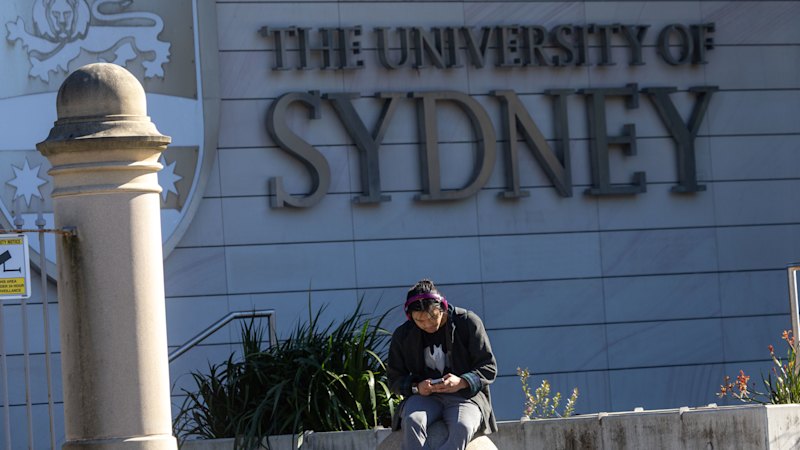
A proposed new tertiary funding model may restrict students’ ability to go to university or choose their degrees, a tranche of submissions to a powerful Senate inquiry warns.
The Business Council of Australia has added its voice to concerns raised by the $54 billion sector’s largest universities who say that so-called “managed growth funding” risks jeopardising young Australians’ study options by introducing domestic student caps.
This year was a transition period before the new model comes into full effect in 2027. Some popular Sydney universities have said they were forced to turn away students because of the changed allocation of places. Next year is anticipated to be worse.
The new regime, which aims to admit more students from marginalised backgrounds, is currently the subject of a Senate inquiry.
“Managed growth … could constrain growth, limit student choice and reduce the system’s capacity to respond to workforce demand, making the government’s target of 80 per cent tertiary attainment by 2050 harder to achieve,” the BCA’s Bran Black said in a submission to the inquiry.
Student choice is also the focus for the lobbyists Group of Eight, who said the changes risked “replacing one barrier with another”.
“Instead of financial barriers, students may face administrative barriers that prevent them accessing the institution they believe offers the best pathway for their aspirations,” said the Group of Eight’s Vicki Thomson wrote in a submission.
“They got the marks they needed but were told to accept a different university for reasons beyond their control.
“The … assumption that students denied a place at one institution will simply enrol elsewhere is not supported by student behaviour. Students choose universities for specific reasons. When access to a preferred institution is constrained, demand is not always redistributed; in some cases it is lost.”
The University of Sydney’s submission said: “Universities are not interchangeable and student choice is central to ensuring meaningful participation”, while the University of NSW warned “where a student seeking to study psychology is unable to access a place because of allocation limits, they may enrol in a less preferred course or … choose not to enrol at all.”
However, the country’s outer metropolitan and regional universities are set to benefit from the new policy. The legislation intends that caps on student numbers will see those who cannot study their choice of course spilling over to an outer metropolitan or regional university.
“The changes will provide a necessary correction in our university system, redirecting funding in ways that are essential. They are about making sure that the doors of opportunity are open to all Australians, regardless of where they live or their family background – not just opening the doors once, but keeping them open for the future,” the 2050 Alliance, which represents nine universities including Western Sydney University and the University of Canberra, told the inquiry.
Higher education expert Mark Warburton agreed that outer metropolitan and regional universities need better funding.
“[But] it does not require the convoluted Managed Growth Funding arrangements, associated penalty provisions and … fewer places in inner metropolitan universities to achieve this,” he wrote.
Start the day with a summary of the day’s most important and interesting stories, analysis and insights. Sign up for our Morning Edition newsletter.
More:
KioskNews shows a cleaned-up reading view extracted from the publisher’s page — the original always lives on their site, not ours.