Northern Metropolis needs stronger heart to achieve Hong Kong’s goals
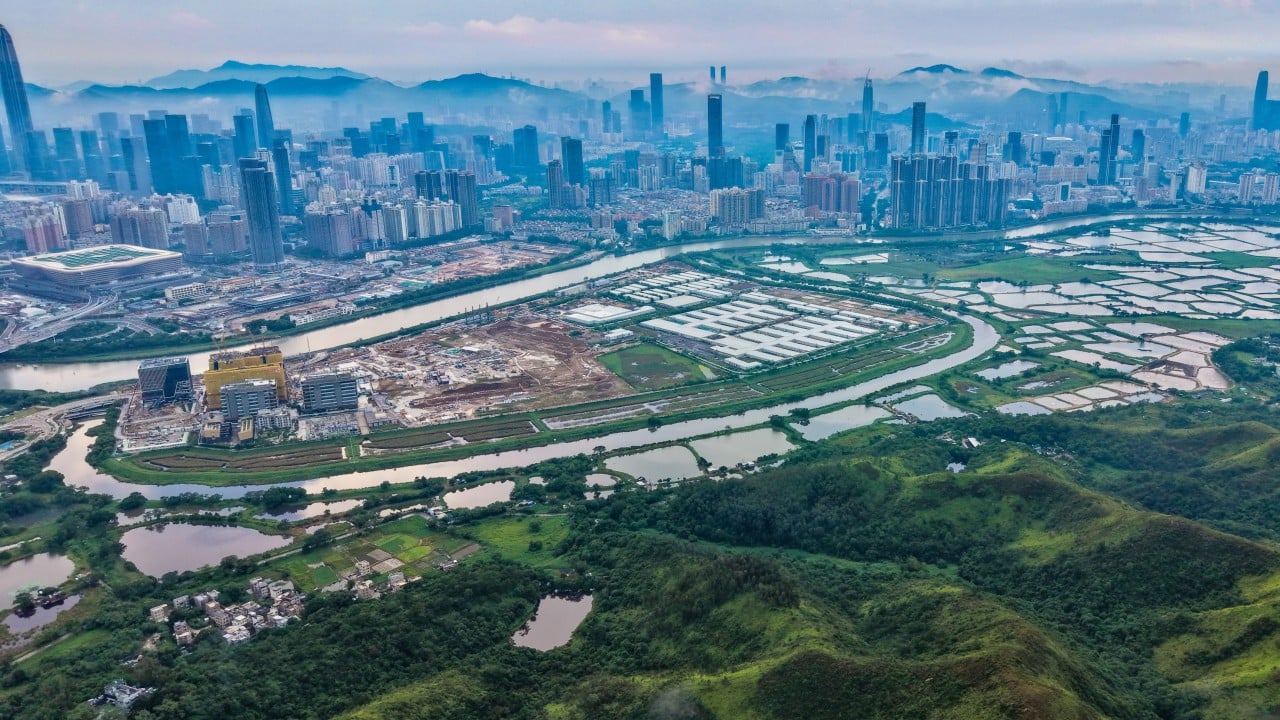
The Northern Metropolis is Hong Kong’s most ambitious development project for the next two decades. Since the Northern Metropolis development strategy was unveiled, major projects including the Hong Kong-Shenzhen Innovation and Technology Park in the Lok Ma Chau Loop, the San Tin Technopole and the Hung Shui Kiu/Ha Tsuen new development area have gathered momentum. The government is also accelerating the development of university towns and industrial estates.
Encompassing Yuen Long and North districts, the Northern Metropolis covers about 30,000 hectares (74,100 acres) and is expected to provide more than 3,000 hectares of new development land. It is intended to become both a platform for Hong Kong’s deeper integration into national development and a major source of future population, industrial and investment growth.
As development advances, though, Hong Kong should reconsider a fundamental question: where should the Northern Metropolis’ true centre be?
Functionally, the Northern Metropolis should become a new type of education and innovation city, built around two principal engines: an innovation and technology park and a university town. Transport, commerce, housing and public services should form a complete urban ecosystem around them.
The problem is that the current spatial arrangement of these engines might be less than optimal. The main development area of the San Tin Technopole sits on about 150 hectares of fish ponds and wetlands and and does not enjoy direct MTR coverage under the current plan.
The Northern Link Spur Line is planned to connect the San Tin Technopole, the Loop and the new Huanggang Port, but it is not expected to come into operation until 2034. For technology enterprises, accessibility is not a “nice to have”. It can be decisive.
The question is not whether the Northern Metropolis should proceed. Rather, it is whether its core layout can still be improved while development remains at an early stage.
An important piece of land has been overlooked. Tit Hang, southeast of the Loop, covers about 160 hectares of government land. Its proximity to the Loop and Kwu Tung North, together with its scale, transport potential and adaptability, gives it many of the attributes required of a metropolitan core.
During the planning process for the San Tin Technopole in 2024, the think tank I lead proposed studying Tit Hang Shan as an alternative or complementary development option. That suggestion was not accepted, but it deserves reconsideration.
Tit Hang Shan could accommodate the university town and the Northern Metropolis’ core district, bringing together university campuses, research facilities, financial services, a Northern Metropolis administrative centre, commercial activities and cultural institutions. Two development belts could also extend along the southern bank of the Shenzhen River, flanking the Loop on both sides.
Together, these areas could form a distinctive Hong Kong-Shenzhen special zone for institutional innovation and cross-boundary collaboration. This arrangement would elevate the Northern Metropolis beyond the concept of a stand-alone technology park. It would create an integrated metropolitan centre combining innovation, education, finance, administration, commerce and culture.
10:31
Many companies seeking spot in Hong Kong’s Northern Metropolis industry park, new chairman says
The world’s leading innovation districts succeed by concentrating universities, research institutions, corporate headquarters, venture capital and supporting urban amenities. Innovation flourishes when the distance between talent, knowledge and capital is reduced.
Physical proximity encourages partnerships, informal exchanges and the circulation of ideas. Hong Kong therefore needs to go beyond merely building research facilities and create an environment where enterprises, academics, investors and residents can interact continuously.
Transport planning must support this concentration. Instead of relying entirely on the Northern Link Spur Line, the government could use Kwu Tung station as a hub for an elevated green transit system connecting the Huanggang Port, Tit Hang Shan and the Loop.
Compared with heavy rail, such a system could be built more quickly and flexibly while connecting multiple development areas. Preliminary estimates suggest that Tit Hang and the two flanking areas could provide around 380 hectares of additional development land and about 10 million square metres of floor area.
This is not simply a proposal to release more land. It is an opportunity to create a new urban centre capable of supporting Hong Kong’s development for the next half-century.
When administrative, technological, educational, commercial and cultural functions converge and connect with Shenzhen’s innovation resources through the Loop, the Northern Metropolis can acquire the critical mass needed to compete internationally.
Hong Kong should therefore transform Tit Hang Shan and the land flanking the Loop into the heart of global innovation. As a strategic connection point within the Greater Bay Area, an Asian hub and an international meeting place, this new core could attract universities, enterprises, investors and talent from around the world.
City planning is never built on a single, irreversible decision. It is a continuous process of correction and improvement. The greater a project’s importance to Hong Kong’s future, the more willing we should be to compare alternatives.
The Northern Metropolis is still taking shape. A serious debate today can prevent a decade-long detour tomorrow. Giving Hong Kong another competitive development option is not an obstacle to the Northern Metropolis. It is how we can give it a stronger heart. Realising that vision requires an even stronger heart on the part of decision makers.
KioskNews shows a cleaned-up reading view extracted from the publisher’s page — the original always lives on their site, not ours.